To have and to hold Downtown church invites married couples to repledge their love
Read this article for free:
or
Already have an account? Log in here »
To continue reading, please subscribe:

Digital Subscription
One year of digital access for only $205*
- Enjoy unlimited reading on winnipegfreepress.com
- Read the E-Edition, our digital replica newspaper
- Access News Break, our award-winning app
- Play interactive puzzles
*First annual payment billed as $205.00 + GST for one year. This annual subscription will automatically renew at $233.00 + GST every 52 weeks (10% off the regular annual price of $259.35). Offer available to new and qualified returning subscribers only. Cancel any time.
To continue reading, please subscribe:
Add Free Press access to your Brandon Sun subscription for only an additional
$1 for the first 4 weeks*
- Enjoy unlimited reading on winnipegfreepress.com
- Read the E-Edition, our digital replica newspaper
- Access News Break, our award-winning app
- Play interactive puzzles
*Your next Brandon Sun subscription payment will increase by $1.00 and you will be charged $17.95 plus GST for four weeks. After four weeks, your payment will increase to $24.95 plus GST every four weeks.
Read unlimited articles for free today:
or
Already have an account? Log in here »
A Winnipeg church is celebrating 100 years of weddings by inviting married couples of all beliefs to reaffirm their commitment at a “mass vow renewal” service on June 20.
Throughout this year, All Saints Anglican Church is marking the centennial of its English Gothic-style building, erected in 1926 at the prominent corner of Broadway and Osborne Street. (The congregation dates back to an original 1883 building that was located nearby.)
As part of the celebrations, the church has put out a call for couples who tied the knot at All Saints — or at any other location, sacred or secular — to participate in the joyful wedding-style service.
All Saints is encouraging people to contribute memorabilia from weddings held at the church, such as this 1940s cake topper. (Ruth Bonneville / Free Press)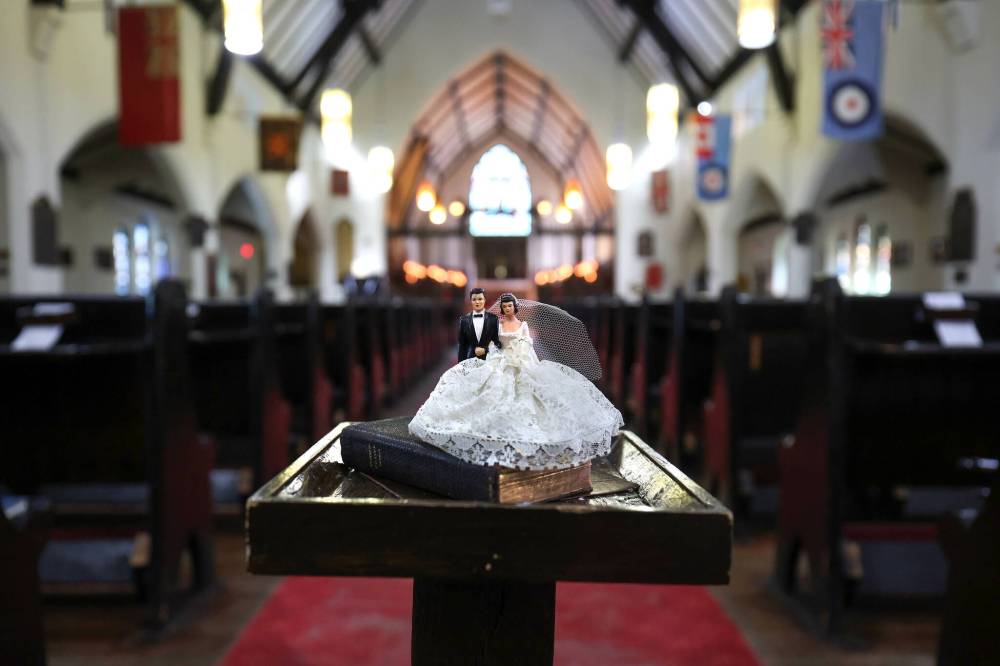
The gathering will include organ music, singing by the choir, and a moment when spouses turn to one another, join hands and recite vows co-led by Rev. Rob Schoeck and his wife, Rev. Lauren Schoeck, who is also an Anglican priest.
“We don’t verbalize enough what marriage means to us,” says Arlene Merrick, a member of the church committee that’s planning the event.
“It’s an occasion to tell your partner in a very public way: ‘I would marry you again.’ We’re encouraging people to get dressed up.”
“It’s an occasion to tell your partner in a very public way: ‘I would marry you again.’ We’re encouraging people to get dressed up.”
The free Centennial Celebration of Weddings event runs from 1 to 4 p.m. on June 20. The service will start at 2 p.m. and last about 30 minutes. There’s no need to pre-register. Donations will be accepted.
There will be a display of photos, memorabilia and clothing from All Saints weddings of decades past (contact the church if you’ve got items to contribute).
A photographer will be on hand to take portraits at a reasonable cost.
Schoeck, who leads the congregation, says the vow renewal offers an opportunity for spouses to “remind themselves of the moment of their marriage” and be thankful for the love that has blossomed and borne fruit in their lives.
Mark McLellan and Arlene Merrick on their wedding day, July 8, 2006; Merrick is on the planning committee for the church’s vow renewal event. (Supplied)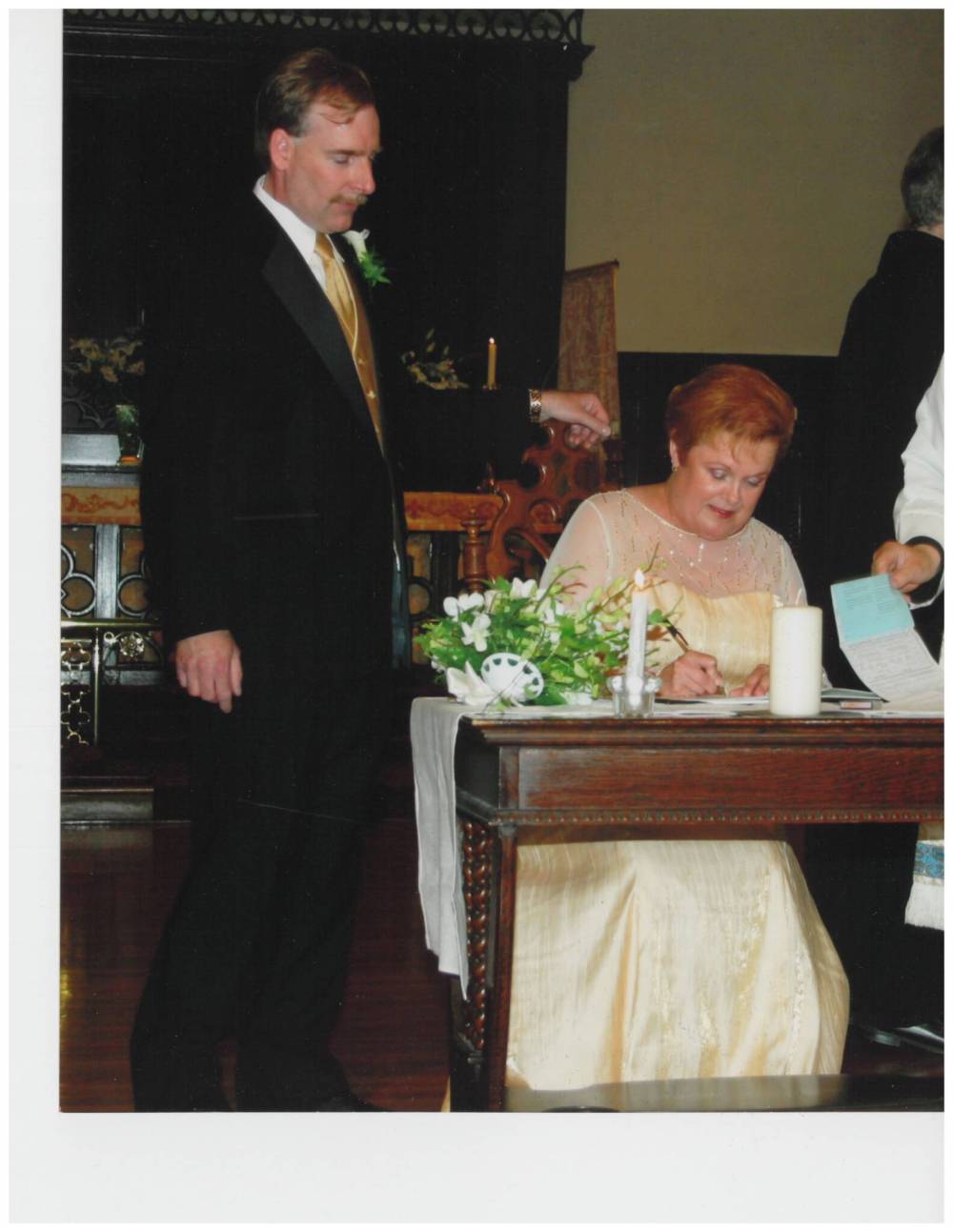
When Merrick, 73, wore a champagne-coloured dress to exchange vows with husband Mark McLellan, 65, at All Saints 20 years ago, it was the second marriage for both.
After meeting as singers in the church choir, they were grateful that Anglican doctrine had loosened back in the 1960s, allowing divorced persons to remarry.
McLellan has attended All Saints since birth and is immensely proud that four generations of his family have held nuptials there.
His maternal grandparents, Kay and Wilfrid Holbrow, wed there in 1936.
Michelle and Dylan Tweed on Oct. 14, 2017 (Supplied)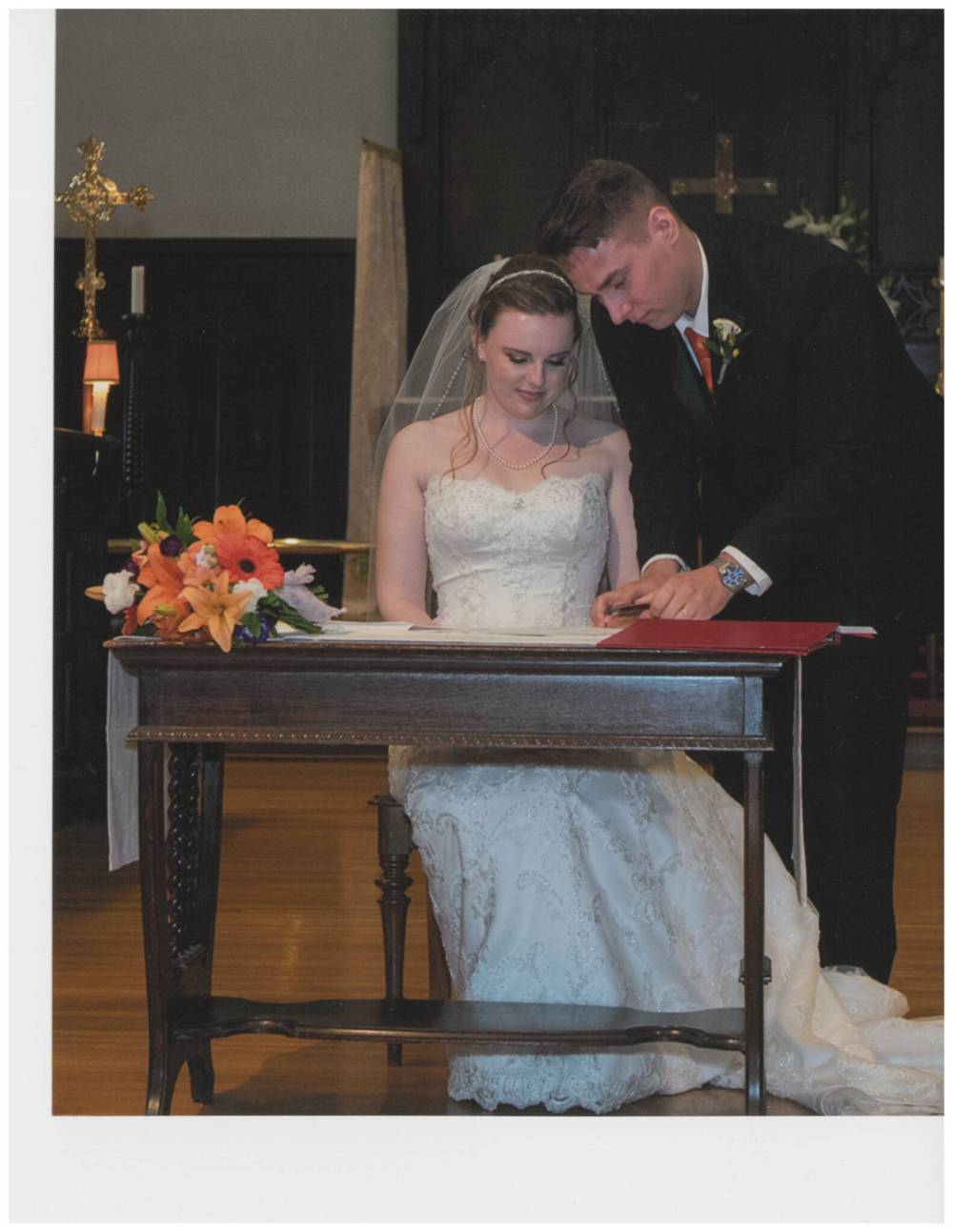
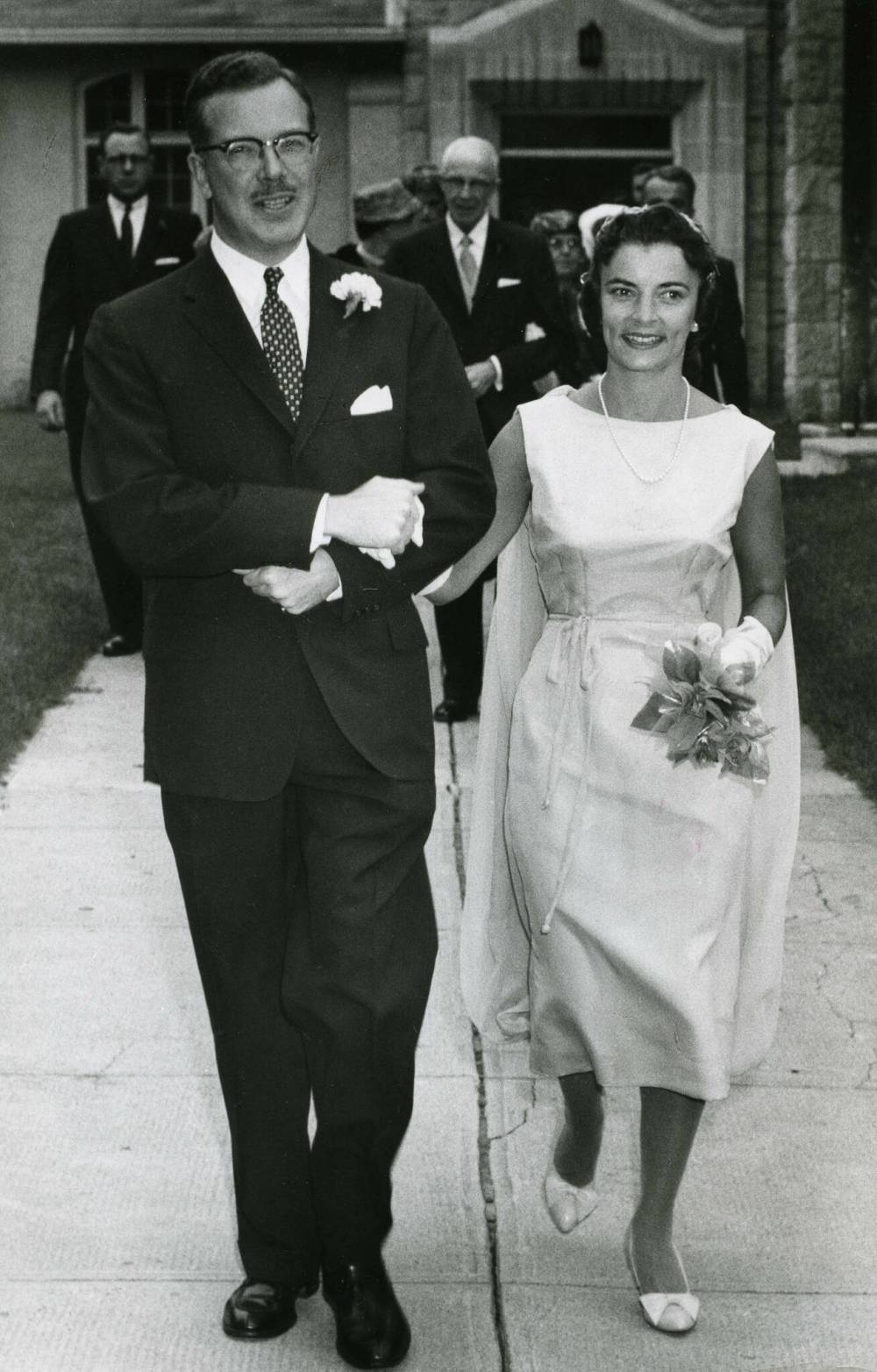
His parents, Elaine and Rick McLellan, did the same in 1959.
After he and Merrick followed in their footsteps in 2006, McLellan was thrilled to escort his daughter Michelle to the altar to marry Dylan Tweed in 2017.
“Ever since Michelle was born, Mark dreamt of walking her up that aisle,” Merrick says.
Michelle’s off-white gown was strapless — a look that would have been unthinkable as recently as the 1970s, Merrick says, because Anglican brides were expected to keep their shoulders covered.
Mark McLellan’s grandparents, Kay
and Wilfrid Holbrow, wed at All Saints on Nov. 6, 1936. (Supplied)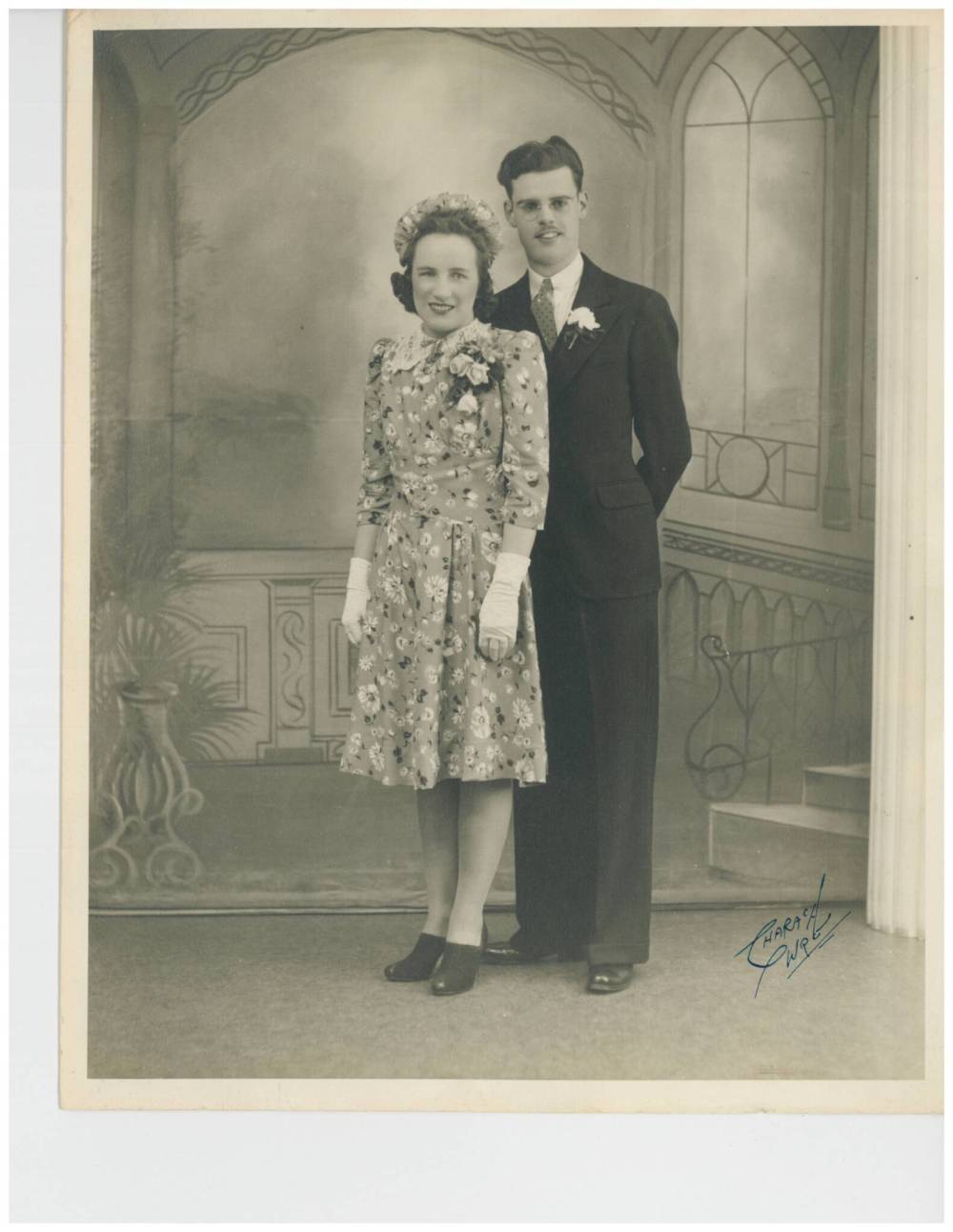
The family has treasured photos of three of the four couples signing the register at the exact same wooden table — an antique that dates back to the church’s original building.
Joy Peters, the church’s administrator, says 100 years ago — and for decades after that — the “rite of holy matrimony” was a formal worship service that included hymns, prayers, scripture readings, sometimes a sermon, and the priest giving the sacrament of communion to the kneeling bride and groom.
Many of Winnipeg’s movers and shakers belonged to All Saints and entered holy wedlock there.
Premier Duff Roblin married Mary MacKay there in 1958, the same year he was elected to lead the province.
Rick and Elaine McLellan, wed on May 23, 1959 (Supplied)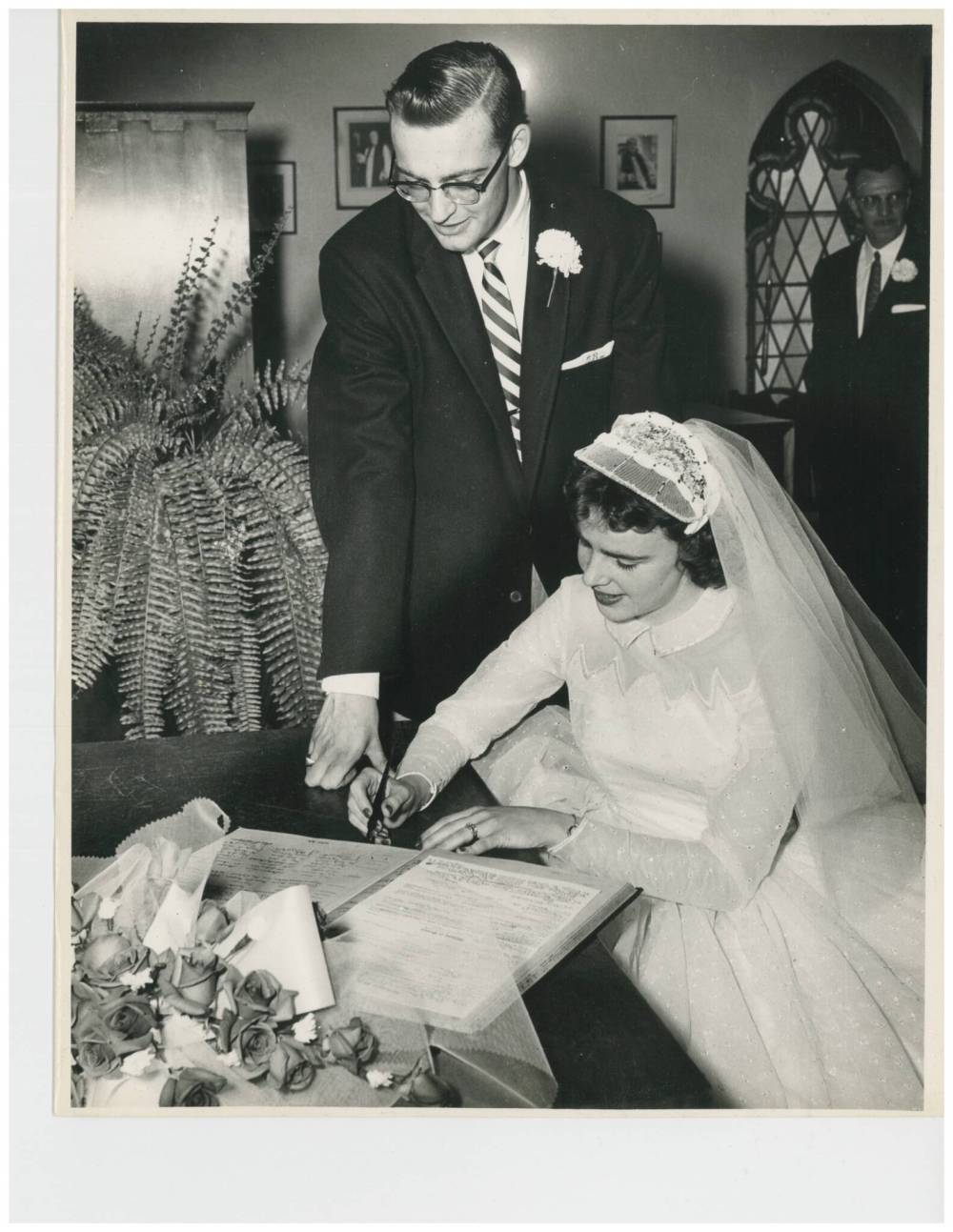
Nowadays, it’s rare for any couple to have a fully traditional Anglican wedding. Schoeck does conduct some contemporary wedding services.
But All Saints — like many churches — is dealing with a small, aging congregation, a dwindling donor base and a grand building that needs constant maintenance.
That’s why, around the turn of the 21st century, a decision was made to generate revenue by offering the building as a rental venue for virtually any kind of wedding, with any qualified officiant, religious or not.
The result has been a diverse, multicultural parade of brides and grooms who want a “church look” and bring their own vision to the charmingly old-fashioned space.
The church stipulates that ceremonies be “reasonably Christian,” but in practice, pretty much anything goes.
Merrick tells of a Star Wars-themed wedding that featured raised lightsabres. Peters recalls a bride who wore a black, sparkly ballgown.
“We had a wedding last year where the bride was from Mexico, and she surprised her husband with a mariachi band for the recessional,” Peters says.
“It was so much fun. We had to sneak the band in.”
The church charges a base price of $800 for a wedding. “It’s definitely a helpful source of revenue,” Peters says.
“It also gets a lot of people across the threshold. We want the building to be used.”
All Saints is well-served by its location, kitty-corner to the Legislative Building (a picturesque setting for photos) and a few blocks from the Fort Garry Hotel, a popular reception venue.
But the biggest attraction for renters, Peters says, is the awe-inspiring traditional beauty of the nave, with its soaring ceiling, striking stained-glass windows and dark-toned pews that seat at least 300 guests.
Some Christians get married at All Saints — bringing their pastor along to officiate — because they find their home church too plain, modern or auditorium-like, the committee members say.
An arched gothic doorway at the western end of the church has allowed many a bride over the past 100 years to make a “high-drama entrance” directly onto the long, red-carpeted centre aisle leading to the altar.
‘Kneeling cushions’ made of cream-coloured silk, on which the bride and groom kneel side-by-side, are now rarely used for wedding services at All Saints Anglican Church. (Ruth Bonneville / Free Press)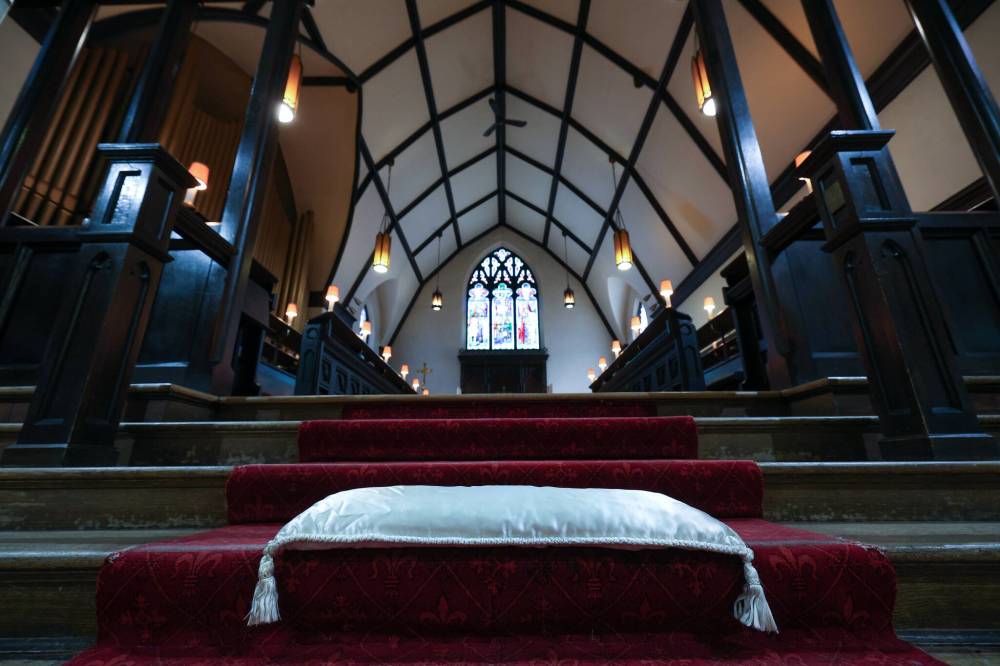
Peters, 42, didn’t get married at All Saints, but looks forward to renewing her vows there on June 20 with Ryan, her husband of 11 years.
“There’s a lot of talk about how many marriages end in divorce, and ‘ball and chain’ jokes,” she says.
“But I would marry my husband so much more now than when I first married him. I’m really grateful.”
Matrimonial matriarch
Margaret Van Benthem still remembers the excitement that bubbled through her when, 55 years ago, the priest at All Saints Anglican Church formally announced — for three Sundays in a row — her upcoming marriage.
In the ancient ritual called “publishing the banns,” the priest would, at three consecutive services, announce a couple’s intention to marry and ask if anyone knew of any impediment to the union.
Volunteer wedding co-ordinator Margaret Van Benthem, 80, helps couples tie the knot. (Ruth Bonneville / Free Press)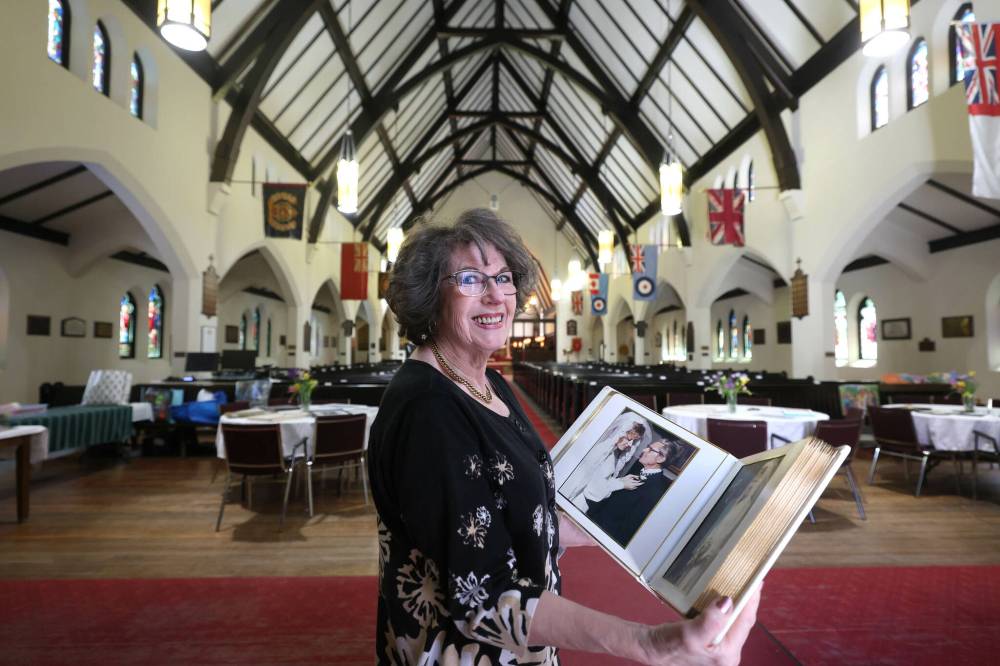
“You’d be sitting in church, and you couldn’t wait,” recalls the youthful 80-year-old. “Everybody was so excited for you. It was building up to the big event — not in a showy way, but in a very respectful way. This was a serious thing.”
If the banns of marriage are little-known today, it’s part of an evolution toward more secularized, personal-statement weddings that Van Benthem reluctantly accepts.
The upcoming Centennial Celebration of Weddings event at All Saints is giving her a chance to share memories of a different time.
“A wedding was such a religious experience,” she says. “Everybody followed the book.”
The indomitable Van Benthem is the oldest active member of the All Saints congregation who’s been attending since she was in the womb.
An ultra-dedicated volunteer at both weddings and funerals, she even manually tolls the church’s lone bell if there’s no one else to pull the rope.
Her parents, Alf and Betty Holbrow, walked down that special aisle in 1942. She followed in 1971. Her daughter Lisa and son John carried on the tradition in 2001 and 2014, respectively.
Alf and Betty Holbrow in 1942. (Supplied) 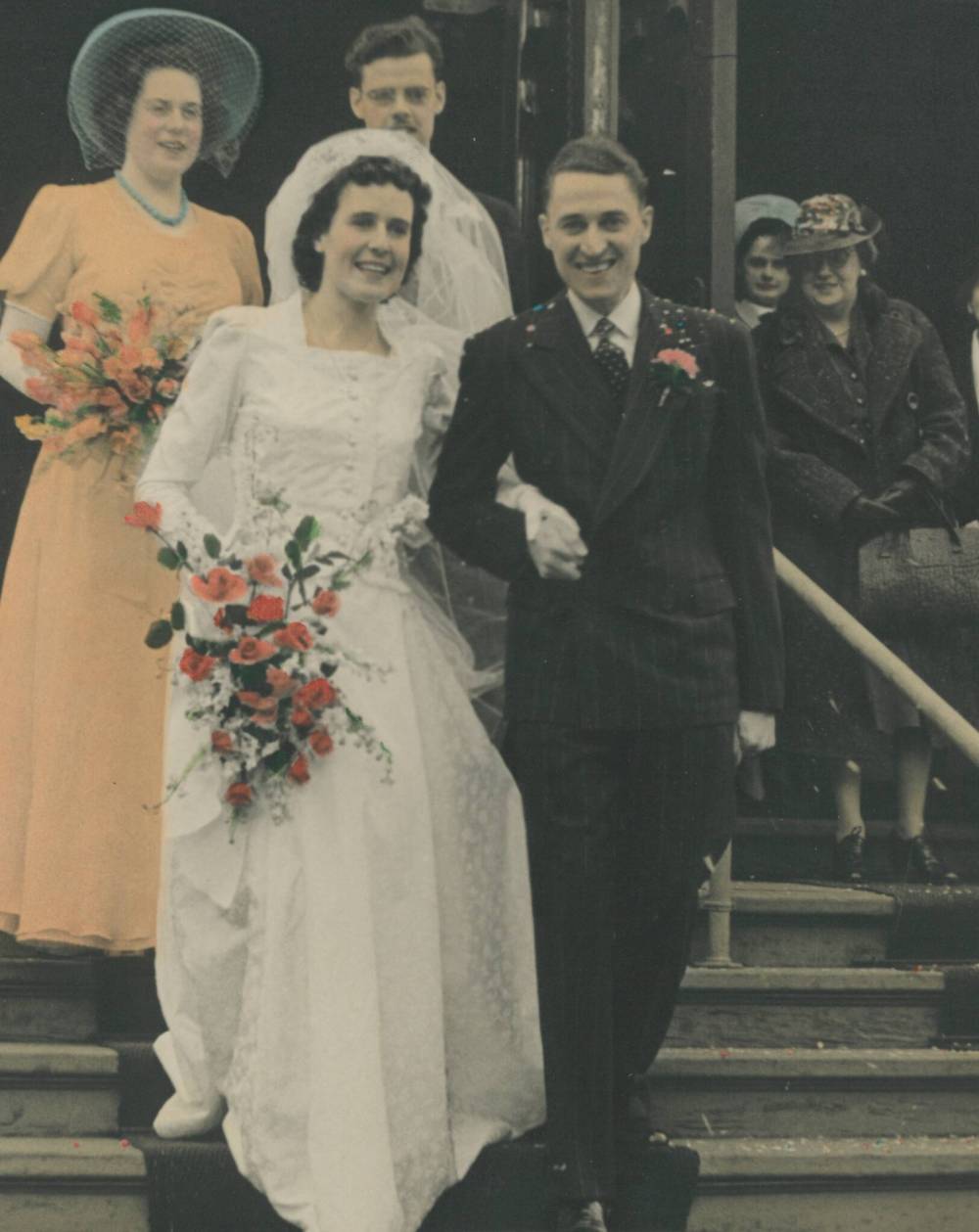
The centennial display of memorabilia will include the exquisite 1940s cake-topper from Alf and Betty’s wedding cake, on which the miniature bride’s dress is made of real lace.
“That wasn’t bought at Dollarama,” Van Benthem observes.
Her own tiered cake in 1971 was baked by her mother, then taken to Eaton’s to be elaborately iced. “Weddings weren’t the business they are now,” she says.
Most elements of weddings were modest by today’s standards, she says, and people didn’t expect monetary gifts to cover the cost of the reception.
Don’t get her started on the questionable etiquette of current trends like “You’re invited to the after-party, but not the dinner.”
In the quarter-century since All Saints started allowing weddings with no religious affiliation to be held on a “rental of space” basis, Van Benthem has volunteered her time as the host — a.k.a. matrimonial expert and problem-solver — at hundreds of eclectic ceremonies.
“Every wedding now is unique. Some are very relaxed,” she says, recalling one in which a small child was pulled down the aisle in a wagon.
From taping Xs on the carpet so the attendants stand in a perfectly angled line — with every groomsman’s hands uniformly clasped — to briefing the bridesmaids on maintaining their spacing, Van Benthem fusses over every detail.
“I know every inch of what works. It should look like everything is seamless.”
Margaret Van Benthem and her bridesmaids at her 1971 wedding. (Supplied)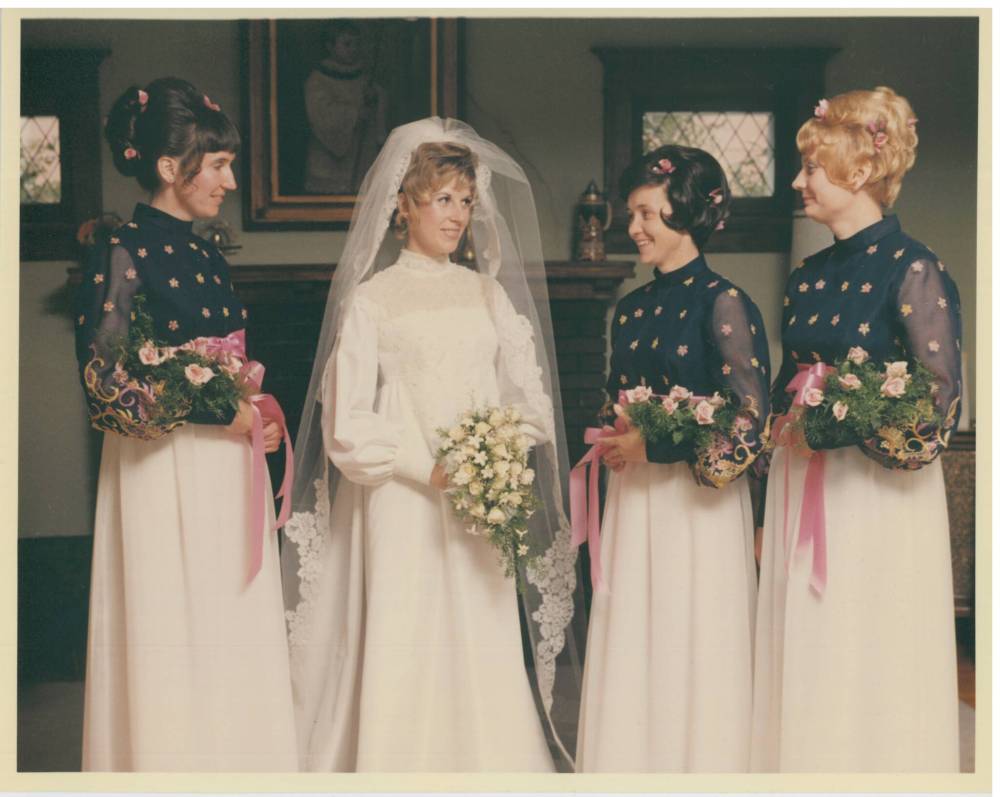
The former teacher doesn’t tolerate gum-chewing or ball caps, even at the rehearsal.
“You have to respect the space,” she declares. “People aren’t used to being formal in any way.”
Her key pieces of advice for a smooth wedding? Everyone involved in the ceremony must attend the rehearsal.
Women should practise walking in their high heels. And groomsmen must try on their suits sooner than 20 minutes before the ceremony.
She and the other volunteers have seen men with no belts, men’s pant legs that are way too short, and buttons that have to be sewn on at breakneck speed.
Recently, a group of five groomsmen pulled their rental suits out of their garment bags and realized that none of them possessed the ability to tie a necktie. Van Benthem had to do a rapid intervention.
“I found this older gentleman (among the guests) and had him do all their ties — I’m not kidding you!”
Van Benthem laments that weddings increasingly resemble performances.
Traditionally, the bride and groom took their vows on the same floor level as the congregation, then knelt on the lowest of three steps that lead to the chancel (the space near the high altar) for the consecration and blessing.
Van Benthem on her wedding day with her parents, Alf and Betty Holbrow. (Supplied)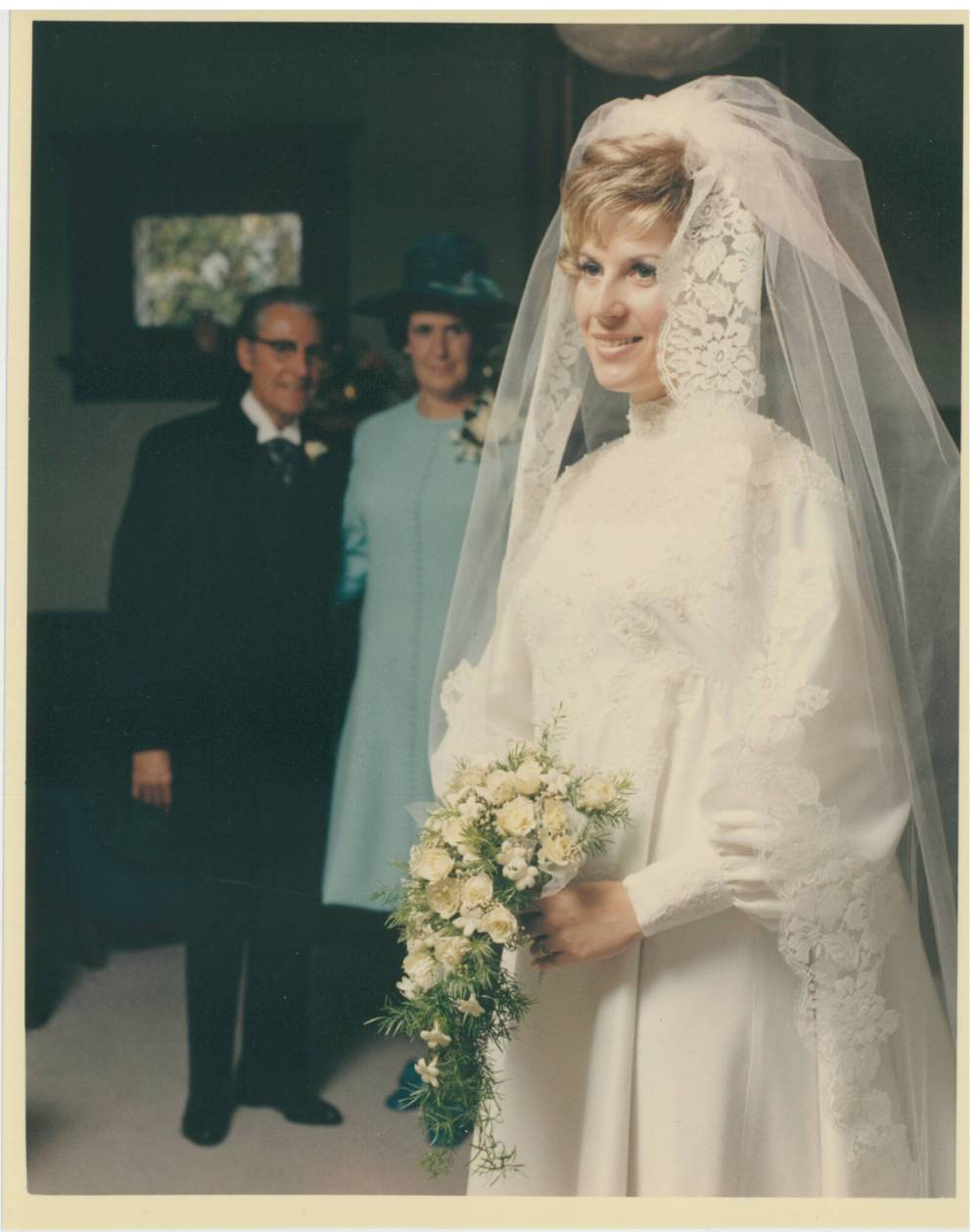
Today, they stand at the top of those steps for better visibility and are “on show,” lit by spotlights.
Knowing this place of worship and all its linens, vessels, furniture and artifacts like the back of her hand, Van Benthem has taken to sticking labels on things because she worries that institutional knowledge is being lost.
“Things can slip very quickly. It upsets me that nobody knows this stuff,” she says.
Two traditional objects that are rarely pulled out of storage now are the tasseled “kneeling cushions” made of cream-coloured silk on which the bride and groom knelt side-by-side.
One cushion was placed on the lowest step, and the other at the high altar, where the newlyweds knelt to receive communion.
“When I got married, I took it for granted. As you age, you put everything into perspective.”
First her parents, then Van Benthem and her husband, then her children and their partners all knelt on those same, now-antique cushions. She finds it a moving expression of continuity and legacy, but it didn’t really hit her until she was the parent.
“When I got married, I took it for granted. As you age, you put everything into perspective.”
Van Benthem says she pours energy into being a volunteer wedding facilitator for two reasons. First, renting out the space for weddings brings in vital revenue to help maintain the “irreplaceable” century-old building.
Just as importantly, she says, weddings draw new people into the space. Some of them are so struck by its beauty and peaceful atmosphere that they return for services, concerts or their own family weddings.
“There’s something different when you’re in a sacred space. It wraps itself around you. Every single thing around you is spiritual.”
If you marry here, Van Benthem says, you can come back to visit in 20 years and it will look just the same.
“Change for the sake of change is never good.”