
From snowy fairways to the cross-country skiing World Cup Klaschka first Winnipegger in decades to compete in pinnacle event
Read this article for free:
or
Already have an account? Log in here »
To continue reading, please subscribe:
Digital Subscription
One year of digital access for only $1.44 a week*
- Enjoy unlimited reading on winnipegfreepress.com
- Read the E-Edition, our digital replica newspaper
- Access News Break, our award-winning app
- Play interactive puzzles
*Billed as $5.77 plus GST every four weeks. After 52 weeks, price increases to the regular rate of $19.95 plus GST every four weeks. Offer available to new and qualified returning subscribers only. Cancel any time.
To continue reading, please subscribe:
Add Free Press access to your Brandon Sun subscription for only an additional
$1 for the first 4 weeks*
- Enjoy unlimited reading on winnipegfreepress.com
- Read the E-Edition, our digital replica newspaper
- Access News Break, our award-winning app
- Play interactive puzzles
*Your next Brandon Sun subscription payment will increase by $1.00 and you will be charged $17.95 plus GST for four weeks. After four weeks, your payment will increase to $24.95 plus GST every four weeks.
Read unlimited articles for free today:
or
Already have an account? Log in here »
When picking a competitive sport in Winnipeg, something that entails spending hours outside in the winter probably isn’t the average person’s first choice.
But despite -40 C temperatures, strong winds and hard snow, Taschi Klaschka has emerged as one of Manitoba’s top Nordic skiers.
From growing up in River Heights and learning to ski with the Red River Nordic Ski Club out of Windsor Park Golf Course, Klaschka has gone far beyond local fairways. He is now the only athlete from Winnipeg in decades to qualify for an FIS Cross-Country World Cup start.
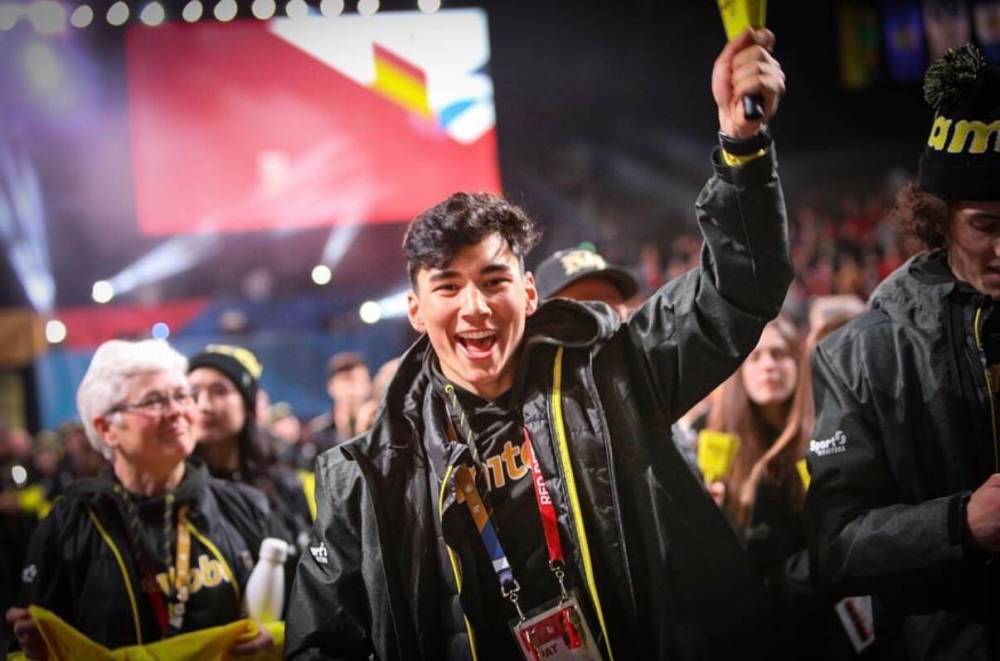
SUPPLIED
Cross-country skier Taschi Klaschka at the 2019 Canada Winter Games in Red Deer, Alta. Klaschka learned to ski with the Red River Nordic Ski Club out of Windsor Park Golf Course.
Klaschka made his World Cup debut in Lake Placid this March, finishing 62nd in the men’s sprint qualification, 15.82 seconds behind the winner in a deep international field.
He said that while Winnipeg may not be a traditional skiing hub and the conditions can be harsh, the environment helped shape his work ethic and development as a skier.
“It’s pretty funny to tell people, ‘Oh, I’m from Winnipeg, and I’m a skier,’ and they’re like, ‘Why the hell would you ever do that there?’” Klaschka said.
Klaschka said that, growing up, he wasn’t immediately drawn to cross-country skiing. Winters in Winnipeg meant cold, abrasive snow conditions that offered little glide, turning every session into a grind.
“It’s such a small, niche sport, but it’s cool. It’s pretty big in Canada, actually,” said Klaschka. “Like there’s thousands and thousands of people that race at nationals. But in Manitoba it’s super small — even Saskatchewan is bigger than us.”
“My grandpa was just like, ‘I need to get this kid on skis.'”
Still, the sport found him early. His triathlete grandfather, Gunther, introduced him to cross-country skiing as a kid.
Klaschka said that proved to be an advantage, explaining that cross-country skiing is similar to ice skating in that starting young is key to developing high-level technique.
“Basically, my grandpa was just like, ‘I need to get this kid on skis,’” he said. “You can definitely notice who grew up on skis and who didn’t.”
While Saturday morning training sessions were sometimes a struggle, Klaschka said his interest in the sport grew as he moved into bigger competitions, including the 2014 Manitoba Winter Games in Winkler and the 2019 Canada Winter Games in Red Deer, Alta.
“As young as the Manitoba Games, I might have been 12, and you know you just kind of have that spark,” Klaschka said. “It’s hard to describe to people who haven’t had that experience, the light switch kind of ticks on in your brain.”
That “light switch” moment eventually led Klaschka to British Columbia, where he attended a ski academy in high school in the fall of 2018, splitting time between schoolwork and training.
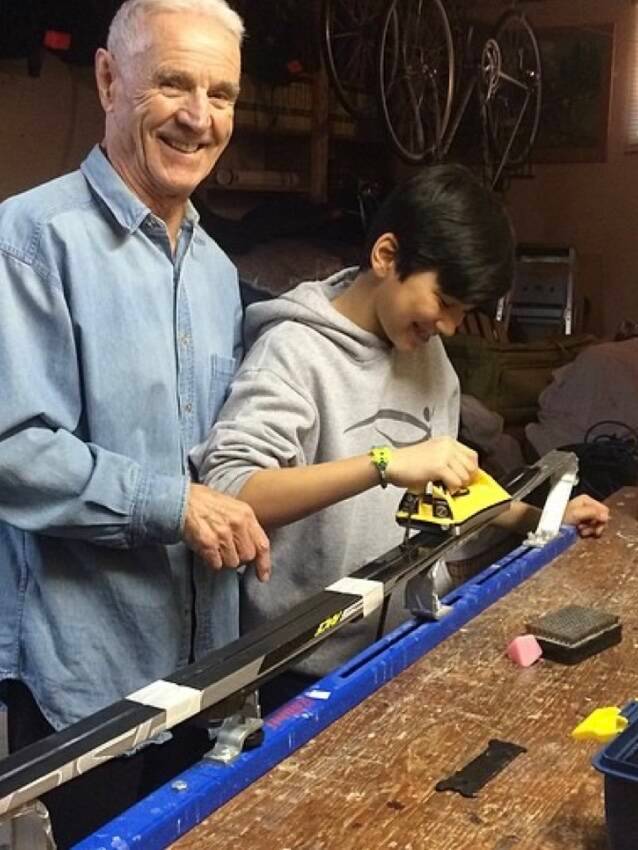
SUPPLIED
A young Taschi Klaschka with his grandfather, Gunther. Klaschka credits his grandfather for getting him on skis as a youngster.
After graduating, he took a gap year before heading to the University of New Hampshire in the United States, where he raced in Division I skiing.
Alongside his athletic career, Klaschka also pursued academics with an eye toward medicine, studying biochemistry and completing prerequisites for medical school.
He spent time training in Europe, including stints in Norway and Switzerland, immersing himself in the European approach to the sport.
“The light switch kind of ticks on in your brain.”
Throughout it all, Klaschka said he was often thinking about how to bridge the gap to the World Cup level.
The call from Team Canada finally came a week before the races started.
“For the World Cup, there’s six spots,” Klaschka explained. “And the way it works is you gain a certain amount of points, like a world ranking throughout the year, throughout the races. And so I realized in mid-late January that I was getting a little close because I’d been racing pretty well in Norway, not results-wise but points-wise.”
He said the level in Norway is so deep that even mid-pack finishes there translate into strong international standing, noting that a result like 38th would often rank among the best in Canada or other countries.
World Cup starts are allocated through national quotas and FIS points earned in sanctioned races, where athletes are ranked based on time behind the winner. Lower scores indicate stronger performances and skiers from traditional “snow nations” often need higher rankings to qualify.
When Klaschka found out that he made the team, he said the outpouring of Winnipeg support was immense.
“I had like 40 messages, 30 messages of skiers I kind of knew of growing up who were way older than me, or skiers that were younger than me, and some around my time as well that were like, ‘Oh, this is huge for Winnipeg, like this is so crazy to see, like, we’re really happy for you.’”
In general, Klaschka added that the “Friendly Manitoba” saying has rung true throughout his career.
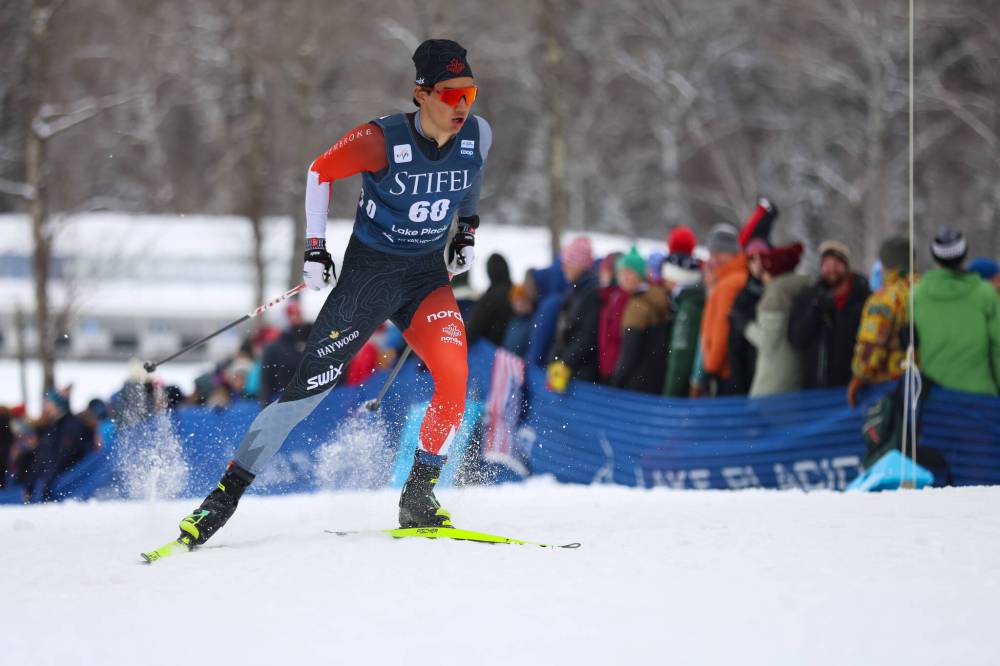
Matan Coll Photo
Winnipeg’s Taschi Klaschka made his FIS Cross-Country World Cup debut back in March at Lake Placid.
“Any person you meet outside of Winnipeg who says they’re from Winnipeg, like automatic friends, no matter where you are in the world,” he said.
For the World Cup competition itself, Klaschka said the experience was “awesome.”
“I couldn’t even hear myself think,” he recalled of the crowds. “I felt like I was in the (Winnipeg) Jets arena, it was so loud going along the course. Even in warmups, I couldn’t hear my music through my AirPods.”
The next step for Klaschka is building toward the World Cup in Sweden in 2027.

“Any person you meet outside of Winnipeg who says they’re from Winnipeg… automatic friend.”
Now back in B.C., winter conditions still linger in parts of the province. But as the snow disappears, his training shifts onto roller skis — poles striking pavement in place of snow. It’s a common method in Europe, though less so in Canada. In Winnipeg, he joked, it’s nearly impossible, pointing to potholes as the real obstacle, with Birds Hill Park often the only workable option.
Soon, that training will shift again. At the end of July, he heads to Norway for a year to train full-time with a European team, stepping into one of the sport’s deepest environments in pursuit of another jump forward.
“Now I’m 23, I’ve reached this level, and I still want more,” Klaschka said. “I still want an Olympic medal. And people are like, ‘Don’t you want to go to school, don’t you want to get a career?’ And of course I do — it’s in the back of my mind — but I have this desire I guess that I’m willing to put everything else on the line for this one goal.”
winnipegfreepress.com/zoepierce