Queue up the World Cup ‘winner’s curse’ All signs point to Argentina joining list of defending champs crashing out in group play
Read this article for free:
or
Already have an account? Log in here »
To continue reading, please subscribe:

Digital Subscription
One year of digital access for only $205*
- Enjoy unlimited reading on winnipegfreepress.com
- Read the E-Edition, our digital replica newspaper
- Access News Break, our award-winning app
- Play interactive puzzles
*First annual payment billed as $205.00 + GST for one year. This annual subscription will automatically renew at $233.00 + GST every 52 weeks (10% off the regular annual price of $259.35). Offer available to new and qualified returning subscribers only. Cancel any time.
To continue reading, please subscribe:
Add Free Press access to your Brandon Sun subscription for only an additional
$1 for the first 4 weeks*
- Enjoy unlimited reading on winnipegfreepress.com
- Read the E-Edition, our digital replica newspaper
- Access News Break, our award-winning app
- Play interactive puzzles
*Your next Brandon Sun subscription payment will increase by $1.00 and you will be charged $17.95 plus GST for four weeks. After four weeks, your payment will increase to $24.95 plus GST every four weeks.
Read unlimited articles for free today:
or
Already have an account? Log in here »
In 2010, four years after ascending the podium in Berlin, Italy fell flat on its face in Mbombela, South Africa.
Six days earlier, it had drawn Paraguay 1-1 to open its title defence. Not ideal; but not a disaster, either. It was only after the Azzurri was forced to come from behind to take a point off New Zealand that something seemed awry.
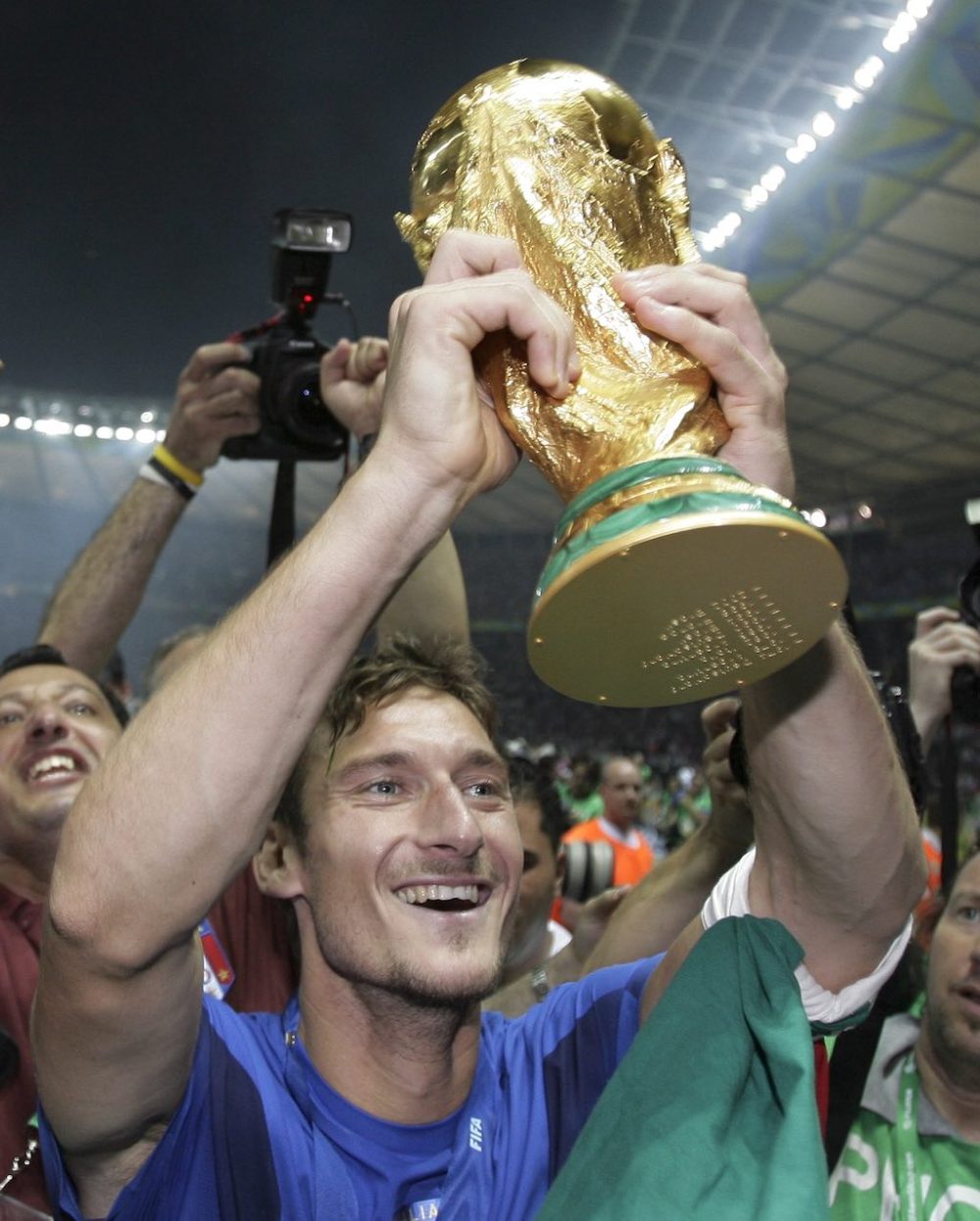
Italy's Francesco Totti lifts the World Cup trophy after defeating France in 2006. The Italians would fail to defend their title in 2010.
A 3-2 defeat to Slovakia in Johannesburg sealed the reigning champion’s last-place finish in Group F. Italy would also fail to come out of its group in 2014 — its last World Cup appearance.
It’s an extreme example, but it underlines the folktale of the “winner’s curse.” Argentina, champion in 2022, will surely be aware of it and preparing whatever charms, spells and strategic tweaks it has at its disposal to break the hex in 2026.
None of it may matter. If anything, the Albiceleste is uniquely vulnerable.
Back at that 2014 tournament, where Italy lost to both Costa Rica and Uruguay, World Cup holders Spain defended the trophy for exactly two matches — a span of five days — before bowing out at the group stage.
In the post-mortem, midfielder Xabi Alonso told reporters that he and his teammates had been mentally and physically unprepared to go back-to-back.
“We weren’t able to maintain the same ambition and hunger, that real conviction that we were going to go for the title,” he said.
“We weren’t able to maintain the same ambition and hunger, that real conviction that we were going to go for the title.”
Alonso had been 28 years old when Spain beat the Netherlands 1-0 to win the World Cup in South Africa. He was now 32. Midfield partner Xavi was 34, and playmaker Andrés Iniesta was 30.
The trio had been fundamental to the intricate tiki-taka that dominated the ball in 2010; now they couldn’t keep it.
Besides, the game had changed.
Four years is a long time in football — not only when it comes to players’ ages but also the sport’s stylistic trends.
By the 2014 event in Brazil, a less-predictable dynamism had replaced the perfected passing template of the Spanish.
That 1-0 win in the 2010 final was overturned on matchday one when the Netherlands ripped their rivals apart, romping to a 5-1 triumph.
Germany wound up champion in 2014, but after rejoicing in Rio it came apart in Kazan, Russia. Just like Italy and Spain, Die Mannschaft had not been able to maintain a grip on the World Cup beyond its group.
A four-time winner, it hasn’t played a knockout match since Mario Götze netted the Cup winner at the Maracanã.
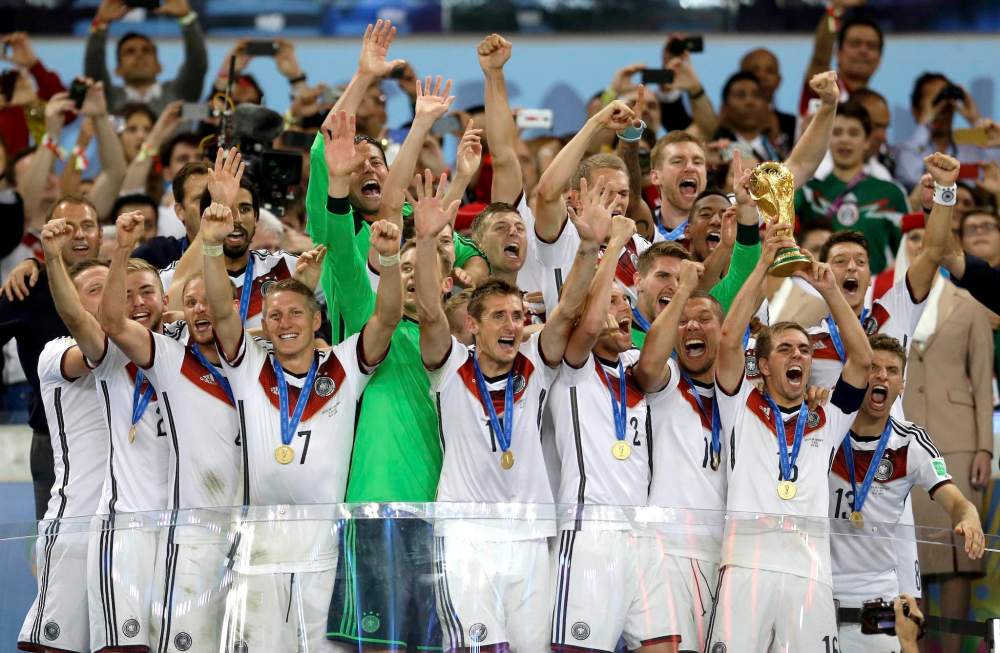
Germany celebrates its World Cup victory over Argentina in 2014.
Carlos Alberto Parreira, who managed the Brazil team that won the 1994 World Cup, thinks the competition is all but impossible to win twice on the bounce.
That previous victory — a monumental achievement, both sporting and cultural — inevitably informs the follow-up team, and to its detriment.
“Once you win the World Cup and go for the next one, believe me, it’s different,” he told The Guardian in the days leading up to the 2022 final in Qatar.
“You keep good players, you keep the name of the country, you have the history behind you, but in the moment you lack something.”
Argentina went on to win that final match, beating France on penalties after a thrilling 3-3 draw at Lusail Stadium.
As a result, it enters the upcoming competition in Canada, Mexico and the United States as reigning champion, and quite at risk of mimicking the most accursed returning winner of them all.
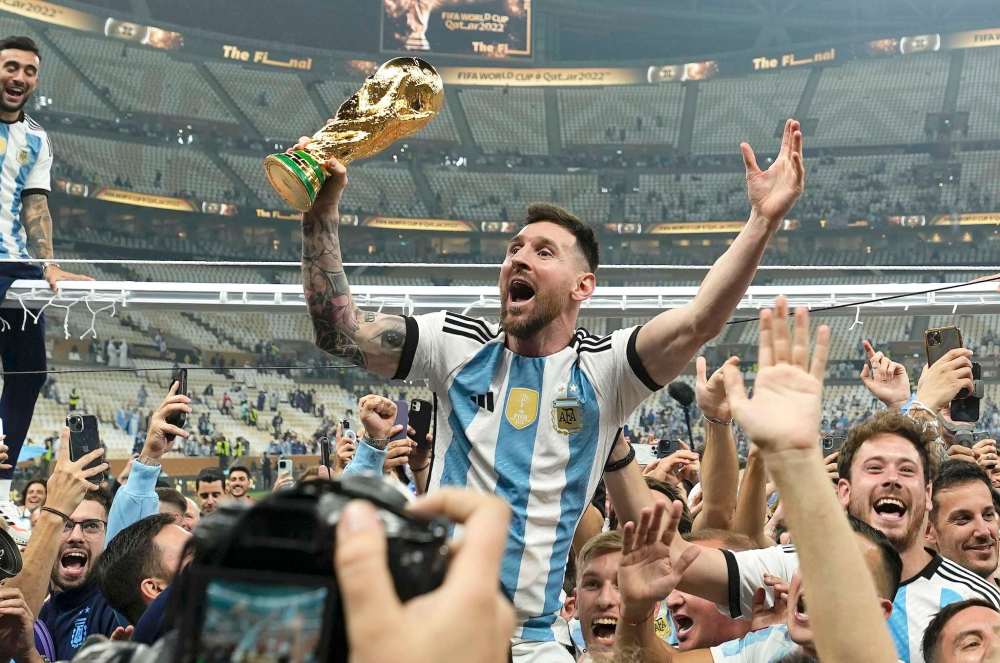
Argentina's Lionel Messi celebrates with the trophy in front of fans after winning the World Cup final in 2022.
Having hoisted the World Cup on home soil in 1998, France kicked off its 2002 campaign with a team that included seven of the starting 11 from the final at Saint-Denis. The entire backline was the same, as was two-thirds of the central midfield. Crucially, Zinedine Zidane was absent through injury.
Les Bleus proceeded to lose its Group A opener to Senegal, and after a scoreless draw with Uruguay it was eliminated by Denmark, despite Zidane’s comeback.
World Cup winners only four years prior, France followed up its victory by failing to score a single goal in Korea-Japan.
Charlie Riedel / THE ASSOCIATED PRESS Argentina superstar Lionel Messi is nursing injuries heading into the World Cup.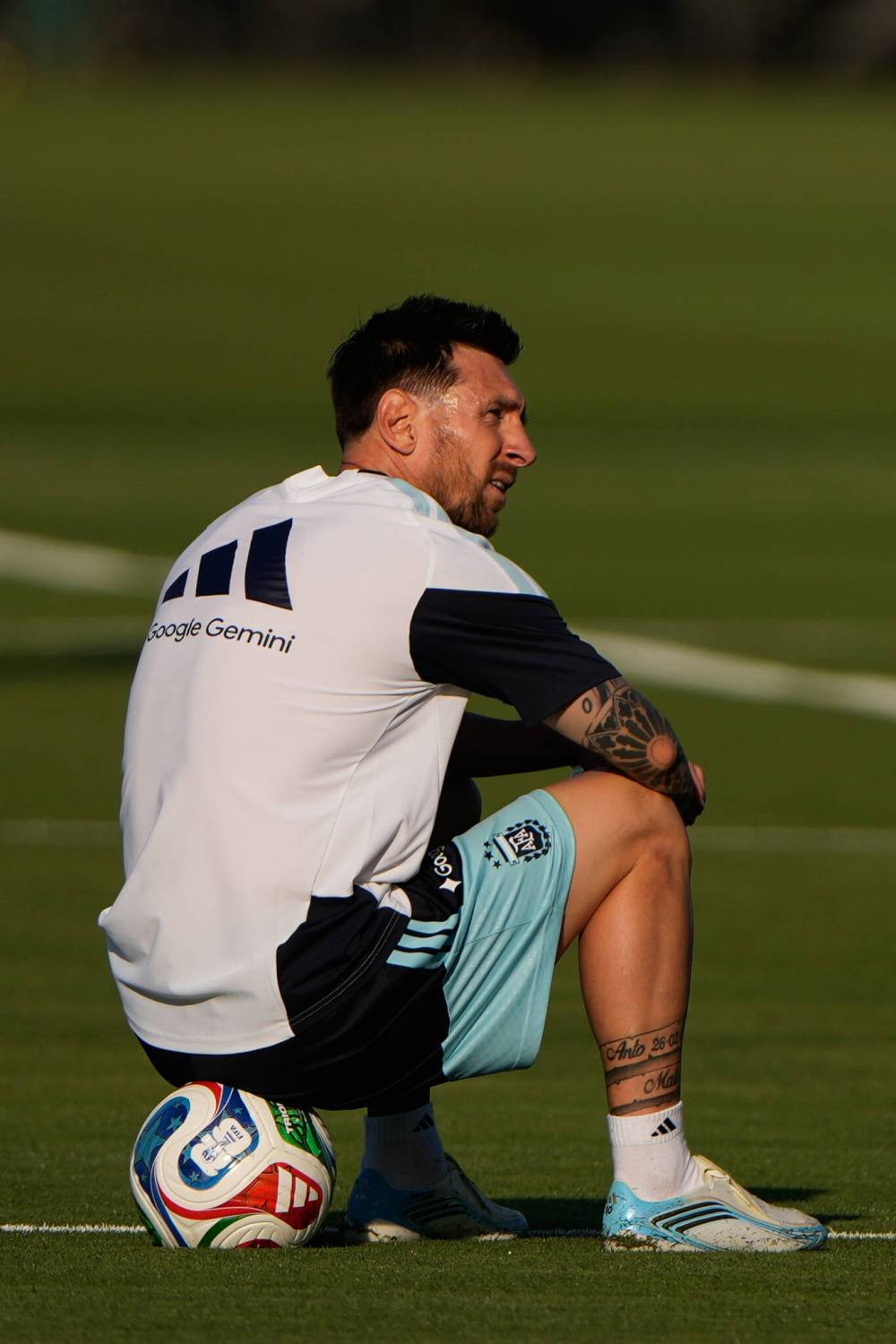
Saturday, Argentina will take on Honduras in a friendly at Kyle Field, home to Texas A&M. The match will be its first since the end of March, when it beat Zambia 5-0.
Unsurprisingly, its starting line-up to face Chipolopolo featured nine of the 11 players who’d begun the 2022 final against France.
All told, more than a third of Argentina’s squad for 2026 is 30 or older, and Lionel Messi will turn 39 in the days between Group J encounters with Austria and Jordan.
Not unlike France in 2002, the South Americans are also about to commence a World Cup schedule with significant fitness issues.
Messi, for one, has been training independently of his teammates as he nurses a tight hamstring. Goalkeeper Emi Martinez has a broken finger. Right-backs Nahuel Molina and Gonzalo Montiel are managing muscle injuries, and defender Cristian Romero has a knee sprain.
Midfielder Nico Paz, who was supposed to represent an up-and-coming generation of Argentine internationals, is seeing a specialist as he tries to speed recovery from a knee injury of his own.
This is not the preparation of the future World Cup winner. If anything, it’s a hospital for treating the last one.
Gustavo Garello / THE ASSOCIATED PRESS FILES World Cup “winner’s curse” or not, Argentina’s manager Lionel Scaloni was never going to omit the team’s big names from four years ago.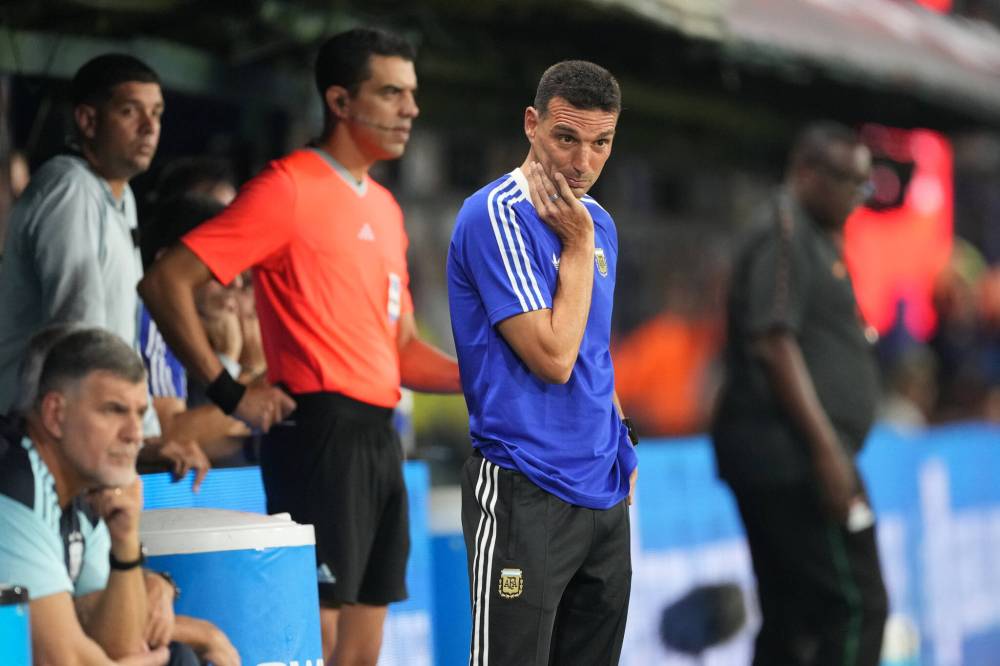
Argentina — perhaps more than any other team at this tournament — will be glad for the expansion to 48 participants and dilution of group stage quality. Even so, it’s hard to see it progressing much beyond the round of 32.
And yet, you can hardly blame it for the decisions it’s taken.
Manager Lionel Scaloni was never going to omit Messi, Martinez, Molina, Romero, Rodrigo de Paul, Nicolás Otamendi and all the other figures from four years ago.
Perhaps the World Cup winner’s curse is less a matter of bad magic than inevitability.
winnipegfreepress.com/jerradpeters
Our newsroom depends on a growing audience of readers to power our journalism. If you are not a paid reader, please consider becoming a subscriber.
Our newsroom depends on its audience of readers to power our journalism. Thank you for your support.
Related Articles
Brazil right back Wesley is out of the World Cup with a thigh injury, and Éderson is replacing him