Call for managed homeless camp gets rough ride at city hall Mayor says building more housing way to go
Read this article for free:
or
Already have an account? Log in here »
To continue reading, please subscribe:

Digital Subscription
One year of digital access for only $205*
- Enjoy unlimited reading on winnipegfreepress.com
- Read the E-Edition, our digital replica newspaper
- Access News Break, our award-winning app
- Play interactive puzzles
*First annual payment billed as $205.00 + GST for one year. This annual subscription will automatically renew at $233.00 + GST every 52 weeks (10% off the regular annual price of $259.35). Offer available to new and qualified returning subscribers only. Cancel any time.
To continue reading, please subscribe:
Add Free Press access to your Brandon Sun subscription for only an additional
$1 for the first 4 weeks*
- Enjoy unlimited reading on winnipegfreepress.com
- Read the E-Edition, our digital replica newspaper
- Access News Break, our award-winning app
- Play interactive puzzles
*Your next Brandon Sun subscription payment will increase by $1.00 and you will be charged $17.95 plus GST for four weeks. After four weeks, your payment will increase to $24.95 plus GST every four weeks.
Read unlimited articles for free today:
or
Already have an account? Log in here »
The mayor and council were advised Thursday that Winnipeg could bring “order out of chaos” on the homeless front by spending $2 million annually for three years on a managed encampment.
“Winnipeg cannot afford the cost of doing nothing,” said Marion Willis, executive director of St. Boniface Street Links.
She told councillors they have a choice: continue spending money on emergency services to manage “chaos” or invest in a long-term solution.
MIKAELA MACKENZIE / FREE PRESS FILES Marion Willis is executive director of St. Boniface Street Links.
“Something has to give here. All we need to do is agree that there is a way to invest to bring order out of chaos… you have nothing to lose and everything to gain.”
Willis, who said there’s a “vast wasteland of despair in the city,” told council that about $1.5 million to $2 million annually over the next three years would be enough to operate a managed encampment — a model she says she’s developed after witnessing Halifax’s response to its homeless crisis.
However, Mayor Scott Gillingham maintained the city’s resources should focus on building more housing, not creating a sanctioned encampment.
“A managed encampment is not going to be the panacea that people think it is,” Gillingham said. “And so I maintain my position — our focus, our energies need to go into getting housing built.”
Willis told council if they decide to pursue the idea, the groundwork has been done. She has identified a potential site near the former boat launch by the Louise Bridge, along with a second option on vacant industrial land at 764 Main St., north of the Higgins Avenue underpass.
“Something has to give here. All we need to do is agree that there is a way to invest to bring order out of chaos… you have nothing to lose and everything to gain.”
Willis argued every dollar invested in a managed encampment would generate savings by reducing demands on paramedics, police and other public services.
She later clarified the annual operating cost could come in at $800,000, based on last year’s estimates, although that figure did not account for the sharp increase in fuel prices.
Gillingham, however, said the city invests heavily in supports, including 24/7 safe spaces, and even provides Street Links with a building to operate one of its housing options.
MIKE DEAL / FREE PRESS FILES Winnipeg Mayor Scott Gillingham
He noted Willis was the only outreach agency to appear before council Thursday, suggesting there isn’t broad support in the sector for a managed encampment. Other organizations have said funding such a site could come at the expense of outreach programs.
Gillingham said a managed encampment would not be large enough to accommodate the entire homeless population and pointed to Street Links’ own success housing roughly 2,500 people over the past 52 months — at an 80 per cent retention rate — as evidence that progress can be made without one.
“We’re going to put our focus and our energy into building housing,” Gillingham said. “Most, if not all of the services, individuals need that are currently unhoused are provincial services. So the province has indicated they are not interested in funding the managed encampment site. I’m going to say that the City of Winnipeg should be prudent and it spend our focus on helping the province get more housing built.”
Willis said it would take little effort for the city to set up a camp.
“We’re going to put our focus and our energy into building housing.”
“This is all municipal land we are looking (to use). It’s the municipality that picks up the garbage. That’s what’s required from the city: land and those types of services. Maybe a partnership with Manitoba Hydro to hook up the power. It’s not a huge undertaking.”
Later, council rejected a motion by Coun. Cindy Gilroy (Daniel McIntyre) that would have directed the public service to identify designated encampment sites across the city. They would have public washrooms and garbage facilities while a managed encampment would include multiple resources.
Gilroy told council the city needs to find somewhere for the homeless to go.
“We need to have a plan as a city,” she said, adding that the city should be proactive, not reactive.
Mike Sudoma / Free Press Files A site near the former boat launch by the Louise Bridge has been identified as a potential location for a managed encampment.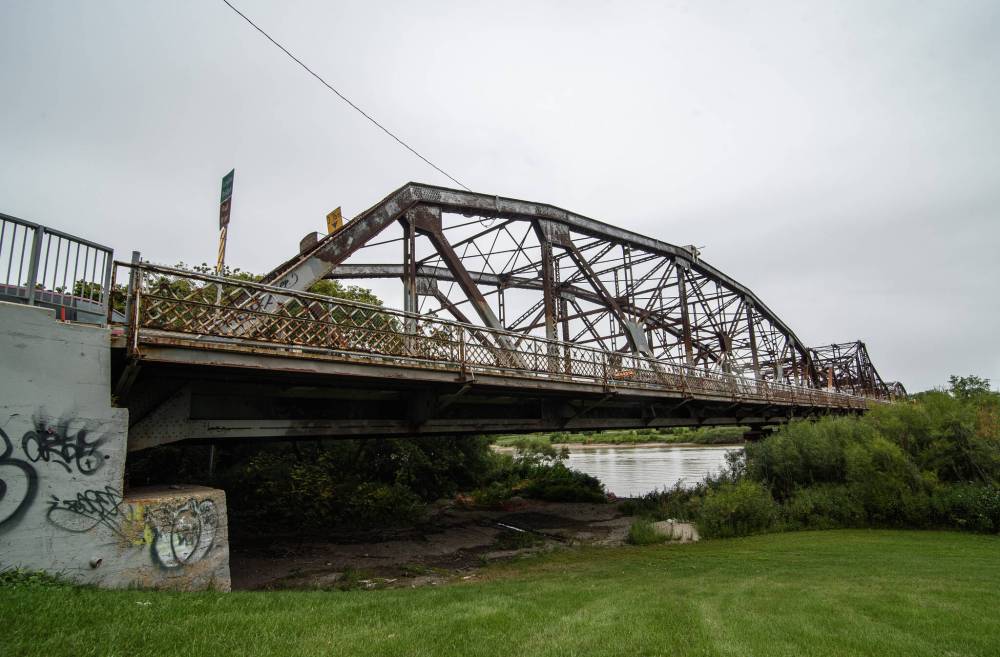
Coun. Ross Eadie, who voted against the motion, backed Willis’s plan, saying he believes in a managed encampment that would lead to housing.
Eadie said such a plan would make it easier for organizations to keep track of the homeless, with fewer being shuffled around. Eadie admitted the city doesn’t have the money to enact Willis’s plan, and said it would require provincial input.
Coun. Emma Durand-Wood, who was one of the four who voted in favour of Gilroy’s motion, said the cost of not acting is being “paid by us all.”
scott.billeck@freepress.mb.ca


Scott Billeck is a general assignment reporter for the Free Press. A Creative Communications graduate from Red River College, Scott has more than a decade’s worth of experience covering hockey, football and global pandemics. He joined the Free Press in 2024. Read more about Scott.
Every piece of reporting Scott produces is reviewed by an editing team before it is posted online or published in print — part of the Free Press‘s tradition, since 1872, of producing reliable independent journalism. Read more about Free Press’s history and mandate, and learn how our newsroom operates.
Our newsroom depends on a growing audience of readers to power our journalism. If you are not a paid reader, please consider becoming a subscriber.
Our newsroom depends on its audience of readers to power our journalism. Thank you for your support.