Care beyond compare Long-held core values of openness, inclusion, empathy set Convalescent Home apart from the personal care home pack
Read this article for free:
or
Already have an account? Log in here »
To continue reading, please subscribe:
Digital Subscription
One year of digital access for only $1.44 a week*
- Enjoy unlimited reading on winnipegfreepress.com
- Read the E-Edition, our digital replica newspaper
- Access News Break, our award-winning app
- Play interactive puzzles
*Billed as $5.77 plus GST every four weeks. After 52 weeks, price increases to the regular rate of $19.95 plus GST every four weeks. Offer available to new and qualified returning subscribers only. Cancel any time.
To continue reading, please subscribe:
Add Free Press access to your Brandon Sun subscription for only an additional
$1 for the first 4 weeks*
- Enjoy unlimited reading on winnipegfreepress.com
- Read the E-Edition, our digital replica newspaper
- Access News Break, our award-winning app
- Play interactive puzzles
*Your next Brandon Sun subscription payment will increase by $1.00 and you will be charged $17.95 plus GST for four weeks. After four weeks, your payment will increase to $24.95 plus GST every four weeks.
Read unlimited articles for free today:
or
Already have an account? Log in here »
Life in a personal care home isn’t something many dream of. In fact, these days, it’s more common to dread the idea.
Manitoba has 124 licensed care homes. Some have been criticized for substandard care, chronic understaffing and depressing meals, or flagged for neglect, abuse and lack of transparency.
Though there are provincial standards in place, there is little consistency among them. More than a few are evasive, unwilling to communicate about issues of importance to residents and their families.
So, imagine finding a care home determined to do it right.
The Convalescent Home of Winnipeg is Manitoba’s oldest licensed personal care home and also one of Canada’s top-rated facilities.
That’s right, it’s old and award-winning.
The non-profit home was recognized as the top senior home care provider in North America last year and as the top senior personal home care services provider in Canada this year by Elder Care Review magazine.
The home, which celebrated 120 years of existence this year, doesn’t shy away from questions or the media spotlight. In fact, they put themselves out there. In the last few years there have been stories published about their history, their awards and about a resident turning 110.
MIKE DEAL / FREE PRESS The Convalescent Home is one of Canada’s top-rated senior personal care homes.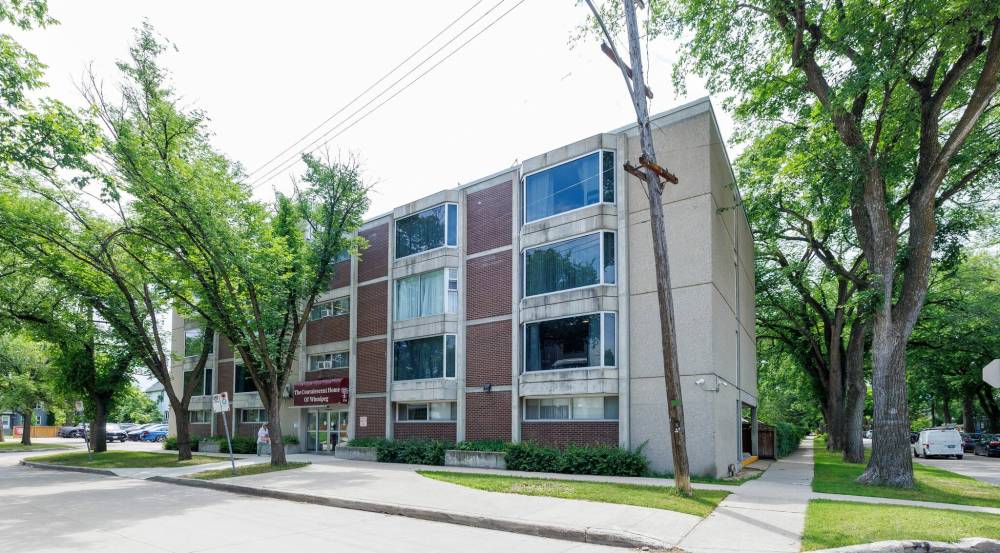
The home appears to be onto something. And if you want to ask about anything, please do. They may even invite you to one of their events, or in for a cup of tea.
Staff, residents and families are forthcoming and willing to answer all questions. And if they don’t know the answer, they find someone who does. They’re open and eager to let people know about their special place, which for all of them is not a facility, but a home. The care runs deep.
Like the residents that live there, the building is older, and has a few challenges and limitations, but it’s rich in important history, meaningful stories and life lessons. It’s not a place to go to die. It’s a place to go to continue living.
The entrance opens to an abundance of comfortable seating, welcoming visitors and encouraging interaction. There’s an eclectic mix of art on the walls that draws the eye upwards. Wall-length windows in a number of rooms bring the outside in, making each area appear spacious even when it isn’t.
The dining room, with an expansive floor-to-ceiling window, allows residents and guests to appreciate the outdoor courtyard, meticulously maintained and decorated with patio umbrellas and ornaments, including a cheerful pair of kitschy geese adorned in bright yellow outerwear.
Along the window, a row of little pots of garden goodies planted by residents promises to bring at least a little harvest. A few feet away sits a small section for potted tomatoes.
Jessie and Hugo, the two floppy-eared rabbits named after the home’s cross-street intersection, receive ample attention from residents and visitors alike. An integral part of the facility’s family, when they’re not being cuddled, they rest in their multi-level cage in a central location for everyone to meet and greet.
“We do have something special.”
There are plenty of music programs, visiting choirs and parties for every occasion.
All faiths are welcome, and faith-based programming is provided for a few denominations.
In addition to the usual bingo and card games, this summer, residents can get a henna tattoo and learn about wildlife, famous Canadians and the country’s national parks.
The Convalescent Home doesn’t look like your average nursing home, but more like an apartment building.
Located just a short walk south from the bustling Corydon strip, its presence in the neighbourhood doesn’t go unnoticed, with its annual block party, neighbours walking their dogs and greeting residents, and schoolchildren dancing at the window to brighten everybody’s day.
The structure and the people in it are a big part of the heart of the community.
Staff will tell you that aging is not viewed as a disease but as a normal, natural part of life, and that people have lots to offer, no matter how old they are. Maybe that’s why the residents appear content.
“We do have something special. We have a lot of gems here, but we are definitely not perfect,” says Justin Lagace.
“Ninety per cent of our challenges are the infrastructure of the building, and we haven’t been able to invest in that,” he said, referring to an aging structure built in the early 1960s, which continues to need repairs.
A nurse by profession, Lagace began his career at Health Sciences Centre before moving over to the Convalescent Home in 2012, first as clinical co-ordinator, then in a nursing educator role. On June 12, he became CEO and director of care.
MIKE DEAL / FREE PRESS CEO Justin Lagace joins Pauline Kolbuck, who turned 101 in May, for tea and a visit. The staff’s mission is to treat all residents like family.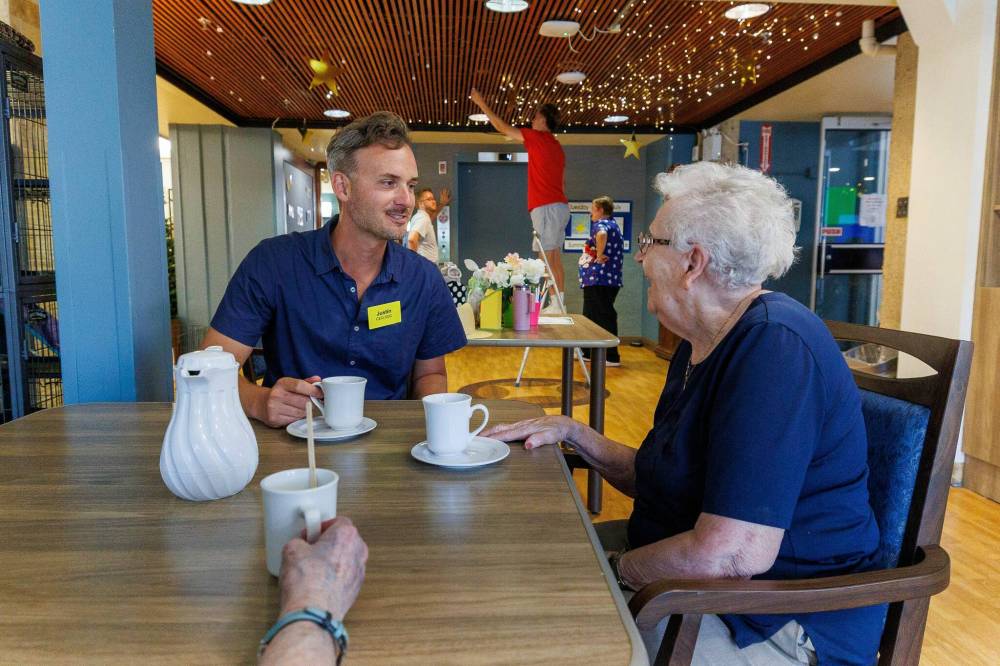
“I love it — the work culture, how we treat each other. I would say it’s adjacent to a family member, and that transmits to residents,” he says.
“If you treat staff well, they will treat the residents well,” Lagace continues. “We are not defined by our titles. Personally, I don’t like the title of CEO; it sounds too official. It’s very common to see the housekeeper dancing with the recreation staff as part of an event, or the CEO feeding a resident at lunchtime.”
For Lagace and his team, there’s a deeply ingrained philosophy at work, with core values visibly lived out every day by employees.
“Humanity — you lose that when you try and be too institutional,” he says.
“This is a home. If we treat it like a hospital then people will feel like it’s a hospital,” he says, adding that when orienting new staff, the No. 1 instruction is that dignity remains at the heart of everything they do.
“We really hammer that home. If you wouldn’t appreciate it in your home, you don’t want it here. That’s our model: this is the residents’ home first. We are guests here to make sure they get all their needs met, but beyond their basic needs, there’s also human contact and socialization.”
“Humanity – you lose that when you try and be too institutional.”
With a staff of 37 full-time and 111 part-time employees, the Convalescent Home is home to 84 residents when at capacity.
The four-storey building has 12 private rooms, six rooms with two beds, and 15 with four beds — the highest number of quad-shared rooms for personal care homes in the province, a reflection of the building’s age.
With no funding for capital projects, staff have been doing all they can to raise money for improvements to the quad-shared rooms so they can install physical cabinetry dividers as opposed to existing curtains.
Their Rooms to Thrive fundraising project is actively seeking donations to improve those spaces and has made considerable progress, though it still has a way to go to reach their objectives.
But despite that shortcoming, the home still manages to garner recognition and accolades from everyone associated with it. And for Lagace, it all comes back to the word “home.”
“Our care is based on dignity, love, socialization, family.”
“I think about what I would want in my home; I think about dignity, I think about safety, I think about care, and love, and then I think about the circular nature of how humans interact with each other,” he says.
“I think about our staff, residents, family members and community and how all those things are interconnected. We are not trying to treat illness. We are trying to treat loneliness and other things. The medical model is not central to our care here, though it is certainly part of it. Our care is based on dignity, love, socialization, family.
“Nobody wants to end up in a personal care home,” he continues.
“The reality is that some people do need higher levels of care. If we can’t keep people at home, we need to look at a model that is not based on institutions, but based on this idea of home. Putting humans into a big facility, that’s a hospital model, not a long-term care model.”
Lagace admires the village model of care delivery, smaller clusters where each home has a nurse, some health-care aides, centralized religious services, and even a movie theatre.
“The care gets better the more the staff knows the individual. Instead of scaling it up to 300 beds like big institutions, scale it down as small as you can.”
Pauline Kolbuck celebrated her 101st birthday in May, and has been at the home for two-and-a-half years. She speaks four languages and says she feels blessed to still have her memory, hearing and sight.
“I feel very comfortable here. I have all the activities to do, lunch together with others — I’m very happy here,” says the mother of two. She was much more lonely when she lived alone in an apartment.
MIKE DEAL / FREE PRESS Kolbuck says the home, at Hugo Street and Jessie Avenue, is the perfect place for seniors to live.
Kolbuck gets teary-eyed when speaking about a favourite activity. She and her husband had a treasured garden many years ago. People would drive by their home, stop to admire their flowers, and ask to buy bouquets. Recently, she had the opportunity to grow flowers again, this time for the Convalescent Home’s courtyard.
“That feeling when I was planting flowers… I put my hands in the ground. How it touched my heart,” Kolbuck recalls emotionally.
MIKE DEAL / FREE PRESS Bingo is one of Margaret Ward’s favourite activities. 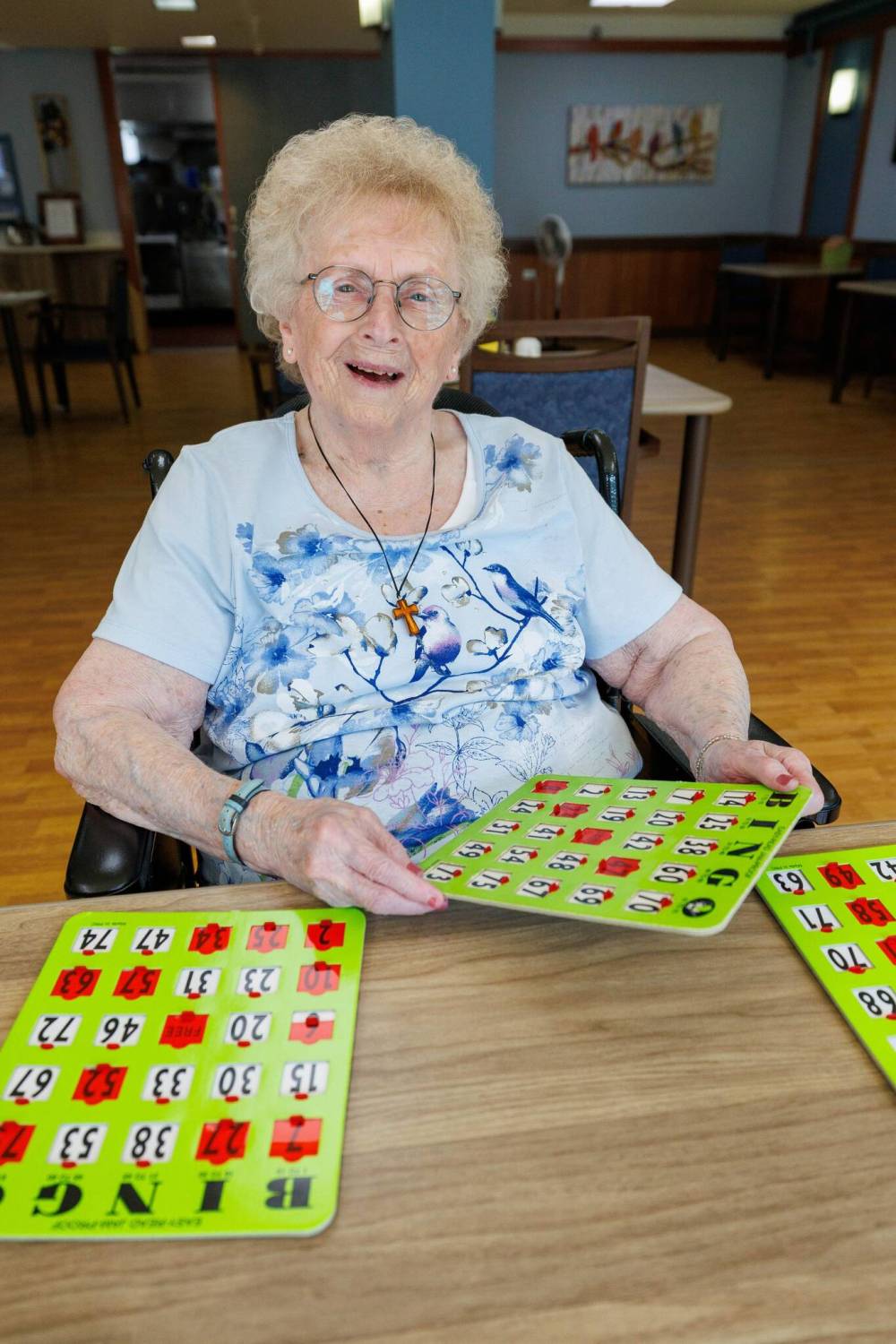
Margaret Ward, 88, has six children, 10 grandchildren and 24 great-grandchildren. She’s been at the home for nine years.
The self-described night owl likes to stay up late and looks forward to breakfast in bed. She enjoys a hearty meal consisting of porridge, prune juice, toast, an egg and half a banana.
“I can’t complain. I don’t feel like I’m in a nursing home. I sleep in. I have my own room — I do what I want. All the staff is at your beck and call,” says Ward, who enjoys music and writing her memoirs.
The two women consider themselves lucky for finding the home. They delight in the many activities offered and especially enjoy outings, like a recent visit to The Leaf and the Assiniboine Park Zoo. They look forward to a country road trip in the fall before harvest.
Nourishment comes in many forms, and the Convalescent Home prides itself on making fresh food on-site while following a four-week rotating menu cycle that is strongly influenced by residents’ feedback.
“This input helps guide future menu planning and ensures residents continue to see meals they enjoy,” said Sarah Canicula, director of food services.
MIKE DEAL / FREE PRESS Food service director Sarah Canicula says meals are often based on feedback from residents.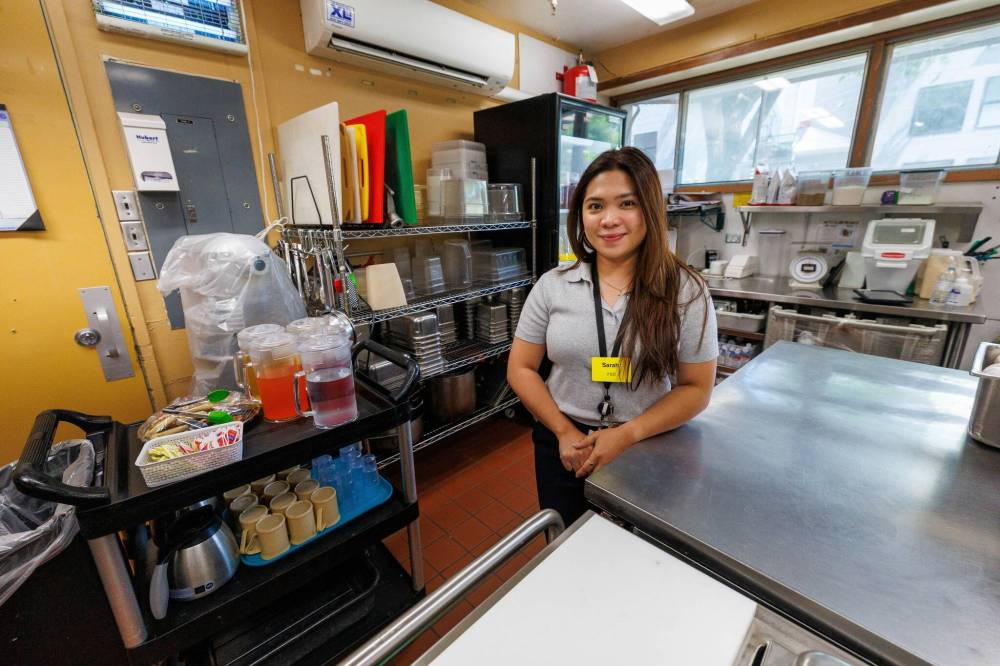
Residents particularly enjoy homemade creamy soups, the cream of mushroom being a favourite. Mediterranean fish fillets and maple-glazed salmon have also been popular, along with hearty, home-style stews. Fresh fruit is offered daily and is included as part of regular meals and as a snack option.
“Our experienced lead cook and kitchen team take pride in preparing meals that are both flavourful and visually appealing,” says Canicula, adding that taste-testing occurs for all diets to ensure quality and consistency.
The home strives to stay current with dietary trends and actively looks for ways to accommodate plant-based preferences. Their menu includes a variety of legumes and beans, and ensures residents have access to vegetarian and vegan options.
“We are a small home that takes pride in providing high-quality, home-cooked meals,” she says.
“We call us the TCHW family because it doesn’t matter what position you hold, everyone is valued as an important piece of what makes our home so amazing,” recreation director Jennifer Russell says.
With a team of facilitators, recreation staff members work collaboratively to come up with new ideas on how to improve existing programs, or create new ones based on resident input.
Big celebrations like the Mother’s Day Tea, Father’s Day Classic Car Show, Christmas events and the Halloween Bash are the most popular.
This summer, a camp week was offered with outdoor-themed programming. August will see Folklorama at the home. Daily programming includes favourites like balloon badminton, giant crosswords and manicures.
“We always want to have something super-exciting to look forward to every month,” Russell says.
MIKE DEAL / FREE PRESS Recreation director Jennifer Russell examines some of the tie-dyed shirts residents made during a recent activity session.
But activities are about much more than fun and games. Recreation workers focus on the five dimensions of wellness: physical, emotional, social, cognitive and spiritual.
“Our sit-and-stretch exercises strengthen muscles that help maintain a resident’s ability to self-transfer, which in turn helps keep their independence,” Russell explains.
“Jeopardy! and other trivia (games) help keep their minds active and also promote lifelong learning. One-to-one visits from our team help reduce social isolation and foster meaningful relationships.
“Recreation is the freedom to enjoy life at all stages of aging, and our team makes sure that our residents feel heard, cherished and respected, all the while having fun.”
For health-care aide Jackie Goundry, who has worked at the facility for 17 years, residents and co-workers make coming to work an absolute joy.
“We are a family,” she says, noting that staff celebrate the good times and mourn the bad times together.
Though the work of aides can be challenging, Goundry says she and her colleagues are well supported.
MIKE DEAL / FREE PRESS Health-care aide Jackie Goundry gives Margaret Ward’s nails a fresh coat of nail polish. Highly personalized care is one of the reasons why the Convalescent Home is one of Canada’s top-rated personal care homes.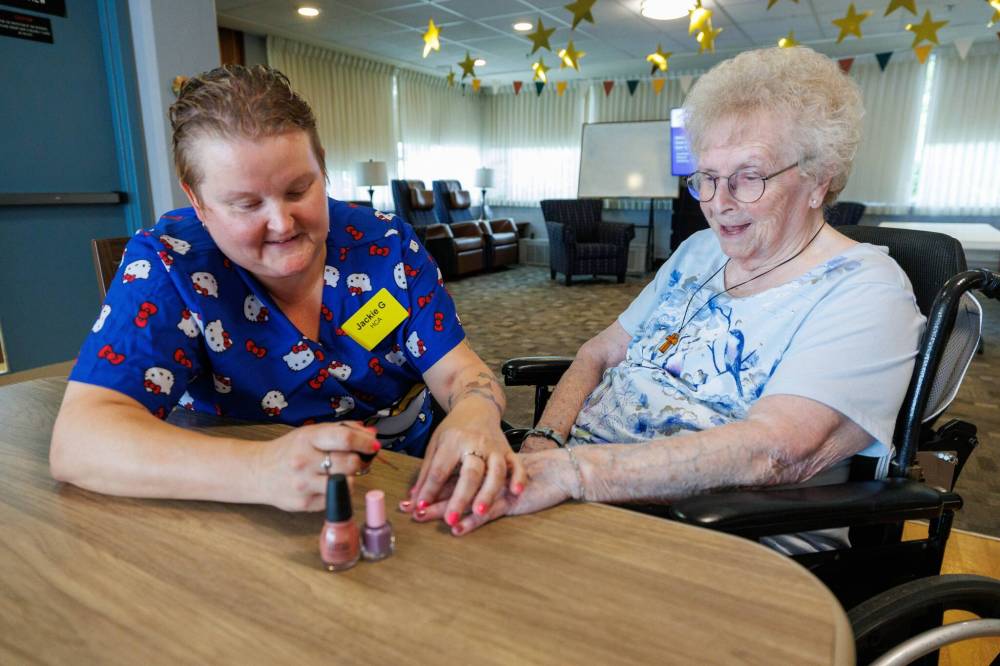
“We can go to the nurse if we have a question or issue, and we resolve it swiftly. The door to the CEO and the assistant director of care are always open if we need to ask a question, have a concern, want a quick chat or tell a good joke.”
There are about 80 health-care aides at the home, from full-time to casual. The staff-to-patient ratio is 1:7, and each floor has 28 residents. To ensure comfort, residents can request female or male staff members to assist with personal care.
“We go above and beyond to make everyone feel heard, appreciated and cared for. And there is always lots of laughter and the occasional dance number at any given time.”
While being a primary caregiver for her parents, Sherry Heppner witnessed the challenges in personal care homes and how they impacted residents.
After a long career in financial services, she decided to go back to school at age 50. She attended Red River College Polytechnic and received certification as a therapeutic recreational facilitator for older adults.
In 2015, she began working at the home and, now at 67, the development co-ordinator keeps up an impressive pace with passion and enthusiasm. Heppner lives in the neighbourhood, walks to the home and revels in arriving at work.
“You open the doors and you get a different feel – it’s warmth, it’s not institutional.”
“You open the doors and you get a different feel — it’s warmth, it’s not institutional. There’s a feeling, an emotion, there’s a pulse, there’s love — you feel welcomed and safe, you feel that people care about you,” she says.
“We see firsthand the realities that many Manitoba families face as they support loved ones living with dementia and other age-related challenges. We also witness remarkable moments of connection, resilience, humour and dignity every day.”
Heppner says aging puts us in touch with our own mortality, which is not always easy for family and friends to talk about.
“There needs to be a shift in the mindset. We should be planning for our future. There’s nothing to prepare us for how the system works. We need to have those conversations with our family.”
Like Lagace, Heppner believes in person-centred care as opposed to traditional institutional designs.
“Our residents teach us daily that life continues to hold meaning, purpose and joy. ”
“What you need are people who are qualified to provide care. Some residents do require medical care, some just need assistance, somebody to provide that friendship, a person that can show care, show love, patience and understanding and be able to dance and laugh and hug, and treat them as people. We are a big hugging group here.”
Heppner’s list of tasks is long, as she works to find the resources to get a new boiler, fix the roof, remodel the kitchen and improve the quad rooms — and those are just the highlights. In the meantime, she delights in the people she sees every day.
“Our residents teach us daily that life continues to hold meaning, purpose and joy. They face each day with remarkable resilience, finding happiness in the smallest moments and pleasures. It is a perspective that has had a profound impact on me, reminding me to reflect on what is truly important in life.”
Maureen Hopkinson lives with Alzheimer’s disease and has been a resident at the home for two years. Her husband, Terry Hopkinson, said she didn’t go in easily.
“She went in there fighting, biting and scratching,” says Hopkinson, who lives in an assisted-living facility.
“To this day she’d still like to be with me, but we need different kinds of help. She’s warmed up to the place. They’ve been very good to her. She was in a four-bed room — they got her into a two-bed room. Everybody there knows her, right from the CEO to the (health-care aide) on the floor, even the chef. That’s the thing about the Convalescent Home. They know everybody. They know what they need.
“They communicate extremely well with me. If there’s any issues, we know what’s going on.”
MIKE DEAL / FREE PRESS Terry Hopkinson says the home has provided exceptional care to his wife Maureen, who has Alzheimer’s.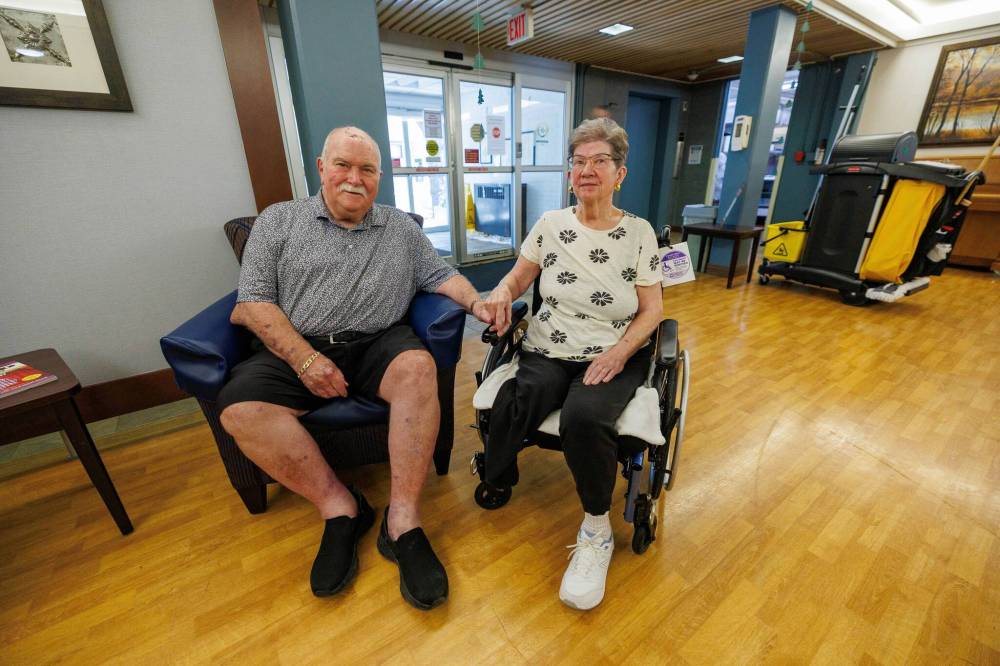
At least once a week, Hopkinson visits his wife. They sit together and have lunch.
“I think the chef makes the best soup. Anything I’ve eaten there has always been very good. She’s never complained. It’s excellent in terms of activities. Jennifer, the recreation manager, she’s really good at trying to get Maureen involved in some stuff. They have good parties over there,” he says, adding that his wife will be 80 in August.
“I feel — as much as I don’t like her being away from me — my daughter feels the same way — that she is in a good place. Quite frankly, she’s in better health that I am. She gets her hair done every week. She looks good. It’s nice to see her smile.”
When he reflects about the Convalescent Home, Hopkinson suggests the exceptional care may have something to do with the fact the current CEO and the one before him are both registered nurses.
“They know what’s going on as health-care professionals. They’ve set standards with the people, with a nurse on every floor. They’re tuned in.”
Patricia Hawkins has had a similar experience with her brother John, who has been a resident for the last five years.
John had a stroke at 60. Though he mostly recovered, he became diabetic, eventually losing a leg and developing kidney issues. With the amputation came mobility issues, and the realization he was no longer able to care for himself.
He thought he’d like to live in Lions Manor, but a bed became available at the home first. Later on, when a spot opened up at Lions Manor, John and his family agreed that he was happy and safe where he was.
“There’s a real home atmosphere.”
“Everything about his care is amazing: the staff, the medical care,” says Hawkins. “I go and visit often. There’s a real home atmosphere.
“It was hard at first, but we got to know the nurses and the aides. They’re good with him. They talk to him. He’s safe and comfortable and he likes the food. My husband and I go and have Christmas dinner there.”
John is in a quad room and requires a special wheelchair and a lift.
“We’ve asked them to get him up every day. They’re great,” she says.
“His bed looks towards the nursing station. In a private room, he would be isolated. There, people pop in to see him,” she says, adding that Ebony, a black Labrador retriever from one of the home’s programs, also comes by to greet him.
Hawkins is thankful for the level of care her brother receives.
“I think that our family lucked out in John’s placement. He’s loved. The care he’s getting is superb, right from the top. It’s a culture of caring.”
“I think what I wasn’t expecting is my Mom and Dad to be loved.”
Award-winning singer-songwriter Steve Bell has seen that care in action firsthand. His father was a resident until he died three years ago.
“The deepest and fondest memory was when we came here the day that Dad was dying,” Bell recalls. “People checked on Dad and checked on us. It was love.”
Bell’s 94-year-old mother is still a resident.
“They have had great care there, but the most appreciated aspect of that has been the obvious love they received from staff. I think what I wasn’t expecting is my Mom and Dad to be loved.”
For Kolbuck, the centenarian, there’s no question the Convalescent Home is the best place to be.
“If anybody can get into this nursing home, it’s the best nursing home,” she says.
The legacy created at the home is what Lagace is most proud of.
“There’s a reason that people end up staying 20 to 30 years,” he says, referring to the low staff turnover.
“There is beauty in long-term care. There are people who are thriving here.”
fpcity@freepress.mb.ca