Scaling new heights of possibility Shoal Lake Lodge a manifestation of reconciliation in action
Read this article for free:
or
Already have an account? Log in here »
To continue reading, please subscribe:

Digital Subscription
One year of digital access for only $205*
- Enjoy unlimited reading on winnipegfreepress.com
- Read the E-Edition, our digital replica newspaper
- Access News Break, our award-winning app
- Play interactive puzzles
*First annual payment billed as $205.00 + GST for one year. This annual subscription will automatically renew at $233.00 + GST every 52 weeks (10% off the regular annual price of $259.35). Offer available to new and qualified returning subscribers only. Cancel any time.
To continue reading, please subscribe:
Add Free Press access to your Brandon Sun subscription for only an additional
$1 for the first 4 weeks*
- Enjoy unlimited reading on winnipegfreepress.com
- Read the E-Edition, our digital replica newspaper
- Access News Break, our award-winning app
- Play interactive puzzles
*Your next Brandon Sun subscription payment will increase by $1.00 and you will be charged $17.95 plus GST for four weeks. After four weeks, your payment will increase to $24.95 plus GST every four weeks.
Read unlimited articles for free today:
or
Already have an account? Log in here »
Before proceeding with this story, it is so very important to acknowledge that Shoal Lake (Treaty 3 Territory) is the source of Winnipeg’s drinking water.
Ironically, for all the years that we have enjoyed the gift of some of the best and safest water in the world, those who reside on the shores of its source have suffered without. Years’ long boil water advisories caused insecurity of not having a safe source of water for children and families. That this was only very recently addressed and solved in a just and hopefully lasting way is commentary for another time and in another place.
Today, in the interest in encouraging positive and meaningful conversations in these difficult and divisive time — and in the spirit of looking at the energy of what lies ahead rather than looking back at what was — there is hope. And possibility.
SUPPLIED
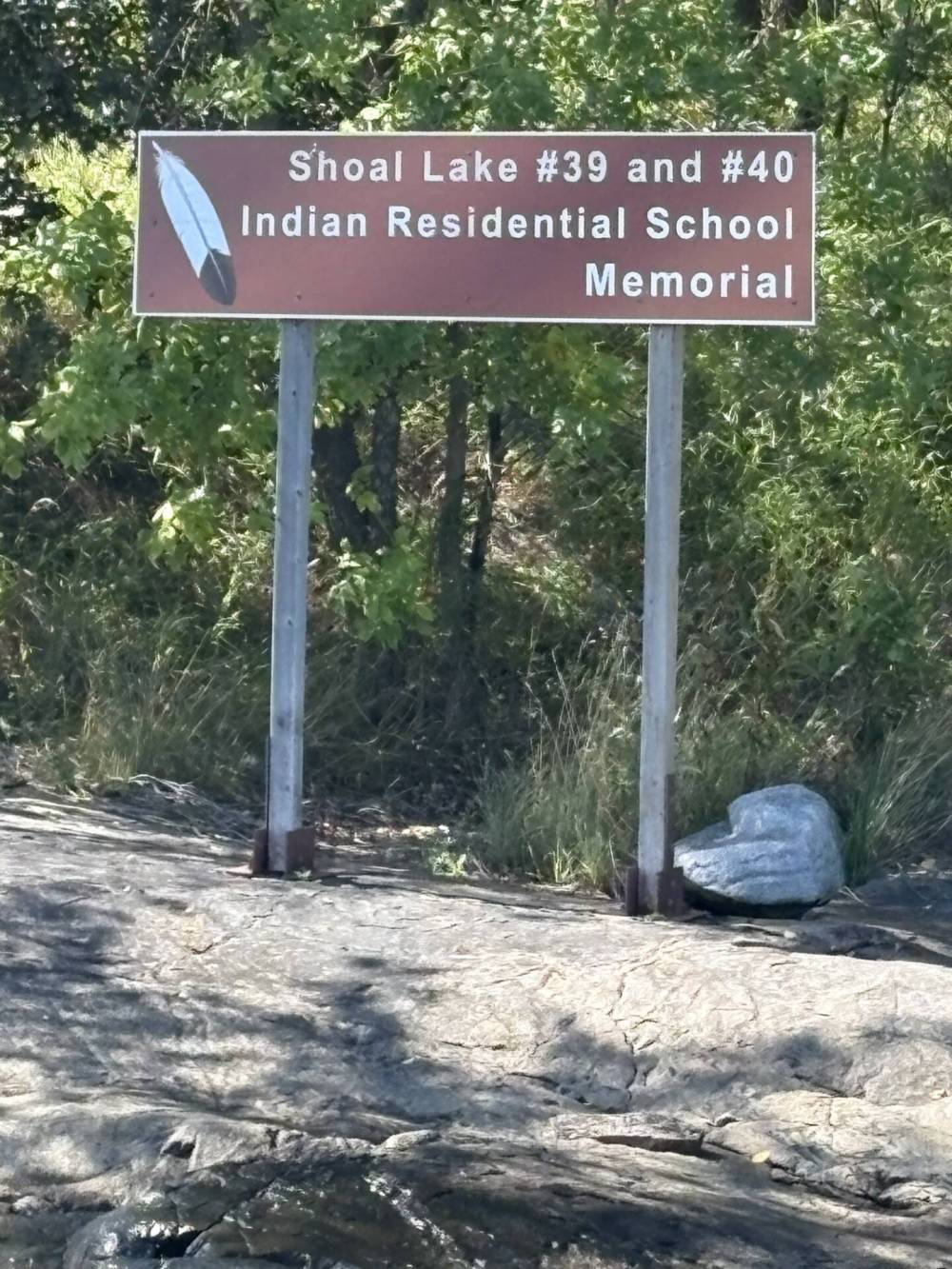
The residential school memorial at Shoal Lake.
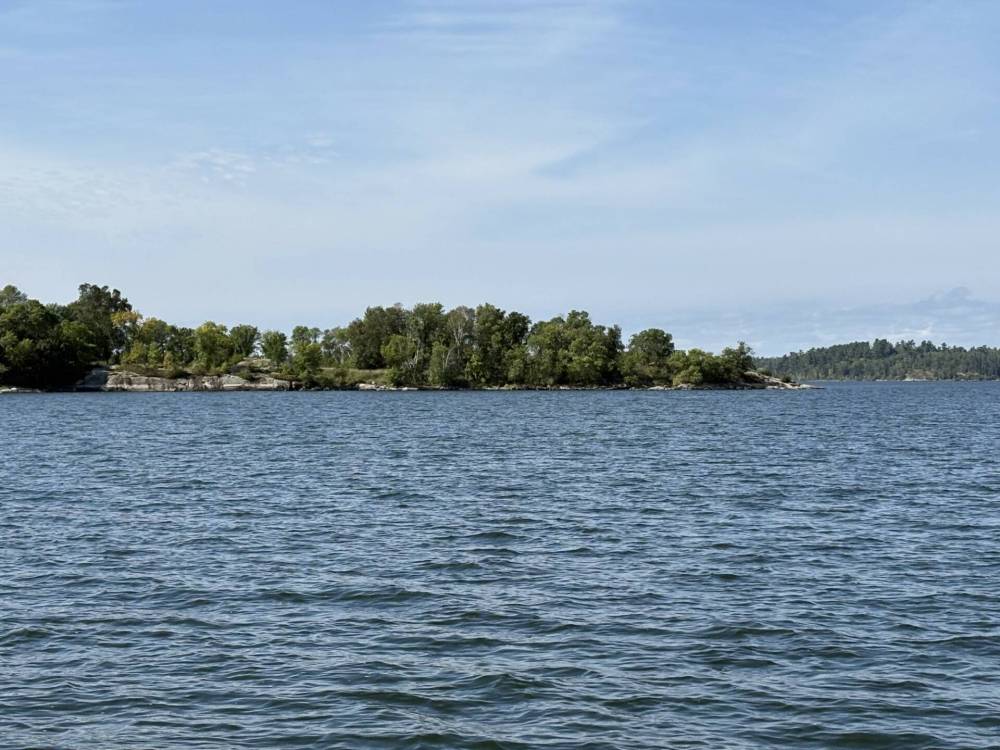
Shoal Lake is situated approximately two hours east of Winnipeg, sitting astride the Manitoba-Ontario border. Two different roads access separate First Nation communities that are on the lake. The first being Freedom Road, completed in June 2018, which intersects the Trans-Canada Highway just west of Falcon Lake, and now allows community members of Shoal Lake FN 40 vehicle access. Second is Ontario Highway 673, across the provincial border, which allows road access to Iskatewizaagegan (Shoal Lake) No. 39.
A lesser known but equally impressive waterbody adjacent to Lake of the Woods, Shoal Lake is connected to its more well-known cousin on its northeast corner, at Ash Rapids. A rocky narrows with significant current, safe navigation demands caution from any boater experiencing this piece of classic Canadian Shield. Successfully completing this minor challenge, expect to be rewarded with a remarkable shift in both the landscape and the vibe. With far fewer people and cottages on Shoal Lake, the feel quickly becomes one of peace and actually being alone, and it truly is palpable.
Hand in hand with this is less charting and navigational markers as we travel southwest. Approximately one half of the lake has been charted by the Canadian Hydrographic Service, and hopefully it remains that way.
This is how wild places stay wild.
In March 2019, Iskatewizaagegan FN No. 39 purchased Shoal Lake Lodge. As the only fishing camp on the lake, the opportunity was evident. At the time, little did we know the COVID-19 pandemic was around the corner and about to change lives forever.
Fast-forward two years and once the industry started to find it’s feet once more, the camp was able to focus on the path towards rebuilding the business and, importantly, creating their unique brand in a competitive space.
Physically, Shoal Lake Lodge is uniquely placed for opportunity as they are situated in such a special place.
Given the island location and limited access in that there are so few roads in, the camp offers a total experience that, candidly, is impossible to find a two-hour drive from Winnipeg.
SUPPLIED
Six cabins are set far apart from one another at Shoal Lake Lodge with a main lodge for socializing and meals.
Aesthetically, the island and the camp are stunning. Six cabins set far apart from one another and a main lodge for socializing and meals. Service is personal and warm, with a relaxed, intimate feel enjoyed between staff and guests.
This is the antithesis of the cold and impersonal “factory fishing” camp, but rather a place where one can comfortably interact with everyone else in the space. Truly, meaningfully, appreciably different. In the best possible way.
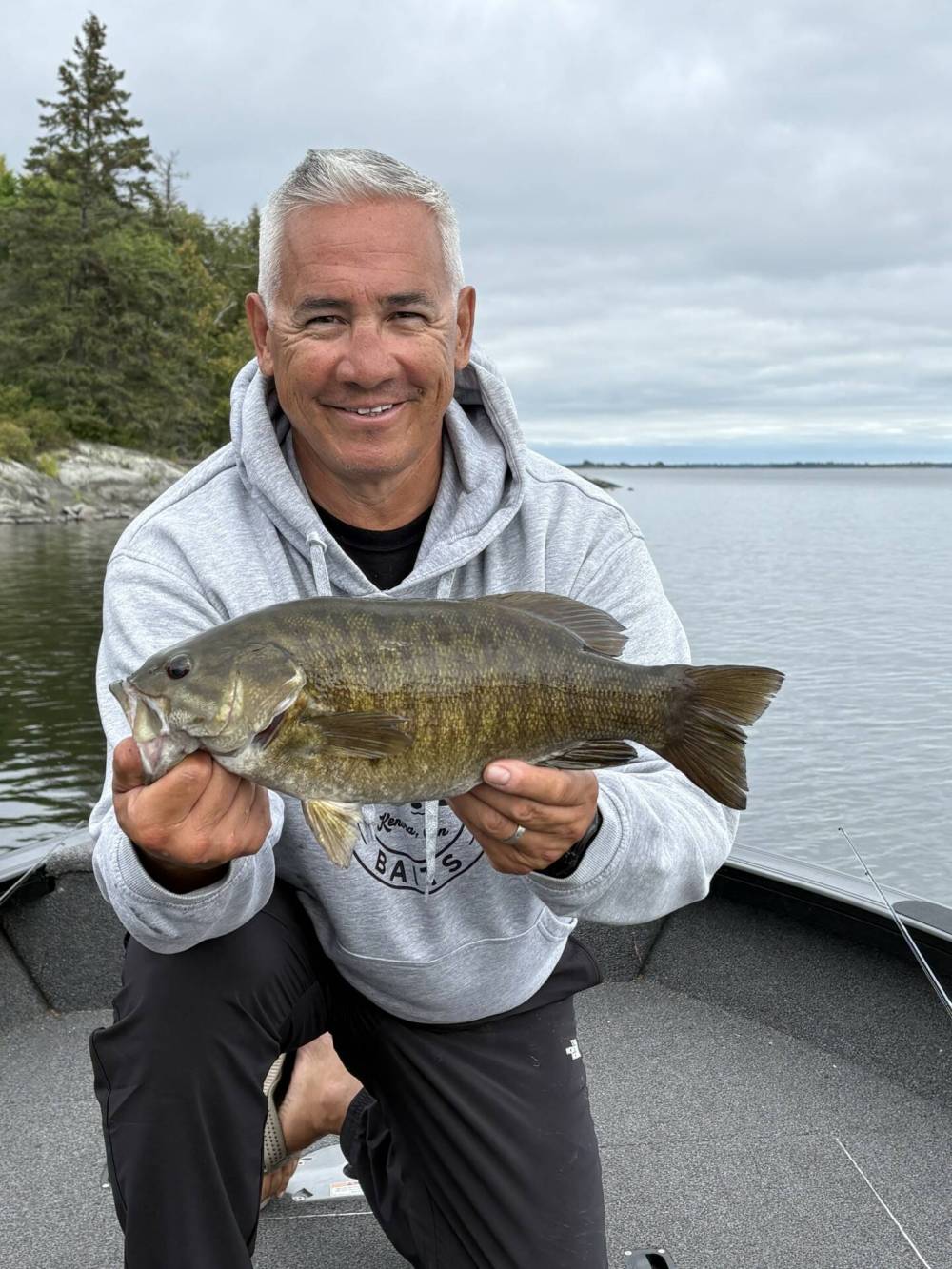
The Shoal Lake fishery is biodiverse: pike, musky, smallmouth and largemouth bass, and walleyes.
The walleyes merit a special mention here as Shoal Lake has been closed to sport fishing for them for over thirty years. What this means in real time is that anglers cannot knowingly target them, and therefore none can be retained when caught accidentally. These fish are mingling in and coexisting with smallmouth bass in such a way that there are times when the angler doesn’t know the species that’s hooked up until such time that it gets close to the boat for visual identification. Or jumps — as bass do and walleyes do not.
As evidenced by the numbers caught while bass fishing, it is abundantly clear that the walleye population is healthy. And this is not to suggest in any way that this fishery should be reopened.
Bass and pike are everywhere in the system, with both relating to the incredibly healthy, robust underwater weed growth throughout. These weeds seem to top out in around eight to ten feet of water and are clearly a magnet that attracts fish.
Subject of course to the whims of weather and the seasons, Shoal Lake could be largely considered a fishery that, on most days, an angler will be fishing in shallow water (eight to 12 feet of water). Points, weeds, and even the most innocuous structural changes hold fish, and, remarkably, dropping jigs and plastics in the first transition break from these will continue to put fish in the boat.
SUPPLIED
Shoal Lake is biodiverse: pike, musky, smallmouth (pictured) and largemouth bass and walleyes swim the pristine waters.
And on the subject of putting fish in the boat, the individual most responsible for that — as well as safe navigation of the aforementioned largely uncharted waterbody — is the guide. These experienced pros are the difference makers in the day, come with decades of experience on the lake, and understand fish behaviour and seasonal movements. They will run your boat, offer guidance and tips on gear choices, cast location, and give advice on how to modify your retrieve to catch more fish.
These folks are an integral part of the Shoal Lake team.
There is a distinctive feature that extends east out into the lake. It is quite unlike the surrounding geography. Unique, narrow, no more than 100 metres wide, and really very striking when one gets close enough to get a look, a beautiful granite bluff stands of mixed pine and poplar paired with open spaces dotted with the odd, lone tree.
Look closer and one will see some old outbuildings. Approach from the south, looking closer, and the sign on the shore is clear to the eye: “Shoal Lake #39 and #40 Indian Residential School Memorial.”
This, too, is a part of the history of Shoal Lake, Ontario and, importantly, that of Canada. And this shall always be here to remind those who may either be passing by, or to those who seek it out with the purpose of seeing and feeling this solemn place.
Let it serve as a reminder of one of the sad and painful things that we all have in our collective history as Canadians, but also to see the brilliant opportunity that we now have in front of us for meaningful engagement.

The Truth and Reconciliation Call to Action 92 reads, in part: “We call upon the corporate sector in Canada to adopt the United Nations Declaration on the Rights of Indigenous Peoples as a reconciliation framework and to apply its principles, norms, and standards to corporate policy and core operational activities involving Indigenous peoples and their lands and resources. This would include, but not be limited to, the following:
SUPPLIED
Shoal Lake is situated approximately two hours east of Winnipeg, sitting astride the Manitoba-Ontario border.
ii: Ensure that Aboriginal peoples have equitable access to jobs, training, and education opportunities in the corporate sector, and that Aboriginal communities gain long-term sustainable benefits from economic development projects.”
Shoal Lake Lodge is 92 being manifested in word and deed. A First Nations community taking decisive action to run an entrepreneurial endeavour, responsibly and ethically managing the resource, and creating opportunity.
Reconciliation in action.
sports@freepress.mb.ca