April is National Poetry Month but this year, it will probably go down in history as the month COVID-19 took hold, closing schools and non-essential workplaces, restaurants and bookstores.
*First annual payment billed as $205.00 + GST for one year. This annual subscription will automatically renew at $233.00 + GST every 52 weeks (10% off the regular annual price of $259.35). Offer available to new and qualified returning subscribers only. Cancel any time.
To continue reading, please subscribe:
Add Free Press access to your Brandon Sun subscription for only an additional
*Your next Brandon Sun subscription payment will increase by $1.00 and you will be charged $17.95 plus GST for four weeks. After four weeks, your payment will increase to $24.95 plus GST every four weeks.
April is National Poetry Month but this year, it will probably go down in history as the month COVID-19 took hold, closing schools and non-essential workplaces, restaurants and bookstores.
Hey there, time traveller!
This article was published 18/04/2020 (2333 days ago), so information in it may no longer be current.
April is National Poetry Month but this year, it will probably go down in history as the month COVID-19 took hold, closing schools and non-essential workplaces, restaurants and bookstores.
This year is also the fifth anniversary of this specific poetry-month project and we’re happy to announce a new partnership with the Winnipeg International Writers Festival and with it, a new name: Writes of Spring.
You’ll find poems by 12 Manitoba poets working through the theme A World of Poetry.
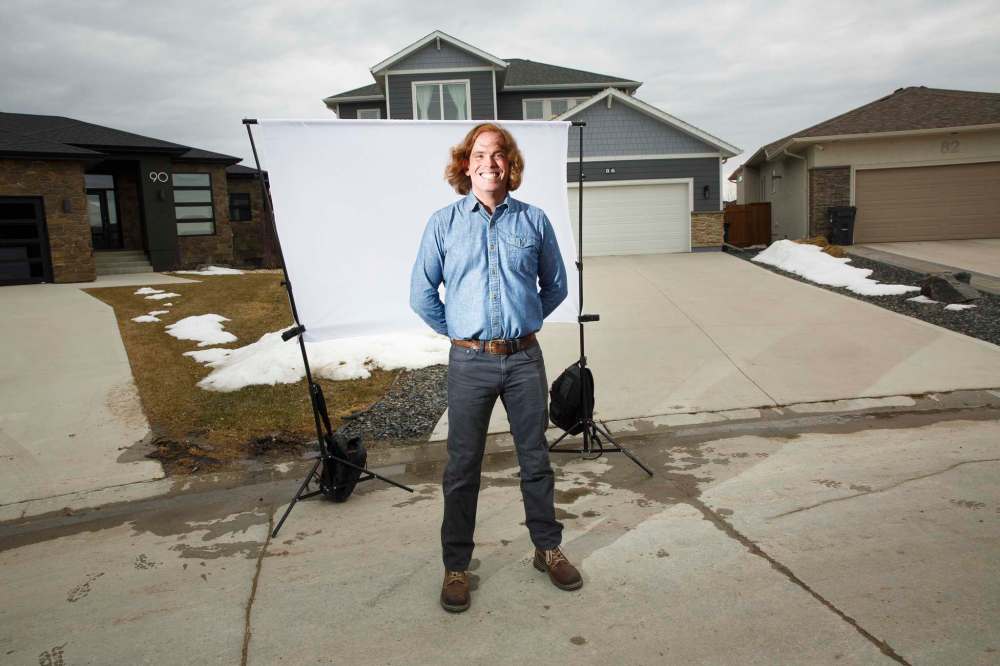
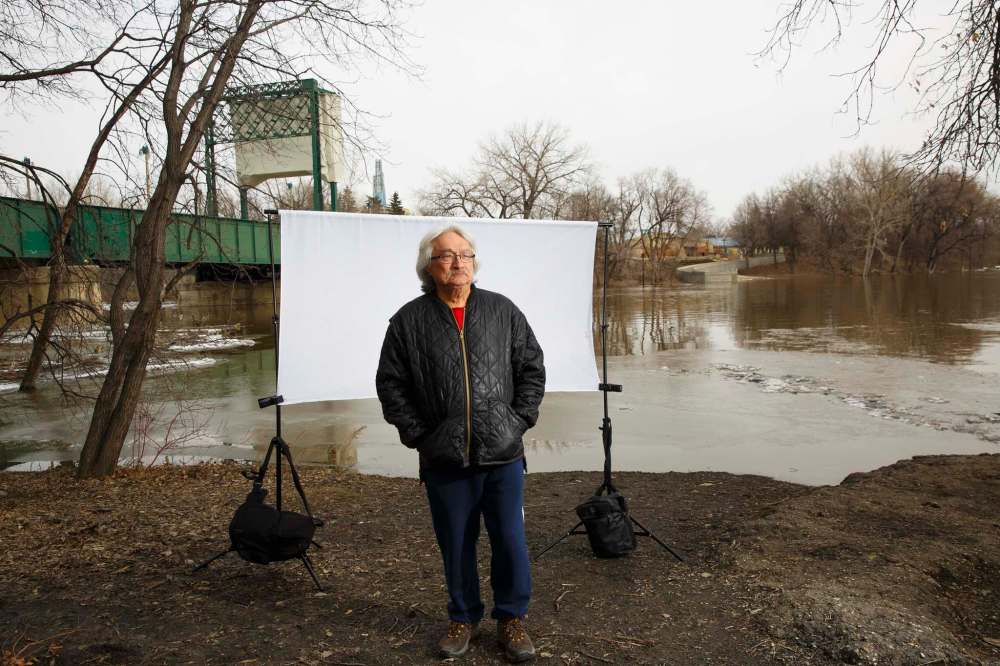
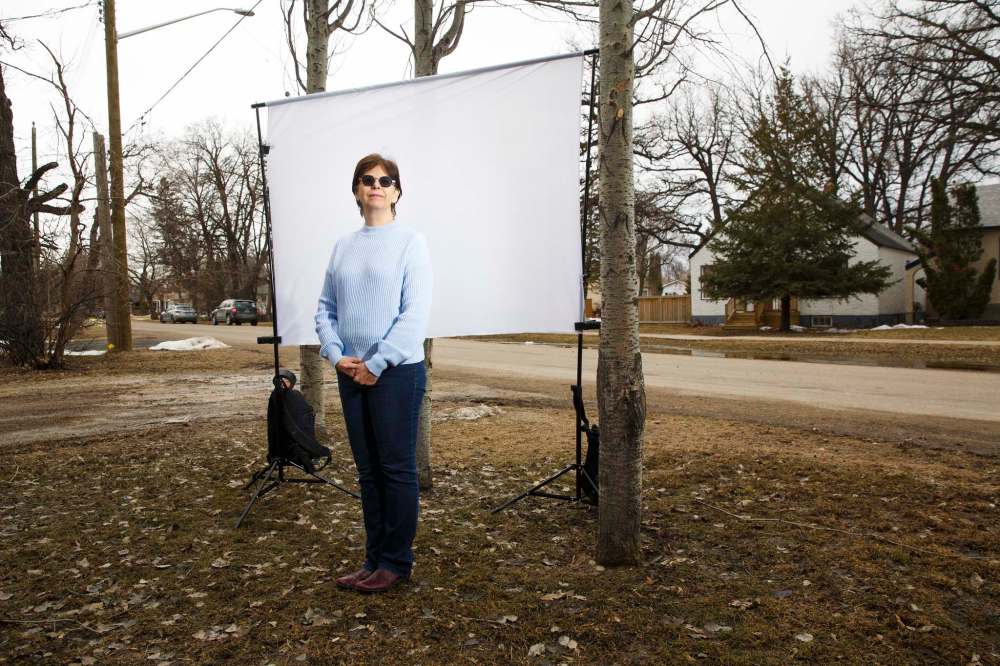
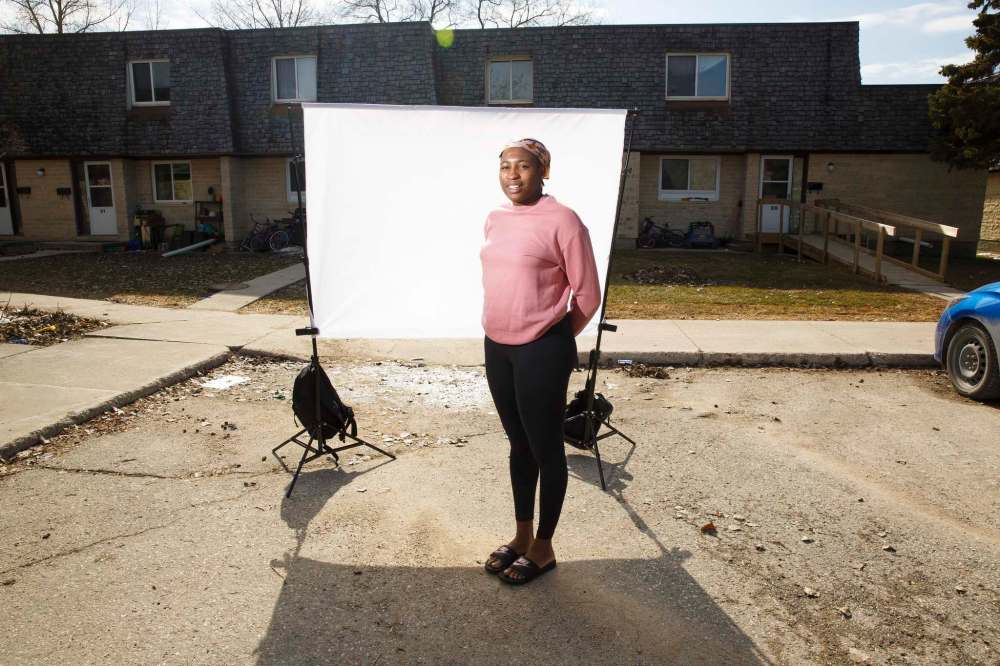
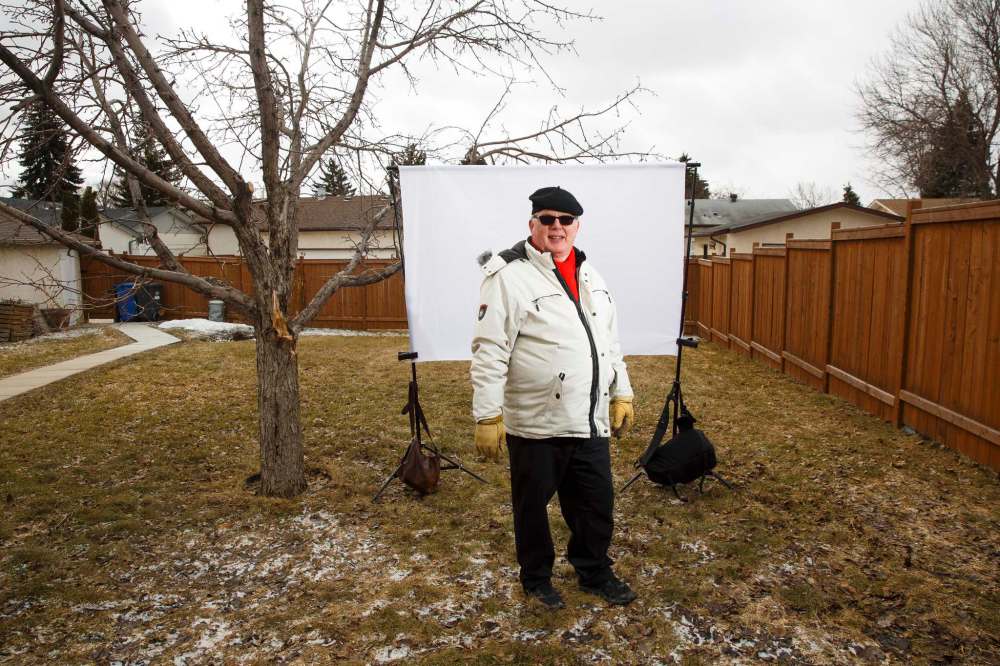
You’ll also find portraits by Free Press photographer Mike Deal that are studio portraits, but outdoors. He spent a windy day setting up the white backdrop on tree-lined boulevards, in parking lots and driveways. All the poets had to do was run out of their houses, pose, and then return inside.
As we shelter-in-place, here’s hoping that these wide-ranging poems provoke and amuse, distract and fascinate.
— Ariel Gordon & Kerry Ryan
Thought CatalogueWhen Music Dies
by Bola Opaleke
Something rises. I like how the night before
fasten its scent around my breath
every morning. I was used to having shadows
of men hovering over me in the middle
of the night; scavenging the windy nightmares
of my old dreams. One lover calling on the other.
Using the megaphone in her eyes
as if the volume of his desire can be tune up or down.
She reaches for my lips & my body stiffened.
I grow up learning the dangerous language of hands.
Because some stories come out of the breasts running
like a river. I disagree with water directing
the affairs of men. In bathtubs. One lover calling
on the other using the wooden whistle.
He cannot tell why a dead dog wags its tail to the siren.
I like how the sky opens its eyes the way men open their tongues.
Bola Opaleke is an Nigerian-Canadian poet with work on CBC Books and in The Nottingham Review, The Literary Review of Canada, and Canadian Literature.
●●●
MIKE DEAL / WINNIPEG FREE PRESS
Poet Julian Day, photographed outside his house in Sage Creek.Newfoundland Fragments
by Julian Day
A long hike: your sandals break two hours in.
Careful with water, we work our way back.
We never make it to the end of Green Gardens and the open sea.
The next day, St. Anthony.
L’Anse aux Meadows a disappointment.
On the way we pass a single red house on a tiny island.
So much of what we do is hope and trying.
This dominion built on exploitation and extinction.
The killing of the Beothuk; their land New-found.
We drive and name each mile between crumbling towns.
Have I become the lacuna in my life?
At night, the stars sweep low and touch the ground.
Julian Day is a software developer. His debut chapbook will be published by Anstruther Press in 2021.
●●●
MIKE DEAL / WINNIPEG FREE PRESS
Poet Duncan Mercredi, photographed outside at the point where the Red River and the Assiniboine River meet.An excerpt from Three Solitudes
by Duncan Mercredi
This city
Sings a quiet song
Meeting at the junction of two rivers
Background song of drum and dance
Echoes of laughter and tears
Buried beneath the concrete
Sacred mounds long leveled
Meaning nothing
Needing space to build
Lay tracks
Displayed in glass cases
This city
Dirty sidewalks cover blood and death
A spirit left to lie alone
No name, no reason
Just a body, buried in back pages
A shrug, move on
I have lived here longer than where I was born
I walk along its concrete trails
Paths have led me through back alley dreams
Still my visions take me back
That place where the river blessed me
I could dive down deep within that clear cold water
Stretch my arms out to touch bottom
But I never could and over time
That clear cold water became cloudy
No longer clear
No longer life giving
No longer blessed
Now I haunt the urban landscape
Searching for another song
One I heard as a child
Has faded by city sounds and sirens in the night
Reaching the place where the city ends
All I see is an unending horizon
I always turn back
Face east, west, south but never north
I have left that place
I have placed my tobacco on these sidewalks
To claim this city as my home
Duncan Mercredi is a Cree/Métis writer and storytellter. He is the current Poet Laureate of Winnipeg. This poem will appear in his upcoming collection, mahikan ka-onot: The Poetry of Duncan Mercredi (Wilfrid Laurier University Press).
●●●
MIKE DEAL / WINNIPEG FREE PRESS
Poet Alison Calder photographed outside her house in Wolseley.Winter, and the river
by Alison Calder
becomes a right-of-way,
skate-skiers’ herringbone
carving the waterway’s spine.
Space and time combine
in new perspective: from down here
you can see that the houses of the rich
are crumbling, old cottonwoods
falling into the stream.
Still, we can’t get over there,
the river’s altered state
allowing only so much movement,
ice tented strangely,
encampment or occupation.
On our side, the river asserts itself,
bubbling up under the bank, dry grass
icicled inside the drip drip drip
of warmer times.
Spring is coming, people say.
Right now, the snow’s still falling,
hiding footprints, voices, thin ice,
shielding a sun that’s slowly getting stronger.
Alison Calder teaches Canadian literature and creative writing at the University of Manitoba. Her most recent book is Connectomics.
●●●
MIKE DEAL / WINNIPEG FREE PRESS
Poet Lise Gaboury-Diallo, photographed outside her house in St. Vital.Printanier
par Lise Gaboury-Diallo
rythmes de passage
chaque souffle chaque bougie
dans cette vie constellée
de rites initiatiques
on avance
toi et moi
suivant l’appât du hasard
la rime cajolée à l’âme
d’une raison ou saison
à l’autre on l’écrit
et on la lit
notre vie
notre espoir calibré
toujours recentré sur demain
Professeure au département d’études françaises, de langues et de littératures à l’Université de Saint-Boniface, Lise Gaboury-Diallo a publié huit recueils de poésie et deux recueils de nouvelles.
●●●
MIKE DEAL / WINNIPEG FREE PRESS
Poet Ruby Chijioke-Nwauche, photographed outside her house in Fort Richmond.
Untitled
by Ruby Chijioke-Nwauche
Tell me what you miss most about home
is it looking into a bright blue sky
through crisscrossing black electrical wires
watching the sun set
sky turning pink like the corrugated roofs of houses around you for miles
driving through bumpy cement streets
with radios blasting
5 songs blending into one
road trips to the village
accompanied by brief stops for
garden eggs and groundnuts
to keep your belly warm till
the pot of egusi waiting at your destination
Is it crossing gutters to the
spicy suya stand that you can smell from streets away
is it closing your eyes to feel the cool harmattan breeze against your skin
or window watching through the heavy rains of July
is it this feeling of the ground and soil under your feet
is it this fast rhythm of your heart that never stops
a feeling that burrows into you
that calls you back to where you came from
grabbing hold, not letting go.
Ruby Chijioke-Nwauche is a 21-year-old English major at the U of M originally from Nigeria.
●●●
MIKE DEAL / WINNIPEG FREE PRESS
Poet Joel Ferguson, photographed outside his house in the West End.The Hôtel Universel
by Joel Robert Ferguson
A ziggurat of all that’s best for only the best, the guests
are dry and well-fed. The wedding on the mezzanine level
is one to remember for all in attendance, but the halls above
are cold and silent. After the front desk formalities, no one’s asked
for their papers, and the beds are so large that nobody touches
if they don’t want to. The pizzeria the concierge suggests
gets so many orders wrong, sends every room extra anchovies
that perfume the halls with the sea and death, but a woman’s kind voice
will dispatch apologies and free pizzas with an accent
that can’t quite be placed. At the Hôtel Universel
no one feels transient, and not in an unsettling way either—
it’s just that none of the pens bearing the hotel’s logo have ink
so one’s thoughts keep escaping out into the drizzly night.
The wi-fi is a patchy too, but you can still stream
Frozen or The Shining, if you don’t mind the pauses to buffer
that extend and silence the closeup of Danny’s silent scream.
Joel Robert Ferguson divides his time between Winnipeg and Montreal, where he is finishing his Masters in English Literature at Concordia University.
The Hôtel Universel is from Ferguson’s debut collection, The Lost Cafeteria (2020, Signature Editions).
●●●
Untitled Tanka
by Debbie Strange
I have always
been a scatterling
in this world
of curiosities, there is
never enough time
Debbie Strange is a short-form poet whose work has been published in 15 countries and translated into 11 languages.
●●●
MIKE DEAL / WINNIPEG FREE PRESS
Poet Ron Romanowski, photographed outside his house in East Kildonan.When One Cataclysm Melts Into Another
by Ron Romanowski
On Last Autumn’s Cruise I Saw a Norwegian Glacier Scream
The first wail had been of the glacier’s sickness
how it swooned under pressure, and
without pleasure
it became the astringent of its own demise
rotting from within itself,
done with itself,
never to desire again
that swell of a continental mount—
the sickness pissing by,
the romance flushed
as a Shakespeare with no lovers on stage—
And Last Night I Dreamt I Heard an American Mountain Sob
This second lamentation
could only be a mountain’s
illness
how it crumbled under oppression
and weighted misery
through the enigma of
its own allure,
gritted from within itself,
ministering to itself,
ever to require the spreading
of a continental shelf—
that thickness gone by, those eons flaccid,
Walt Whitman shorn of another multitude.
Ron Romanowski’s latest poetry collection is If 30,000 Strikers Marched Today (2019).
●●●
MIKE DEAL / WINNIPEG FREE PRESS
Poet Megan Wray, photographed outside her house in Southdale.The Genocide Project
by Megan Wray
i was born with explosives for bones and a timer counting down in my chest
i was born in manhattan, 1939
laying Roses on flowers with Truth in my veins
and many folded cranes in the palms of the pained.
i was passed down Pearls
as they float under ships and hips in sea water Harbours
with last boat calls for the fishers and loggers
then the gates closed to protect those who lay too close to the water.
fear not, we shall not let them be captured by sea monsters
that wash up on our shores post-tsunami storms.
take what you can carry or what you will bury
and i will try to close the gap from east across west
and all of the rest i will carry in my bones.
on my back, the pigment still burns.
redress our wounds after aliens intrude
and two billion dollars collide with forces of nature.
we are scorched alive and they call it a success.
i was born an enemy to the state from which i get my face
and the land on which i lay.
and i have felt the melting of my skin as my red and white fly.
the sky above looms with fear
so i will hold the ash in my bones
i will always hold ash in my bones.
Megan Wray is a bisexual and biracial woman of colour who writes poetry to explore the intersections of her identity.
●●●
MIKE DEAL / WINNIPEG FREE PRESS
Poet Sally Ito, photographed outside her house in Wolseley.Names of Grasses
by Misuzu Kaneko, translated by Sally Ito and Michiko Tsuboi
The names of grasses people know
I don’t know at all.
The names of grasses unknown by people
I know those
because I gave them names –
names I liked to grasses I liked.
After all, the names of grasses people know
have already been given to them by someone else.
Only the sun in the sky knows the grass’ true names.
And so I call out to them
Only I call out to them.
Misuzu Kaneko (1903-1930) was a Japanese children’s poet who lived and worked in Yamaguchi prefecture.
Michiko Tsuboi is co-translator of Japanese poetry with her niece, Winnipeg poet Sally Ito. Michiko lives in Shiga prefecture.
●●●
MIKE DEAL / WINNIPEG FREE PRESS
Poet Jennifer Still photographed outside her house in Crescentwood.Lift
by Jennifer Still
consider the 4000-year-old feather
slipped from an ice patch
the deep past offered up
while you sleep
in your child weight
as I carry your wedding dress
home from the cleaners
folded over my arm
brighter than snow
your pointed sleevelet
releasing
a tissue
Jennifer Still is a Winnipeg poet working at the intersection of language and material forms. She is the author of three poetry collections.
It was probably the easiest prediction to make in Winnipeg politics this week: the moment Kevin Klein officially entered the mayoral race, someone would bring up Peter Nygard.
Sure enough, they did.
And it was led by Klein’s chief political opponent in this race, Mayor Scott Gillingham, who called Klein a “fixer” for the convicted sex offender.
As a high school student at Winnipeg’s Transcona Collegiate, one of his classes required him to create a business plan. He was cleaning vehicles part-time at the Chamois Car Wash and Detail Centre, so he used the assignment to envision a car wash of his own — one with a Regent Avenue address.
Fast forward some 25 years later and that dream is a reality. Thompson is the co-owner and general manager at Flamingo Express Car Wash.
Located at 868 Regent Ave. West — east of the row of car dealerships that call the thoroughfare home and across the street from an Amazon distribution hub — Flamingo opened last month.
Thousands are still without power in Winnipeg after high winds and thunderstorms knocked out power lines Sunday.
About 4,000 Manitoba Hydro customers were still dealing with outages this morning after crews worked to restore power in the Westwood and River Heights areas, Hydro spokesman Peter Chura said. On Sunday, Hydro reported outages affecting approximately 6, 700 customers.
The high winds and heavy rain brought down trees and broke power poles, causing "very severe damage," in River Heights, one of the hardest-hit neighbourhoods, while some of the damage in the Westwood area appeared to be caused by lightning strikes, Chura said.
Thunderstorms rolled in at about 6 p.m. Sunday and brought heavy rain and high winds to some areas of the province. Winnipeg received about 35 mm of rain, while some areas got almost double that. More than 62 mm was recorded at The Forks and 68.8 mm was recorded at Portage Southport, according to Environment Canada.
Sharif Hassan, The Canadian Press5 minute readUpdated: Yesterday at 10:39 AM CDT
If you’re angered by U.S. President Donald Trump's renaming of Lake Ontario to “Lake America,” chances are that an American living in your neighbourhood might be just as outraged — if not more.
Many Americans who've made Canada their home are calling it an embarrassing, even "childish," stunt.
Ben Davis, a retired law professor, said Trump’s executive order to change the lake’s name is "so beneath the office of the United States president."
"And obviously it's another one of his distractions of the day, but it's just pitiful,” Davis said.
Xiumei Li had a friend who had been on the dating scene for a while.
He’d been seeing an impressive woman, a startup founder building a successful business. She was a good conversationalist. She was interesting.
She sounded great. So why didn’t it work out?
Some gentle prodding revealed he was intimidated by her, but also felt that “there was a gap between what he expected for a partner versus what this female entrepreneur had to offer,” Li says.