The ecstasy and the agony An artist thrives in a precious, temporary gallery space in the increasingly unaffordable art heart of the city
Read this article for free:
or
Already have an account? Log in here »
To continue reading, please subscribe:

Digital Subscription
One year of digital access for only $205*
- Enjoy unlimited reading on winnipegfreepress.com
- Read the E-Edition, our digital replica newspaper
- Access News Break, our award-winning app
- Play interactive puzzles
*First annual payment billed as $205.00 + GST for one year. This annual subscription will automatically renew at $233.00 + GST every 52 weeks (10% off the regular annual price of $259.35). Offer available to new and qualified returning subscribers only. Cancel any time.
To continue reading, please subscribe:
Add Free Press access to your Brandon Sun subscription for only an additional
$1 for the first 4 weeks*
- Enjoy unlimited reading on winnipegfreepress.com
- Read the E-Edition, our digital replica newspaper
- Access News Break, our award-winning app
- Play interactive puzzles
*Your next Brandon Sun subscription payment will increase by $1.00 and you will be charged $17.95 plus GST for four weeks. After four weeks, your payment will increase to $24.95 plus GST every four weeks.
Read unlimited articles for free today:
or
Already have an account? Log in here »
Hey there, time traveller!
This article was published 29/12/2022 (1356 days ago), so information in it may no longer be current.
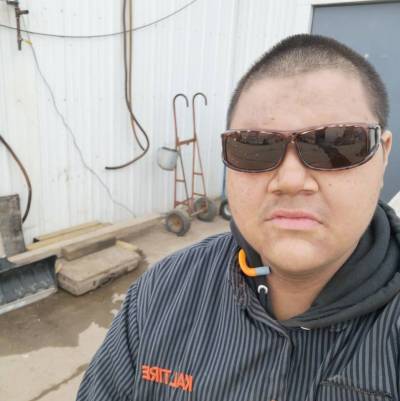
Jedrick Thorassie sits cross-legged on 123-year-old floorboards, surrounded by paintbrushes, finished works, and dozens upon dozens of sketchbooks, each page filled with the pictures he’s seen and the ones he’s created.
He’s wearing a Carhartt toque, Columbia hiking boots and a black sweatsuit made by The North Face and Supreme. He’s drinking black coffee. He’s holding a portrait he made of Gustav Klimt, along with a picture-perfect recreation of the Austrian master’s 1908 work, The Kiss.
“Klimt, Francis Bacon, I love Michelangelo’s stuff,” says Thorassie. “I just love art, period.”
Thorassie is Sayisi Dene, originally from Tadoule Lake. “It’s north of Thompson, same latitude as Churchill,” he says.
RUTH BONNEVILLE / WINNIPEG FREE PRESS The struggle to create is Jedrick Thorassie’s calling. Finding a place to make and sell it alongside other artists is getting tougher. He found a precious temporary reprieve in a gallery space on Arthur St. and hopes he can find a way to stay in the neighbourhood.
All his life, he has been an artist, but only recently has he affixed that label to himself. In the fly-in community of Tadoule, Thorassie was a mischievous kid, he says, with an eye for colour and composition. Surrounded by the elements of life itself — water, trees, animals, humanity — Thorassie felt compelled to recreate them on the flat terrain of paper and canvas. Whether in pencil, charcoal, watercolour or acrylic paint, Thorassie found himself able to assert control over the world through his art.
In Tadoule — where the artist grew up in what he calls a broken home — Thorassie says he faced boundaries to earning a living as an artist.
“I tried it, and it’s almost impossible,” he says.
Six years ago, he came to Winnipeg, where he’s been trying in earnest to establish himself. It has not been quick or easy.
Thorassie, like many artists in Winnipeg and all major cities, has spent his career striving to find community, visibility, access to resources, and of course, the economic opportunities that accompany such pursuits. Using Instagram, he sells most of his work — which ranges from naturalistic scenery, to contemporary pop-art, to street-art-style ‘flips’ of popular imagery — but has had considerable struggle in finding suitable physical space both for himself to work, and to meet other artists. It’s not getting any cheaper to be an artist either, with studio rents, gallery fees and material costs on the rise.
In October, Thorassie was presented with what he thought was a golden opportunity: a residency in an open gallery space on the main floor of 70 Arthur St., a warehouse constructed in 1899 which now houses dozens of offices, including those of music promoters and film distributors, along with a busy coffee shop.
Since Nov. 4, Thorassie, a 40-year-old father of two, has spent hundreds of hours sitting in the gallery space, creating and mounting his art, selling original prints. His styles — ranging from Klimt and Picasso-inspired portraits, to Alex Colville-esque scenes depicting the people in Tadoule, to fiery political paintings about residential schools, to pop culture portraits of people like Kobe Bryant — are as unpredictable as his encounters with the people who visit his pop-up studio.
RUTH BONNEVILLE / WINNIPEG FREE PRESS Dreaming of creating among other artists, Sayisi Dene artist Jedrick Thorassie is thriving in his temporary downtown space. ‘My idol came to my art show … Not only that, she worked down the street.’ Now he and Indigenous artist Jackie Traverse are friends.
One woman bought a painting of a raven, and invited the artist out to dinner with her husband. “She was so sweet,” he says. Kids often pop their heads in to say hello. At his opening, a woman walked into the gallery and gave Thorassie a thrill.
“She was walking around and looking at the work, and she brought a few pieces up to purchase,” says Thorassie. “I didn’t know who it was until she sent me the e-Transfer.”
When he first started “taking this thing serious,” Thorassie obsessively recreated and studied the work of artists he admired. There were few who meant as much to him as Jackie Traverse, who was standing right in front of Thorassie, holding a Jedrick original in her hands.
“My idol came to my art show,” Thorassie says of Traverse, whose practice is centred on community and her experiences as an Indigenous woman in Winnipeg.
“Not only that, she worked down the street. She’s one of my best friends,” he says.
Thorassie made it happen downtown.
Art is made in every corner of Winnipeg, but it is downtown where it is arguably more present, more prevalent and more potent, than anywhere else in this city.
If a traveller were to venture backwards in time, that opinion would likely go unchanged. The Winnipeg Museum of Fine Arts opened its doors in 1912 at the Industrial Bureau on Main Street; in 1913, the first motion picture-only facility opened downtown. The Winnipeg School of Art and Design was housed in the bureau. The Winnipeg Sketch Club took shape downtown a few years later. Theatre, dance and music lived there. Nowhere else in the city was there a greater concentration of artistic expression and consumption.
With the establishment of such cultural institutions as the Centennial Concert Hall, the Manitoba Museum, the Royal Manitoba Theatre Centre, the Winnipeg Art Gallery, the Winnipeg Film Group, and the Canada Life Centre (former MTS Centre), plus dozens of others, art has not stopped playing a key role in the downtown economy. Even as the area has been beleaguered by panic over its supposed demise, and despite having less than 1 per cent of Winnipeg’s total land area, downtown hosted 6.8 million unique visitors in 2019 to over 2,000 events in the arts and entertainment sector.
The arts and creative industries in Winnipeg are worth approximately $1.6 billion in real GDP, up 22 per cent over the previous decade, according to a study released by the Winnipeg Arts Council in October. That same study, conducted by local pollsters Probe Research, found that eight in 10 Winnipeg residents attended major arts events, with little variation across the city. “In other words,” the reports authors noted, “Whyte Ridge loves the arts almost as much as Wolseley.”
More results from that study indicate the significance of art in day-to-day life for Winnipeggers. About 86 per cent say the arts make everyday life more fun; just over three-quarters of respondents said arts and culture were good stress relievers; just over half said they made art themselves; about 80 per cent said the arts are a good tool for reconciliation; and two-thirds said Winnipeg has a more vibrant arts scene than most cities.
In a city where agreement on topics political, pedestrian, and even windchill-related is rare, there seemed to be consensus, supported by the study, that art is good for Winnipeg. In an editorial published in the Free Press this fall, the arts council’s board chair Andrew McLaren summed it up thusly. “When the arts prosper, downtown prospers, and when downtown prospers, all of Winnipeg sees the benefits.”
But there are challenges to making art downtown, as Thorassie well knows. It’s growing more difficult with every upward tick of real estate costs to afford to do it. One-bedroom loft-style apartments with $1,300 rents do not jibe with the concept of an accessible art-making enclave, nor do rising rental costs per square foot of retail and studio space.
JESSICA LEE / WINNIPEG FREE PRESS
But making and showing art downtown is still a key goal for new artists like Thorassie, and organizations like Urban Shaman, which has been showcasing global Indigenous art in the Exchange District since 1996.
Urban Shaman is currently in its third location, on the second floor of the Glengarry Building at 290 McDermot Ave, where interim director Debbie Keeper spends her days in the midst of grant applications, arts reports and endless mounds of documents.
Downtown’s reputation as an artistic hub extended beyond the Manitoba border. During an eight-year sojourn in Raleigh, N.C., Keeper got into a taxicab driven by a New Jerseyan. “I said, ‘I’m from Winnipeg,’” she recalls. “He said, ‘I love Winnipeg.’ I said, ‘No way. Nobody’s ever heard of it here.’ I asked him why, and he says, ‘We went touring through the Exchange District and downtown and saw all the art galleries. I’ve never seen anything like it.’”
When it was founded 26 years ago, Keeper says, Urban Shaman initially targeted the North End as its home. However, the non-profit settled downtown.
Like Thorassie, Keeper says making art downtown has tremendous benefits, and dozens of organizations — including Video Pool, Creative Manitoba, Jazz Winnipeg, ArtsJunktion and Synonym Art Consultation — have built a solid community. But the churn of capitalism threatens that. There is considerable fear from artists of being priced out completely.
JESSICA LEE / WINNIPEG FREE PRESS
A few years ago, out of curiosity, she looked up other rents and saw that smaller spaces were renting for several times as much as Urban Shaman’s bigger space on McDermot.
Asked what’s appealing about their current space, Keeper is direct. “What’s appealing is that we can afford the rent.”
It’s an enormous problem, says Angela Mathieson, the CEO of CentreVenture, an organization dedicated to downtown real estate development and investment. And it is a problem her organization hopes to address with the development of its Market Lands project along with the University of Winnipeg Renewal Corporation.
That project, gestating since 2018 and set to begin construction this year on the former site of the Public Safety Building between Princess and King streets, will feature a mix of market-rate and below market-rate apartments and an outdoor market space. But the arts will play a key role.
Within the project, Mathieson says, organizations including Urban Shaman, Video Pool, Creative Manitoba and MAWA will have office, work and display space. As the main floor “anchor tenant,” Urban Shaman will move from McDermot and receive a level of public visibility it has not yet been able to afford.
DAOUST LESTAGE Market Lands rendering
Inside the $40-million Market Lands project, Mathieson said there will be a mix of market and affordable housing, along with lower-than-market rent for the arts spaces inside, supported through a mix of financing and non-profit funding. “What we’re trying to address are rising market conditions, which artists simply can’t afford to pay,” she says. “Their best interests are not always looked after under those conditions, but they will be in this building.”
Keeper hopes increased visibility will help her organization and artists in the city to build community and show their value to Winnipeggers who may have disregarded it. She says operational funding should be more readily available for new arts groups, who are often forced under by rising market costs.
“Artists are the canaries in the coal mine,” she says. “You are always going to need someone to point out that all is not well.
“People should realize that art is integral to the health of society, and must stop treating it like a hobby or an afterthought.”
Thorassie doesn’t know where he will make art once his residency on Arthur Street winds down.
But he knows he would like it to be downtown. “Just based on this experience, it’s where I want to be. The people are coming and going, saying hello, popping in. I love it.”
Before heading out to run a few errands, Thorassie says he is ready for the long haul as an artist in Winnipeg.
“Being an artist is all I want,” he says. “It’s really f—-ing hard. I’ve done a lot of jobs in my life, but nothing amounts to this. And no matter what happens, whether I make money or not, whether I have a studio or not, I am always going to be painting and making art. It’s just a part of who I am.”
Thorassie picks up a sketchbook and starts scribbling.
ben.waldman@winnipegfreepress.com

Ben Waldman is a National Newspaper Award-nominated reporter on the Arts & Life desk at the Free Press. Born and raised in Winnipeg, Ben completed three internships with the Free Press while earning his degree at Ryerson University’s (now Toronto Metropolitan University’s) School of Journalism before joining the newsroom full-time in 2019. Read more about Ben.
Every piece of reporting Ben produces is reviewed by an editing team before it is posted online or published in print — part of the Free Press‘s tradition, since 1872, of producing reliable independent journalism. Read more about Free Press’s history and mandate, and learn how our newsroom operates.
Our newsroom depends on a growing audience of readers to power our journalism. If you are not a paid reader, please consider becoming a subscriber.
Our newsroom depends on its audience of readers to power our journalism. Thank you for your support.
Related Articles
Too many U of W and RRC Polytech students are still fleeing the inner city as soon as classes end