Half-century of horseplay Springfield Polo Club celebrates milestone, works to make ‘sport of kings’ more accessible
Read this article for free:
or
Already have an account? Log in here »
To continue reading, please subscribe:

Digital Subscription
One year of digital access for only $205*
- Enjoy unlimited reading on winnipegfreepress.com
- Read the E-Edition, our digital replica newspaper
- Access News Break, our award-winning app
- Play interactive puzzles
*First annual payment billed as $205.00 + GST for one year. This annual subscription will automatically renew at $233.00 + GST every 52 weeks (10% off the regular annual price of $259.35). Offer available to new and qualified returning subscribers only. Cancel any time.
To continue reading, please subscribe:
Add Free Press access to your Brandon Sun subscription for only an additional
$1 for the first 4 weeks*
- Enjoy unlimited reading on winnipegfreepress.com
- Read the E-Edition, our digital replica newspaper
- Access News Break, our award-winning app
- Play interactive puzzles
*Your next Brandon Sun subscription payment will increase by $1.00 and you will be charged $17.95 plus GST for four weeks. After four weeks, your payment will increase to $24.95 plus GST every four weeks.
Read unlimited articles for free today:
or
Already have an account? Log in here »
Hey there, time traveller!
This article was published 08/06/2023 (1212 days ago), so information in it may no longer be current.
BIRDS HILL PROVINCIAL PARK — The Springfield Polo Club turns 50 this summer. To mark the milestone, members are hosting an open house on June 17, at their home base in Birds Hill Provincial Park, off of Nimowin Road.
Sue Smith is one of the organizers of next weekend’s event. Standing in front of a horse trailer parked near the field of play on a sun-drenched Saturday afternoon, Smith says attendees will be treated to exhibition matches, hands-on tutorials, a $5 barbecue lunch and a kids’ craft area.
Even better, onlookers will be afforded the opportunity to participate in a so-called divot stomp, an activity that involves smoothing out the grass playing surface following a game, by using the heel of one’s shoe or boot to press down on turf turned up by galloping hooves. (Nodding at a fresh pile of horse doo-doo, another member strongly recommends boots.)
“A lot of people seem surprised when they learn that Winnipeg has had its own polo club for 50 years. We often refer to ourselves as one of the city’s best-kept secrets.”–Sue Smith, organizer
“Things get underway at 10 (a.m.) and go till about four (p.m.), and we’re encouraging interested parties to sign up on Eventbrite, so we have an idea how many people are coming out,” says Smith, who joined the club about 30 years ago at the urging of her polo-playing husband, and now cheers on their three adult children, all of whom have become accomplished players, as well.
“A lot of people seem surprised when they learn that Winnipeg has had its own polo club for 50 years. We often refer to ourselves as one of the city’s best-kept secrets so we thought why not use the anniversary to increase awareness of the game, and help spread the word?”
Gary Senft hadn’t heard of the Springfield Polo Club when he headed out for a leisurely ride on his sister’s horse Cotton Time Van, one June morning in 1974. Furthermore, Senft, a university student at the time, knew “zip… zero” about the Sport of Kings, when a group of seven men playing polo in a privately-owned field adjacent to Hillside Road called out to him, saying they needed an eighth, to field two full teams.
Senft agreed to join in, but he stops short of referring to his actions that day as “playing” polo. Mostly, he rode this way and that in an attempt to keep up with the goings-on, only to watch his counterparts turn around and head in the opposite direction, the moment he managed to catch up to the ball, he reports.
JOHN WOODS / WINNIPEG FREE PRESS Gary Senft has been playing polo for 49 years.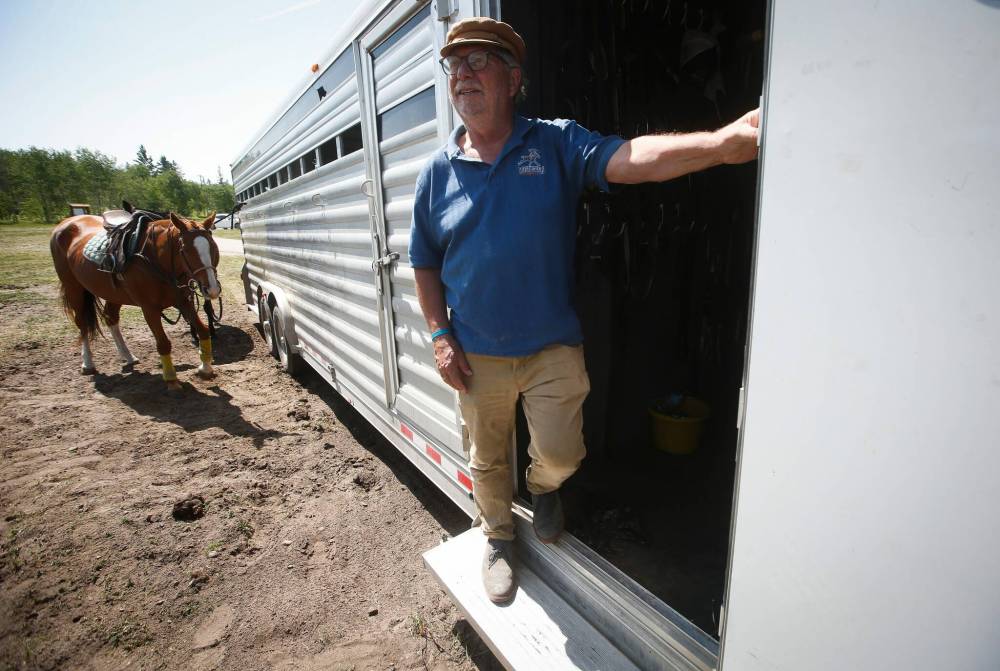
“I suppose I had a good enough time, though, because I played again the following week, and have belonged to the club ever since, for 49 of its 50 years,” says Senft, crediting the late Ross Fargey, who was among those who beckoned him to play that day, with founding the club.
The way Senft came to understand the story, Fargey, a university professor, fell in love with polo when he was living and teaching in West Africa. Fargey, who died in 2003, eventually settled in the Birds Hill area, where he kept a number of horses. Upon discovering many of his neighbours also had horses, he proposed they form a polo club, by using a sheep pasture on his property as their original playing surface.
If you’re thinking polo was new to the province when Fargey formed the Springfield Polo Club, which moved to its present digs in the late 1970s, think again. Polo was first played in Manitoba in 1894. At one time, there were three locations in Winnipeg reserved for the sport: Whittier Park, the St. Charles Country Club and the area currently occupied by — how else do you think it got its name? — CF Polo Park.
Senft, a retired lawyer, agrees with Sir Winston Churchill, who once called polo a “passport to the world.” During his long career, Senft has travelled to, among other spots, South Africa, Argentina, Ecuador and Mexico expressly to saddle up and smack a ball around.
HORSING AROUND
The rules of polo, one of the world’s oldest team sports and, until 1936, an Olympic event, are fairly straightforward.
• Games are contested on a field measuring approximately 275 metres long by 180 metres wide. The playing surface at Birds Hill is considered one of the best on the continent.
• Individual matches typically consist of four or six periods, called chukkas, each of which lasts seven minutes. Players, four to a team, switch horses between each chukka, similar to line changes in hockey.
• The object of the game is to propel a ball through the opposing team’s goal, using a long-handled wooden mallet. Teams change ends following each goal.
• Most goals wins.
He smiles, saying he was “this close” to taking part in a match at Windsor Castle, during a trip to England. That was until Maj. Roger Ferguson, the Duchess of York’s father and the then-manager of the polo facilities there, told him and his cohorts, “Sorry, boys, we’ve had a bit of a mix-up. We have to let Kenya play today but please come back again.” (“Yeah, as if I was ever going to make it back to Windsor Castle,” Senft says with a shrug.)
Like most organizations that have been operating for a half-century, the Springfield Polo Club has had its share of peaks and valleys, membership-wise, Senft says. While there were once as many as 50 members, present ranks are closer to 25. And while you might be thinking, yeah, that’s because you need a horse of your own, that isn’t the case at all, says Tia Andrews, 24, who joined the club in 2018.
“If you’re a beginner, you can sign up for lessons, and you’ll be put on one of the older horses, which are great for teaching players the ins and outs of the sport,” says Andrews, who specialized in show jumping when she landed a part-time job exercising horses belonging to one of the polo club’s members, which led to her trying polo out, for herself.
Many of the members have horses available for lease, she continues, comparing the price of a junior membership to what one would expect to pay to join a golf course for the summer.
“There’s a misconception out there that polo is this elitist sport and that you require a ton of money and connections to play, but that’s not true in Manitoba. All you need is a love of riding, and we’ll happily put you on a horse.”
Andrews, who spent part of the past winter in Argentina, where polo is as popular as ice hockey is in Canada, says the local club hosts league play on Tuesdays and Sundays, and that Thursday evenings are reserved for practice. She chuckles when asked who’s more accomplished, the riders or their mounts?
“Not only do the smarter horses watch the ball and follow the line of play, they keep out of trouble,” she replies, introducing us to Secret, “the super horse.” “The better horses will hit the brakes when you hit a back shot without you telling them to, because they already know that when the ball changes direction, they’ll be turning around.”
“There’s a misconception out there that polo is this elitist sport and that you require a ton of money… All you need is a love of riding.”–Tia Andrews
Like Smith mentioned earlier, the upcoming open house will grant newbies an opportunity to give polo a shot, albeit from atop a stationary steed fashioned out of wood. Overseeing the lessons will be Smith’s son Garrett, who runs the Springfield Polo Club’s student training program.
Garrett, 27, started watching his parents play polo at age three. By the age of six, he was joining them on the field, aboard a Welsh pony that wasn’t much taller at the shoulder than he was.
“My pony and I had a great time, but what I didn’t realize then was that the other horses weren’t too fond of it, so kept their distance, which gave me lots of time to develop my skills,” he says with a laugh.
Garrett, who transferred to a “real” horse at age 11, played every sport, pretty much, growing up, including hockey, soccer and volleyball. He dropped each, one by one, until polo became “his” game. Like Senft, Garrett has travelled afar to play. He went to Florida the last two winters, and has also been invited to suit up in England, Mexico and California.
JOHN WOODS / WINNIPEG FREE PRESS Garrett Smith, 27, started watching his parents play polo at the age of three; by the time he was six, he was joining them on the field.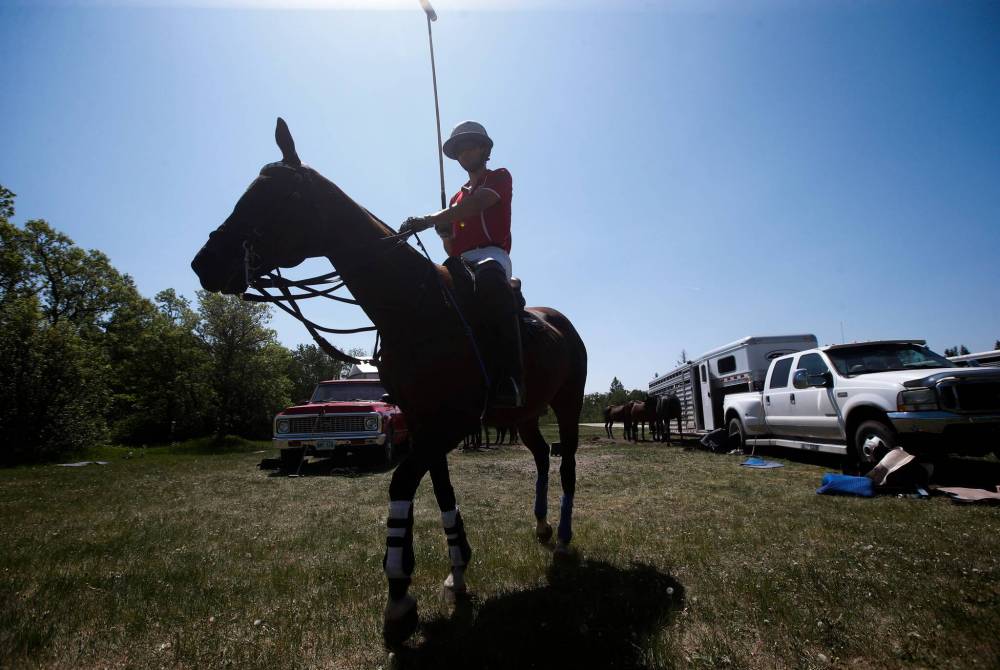
Besides Winnipeg, there are a number of polo clubs spread across Western Canada, he points out. In years past, specially formed tournament teams from the Springfield club have faced off against squads from Calgary, Saskatoon, Kelowna and Vancouver.
“One of the things I love about polo is that, unlike most sports, I can play alongside my mom, my dad, my sister, my brother… it’s a really great family game,” he says, adding he and his siblings are but a few of the second-generation players who belong to the club.
“And sure, it can get expensive keeping horses, but to me, it’s an alternative to owning a cottage. Plus, after putting up with our long, cold winters, it’s a tremendous way to make the most of our beautiful summers.”
david.sanderson@freepress.mb.ca
Dave Sanderson was born in Regina but please, don’t hold that against him.
Our newsroom depends on a growing audience of readers to power our journalism. If you are not a paid reader, please consider becoming a subscriber.
Our newsroom depends on its audience of readers to power our journalism. Thank you for your support.