Voices across time Author Donoghue revels in liberating and bringing new life to stories from the past
Read this article for free:
or
Already have an account? Log in here »
To continue reading, please subscribe:
Digital Subscription
One year of digital access for only $1.44 a week*
- Enjoy unlimited reading on winnipegfreepress.com
- Read the E-Edition, our digital replica newspaper
- Access News Break, our award-winning app
- Play interactive puzzles
*Billed as $5.77 plus GST every four weeks. After 52 weeks, price increases to the regular rate of $19.95 plus GST every four weeks. Offer available to new and qualified returning subscribers only. Cancel any time.
To continue reading, please subscribe:
Add Free Press access to your Brandon Sun subscription for only an additional
$1 for the first 4 weeks*
- Enjoy unlimited reading on winnipegfreepress.com
- Read the E-Edition, our digital replica newspaper
- Access News Break, our award-winning app
- Play interactive puzzles
*Your next Brandon Sun subscription payment will increase by $1.00 and you will be charged $17.95 plus GST for four weeks. After four weeks, your payment will increase to $24.95 plus GST every four weeks.
Read unlimited articles for free today:
or
Already have an account? Log in here »
Hey there, time traveller!
This article was published 12/10/2023 (1108 days ago), so information in it may no longer be current.
Emma Donoghue has long been a time traveller.
The Irish-Canadian author has taken readers many places with her historical fiction, be it to a Dublin maternity quarantine ward during the 1918 flu pandemic (The Pull of the Stars, 2020), or an isolated island inhabited by monks in the year 600 AD (Haven, 2022), or post-famine Ireland in 1850 where miraculous “fasting girl” has been able to survive without food (The Wonder, 2016, now a Netflix adaptation co-written by Donoghue starring Florence Pugh).
Literary preview
An Evening with Emma Donoghue
Thin Air: Winnipeg International Writers Festival
Monday, Oct. 16, 7 p.m., McNally Robinson Grant Park, streaming on YouTube
Admission is free
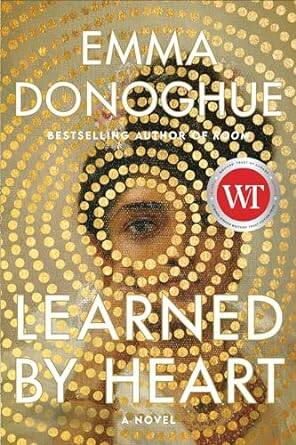
Donoghue’s latest novel, Learned By Heart (2023, HarperCollins Canada), is set at a York boarding school in 1805, where two very different real-life 14-year-old girls — brassy tomboy Anne Lister and Indian orphan heiress Eliza Raine — fall in consuming, passionate, secret love.
Lister, a Regency-era diarist who is also the subject of the BBC/HBO series Gentleman Jack, has long been a source of fascination and inspiration for the Room author. Donoghue’s first play, 1993’s I Know My Own Heart, was a loose adaptation of Helena Whitbread’s first book of selections, I Know My Own Heart: The Diaries of Anne Lister, 1791-1840, which was based on Lister’s incredible 5,000,000-word diary that was, for a long time, a secret.
“I just thought, this is a voice I’ve never heard before and it’s been more or less locked up for 200 years and now beginning to come out,” the London, Ont.-based Donoghue says of discovering Anne Lister, a fascinating figure who, as she writes in her author’s note, changed her life.
“I think I started writing historical fiction because Anne Lister had thrown open this door that I went through and I’ve been writing about kind of historical oddities for much of my career ever since.”
In advance of Donoghue’s appearance at McNally Robinson on Monday, Oct. 16, as part of Thin Air: The Winnipeg International Writers Festival, the Free Press spoke to Donoghue about Anne Lister and Eliza Raine, LGBTTQ+ stories (and book bans), and the pull of the past.
“I don’t think any writer should stay in their own era,” she says.
This interview has been edited for length and clarity.
Free Press: This novel has been percolating for a long time. Why did you want to tell this story now, and in this way?
Author Emma Donoghue (Una Roulston / The Canadian Press files) 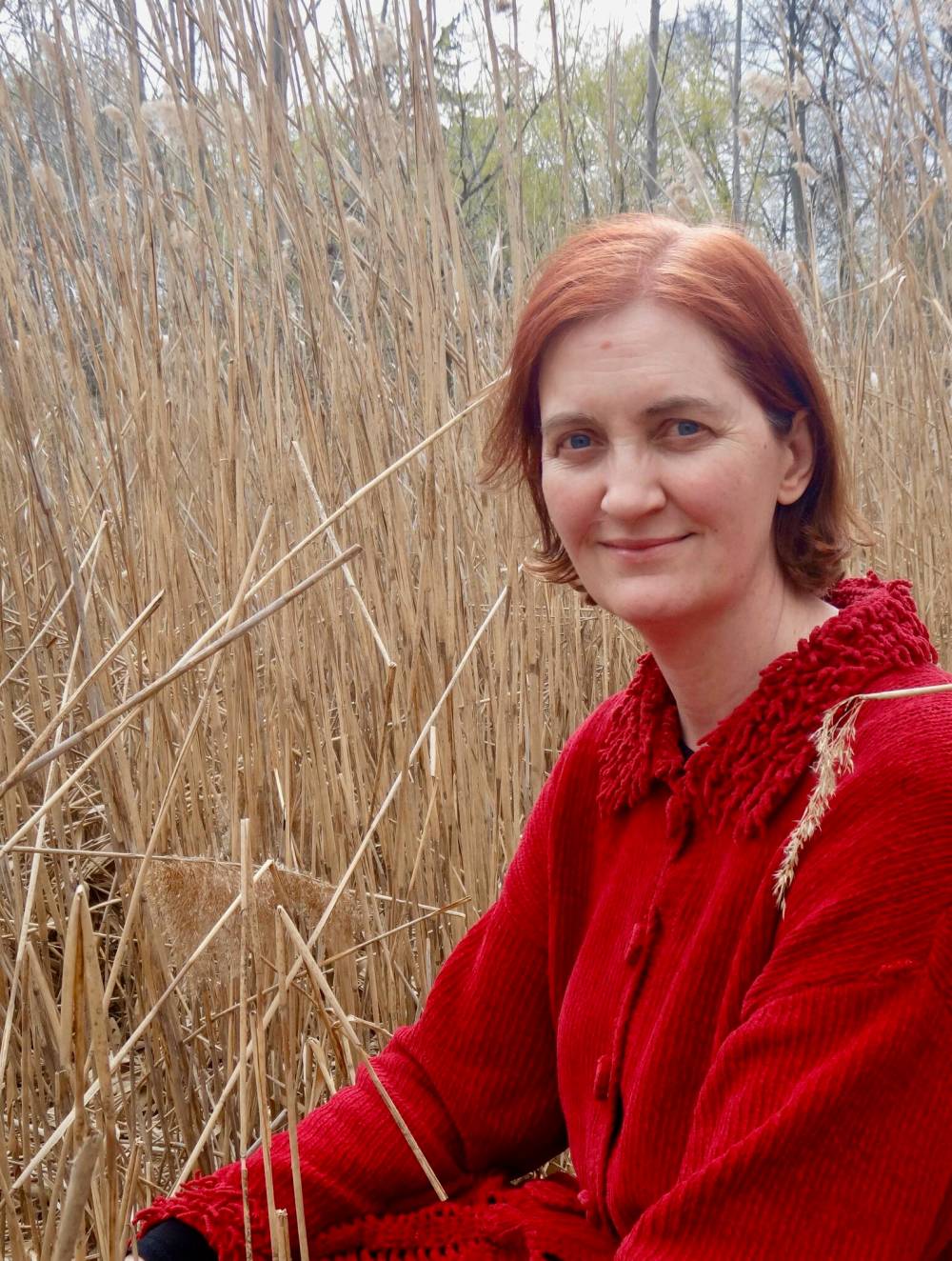
Emma Donoghue: I was always fascinated by the bit before the diary began, so when she was 14 and fell madly in love with a girl in school. I think that’s where Anne Lister really stepped over the line of acceptability for the first time and really discovered herself. The big surprise, in all these years where I’ve been slowly waiting to be ready to write this book — well, two things surprised me.
First of all, I was surprised that the book ended up being from the perspective of Eliza Raine, the other girl. As a biracial girl in 19th-century England, we just haven’t heard from people like her in history. She’s a particularly forgotten figure, literally locked away in an asylum for most of her life. So I just find it irresistible to try and bring her back into the light.
And the other thing that surprised me was that big community of — I say scholars but sometimes fans — lots of people digging up information about Anne Lister and all her women. That’s been an amazing resource and it’s really grown, to the point where I was able to write this book with a huge amount of help from other people just voluntarily transcribing documents for me, and explaining points of law and so on. They would not have been around 10 years ago, because most of them have come together in the aftermath of the TV show, Gentleman Jack. Now, there’s online communities of Anne Lister enthusiasts. So actually, I’m really glad it took me this long to write this book because I got way more help.
FP: The novel is, in many ways, Eliza Raine’s book, not Anne Lister’s. But Eliza Raine totally deserves the same cult following Anne Lister has.
ED: She absolutely does. You know, it’s funny, she may have had an influence on literature, and that she may well have inspired the mad, biracial Mrs. Rochester in Jane Eyre. The Brontës would have known about her, and so she may have left a little fingerprint on our culture there.
But no, she’s been a totally forgotten figure. You know, when I see shows like Bridgerton doing a fantasy version of the past, where like, “Oh, let’s pretend there was no slavery,” I sometimes think it’s so much more interesting to hear about how actual people of colour really lived and what their lives were like. I think Eliza is a massively fascinating figure. And one thing I found particularly interesting was that in their social circle, based on all the letters I read, nobody mentioned race.
No one mentioned that Eliza had come from India at the age of six and had a whole Indian family that she’d really been cut off from, so they’re just like, “Don’t mention it, don’t mention it,” until there’s this moment where she has a quarrel with her guardians. And then there are these two letters from a friend of her guardian, in the most viciously racist terms, denouncing her. Those two letters were the most useful source to me because they made me realize that there was an undercurrent of racist judgments just ready to be poured on Eliza if she put a foot wrong.
FP: As you said, this is not a fictionalization of Lister’s diary, but rather focused on the bit before the diary. What was it like for you to imagine and inhabit their 14-year-old selves?
ED: That’s a good question. Because with historical fiction, I find I always put contemporary material into it, too, and I always put autobiographical material into it. For instance, I was a rather intellectually cocky 14-year-old and on my first day of school I made some joke about people being “ignorami” and I was mocked for it for the next five years. I was so embarrassed by that incident that I decided, “I’m gonna put that in the novel.”
But more seriously, I remember being 14 and falling in love with a girl and thinking, “Oh no, this is simultaneously the most exciting thing that ever happened to me and this is the end of the world,” because here I am in 1980s Catholic Ireland and it was absolutely unacceptable. You know, even nowadays, it’s funny: like my kids’ generation in Canada can seem so totally cool with every variation on sexuality and gender — but still, a lot of them don’t come out to their parents. And there are still families where effectively the kids are absolutely miserable and just waiting to escape. I tried to find a kind of timelessness in the story of what it might be to fall in love at 14 and to feel this is an unacceptable and unspeakable kind of love.
FP: Reading the novel, one can’t help but think of the book bans targeting LGBTTQ+ books, and how, while Lister’s story was suppressed for so long, Learned By Heart is also a book that could very well be banned by some schools in the United States today.
ED: I don’t think we would’ve even talked about this 10 years ago — things have actually got worse, at least in the States. I know publishers there who just can’t get librarians and teachers to order their books, the librarians and teachers are afraid, there’s a climate of fear. So even before a book is banned, are people going, “Oooh, better not buy that one.”
And yet, I know for myself as a young queer teenager, I was desperate for books. Books were my salvation. They gave me this glimpse that somewhere out there, that was a place where things would get better. So I really feel like, by writing a book that might reach and might touch other young people, I’m paying back what was done for me by the books I found.
FP: Speaking to historical fiction more broadly: what is it that draws you to the past?
ED: This is going to sound a bit shallow, but I think I dread getting bored. I could not just write out of my own life experience. My life experience has been like, read a lot of books, sell a lot of novels, live very happily with the same person for 30 years, and has two kids. It would never make a memoir. They’re never going to make a movie about my life: Move to Canada, Find Everything Very Nice.
So, history’s been this great source of stories for me. Stories that I feel a sense of mission about telling, you know, digging up the real truth of the past rather than the simplified version, finding characters who are wonderfully complex and are ahead of their time. And it also gives me a great feeling of comfort to form connections with these characters across history, to write about somebody who might seem utterly alien to me.
Like, my last novel, Haven, was about three monks on an island in the year 600. I mean, yeah, they’re aliens to me. But of course, when I get into their head, and I’m writing a particular scene from their point of view, I’m finding common ground with them.
Writing a novel and then reading a novel is just one big exercise in empathy. I start out with a curiosity about these people but then I end up inhabiting their skins.
jen.zoratti@winnipegfreepress.com

Jen Zoratti is a columnist and feature writer working in the Arts & Life department, as well as the author of the weekly newsletter NEXT. A National Newspaper Award finalist for arts and entertainment writing, Jen is a graduate of the Creative Communications program at RRC Polytech and was a music writer before joining the Free Press in 2013. Read more about Jen.
Every piece of reporting Jen produces is reviewed by an editing team before it is posted online or published in print – part of the Free Press‘s tradition, since 1872, of producing reliable independent journalism. Read more about Free Press’s history and mandate, and learn how our newsroom operates.
Our newsroom depends on a growing audience of readers to power our journalism. If you are not a paid reader, please consider becoming a subscriber.
Our newsroom depends on its audience of readers to power our journalism. Thank you for your support.