A trial separation A longtime TV-dependant watcher and critic prepares for a four-week elimination diet
Read this article for free:
or
Already have an account? Log in here »
To continue reading, please subscribe:

Digital Subscription
One year of digital access for only $205*
- Enjoy unlimited reading on winnipegfreepress.com
- Read the E-Edition, our digital replica newspaper
- Access News Break, our award-winning app
- Play interactive puzzles
*First annual payment billed as $205.00 + GST for one year. This annual subscription will automatically renew at $233.00 + GST every 52 weeks (10% off the regular annual price of $259.35). Offer available to new and qualified returning subscribers only. Cancel any time.
To continue reading, please subscribe:
Add Free Press access to your Brandon Sun subscription for only an additional
$1 for the first 4 weeks*
- Enjoy unlimited reading on winnipegfreepress.com
- Read the E-Edition, our digital replica newspaper
- Access News Break, our award-winning app
- Play interactive puzzles
*Your next Brandon Sun subscription payment will increase by $1.00 and you will be charged $17.95 plus GST for four weeks. After four weeks, your payment will increase to $24.95 plus GST every four weeks.
Read unlimited articles for free today:
or
Already have an account? Log in here »
Hey there, time traveller!
This article was published 20/10/2023 (1062 days ago), so information in it may no longer be current.

Of course I’m not quitting all TV. Television is life! Or at least it’s been mine since the Beatles appeared on the Ed Sullivan Show in 1964, which is the earliest memory I have of sitting rapt in front of a glass screen, probably too close, with the sound up too loud. I was four.
After years of begging to stay up past my bedtime to watch more and more TV, I have been fortunate enough to be paid by this very newspaper and others to sit at home and watch TV — all TV, any TV — and report back with recommendations and warnings.
I have been paid to travel many times to Los Angeles and Toronto to interview talent from behind and in front of the TV cameras. I have read about TV, cried about TV, shouted at TV and talked about TV endlessly without regard for my companions’ tolerance.
I wrote a cookbook’s worth of my own versions of Swanson’s TV dinners. I have written letters not to TV writers and stars, but to TV shows.
So of course I’m not quitting all of TV. But it is time to take stock and — here come the chest pains — consider making some changes. So indulge me in a few pros and cons.
CONS
Join the TV challenge
Misery loves company? Or the more the merrier? We shall see!
Here are three options for anyone wanting to join me in standing back from the nearest screen to take an objective look at our relationship with television, which I define as any type of TV or video programming (series, movies), delivered by any means (ie. cable, satellite, websites and streaming apps) except TV news and sports, which are breeds unto themselves.
Here are three options for anyone wanting to join me in standing back from the nearest screen to take an objective look at our relationship with television, which I define as any type of TV or video programming (series, movies), delivered by any means (ie. cable, satellite, websites and streaming apps) except TV news and sports, which are breeds unto themselves.
What: Choose one of the three challenges below, or set your own challenge for all four weeks, just one week or even a day. You are the boss of your TV and your TV challenge!
There is no prize or winner other than personal satisfaction and whatever bragging your loved ones will tolerate. The objective is to take a fresh look at our relationships with TV and then discuss.
Extreme a.k.a. Gold Turkey Challenge (which I will be undertaking)
No, that is not a typo, but rather an optimistic spin on an extreme cold-turkey TV elimination diet that, fingers crossed, leads to a new golden era of more intentional TV-watching.
Week 1: keep a daily diary of shows watched and when.
Week 2: No TV, no way no how, with whatever journalling or notes you care to keep.
Week 3: five hours of TV, with notes, journalling as possible.
Week 4: 10 hours of TV, with notes, journalling.
Moderate a.k.a. Middle of the Couch Challenge
Week 1: keep a daily diary of shows watched and when.
Weeks 2-4: 10 hours a week of TV with whatever journalling or notes you care to keep.
Let’s Just Think About This
Weeks 1-4: keep a daily diary of shows watched and when.
When: Four weeks, starting Sunday, Oct. 22, and ending Saturday, Nov. 18.
Where: While each of us will be executing our challenges at home, or wherever we usually power up our screens, I’d also like to hear about your experience.
Challengers are encouraged to share observations, questions and suggestions in writing by email to denise.duguay@winnipegfreepress.com or snail mail to 1355 Mountain Ave., Winnipeg, MB, R2X 3B6.
Additionally, the Free Press will welcome all challengers to gather virtually for a TV postmortem on our YouTube channel at 7 p.m. on Wednesday, Nov. 29 (wfp.to/tvchallenge), where I will share my own experience and highlights of any feedback already sent in, as well as fresh feedback and all of our final thoughts.
— Denise Duguay
Too, too much: TV used to know its limits. From a nightly sign off way back in the day and a sprinkling of channels and programs we could navigate by twisting clunky knobs, blowing past Springsteen’s 1992 song 57 Channels (and Nothin’ On) (seriously, Bruce?), we find ourselves at the current state of hundreds of broadcast and specialty channels, YouTube et al., and of course the sprouting-like-mushrooms streaming apps such as Netflix, Apple TV+ and beyond.
As for what’s now available on those screens, the TV ratings stalwart Nielsen Company estimated that as of December 2022, there were more than 821,000 titles on streaming platforms and 231,000 on “traditional linear channels.”
Good TV/bad TV: Television is capable of great beauty and serious harm. By the 1999 finale, I was so moved by the craft and humanity of Homicide: Life on the Street, the story of Baltimore detectives grappling with an unsolved child murder, that I wrote a long letter, not to the creators or cast, but to the show itself.
Nerdy, sure, and no, I never mailed the letter, but the show’s marrying of good hearts and terrible loss was a profound tonic.
Consider also one of the best current shows. Reservation Dogs (Disney+), follows a handful of rez kids after their friend’s suicide, using humour and magic realism to thumb its nose at the tragedies wrought by colonialism while also (mostly) poking fun at its own characters and their beliefs.
On the harm end of the spectrum, scroll the program offerings on your TV delivery system of choice and notice how often murder, violence and especially women and children in peril crop up.
Now, consider a TV world in which depictions of violence were reserved for shows such as the Manitoba-shot ’60s Scoop drama Little Bird (which got its U.S. première on PBS on Oct. 12), where physical and cultural harm is a sobering and hopefully galvanizing mirror to our history.

Broken promises:After years of waiting for cable companies to allow us the choice of only the channels we wanted to watch, at least we now have the “skinny” TV package imposed on those companies by the federal overseer CRTC in 2015, requiring them to offer an inexpensive basic package.
However, at the very least, you still have to subscribe to what Shaw calls Limited ($25) and Bell calls Starter ($35) before you can exercise more personal choices.
But I am no starter and I want to break free of those cable-company limits. Or at least I want to try.

Financial cost: Money is, of course, a factor. My cable and internet bill was $167 a month plus tax (including $20 for Crave and $7 for classic movie channel TCM).
Having just — excuse me, I feel faint — cancelled my cable as of midnight, Oct. 14, my new monthly bill was reduced to $110 plus tax.
That will leave my streaming TV costs at about $75 a month (Netflix, Prime Video, Paramount+, Apple TV+, Britbox, Disney+ and PBS Passport, plus $10 to replace Crave with the ad-supported basic service).
Brain cost: No matter when my day ends — some days I work on the copy-editing desk of this newspaper until 11 p.m. — upon arriving home, I would kick off my boots, grab my iPad or the TV remote and unwind with an hour or two of TV.
But is that really unwinding? A 20-year study published in the U.S. in 2021 found those who “watched, on average, about an hour-and-a-half more daily television than their peers throughout mid-to-late adulthood saw their brain volume reduced by approximately 0.5 per cent.” Half a percentage point sounds small, but it’s your brain!
A 2023 study done in the U.K. found that “longer TV viewing in the middle to old age was associated with a decline in … areas particularly implicated in language, memory and increased risk of dementia.”
Social cost: A Nielsen survey in 2022 showed U.S. TV watchers self-reported an average of 294 minutes or nearly five hours a day.
That sounds uncomfortably close to my life. Factor in 7 1/2 hours of working, a couple of hours commuting and doing errands and … I need to call a friend.
PROS
The single crutch: On the pro-TV side, I can confirm that dating is hell and TV has never ghosted me.

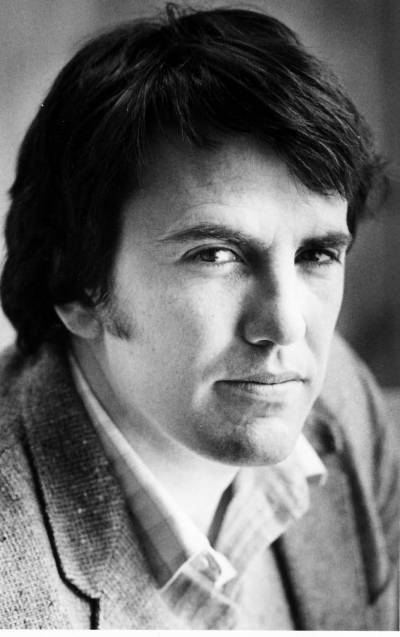
Legacy attachments: I owe my TV-critic career, such as it is, to Robert Stack, the handsome, squinty-eyed American actor who played Special Agent Eliot Ness in the ’60s organized-crime drama The Untouchables.
In reruns, on a black-and-white TV set that often provided the only light in the house, Stack’s presence stands out among the many programs I watched in a family home ravaged by the alternating chaos and strangled quiet of two generations of alcohol and drug addiction.
In fact, TV was a family-wide devotion and diversion: my grandmother considered herself on a first-name basis with Johnny (Carson) and Jerry (Springer), among others, while my mother favoured weepies such as Grey’s Anatomy, which I watched on a step-stool at her bedside during her final bout with cancer.
Whether owed to nature or nurture, TV went from our solace to … addiction? All-consuming habit? I thank Mr. Stack and even TV itself for company during lonely hours and for my love of a medium exploding with options, innovation and excellence.
However, gulp, I’ve heard tell of life beyond the glow of the screen.
So what’s next? While, as stated, I don’t want to quit all TV for all time, I do want to shake up this … let’s settle on “concerning dependence.” I wonder, with rising panic, what non-TV people do with their evenings (and mornings and afternoons).
But I look forward to the challenge. If you’d like to join me, check out the sidebar.
Shows to sample before pulling the plug
Given the Hollywood writers’ and actors’ strikes, the fall TV première schedules are not as packed as usual, but even so, here are four recent or upcoming TV premières that I will definitely consider making time for before my week of TV fasting starts.
Frasier (Thursdays on Paramount+)
Twenty years after the 1993-2004 original series and 39 years after the character premièred in an episode of Cheers, Kelsey Grammer is back as Dr. Frasier Crane.

He’s singing the updated Tossed Salads and Scrambled Eggs theme song as well as starring in this 10-episode reboot that moves the former radio therapist back to Boston.
Missing are brother Niles and beloved Daphne (both David Hyde Pierce and Jane Leeves declined to return).
Bebe Neuwirth will reportedly make an appearance as Frasier’s ex-wife, Lilith. New characters include son Freddy (Jack Cutmore-Scott).
As the trailer promises, “Frasier has re-entered the building. No more callers. All new hang-ups. Oh, what fresh start is this?”
Lessons in Chemistry (Fridays on Apple TV+)
Brie Larson stars in this adaptation of Bonnie Garmus’s bestselling debut (!) novel about the life of Elizabeth Zott, whose 1950s dream of being a scientist gets trashed and subversively reconstituted by way of an offer to host the TV cooking show Supper at Six. “Let’s begin, shall we?”
The Pigeon Tunnel (new documentary on Apple TV+) We can all get a little better acquainted with the spy-turned novelist known for such great books — and film and TV adaptations — as The Night Manager, The Constant Gardener, The Spy Who Came in From the Cold and Tinker Tailor Soldier Spy.
David John Moore Cornwell, better known as John le Carré, is the most recent subject for documentary writer/director Errol Morris (The Fog of War).
Morris covers six decades of the master’s life, weaving in parts of le Carré’s final interviews. And yes, that soundtrack is indeed the work of another master, Philip Glass, here working with Paul Leonard-Morgan.
All the Light We Cannot See (series premières Nov. 2 on Netflix)
Another adaptation, this time of the Pulitzer-winning novel by Anthony Doerr, follows a German radio operator, a blind girl, her father and uncle in Nazi-occupied France.
Their stories intersect via a diamond fiercely sought after by a Gestapo officer. Along the way, the story knits in love, duty, faith and the shifting ground of right and wrong in a dangerous time and place.
In the central role of Marie-Laure — older and younger over the course of a decade — are newcomers Aria Mia Loberti and Nell Sutton.
Mark Ruffalo is the father and Hugh Laurie is Uncle Etienne. Louis Hofmann plays the radio operator Werner.
If you have time to read or listen to the book, you’ll be glad you did.
— Denise Duguay
denise.duguay@winnipegfreepress.com
Instagram: @dduguay

Denise Duguay
Copy editor, TV columnist
Denise Duguay writes about TV for the Free Press. Read more about Denise.
Every piece of reporting Denise produces is reviewed by an editing team before it is posted online or published in print — part of the Free Press‘s tradition, since 1872, of producing reliable independent journalism. Read more about Free Press’s history and mandate, and learn how our newsroom operates.
Our newsroom depends on a growing audience of readers to power our journalism. If you are not a paid reader, please consider becoming a subscriber.
Our newsroom depends on its audience of readers to power our journalism. Thank you for your support.