
Vicarious vistas Amateur astronomer taps into internet-based resources to capture out-of-this-world imagery
Read this article for free:
or
Already have an account? Log in here »
To continue reading, please subscribe:
Monthly Digital Subscription
$1 per week for 24 weeks*
- Enjoy unlimited reading on winnipegfreepress.com
- Read the E-Edition, our digital replica newspaper
- Access News Break, our award-winning app
- Play interactive puzzles
*Billed as $4.00 plus GST every four weeks. After 24 weeks, price increases to the regular rate of $19.95 plus GST every four weeks. Offer available to new and qualified returning subscribers only. Cancel any time.
Monthly Digital Subscription
$4.99/week*
- Enjoy unlimited reading on winnipegfreepress.com
- Read the E-Edition, our digital replica newspaper
- Access News Break, our award-winning app
- Play interactive puzzles
*Billed as $19.95 plus GST every four weeks. Cancel any time.
To continue reading, please subscribe:
Add Free Press access to your Brandon Sun subscription for only an additional
$1 for the first 4 weeks*
*Your next subscription payment will increase by $1.00 and you will be charged $16.99 plus GST for four weeks. After four weeks, your payment will increase to $23.99 plus GST every four weeks.
Read unlimited articles for free today:
or
Already have an account? Log in here »
Hey there, time traveller!
This article was published 08/03/2024 (757 days ago), so information in it may no longer be current.
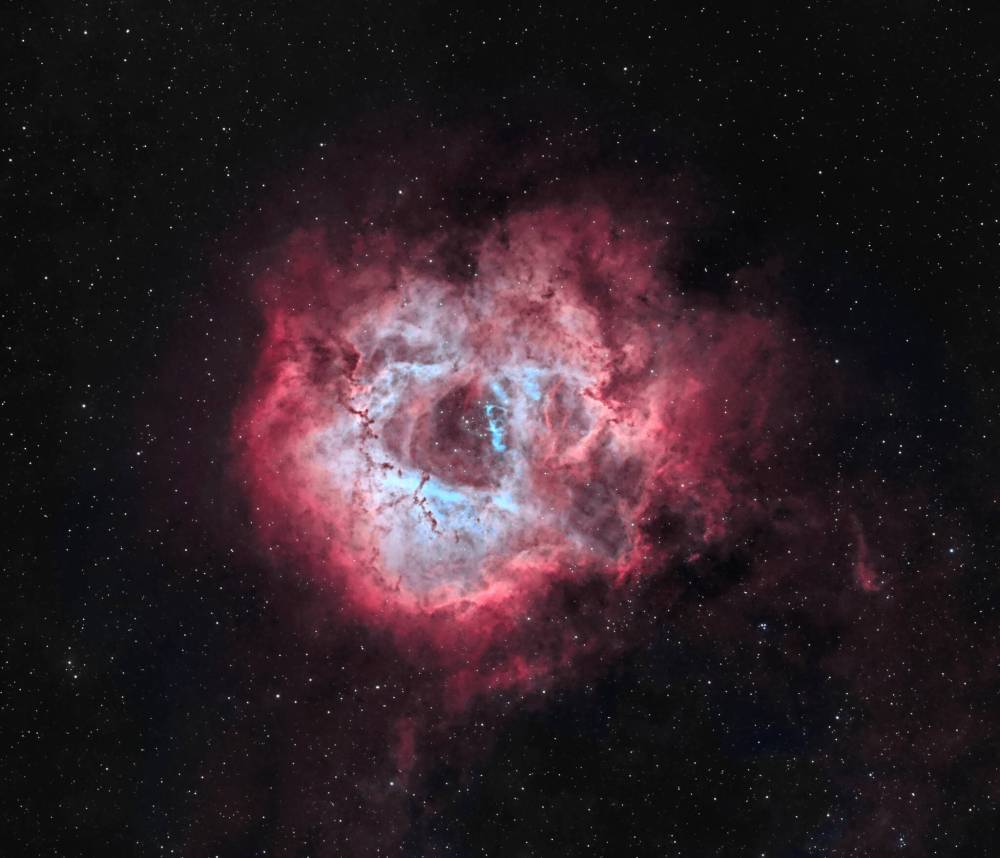
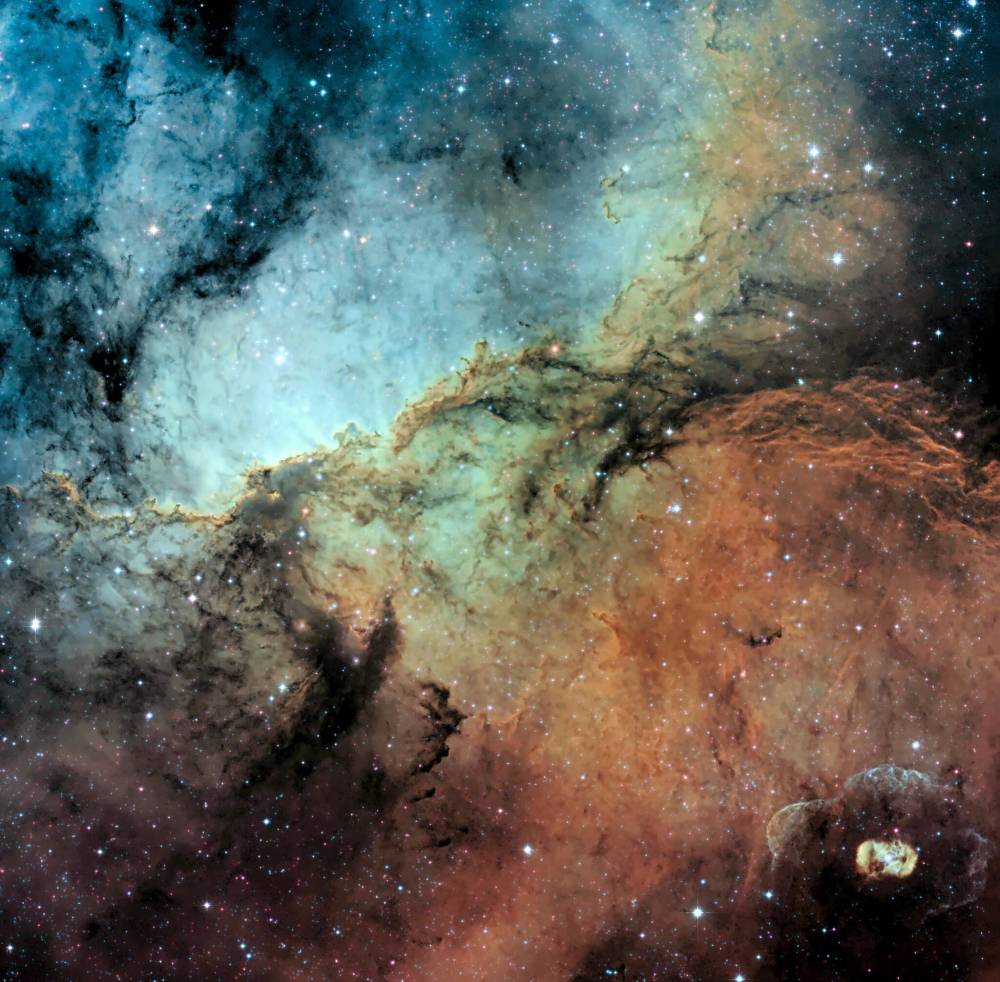
Multiple times a week, amateur astronomer Richard Konrad records images of galaxies, far, far away, through the lenses of telescopes stationed in southern Spain, the Utah desert or Chile’s Rio Hurtado Valley.
Is the 62-year-old grandfather a seasoned globetrotter who taps unlimited resources to pursue his hobby of astrophotography as he sees fit? Not even close, he says with a chuckle, seated inside a Portage Avenue coffee shop five minutes from his Westwood home. Rather, Konrad is among an ever-increasing number of celestial enthusiasts who rely on public internet-based services to capture out-of-this-world, high-res images of stars, nebulae and quasars, without ever having to set foot outside their kitchen or rec room.

“Before leaving the house for this interview, I was using a telescope in the Australian outback to try and get a picture of Messier 78,” he says, referring to a comet-like specimen situated in the constellation Orion so-named for French astronomer Charles Messier. “It was right there, only the conditions weren’t very favourable — it had been cloudy in that part of the country for two weeks — and because I had to go, it became a matter of, ‘OK, maybe next time.’”
Konrad, a married father of two adult sons, split his time growing up between Winnipeg and northern Ontario. He was living in Thunder Bay when his mother gave him a telescope as a gift for his 10th birthday. He couldn’t have cared less that it was a lesser model, likely purchased from K-Mart, he recalls. He figured out how to use it fairly quickly, and began studying the solar system for hours on end, after his parents hit the hay.
Describing himself as “single-focused,” he parked his telescope at age 13, in favour of music. After receiving a doctorate degree in piano from the University of Indiana in the early 1980s, he returned to Winnipeg, where he proceeded to teach piano, around classical performances of his own.
He guesses it was 16 years ago when his youngest son, now 22, became fascinated with astronomy. Instead of reading books at bedtime, the two of them would turn out the lights, stare out the window and imagine themselves flying off to distant destinations, describing what they were encountering, along the way.
To feed his son’s inquisitiveness, he brought home a telescope that offered a lot more “bang for the buck” than the one he had as a child. Around the same time, he joined the Royal Astronomical Society of Canada’s Winnipeg chapter, to help answer his son’s litany of questions with some sense of authority. The funny thing was, as his knowledge and renewed interest in the field grew, his son eventually moved on to “whatever, you know what kids are like.”
Undaunted, Konrad bought a superior telescope to the one he gave his son, then another, then another. “The last one I got weighed over 200 pounds, and was so big I had to buy a trailer, expressly to transport it outside the city, away from all the lights and such,” he says. “It was also so tall, I needed an eight-and-a-half-foot ladder to see through it.”
Konrad continued in that vein for a number of years, driving to rural areas after sundown to stargaze for a few hours. That was, until his wife began dealing with insomnia, which caused him to feel horribly if he returned home at three or four in the morning, only to rouse her from a sound sleep by opening a door or slipping out of his coat and shoes.
Obviously, a telescope isn’t much use during the day, so his thought was “I guess that’s it.” At the end of the day, ensuring she was sleeping properly was much more important than anything he was up to, he says matter-of-factly.

Konrad isn’t sure how his wife twigged into Itelescope, which bills itself as one of the “leaders in internet astronomy since 2006.” All he knows is that for Christmas 2018, he received a trial membership that allowed him to access telescopes on the other side of the world when it was broad daylight here in Winnipeg. Before you could say “beam me up, Scotty,” he was using Itelescope to take photos of this object or that, which he excitedly turned around and shared with friends and family on social media.
Here’s the way it works, he says, holding out his phone to show off a rainbow-coloured image of the Tarantula Nebula, located 160,000 light years from Earth. After reserving a block of time, usually an hour, he punches into a booking system the co-ordinates of what he’s hoping to view on any particular day. Itelescope, which offers various membership plans, including tutorials and free trials, handles everything from there. When it’s his turn to log onto the chosen telescope through his phone or laptop, it should be aimed precisely as requested.
That’s maybe 10 per cent of the hobby, he continues. The other 90 per cent is processing.
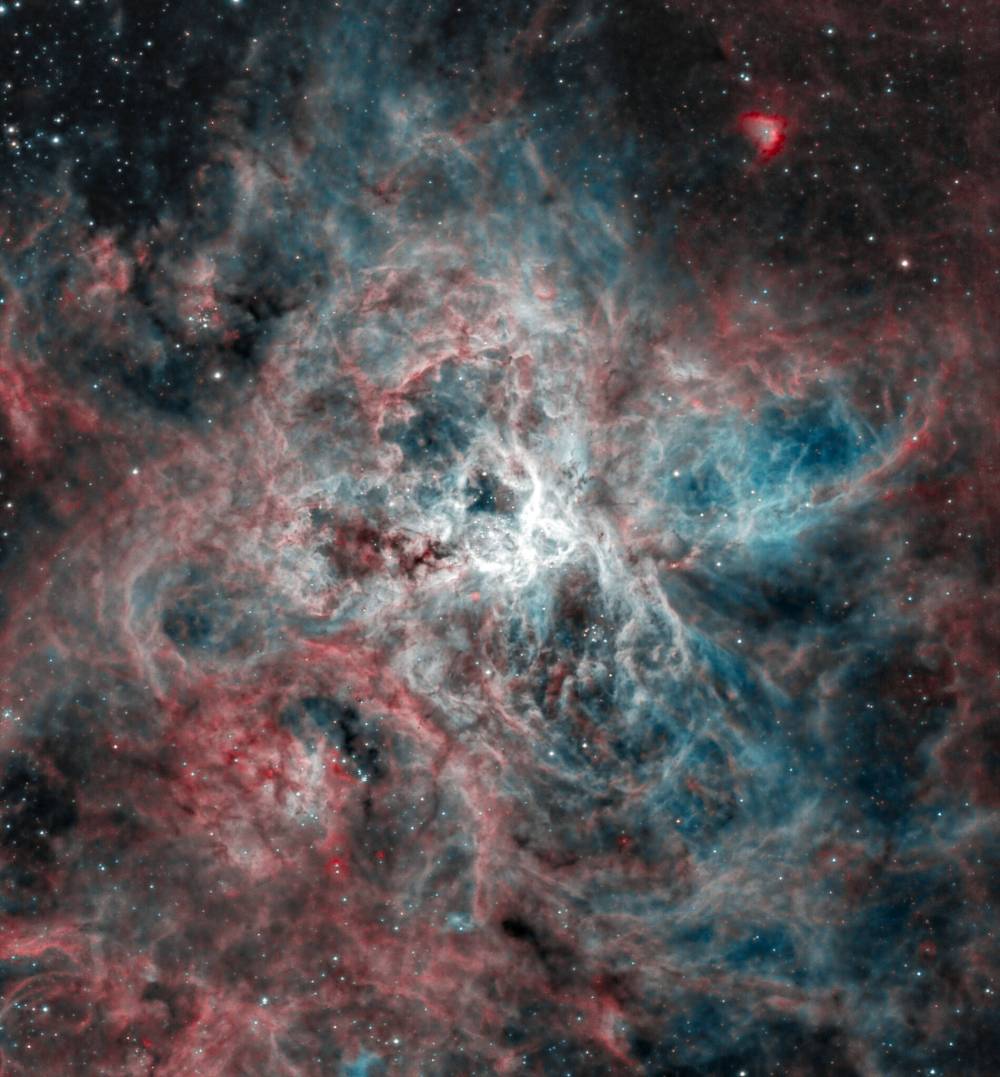
“It’s not like snapping a picture of the moon in the sky. What you’re receiving is scientific data, or linear data, and your job is to then interpret and render it into a way that our brain sees things. From that point on, the hobby becomes less about science and more about art.”
One of the places Konrad regularly shows off his handiwork is Manitoba Astronomy, a Facebook group with 1,200 members. Scott Young, an administrator for the group, says he always looks forward to seeing what Konrad has been up to.
“I mean, Richard’s photos are so good, I have to double-check whether they’re his, or from the Hubble (Space Telescope),” says Young, who also serves as a Planetarium Astronomer with the Manitoba Museum.
Young has tried his hand at Itelescope and similar sites, on occasion. He is also familiar with people in the city and province who do something similar with their own equipment, albeit, on a much smaller scale.
“The technology during the last 10 years has progressed so much that it’s reached a point where you can stick a camera on your telescope in the backyard, run a cable from it to your laptop or computer, and take pictures while you’re inside, watching a movie,” he says, noting that type of scenario would have been tremendously cost-prohibitive, as little as 25 years ago. From there, he says it isn’t that big a stretch to station one’s telescope in a darker, more desirable location, say a farm property, and, by going through the internet, doing the same thing, saving yourself a two- or three-hour commute.

“It’s all about convenience, right? Under the old way of doing things, if it was cloudy in your backyard, there wasn’t much you could do except try again the next night,” Young says, explaining his own interest in the heavens started precisely at 11:16 a.m., Feb. 26, 1979. (If you know, you know.)
“Nowadays, however, there’s more than likely a telescope out there that will offer a perfect view of what you’re interested in, and you’ll get all the data you’re looking for from the comfort of your living room.”
Back at the coffee shop, Konrad smiles when asked how he decides what to set his sights on next, given there are an estimated two trillion galaxies in the observable universe. That can be a problem, he concedes, noting it’s mostly a case of doing his homework, then telling himself, “ooh, I really want to have a look at that, next.” (Our fave of his? One nicknamed the Statue of Liberty nebula, because of a star formation that strongly resembles the New York City landmark at its centre.)
“But you’re right, with that number I’m never going to run out of things to target, and that’s fine by me. I totally feel like a kid again when I’m doing this, and can’t imagine tiring of it any time, soon.”
david.sanderson@freepress.mb.ca
Dave Sanderson was born in Regina but please, don’t hold that against him.
Our newsroom depends on a growing audience of readers to power our journalism. If you are not a paid reader, please consider becoming a subscriber.
Our newsroom depends on its audience of readers to power our journalism. Thank you for your support.