Art deco civic building bears signs of the times Main Street office tower built with depression-era public perception and government priorities in mind
Read this article for free:
or
Already have an account? Log in here »
To continue reading, please subscribe:

Digital Subscription
One year of digital access for only $205*
- Enjoy unlimited reading on winnipegfreepress.com
- Read the E-Edition, our digital replica newspaper
- Access News Break, our award-winning app
- Play interactive puzzles
*First annual payment billed as $205.00 + GST for one year. This annual subscription will automatically renew at $233.00 + GST every 52 weeks (10% off the regular annual price of $259.35). Offer available to new and qualified returning subscribers only. Cancel any time.
To continue reading, please subscribe:
Add Free Press access to your Brandon Sun subscription for only an additional
$1 for the first 4 weeks*
- Enjoy unlimited reading on winnipegfreepress.com
- Read the E-Edition, our digital replica newspaper
- Access News Break, our award-winning app
- Play interactive puzzles
*Your next Brandon Sun subscription payment will increase by $1.00 and you will be charged $17.95 plus GST for four weeks. After four weeks, your payment will increase to $24.95 plus GST every four weeks.
Read unlimited articles for free today:
or
Already have an account? Log in here »
Hey there, time traveller!
This article was published 03/08/2024 (797 days ago), so information in it may no longer be current.
By day, the Federal Building, located at 269 Main St., is a serious, hardworking office structure, housing government departments and civil servants. By night, the art deco-inflected building has a bit of a noir-ish Gotham City vibe. You can imagine Batman standing on that dramatic 11-storey tower, looking out over the skyline and brooding.
Day or night, this 1936 structure, which has also been known as the Victory Building and the Dominion Public Building, is evocative and eye-catching.
“Art deco, to my mind, is a fan favourite,” says Jeffrey Thorsteinson, a Winnipeg-based architectural historian. “As a style, it’s an entryway to modernism.”
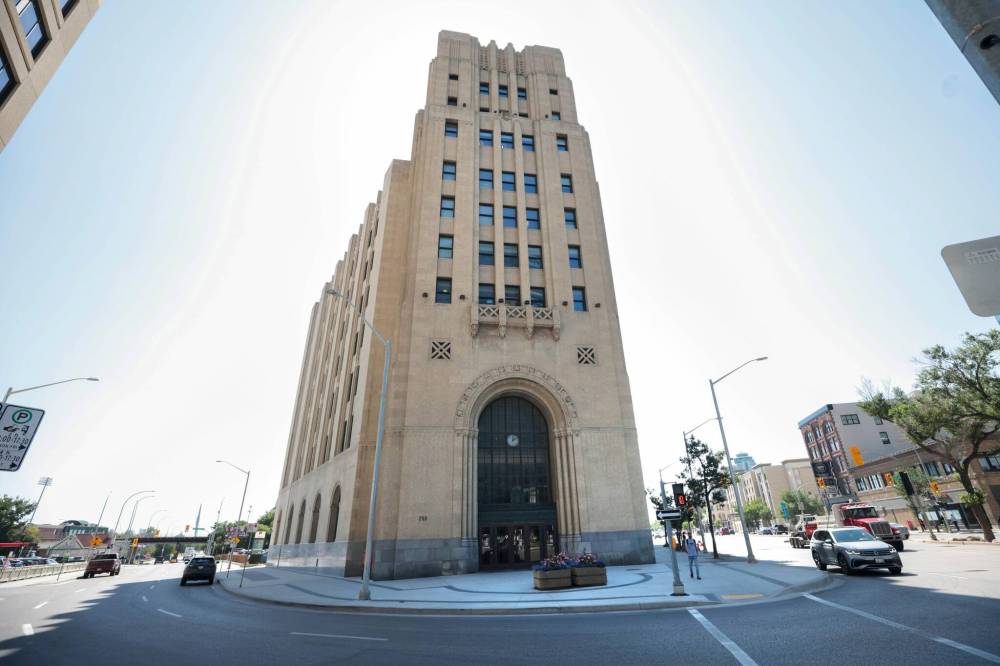
Art deco buildings often express a “transitional vision, with some projects looking quite modern but still retaining some artwork and ornament,” Thorsteinson suggests.
Art deco came out of several design trends that coalesced around the Paris Exposition of 1925. Associated with machine-age newness, the style combines modern materials and streamlined shapes with gorgeous geometric patterning and urbane elegance. In architecture, art deco favours sleek, symmetrical forms, stepped elements and vertical energy, as seen in iconic 20th-century skyscrapers such as the Chrysler Building in New York.
And unlike later modernist movements that take a firm form-follows-function stance by eschewing purely ornamental elements, art deco revels in decorative details, often expressed through stone sculptural friezes or elaborate tiling.
The Federal Building has art deco attributes, but channels “the more dignified, restrained version preferred by government,” Thorsteinson says. As he goes on to explain, while the building is undeniably stylish, its origins are pragmatic, coming out of government works programs created in the depths of the Great Depression.
Manitoba’s economy had already slowed in the 1920s, and with the ‘29 stock market crash and the subsequent depression, big construction projects had mostly stopped. Breaking ground on the Federal Building was made possible through funding from a City of Winnipeg 1932 relief program and the federal government’s Public Works Construction Act of 1934.
Though not quite as extensive as Franklin Delano Roosevelt’s Works Progress Administration (WPA) program in the United States, the Canadian initiative undertook large construction projects across the country in order to boost employment and production, supply needed infrastructure and stimulate economic recovery.
According to Thorsteinson, “In terms of prominent art deco buildings in western Canada, it really was these government buildings that were in that WPA vein.”
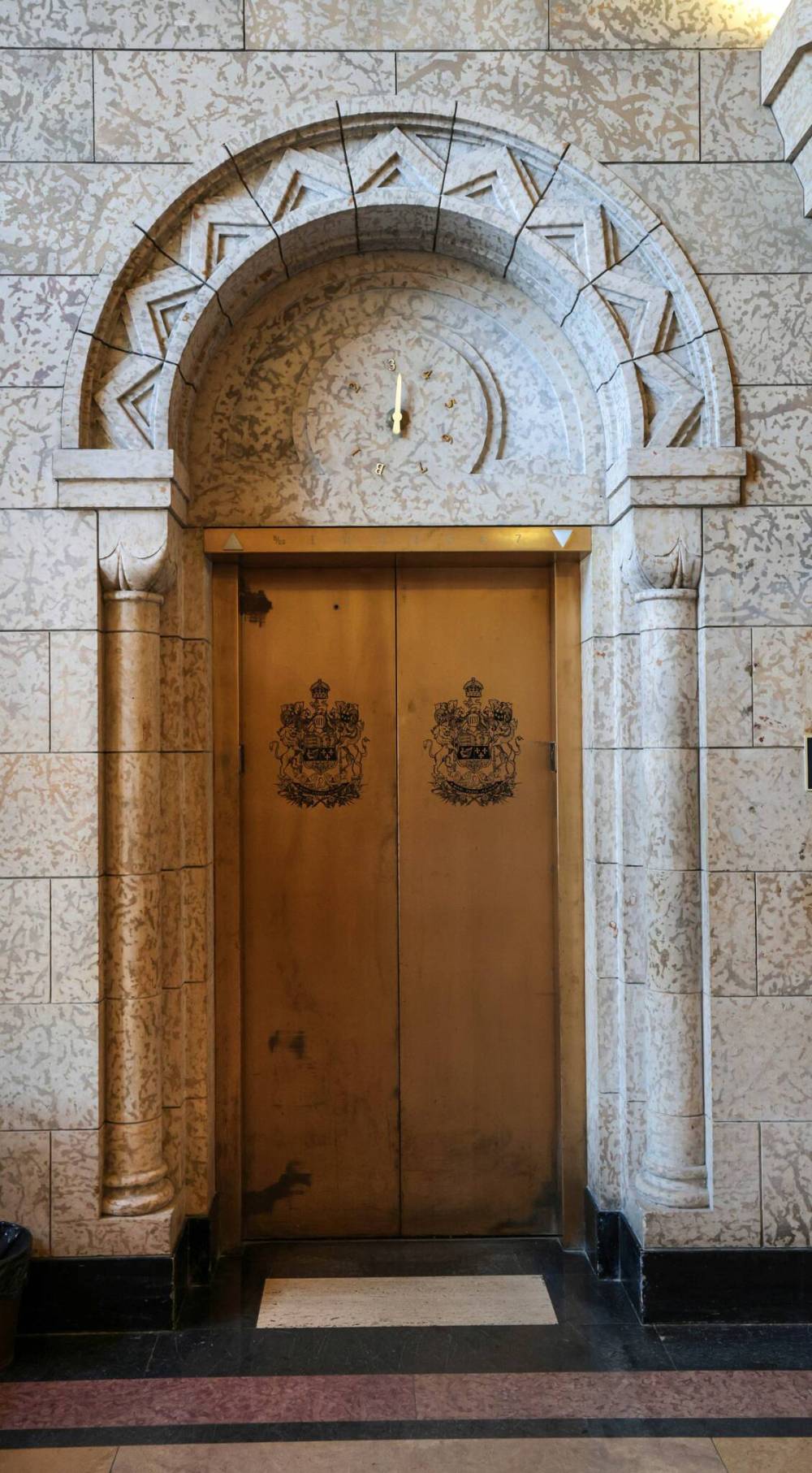
As one of the largest structures erected in Canada under the Construction Act during the economically straitened 1930s, the Federal Building’s design and building process was important. The project used local materials, including Manitoba Tyndall stone, and employed local trades, contractors, engineers and architects, providing knock-on economic benefits for the province.
But the final product was also crucial. The Federal Building — designed by architect George W. Northwood, a partner in the Winnipeg firm Northwood & Chivers — had to deliver two messages at once. During this period of social uncertainty and anxiety, it had to embody strength and solidity, reinforcing the idea that the federal government offices it housed could be relied on. At the same time, with so many Manitobans suffering from economic hardship, the structure couldn’t be seen as flashy or overly luxurious.
“It has a big presence,” says Thorsteinson, but also lots of lovely small details, from the beautifully subtle colours of the lobby’s patterned ceiling to the carved bison heads above the main door.
“The Federal Building has to be thought of as an amalgam of styles. It’s a fusion of the modern with multiple historic touches — Romanesque, Gothic — and then an incorporation of Canadian elements, as well.
“It was a CanCon era.”
Just as the Group of Seven was trying to develop distinctly Canadian images in painting, architects were exploring homegrown design motifs, especially on government buildings.
“Deco does give you space for figurative art,” Thorsteinson points out, noting that during the Depression, “you had a lot of angular postal workers, or men and women with shovels, conveying a ‘Let’s rebuild’ message.”
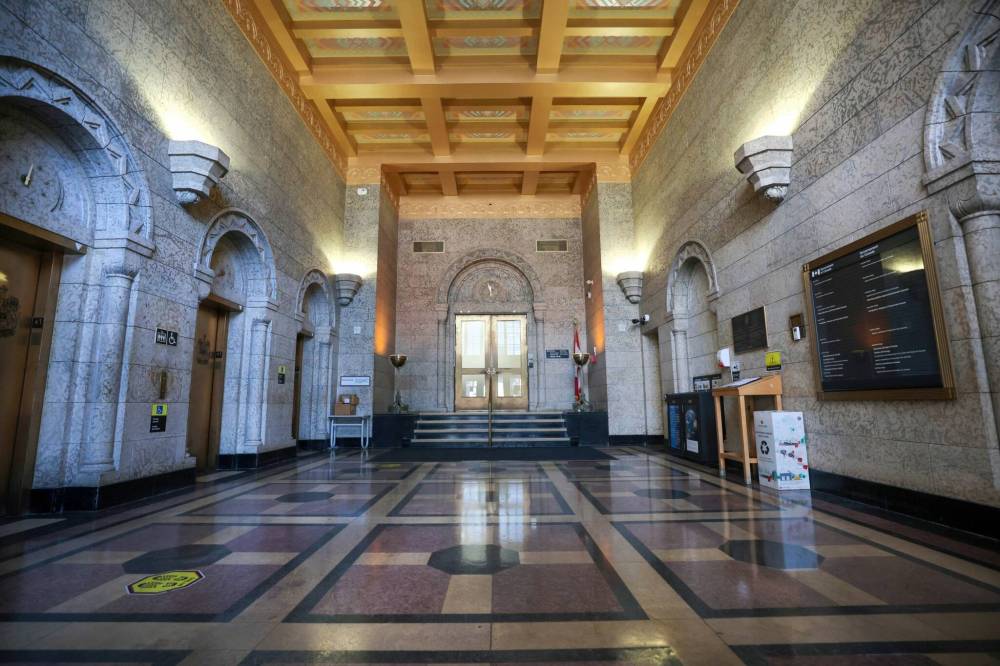
There are no figurative elements in the Federal Building’s design scheme, but decorative motifs favour prairie flora and fauna, including wheat sheafs and thistles, wild ducks and rabbits.
These repeated images, on the building’s exterior and interior, around windows, doorways and light fixtures, also tie into the project’s roots in the Construction Act.
“It was a stimulus program. All the carving on the Federal Building would have meant more jobs. There’s this modernist idea that ‘ornament is crime,’ but ornament is also employment,” Thorsteinson says.
In structural terms, the Federal Building reaches to 11 storeys with is vertically oriented art deco tower, but there’s a plainer, more horizontal emphasis along the building’s seven-storey Main Street face that connects it to “streamline Moderne,” a deco-adjacent interwar style.
Though this is an international movement, Thorsteinson sees regional dimensions as well, with the broad planes of local stone echoing the broad plains of the prairies.
There’s also something Winnipeggy about the way the building’s vertical and horizontal elements converge on its arched entranceway, which is unusually positioned, helping to fit the building into an oddly angled, wedge-shaped site.

“Winnipeg is filled with funny lots like we see with the WAG. Because of all the grids and their evolution, we have a fair amount of Flatiron Building situations,” Thorsteinson explains.
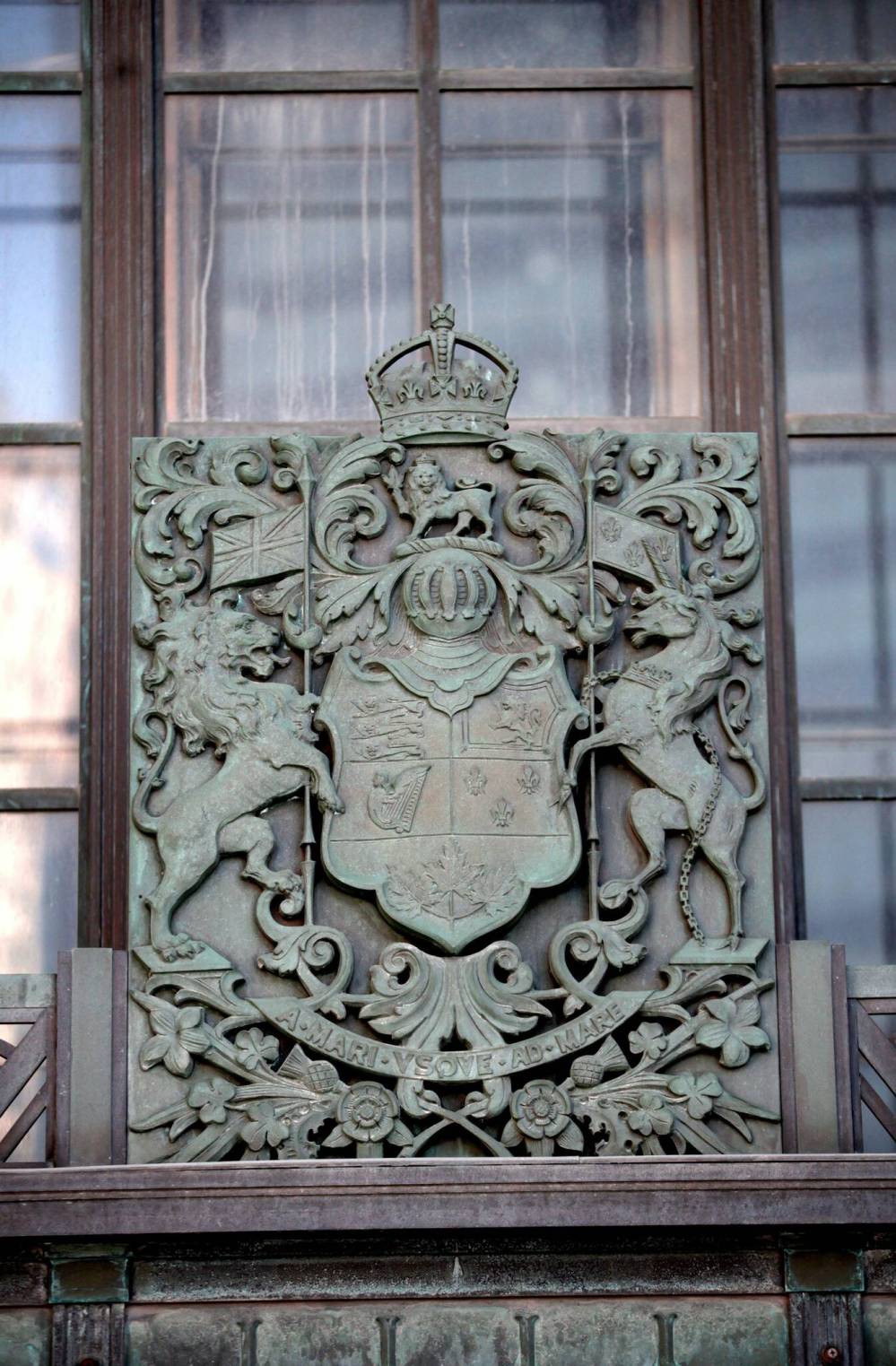
The dramatic, detailed, double-height doorway emphasizes the structure’s unique orientation.
“It really faces Portage and Main,” Thorsteinson suggests, historically our town’s most famous intersection.
In a larger sense, the Federal Building, when it opened in 1936, was oriented toward the future. During the difficult times of the Great Depression, Northwood’s design — solid, serenely beautiful, ambitious but not ostentatious and reassuringly Canadian — would have offered weary Winnipeggers some hope for a better tomorrow.
fparts@freepress.mb.ca
Landmarks
A regular series that looks at the structure and spaces that shape Winnipeg.

Studying at the University of Winnipeg and later Toronto’s York University, Alison Gillmor planned to become an art historian. She ended up catching the journalism bug when she started as visual arts reviewer at the Winnipeg Free Press in 1992.
Our newsroom depends on a growing audience of readers to power our journalism. If you are not a paid reader, please consider becoming a subscriber.
Our newsroom depends on its audience of readers to power our journalism. Thank you for your support.