Prairie pictures Archives of pioneering Manitoba naturalist to be documented in new book
Read this article for free:
or
Already have an account? Log in here »
To continue reading, please subscribe:

Digital Subscription
One year of digital access for only $205*
- Enjoy unlimited reading on winnipegfreepress.com
- Read the E-Edition, our digital replica newspaper
- Access News Break, our award-winning app
- Play interactive puzzles
*First annual payment billed as $205.00 + GST for one year. This annual subscription will automatically renew at $233.00 + GST every 52 weeks (10% off the regular annual price of $259.35). Offer available to new and qualified returning subscribers only. Cancel any time.
To continue reading, please subscribe:
Add Free Press access to your Brandon Sun subscription for only an additional
$1 for the first 4 weeks*
- Enjoy unlimited reading on winnipegfreepress.com
- Read the E-Edition, our digital replica newspaper
- Access News Break, our award-winning app
- Play interactive puzzles
*Your next Brandon Sun subscription payment will increase by $1.00 and you will be charged $17.95 plus GST for four weeks. After four weeks, your payment will increase to $24.95 plus GST every four weeks.
Read unlimited articles for free today:
or
Already have an account? Log in here »
Hey there, time traveller!
This article was published 07/10/2024 (687 days ago), so information in it may no longer be current.
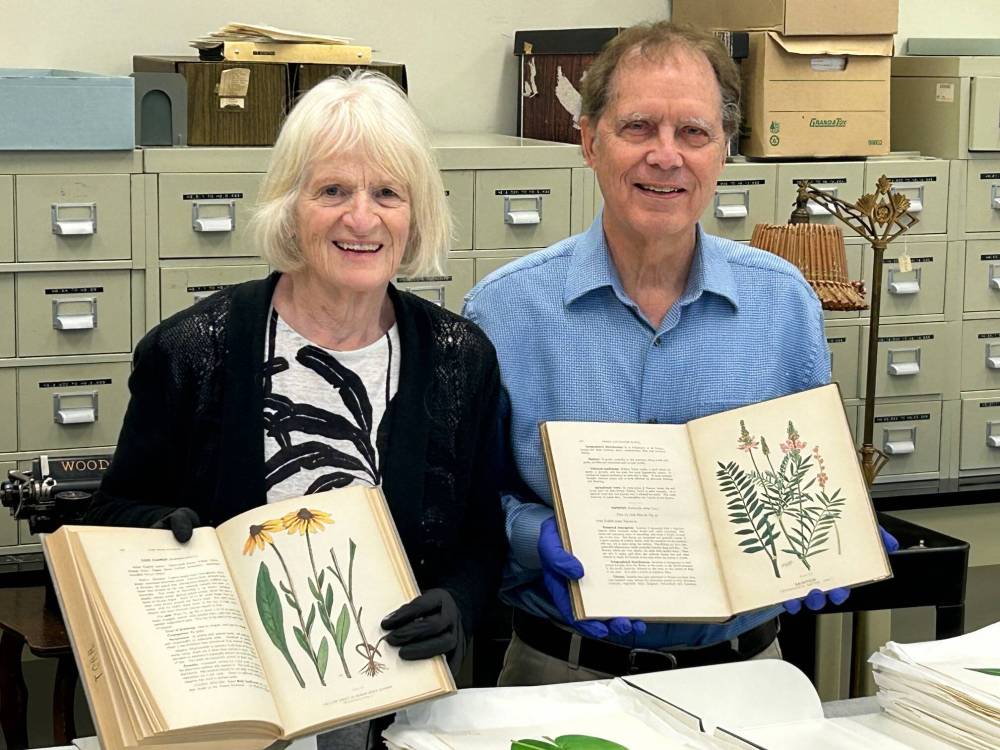
Wearing tight-fitting conservation gloves, ecologist Robert Wrigley and botanist Jackie Krindle gently sift through an extensive series of vibrant 125-year-old watercolour paintings of native wildflowers in the Manitoba Museum’s sixth-floor Human History lab.
Skilfully rendered pitcher plants, orchids and violets, among many other multi-hued wildflowers, capture a viewer’s attention.
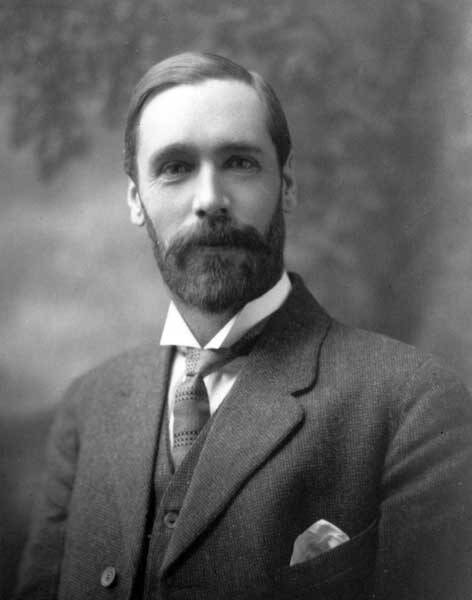
The creator of these 10- by 16-inch timeless works of art was Norman Criddle (1875-1933), the son of British immigrants who in 1882 homesteaded on the unbroken mixed-grass prairie southeast of Brandon.
“As a youth, he began to study and paint the wildflowers and insects he found in the local Carberry Sandhills and aspen parkland,” notes biographical information penned by Wrigley about Criddle, also a noted entomologist who is credited with discovering an effective method for killing locusts known as the Criddle mixture.
“Without formal training, he later contributed 103 attractive watercolour paintings of farm- and garden-related plants to two books published by the Department of Agriculture, Dominion of Canada, in 1909 and 1913.”
Wrigley and Krindle are preparing a book illustrating 200 of Criddle’s paintings along with species accounts.
The Criddles first lived in a tent at their homestead, known as Aweme, before building a wood cabin that Norman’s father, Percy Criddle, christened St. Albans.
Family tree
Norman Criddle’s father, Percy Criddle, moved to Canada with his wife, Alice, and his mistress, Elise Vane. At the time, they had nine children between them, ranging from age two to 14.
Norman Criddle’s father, Percy Criddle, moved to Canada with his wife, Alice, and his mistress, Elise Vane. At the time, they had nine children between them, ranging from age two to 14.
Roland Sawatzky, curator of history at the Manitoba Museum, notes that the Criddle-Vane family arrived in Manitoba in 1882, settling south of Brandon at a homestead known as Aweme.
“There they set up a large manse of sorts, and tried to re-establish a hint of the lifestyle they had enjoyed in England, with theatre and music nights, golf and tennis courts, and amateur scientific pursuits, like etymology and botany,” Sawatzky says via email.
“Norman Criddle arrived with his parents at the age of seven, and when he grew up he took up natural science, painting hundreds of Prairie plants and insects in intricate watercolours.”
His grandmother, Mary Ann Alabaster Criddle, was a well-known artist in England, while Percy was a prolific composer of songs.
“Art and science were equally respected and practised in the family, and in Norman Criddle, the two combined to create beautiful Manitoban scientific paintings, many published in colour in national botanical books,” Sawatzky writes.
Over 500 of Norman Criddle’s paintings were donated to the museum years ago, but recently dozens more were found in the possession of family members; they were also donated. The donation included original Percy Criddle musical compositions, mor than 100 sketches and paintings by Mary Ann Criddle and hundreds of family letters, he says.
“This huge collection covers many disciplines and over 150 years of history, showcasing the endeavours of a single family that contributed so much to the province and the nation.”
The Criddle-Vane homestead, located in the Municipality of Glenboro-South Cypress, was declared a Manitoba Provincial Heritage Park in 2004.
“While I was preparing an article on the scientific achievements of Norman in entomology and botany, and his brother Stuart in mammalogy, I visited the Manitoba Museum, where I knew (as a former curator and museum director) there existed a substantial archival collection of paintings, animal specimens and artifacts from the Criddle family,” Wrigley says.
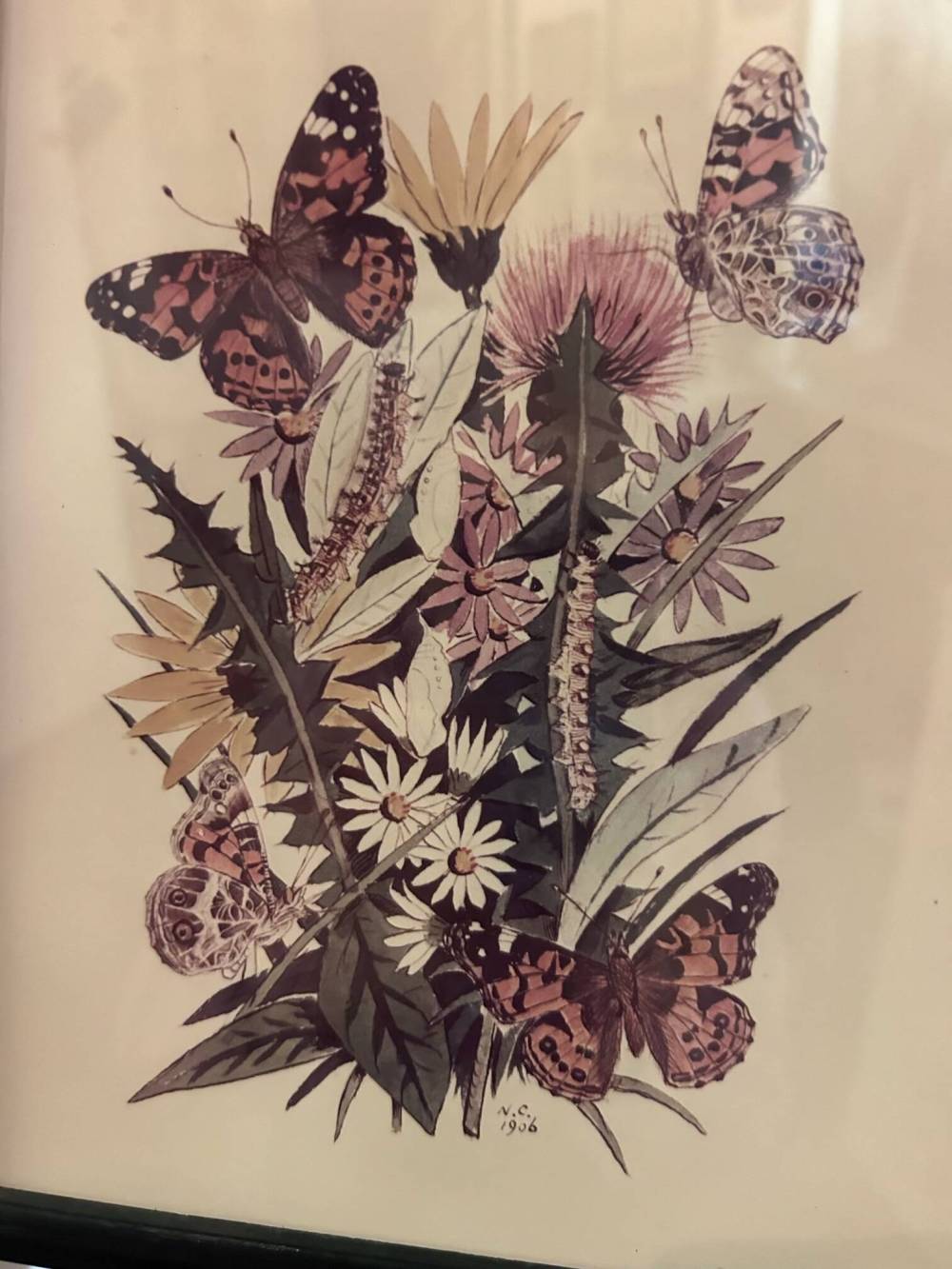
“I was amazed to learn that the museum held at least 600 watercolour paintings by Norman, from his early attempts at flowers, birds, farm animals and landscapes, to over 450 highly detailed paintings of plants, birds, butterflies and moths,” Wrigley adds.
Also present in the lab on this September morning is Cortney Pachet, collections technician in human history.
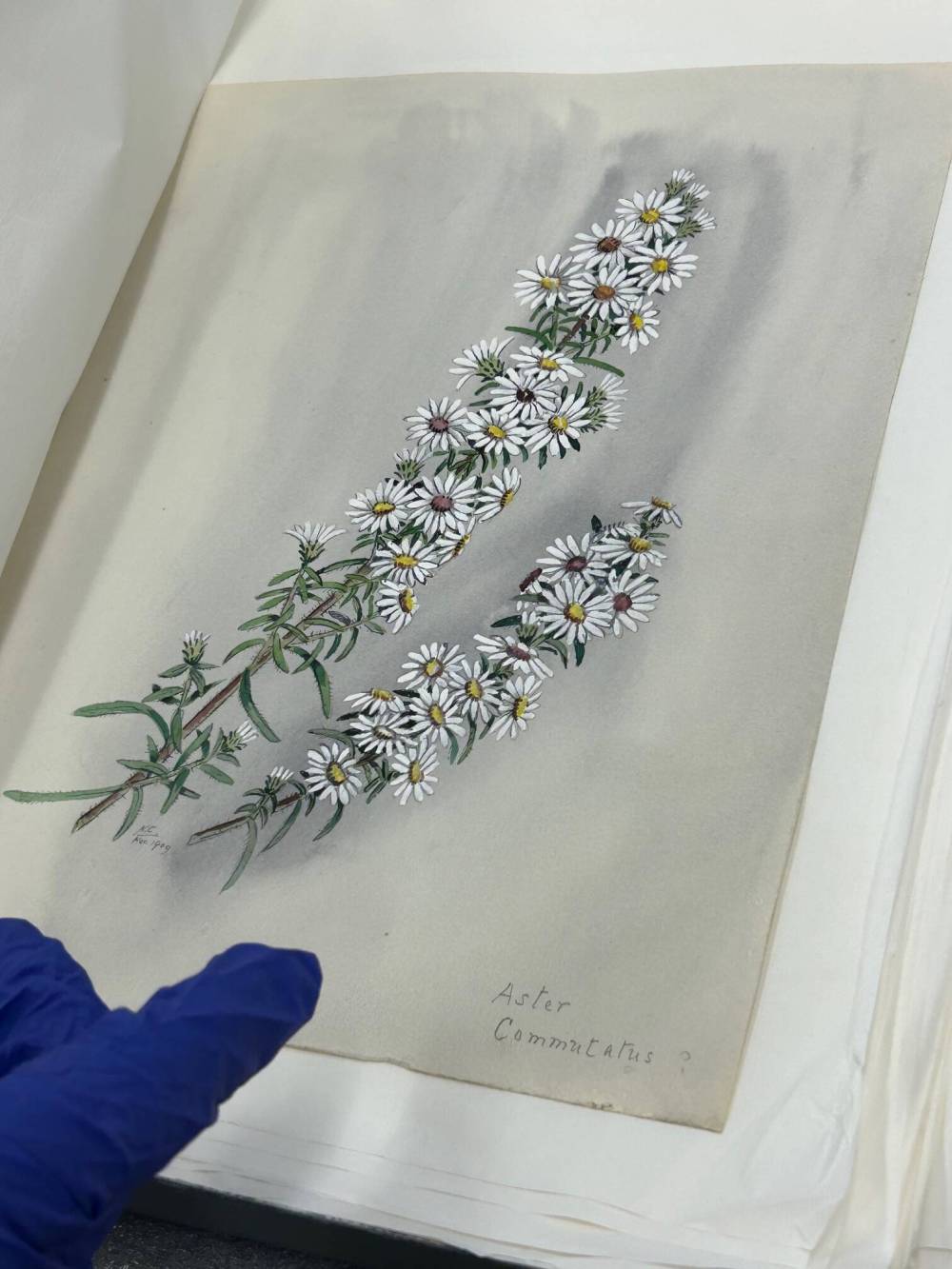
She explains that Criddle’s paintings are stored in special archival boxes separated between sheets of acid-free paper so they don’t contact other materials whose chemical content might damage the paintings.
“They will be well preserved for centuries. We do cycle several at a time in our Parklands Gallery, where we have a permanent exhibit on the Criddle family,” she says.
The exhibit contains a few significant pieces about the settlers, including the book Criddle-de-diddle-ensis: A Biographical History of the Criddles of Aweme, Manitoba: Pioneers of the 1880’s by Alma Criddle.
“We also have a beautiful inlay box made with mother-of-pearl, which came from the Assiniboine River near their home. Then we have a rotation of watercolours by Norman featuring a hawthorne and the cutleaf cone flower,” Pachet says
There’s also a photo of a smiling, moustached Norman Criddle in the exhibit, with two of his four pet crows — named Impy, Hoppy, Demon and Satan — perched on his hat.
“He doted on them,” Pachet says.
The Criddle family was interested in all facets of science and art. One photo shows father Percy standing by his telescope out in the yard; Pachet notes that there was a microscope inside the home.
“There were also meteorological instruments to track weather records daily. The meteorological records are here at the museum. We also have a sizable collection of their inlay work,” she says.
A vertical display case in the museum’s Prairies Gallery also contains samples of seeds in vials with twist-top lids that Criddle — who worked for the Department of Agriculture with weeds and weed seeds before becoming a full-time entomologist — collected over the years.
There are at least 100 such test tubes on display.
“All of them are meticulously labelled,” Pachet says. “A lot of them are of Prairie plants collected on his property and across Manitoba.”
Criddle’s watercolours were equally detailed.
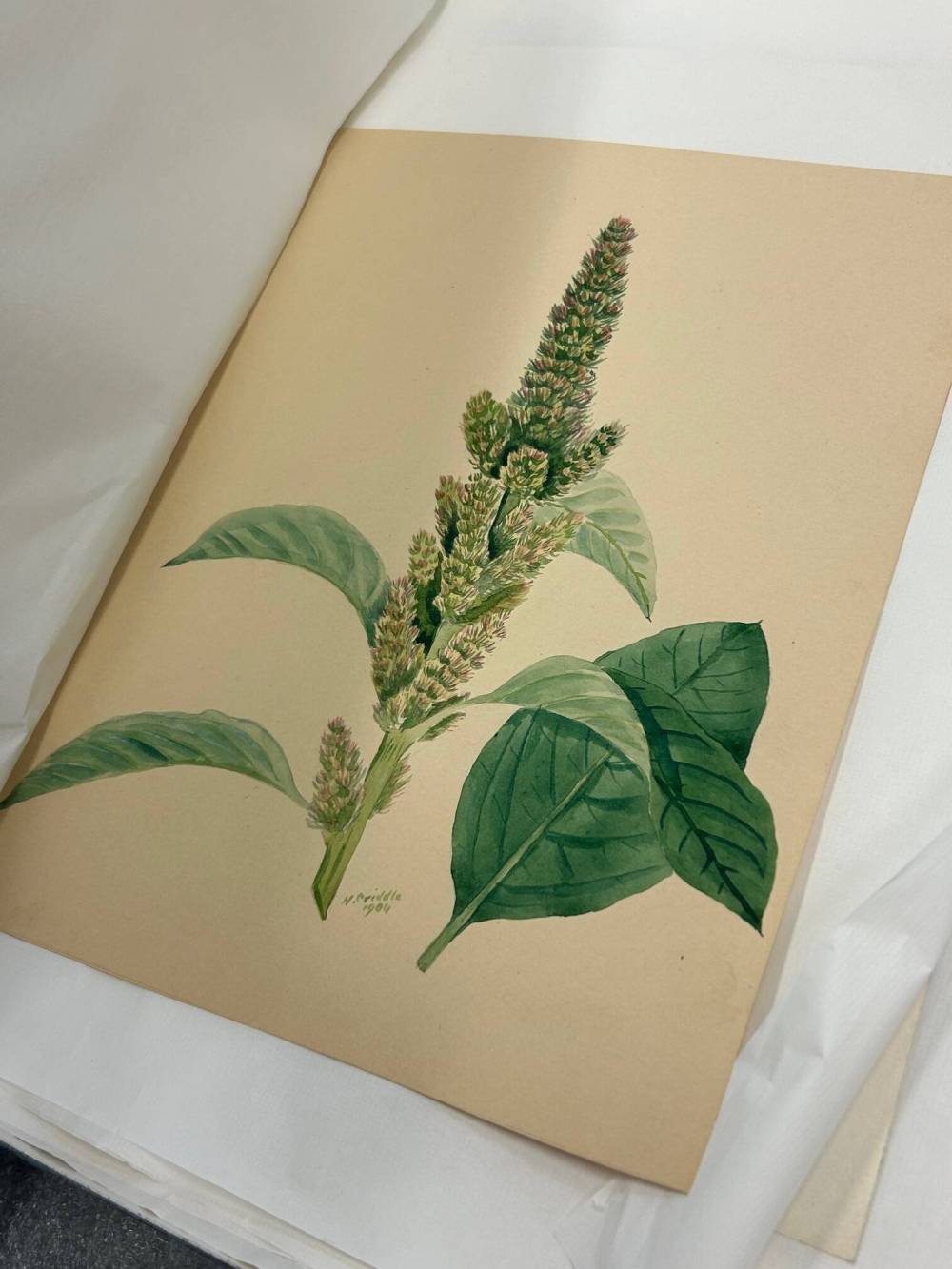
Back in the lab, Krindle, a longtime museum volunteer and former field consultant on environmental-impact studies, says it’s particularly notable that Criddle painted the plants when they were in bloom in the field, rather than picking them.
She pauses to admire a painting of a pair of Rose-breasted Grosbeaks perched on a flowering shrub.
“I suspect he spent some time observing the birds, and later arranged the pair perched on a flowering cherry. He’s captured the rich feather colours and their thick beaks, and the arrangement of the birds among the twigs is perfectly designed,” she says.
Krindle then points to a painting of two woodland orchids from Manitoba dated June 26, 1926.
“They’re quite tiny. He drew them a bit larger than life-size. They’re found growing among moss on the forest floor,” she says.
She also comments that one of the plants has a “long lip,” which is very important in identification.

“Whereas if you look at this one, it doesn’t have that lip at all and it has long hairs on the petals and leaves, so it’s an example of how detailed his observations and paintings were,” Krindle explains.
For a first-time viewer of Criddle’s art work, the flower paintings of celebrated 19th-century artists Vincent Van Gogh, Claude Monet and Henri Fantin-Latour spring to mind. Such paintings (and a few drawings) reveal Criddle’s pleasure in capturing the beauty of nature.
“I marvel at the skill he brought in identifying every little nuance of these paintings,” Krindle says.
“To see it in a drawing is great because you can examine every plant feature in detail, like tiny hairs which do not show well in a photograph. Part of my job is to confirm the plants’ recent scientific name, since many of these have been changed over the decades. With Norman’s eye for detail, I have no doubt about the species with which he was dealing.”
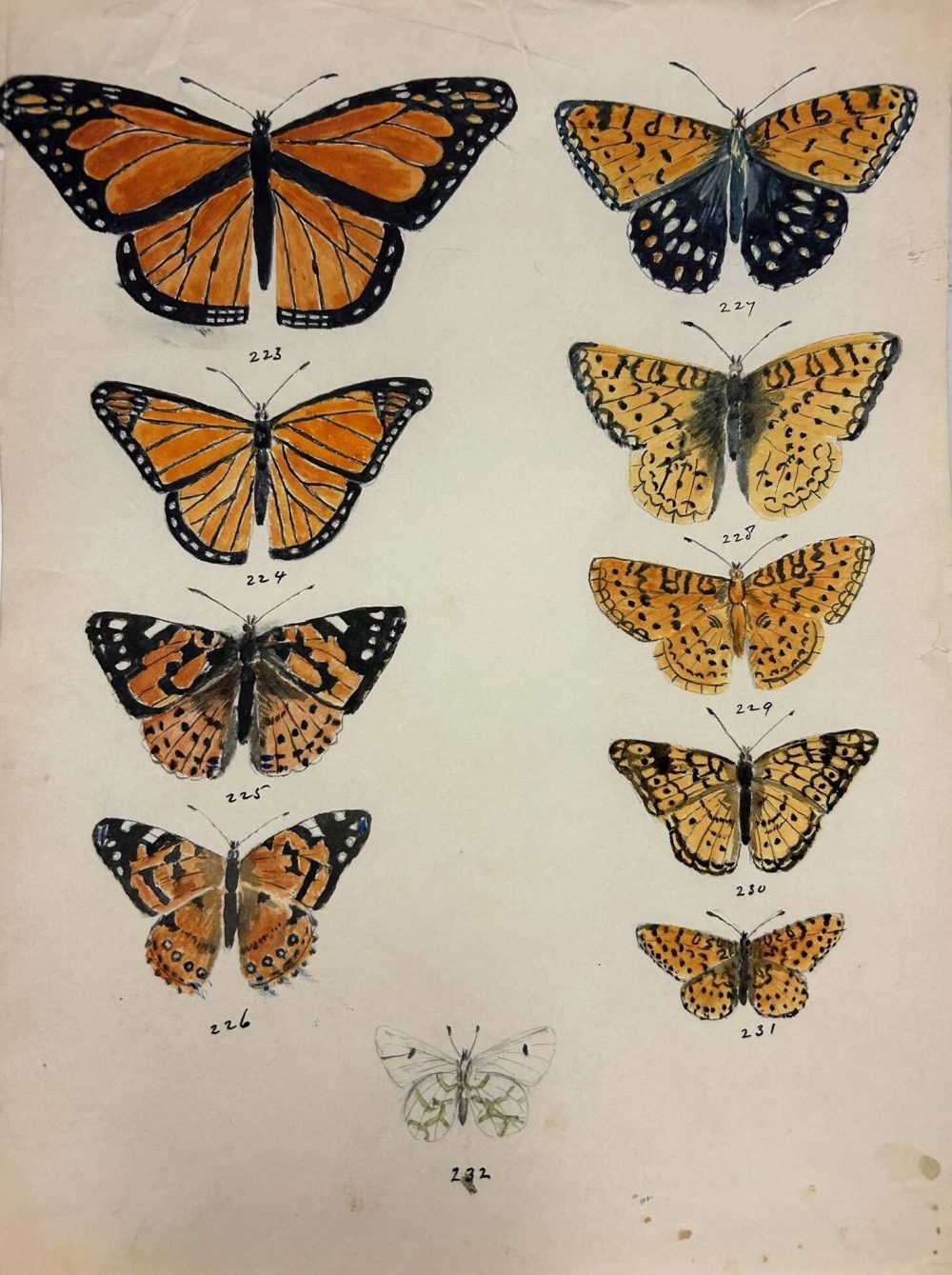
Wrigley emphasizes that the Criddle collection is too wonderful a treasure to remain hidden in the museum’s storage area.
“The public should know that something as beautiful as this was accomplished by a pioneer naturalist in our own province,” he says, adding that’s why he and Krindle decided to collaborate on a book about his work.
“As an ecologist, I am so excited about Norman Criddle’s outstanding achievement in painting this volume of accurately portrayed artwork. The collection holds such natural — and human — history significance.”
Thanks to the efforts of these two devoted naturalists, Criddle’s amazing achievements in capturing the splendour of prairie and woodland plants will soon be better known and enjoyed by those who love nature.
arts@freepress.mb.ca