The ups and downs of reconciliation New play set in downtown elevator trapped between floors
Read this article for free:
or
Already have an account? Log in here »
To continue reading, please subscribe:

Digital Subscription
One year of digital access for only $205*
- Enjoy unlimited reading on winnipegfreepress.com
- Read the E-Edition, our digital replica newspaper
- Access News Break, our award-winning app
- Play interactive puzzles
*First annual payment billed as $205.00 + GST for one year. This annual subscription will automatically renew at $233.00 + GST every 52 weeks (10% off the regular annual price of $259.35). Offer available to new and qualified returning subscribers only. Cancel any time.
To continue reading, please subscribe:
Add Free Press access to your Brandon Sun subscription for only an additional
$1 for the first 4 weeks*
- Enjoy unlimited reading on winnipegfreepress.com
- Read the E-Edition, our digital replica newspaper
- Access News Break, our award-winning app
- Play interactive puzzles
*Your next Brandon Sun subscription payment will increase by $1.00 and you will be charged $17.95 plus GST for four weeks. After four weeks, your payment will increase to $24.95 plus GST every four weeks.
Read unlimited articles for free today:
or
Already have an account? Log in here »
Hey there, time traveller!
This article was published 23/04/2025 (514 days ago), so information in it may no longer be current.
In choosing the setting for his first professional play, Elevate: Manaaji’idiwin, the sky was the limit for David McLeod.
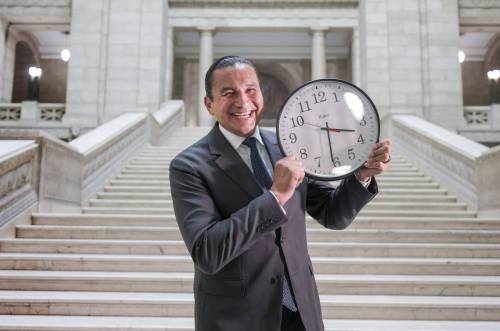
MIKE DEAL / FREE PRESS David McLeod is the writer of Elevate: Manaaji’idiwin, which runs from April 23 to May 17 at the RMTC’s MainStage. 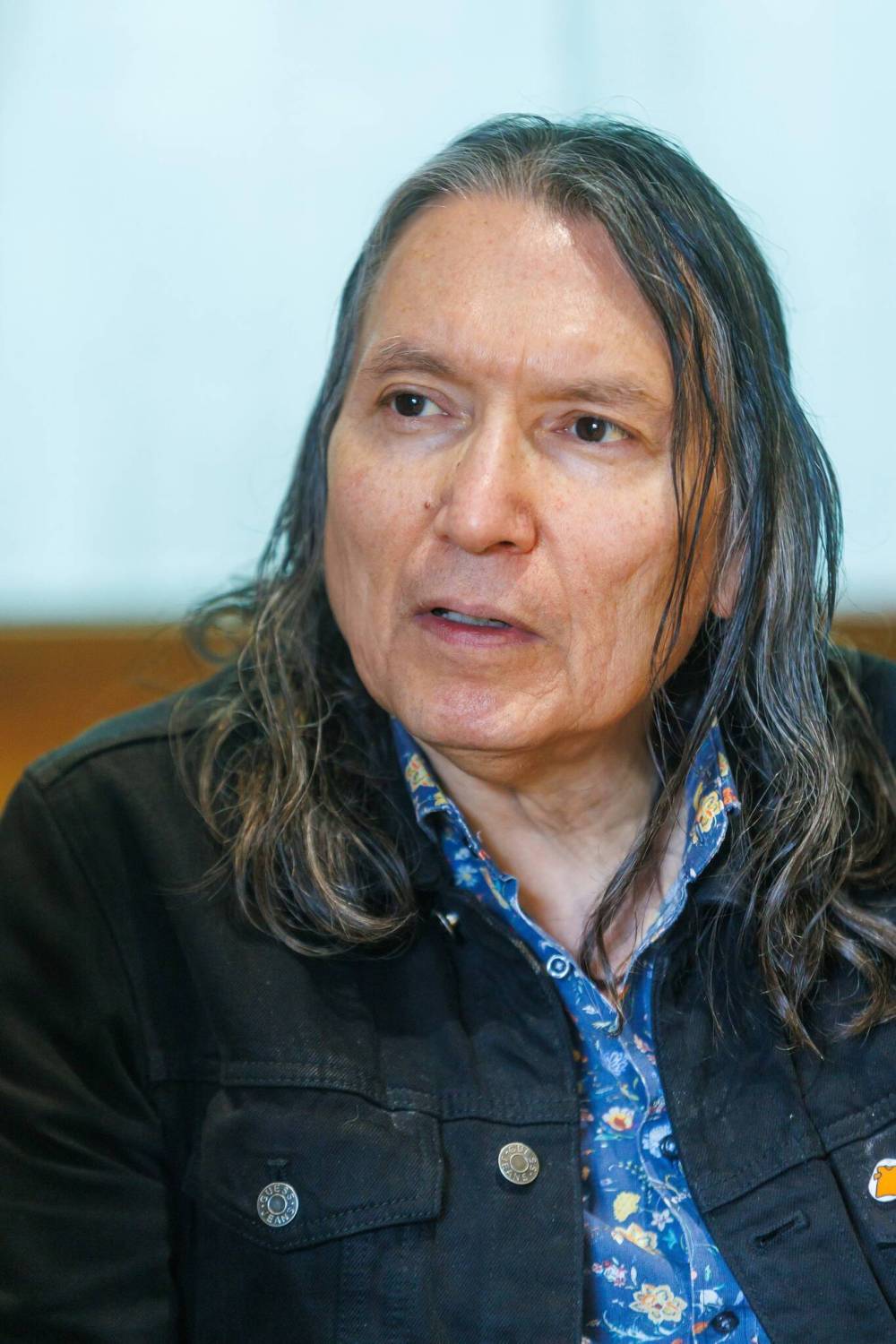
He could have found simmering drama at a small-town family gathering, like his friend Doug Nepinak once did in BBQ, or revisited hamlets of relational history around Thompson, Pine Creek First Nation and Camperville.
But instead of pinning the script to the great wide open of Manitoba’s landscape, McLeod decided to set the conversational back-and-forth behind the closing doors of a sanitized, corporate elevator in Winnipeg’s downtown, throwing two characters into a rubaboo of shared enlightenment, enclosed humour and claustrophobic consternation.
“When he came in, our director Herbie Barnes said, ‘Dave, you’ve chosen one of the hardest things to write: two people in an elevator dealing with reconciliation,’” recalls McLeod, who is also chief executive officer of Native Communications Inc. (NCI) and an outspoken and tireless booster of Indigenous art and culture.
The playwright decided that the best way to have that conversation was one on one.
A gifted interviewer, spoken word artist and poet, McLeod says Elevate: Manaaji’idiwin is an extension of personal and communal experience, with the elevator serving as a metaphor for access and inclusion for Indigenous people in big city settings.
THEATRE PREVIEW
ELEVATE: MANAAJI’IDIWIN
Royal Manitoba Theatre Centre (174 Market Ave.)
to May 17
Tickets $25.50 to $91 at royalmtc.ca
Building on the outlook of writers such as Nepinak and Marvin Francis, McLeod aimed to reveal, in a literal sense, the ups and downs his characters might encounter once they cross the threshold into shared space.
This is reflected in the title, which includes the Anishinaabemowin word manaaji’idiwin, that means “to go easy on one another and all of Creation” This is also known as respect in the Seven Grandfather Teachings.
For McLeod, the writing process began when he was accepted into the Royal Manitoba Theatre Centre’s Pimootayowin Creators Circle, a theatrical development program led by Governor General’s Award winner Ian Ross.
At an early gathering, Ross gave the participants an open prompt — to begin from experience.
“I stepped into an elevator. It was full of people and then the security guard ran to the door and said, ‘Where do you think you’re going?’”–David McLeod
“One came to mind,” says McLeod. “I was visiting a friend in an office tower here in Winnipeg, years ago, and I stepped into an elevator. It was full of people and then the security guard ran to the door and said, ‘Where do you think you’re going?’ I thought somebody was in trouble. So then he ordered me outside the door. I was kind of stunned and the people in the elevator were like, ‘What is going on?’”
Over 30 years later, the experience stays with McLeod.
“Even getting into the elevator itself is very symbolic of the Indigenous community. Getting into an elevator in a building like that can be a big step at times. I mean, walking into the Manitoba Theatre Centre to say, ‘Hey, I’m working on a play — that’s a big step as well. It’s interesting that you get to be in this place,” he says.
Before he moved into broadcasting with NCI, McLeod’s early life revolved around theatre and music. In Thompson, he had a cable access metal show called Video Noise and another called Let’s Talk Band Talk, where he interviewed bands playing the local bar.
He began accumulating one of Canada’s largest personal collections of global Indigenous-made music, while also getting involved in the Thompson Playhouse and with People for People, an Indigenous theatre group in the northern Manitoba city.
“Even getting into the elevator itself is very symbolic of the Indigenous community.”–David McLeod
At People for People gatherings, participants would come together to develop short scenes and musical numbers, McLeod says. Each evening ended with a potluck.
After moving to Winnipeg in the late ‘90s, McLeod got involved in other community-based writing and theatre projects, including Shakespeare in the Red at Prairie Theatre Exchange and the Winnipeg Indigenous Writers Collective, appearing in that group’s anthology chapbooks Urban Cool and Bone Memory.
Within the Pimootayowin Circle, McLeod found similar camaraderie.
“It was such a healthy environment where people could talk about ideas and their lives. At times, it would be emotional for people to share where a story comes from, but the group was a safe place where writing could thrive. I wish there was more of that.”
As he developed his characters, a white corporate lawyer named Jonesie (Kevin Klassen), an Indigenous man from elsewhere named Tallahassee (Nolan Moberly) and an AI interface named Sharon (Melissa Langdon), McLeod says he looked to his literary circle.
MIKE DEAL / FREE PRESS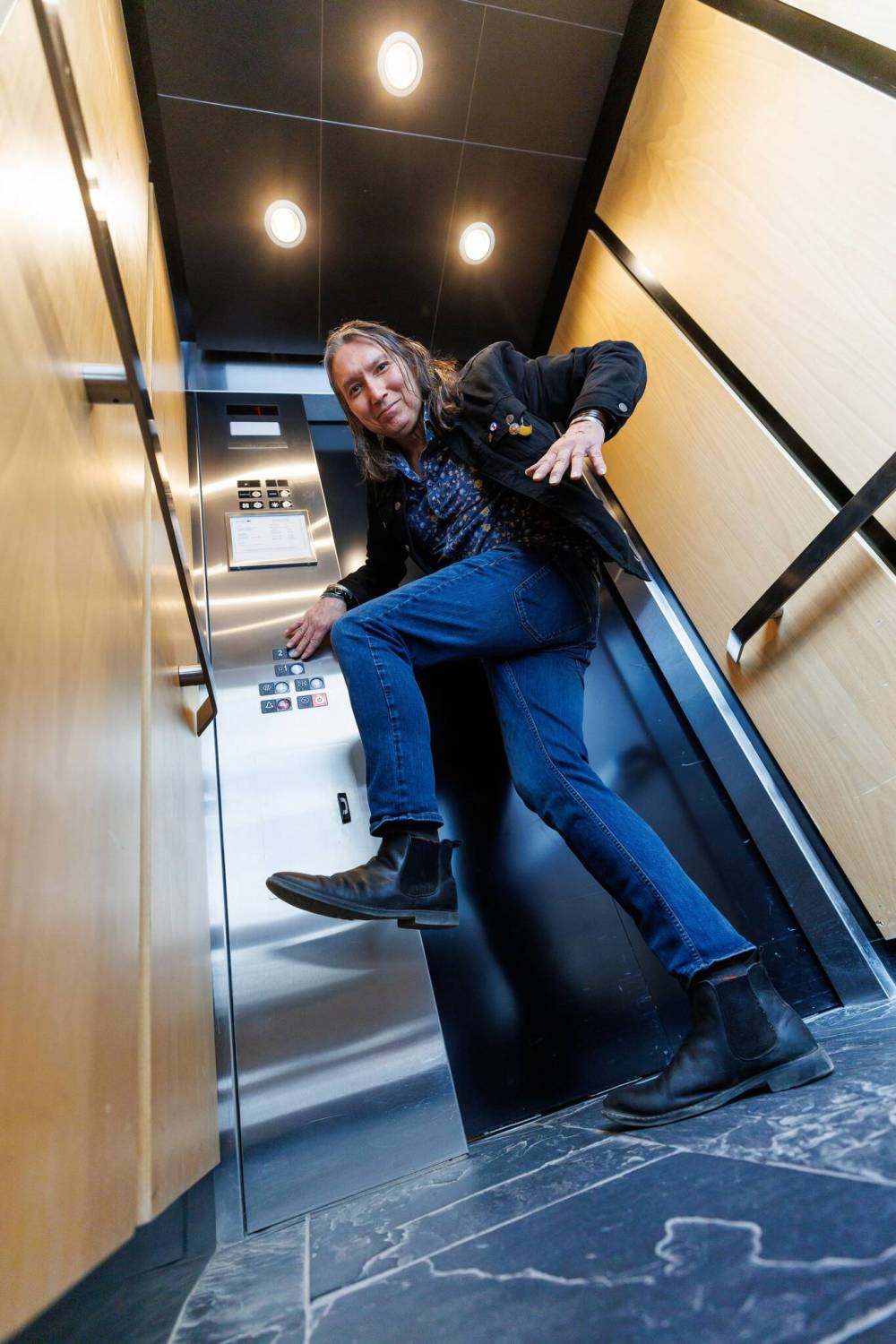
“You try to interject as many ideas as you can, including ones you don’t like to put in, like stereotypes and the challenges that exist, but that’s the beauty of theatre: the freedom to express that which is often expressless,” he says.
He read the late Murray Sinclair’s writings, sat with Sinclair’s children, thought back to his experiences with Nepinak, including appearing in his play Incident at Oka, Manitoba, and revisited conversations with contemporary artists such as Tomson Highway and Art Napoleon.
“One question I’m asked a lot is ‘Have you ever written a play? What gives you the right or the ability?’ Art Napoleon has said that within the Indigenous community, not that long ago, people had to play many roles, not just one,” he says.
“This extends to all society, where we tend to put a label on people and say that’s who and what they are. Whereas I think that all of us have the ability to extend ourselves outside of that. That’s part of the adventure of life that we can step into another arena and see how well we can do, or learn how well we can’t do, and see how much we have to learn. That’s something I carry from this.”
ben.waldman@winnipegfreepress.com

Ben Waldman is a National Newspaper Award-nominated reporter on the Arts & Life desk at the Free Press. Born and raised in Winnipeg, Ben completed three internships with the Free Press while earning his degree at Ryerson University’s (now Toronto Metropolitan University’s) School of Journalism before joining the newsroom full-time in 2019. Read more about Ben.
Every piece of reporting Ben produces is reviewed by an editing team before it is posted online or published in print — part of the Free Press‘s tradition, since 1872, of producing reliable independent journalism. Read more about Free Press’s history and mandate, and learn how our newsroom operates.
Our newsroom depends on a growing audience of readers to power our journalism. If you are not a paid reader, please consider becoming a subscriber.
Our newsroom depends on its audience of readers to power our journalism. Thank you for your support.