Queen bee Aganetha Dyck's collaborations with the hive mind proved sweet
Read this article for free:
or
Already have an account? Log in here »
To continue reading, please subscribe:

Digital Subscription
One year of digital access for only $205*
- Enjoy unlimited reading on winnipegfreepress.com
- Read the E-Edition, our digital replica newspaper
- Access News Break, our award-winning app
- Play interactive puzzles
*First annual payment billed as $205.00 + GST for one year. This annual subscription will automatically renew at $233.00 + GST every 52 weeks (10% off the regular annual price of $259.35). Offer available to new and qualified returning subscribers only. Cancel any time.
To continue reading, please subscribe:
Add Free Press access to your Brandon Sun subscription for only an additional
$1 for the first 4 weeks*
- Enjoy unlimited reading on winnipegfreepress.com
- Read the E-Edition, our digital replica newspaper
- Access News Break, our award-winning app
- Play interactive puzzles
*Your next Brandon Sun subscription payment will increase by $1.00 and you will be charged $17.95 plus GST for four weeks. After four weeks, your payment will increase to $24.95 plus GST every four weeks.
Read unlimited articles for free today:
or
Already have an account? Log in here »
Hey there, time traveller!
This article was published 23/07/2025 (447 days ago), so information in it may no longer be current.
Aganetha Dyck saw art in the everyday, the domestic, the small.
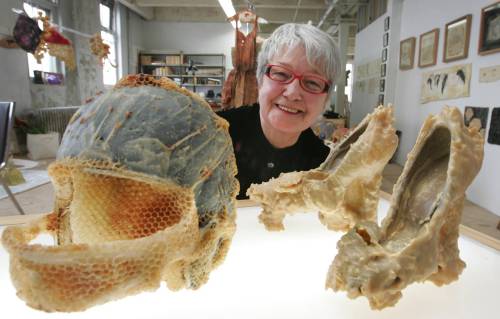
Nowhere was that more evident than in her internationally recognized work with live honeybees. The Winnipeg-based artist would place found objects — china figurines, sports equipment, Barbie dolls, stiletto heels — in beehives, and the bees would cover them in honeycomb and wax, creating striking sculptural works that have been exhibited in Canada, the United States and Europe.
WAYNE GLOWACKI / FREE PRESS FILES Aganetha Dyck poses with her pieces Wedding Guest Shoes (right) and Sports Night in Canada in 2007.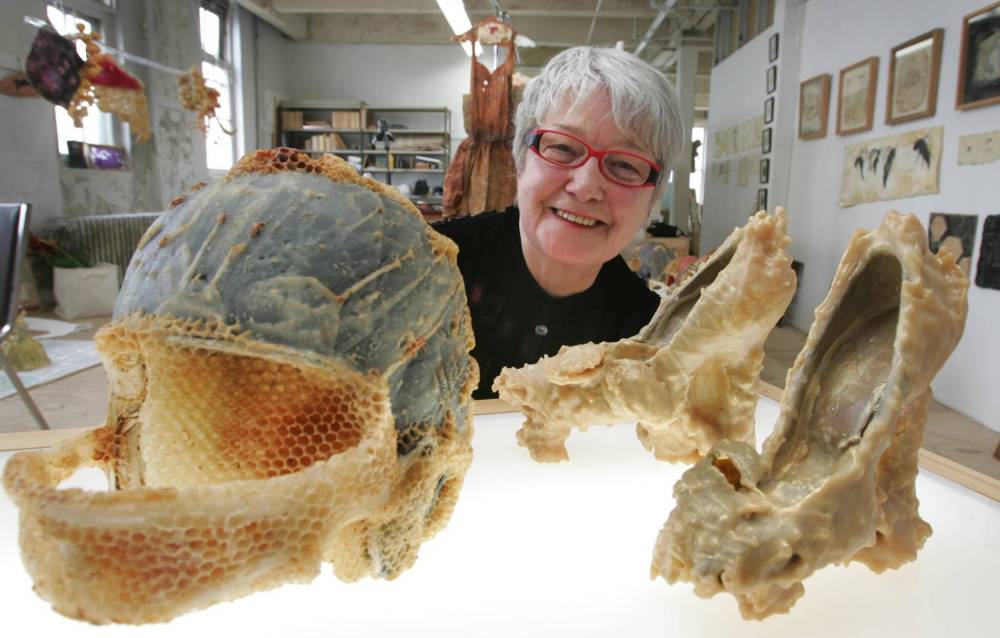
Dyck always made sure to give credit to her millions of tiny, buzzing collaborators, because to her it was, indeed, a collaboration.
“They’re all unionized,” she told the Free Press in 2007 after winning a Governor General’s Award for visual and media arts, as well as the Arts Award of Distinction from the Manitoba Arts Council. “I look after them well.”
Dyck died on July 18. She was 87.
“As an artist, she was absolutely fearless,” says Shawna Dempsey, visual artist and co-executive director of MAWA (Mentoring Artists for Women’s Art).
“She would work with any material in any way, even if no one had done it before, considered it before, or if those processes and materials were considered crafty or feminine, which, particularly in the ’80s or ’90s, was a real way to marginalize women artists.
Governor General Michaëlle Jean congratulates Aganetha Dyck after recieving the Governor General's award in visual and media arts at an awards ceremony in Ottawa in 2007.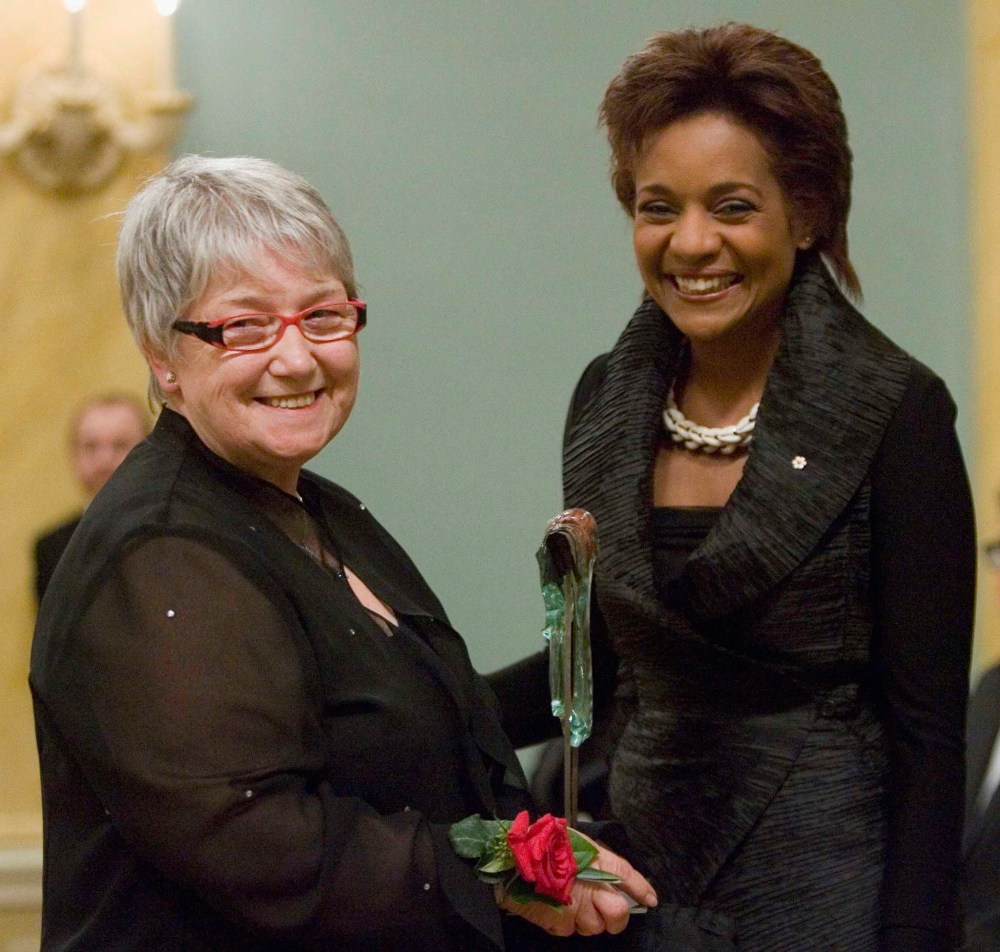
“But nonetheless, Aganetha was true to her instincts and her inner artistic voice, and so, she canned buttons in mason jars and she boiled sweaters and she put a wedding dress in a beehive.”
“There’s lots of ways to describe her art, but for me, one of the ways I’ve been thinking about recently is that I think she reflects the rise of feminist art practice in Canada in the 1970s,” says Serena Keshavjee, a professor of art and architecture at the University of Winnipeg who has curated and written about Dyck’s work.
Dyck took the domestic processes of so-called “women’s work,” and elevated them to high art, but she also saw immense value in collaboration — whether it was with bees or people.
“Collaboration is a feminist methodology. She collaborated with everyone, very generously. Scientists loved her. Beekeepers loved her. Artists around town loved her. She collaborated with her son (artist Richard Dyck),” Keshavjee says.
“This is part of her personality, but it’s also a methodology. She was generous and she shared and she wanted to make art with other people. So all of these things come together for me and saying she was this revolutionary feminist artist in the ’70s.”
Dyck, who was born in Marquette, came to art later in her life and was largely self-taught. Her artistic awakening came in her mid-30s when she was living in Prince Albert, Sask. Her husband, Peter, was transferred there in 1972. She was an executive’s wife and a mother of three and thought she might do some volunteering. She chose the art gallery.
But it was when she started taking drawing courses at the Prince Albert Community College that the seeds of her own artistic practice were planted. One of her teachers, George Glenn, told her to stop painting mountainscapes and start making art about her life.
Dyck protested that she was a homemaker. Surely this man wasn’t suggesting she make art about laundry. But, in a way, he was.
“Then make art from that,” came the reply.
“I came home and she was throwing plaster at the wall. I went, ‘This is new.’ She was so passionate about it. It was wonderful.”–Daughter Deborah Dyck
So she did.
Her children, with whom she was very close throughout her life, started noticing a change in their mother.
“We had a kitchen that had this one blank wall,” recalls her middle daughter, Deborah Dyck. “I came home and she was throwing plaster at the wall. I went, ‘This is new.’ She was so passionate about it. It was wonderful.”
Their late father was also incredibly supportive of their mother, who saw the world as a canvas.
“There weren’t very many surfaces that mom wouldn’t start altering,” adds her eldest son, Richard Dyck. “This increased gradually and then sometimes controversially. Flowers started showing up on my toolboxes and tools…”
“…and a certain car,” her youngest son, Michael Dyck, adds.
This was back in Manitoba, where the family returned in 1976. Aganetha was managing the Big Buffalo Resort at Falcon Lake, and Deborah came out one day to use the car.
“And all of a sudden, mom just popped up on the opposite side of the car, and she had felt markers in her hand,” Deborah recalls.
“…Mom was always worried about the oil catching fire on the fondue, and here she was out at the lake putting these plastic buttons into pots of boiling oil. And it was like fireworks going off. Some of the buttons would explode, and these buttons would go flying 30, 40 feet up in the air.”–Son Michael Dyck
She’d decorated it like a 1960s hippie van, using rust spots as the flowers’ centres.
She was fearlessly experimental, and sometimes just fearless, period.
When she was working on her canned buttons project, she’d boil them in pots of boiling oil in the yard at Falcon Lake.
“It seems a little out of character when I reflect on it now because we always had fondues for Christmas dinner, and mom was always worried about the oil catching fire on the fondue, and here she was out at the lake putting these plastic buttons into pots of boiling oil,” Michael recalls. “And it was like fireworks going off. Some of the buttons would explode, and these buttons would go flying 30, 40 feet up in the air.”
“Different rules for the dinner table,” Richard says.
Dyck’s art practice began taking off. She had started making sculptural works out of Salvation Army sweaters she’d taken home and purposely shrunk.
“She was very humble, and so easy to talk to. She really was a really good friend of mine.”–Megan Krause
“I’ve seen these — the WAG has some — these miniature, shrunken, felted sweaters become very anthropomorphic. They actually become people. It’s so compelling,” Keshavjee says.
In Dyck’s hands, buttons were reimagined as jeweled jars of preserves; cigarettes, wire and wool became sculptures.
Dyck’s work soon caught the eye of Carol A. Phillips, former executive director of the Winnipeg Arts Council and then a curator at the MacKenzie Art Gallery in Regina. Phillips gave Dyck her first solo show in 1976.
Dyck was a huge believer in mentorship, as both a mentee and mentor. She is considered a “founding foremother” of MAWA in 1985, and one of its original members. She was a mentor in the inaugural Foundation Mentorship Program that first year, and again in 1988, 1995, 2004, 2012 and 2014.
“Through MAWA, Aganetha provided years of formal mentorship, but she was so generous with her experience and so curious about and engaged with younger artists, she informally mentored countless more. And not just share her advice as an artist or her experience as an artist, she also was very open about her experience as a woman, as a parent, as a person in the world,” Dempsey says.
Aganetha Dyck's work at an exhibition celebrating four decades of visual art education, community building, and peer support at Mentoring Artists for Womens Art (MAWA) in September 2024.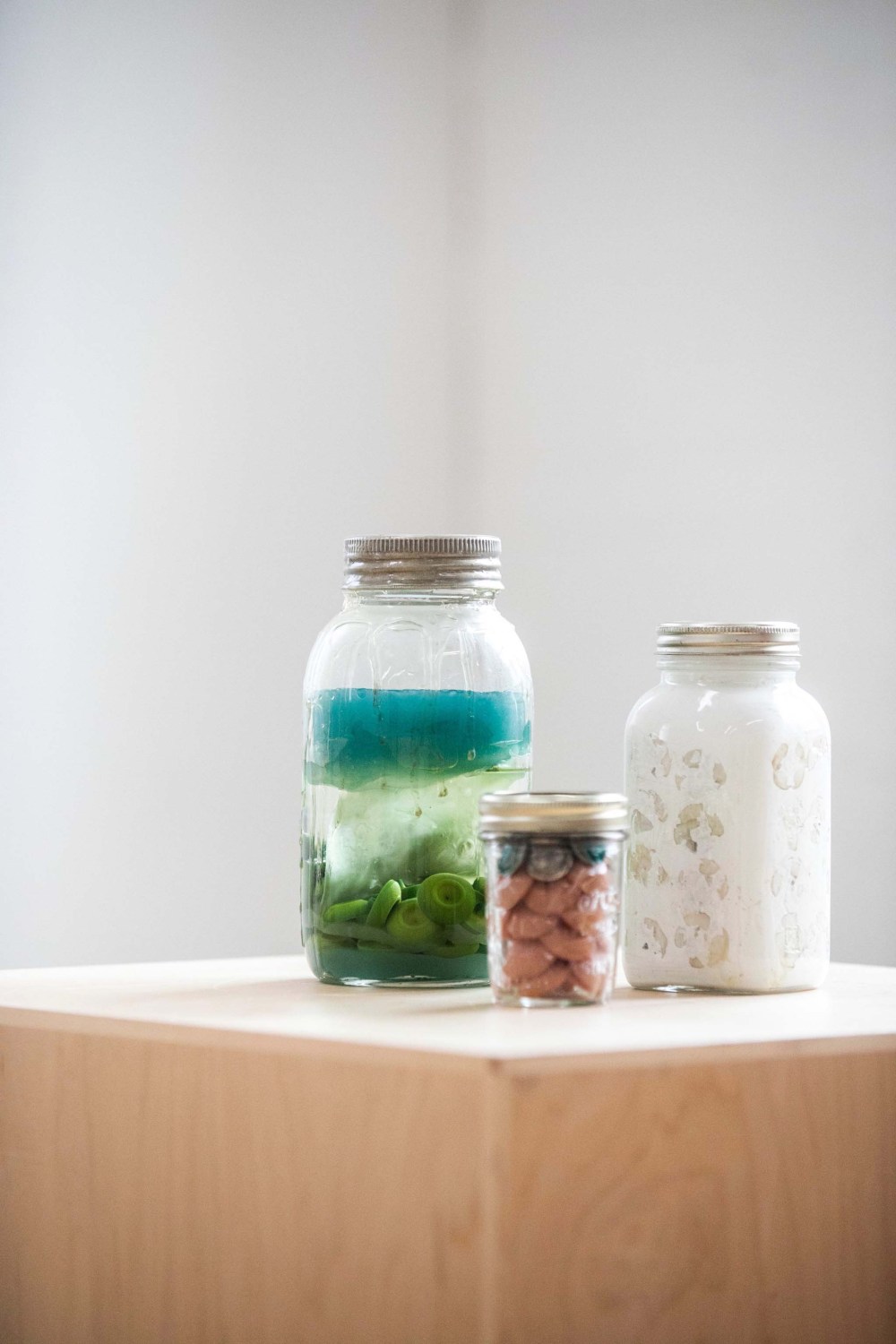
Her mentorship spanned generations. Winnipeg painter Megan Krause, whose 1984 birth year puts her nearly 50 years younger than Dyck, was a mentee of Dyck’s before becoming her studio assistant.
Krause says that during her undergrad, her process was more rigid: she felt she needed a set theme and plan her canvasses ahead of time.
“Something I learned from her was just to play and see where it goes. I could get so paralyzed by not knowing where to start. She encouraged me to figure out the why later. Make a bunch of it and then, through that flow state, it will come,” Krause says.
When they worked togther, Krause says, Dyck always prioritized the catch-up: “First things first, we have to have coffee. We have to talk about life.”
“She was very humble, and so easy to talk to. She really was a really good friend of mine,” Krause says, her voice catching.
Her kids remember her like this, too. A sounding board. They could tell her anything and be met with the same curiosity she brought to her art.
“There was no wall. I don’t know how to explain it. It’s just a very, very close connection,” Deborah says.
In the early 1990s, Dyck began her long collaborative relationship with the bees. She recognized that they were natural architects and wanted to work with them.
WAYNE GLOWACKI / FREE PRESS FILES Souvenir Winnipeg Jets hockey stick and pucks covered in beeswax from Dyck’s Sports Night in Canada. 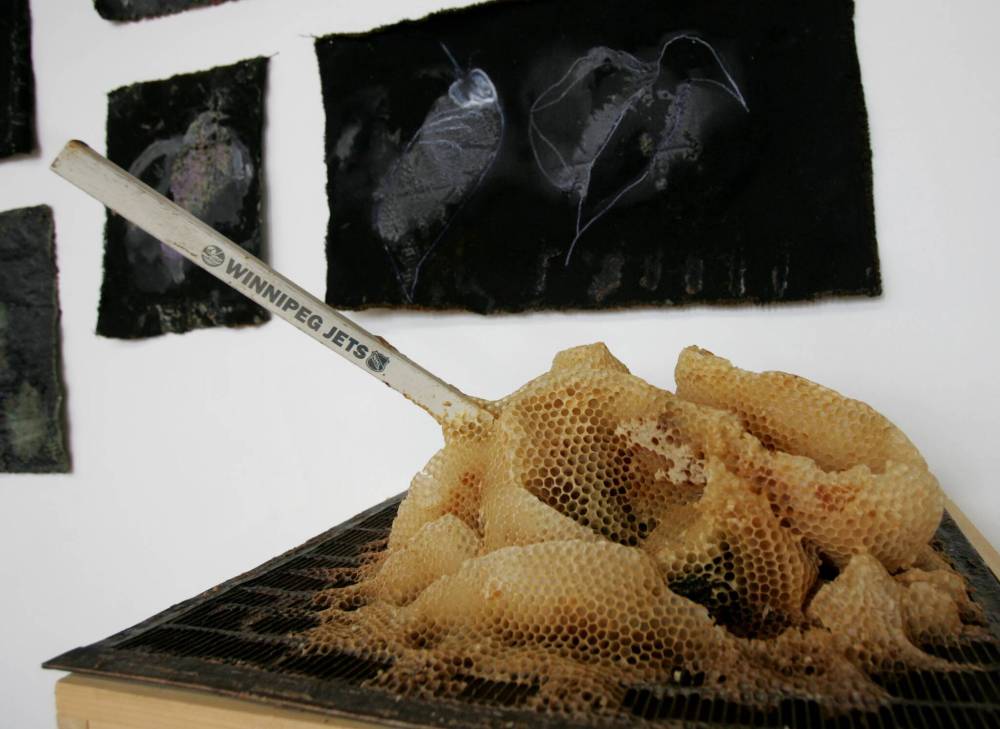
She began working with Phil Veldhuis, a beekeeper and philosophy instructor whose Phil’s Honey, a St. Norbert Farmers’ Market staple, is based near Starbuck.
Veildhuis recalls meeting the artist through the St. Norbert Arts Centre, where she was doing some work and he had been invited to keep some bees on the property.
“I think we had coffee and she told me what she wanted to do; I said it sounded like a ton of fun, and the rest is history,” he says.
JULIE OLIVER / OTTAWA CITIZEN FILES Hive Scan by Aganetha and Richard Dyck appeared in the National Art Gallery of Canada’s exhibition Flora and Fauna in 2012.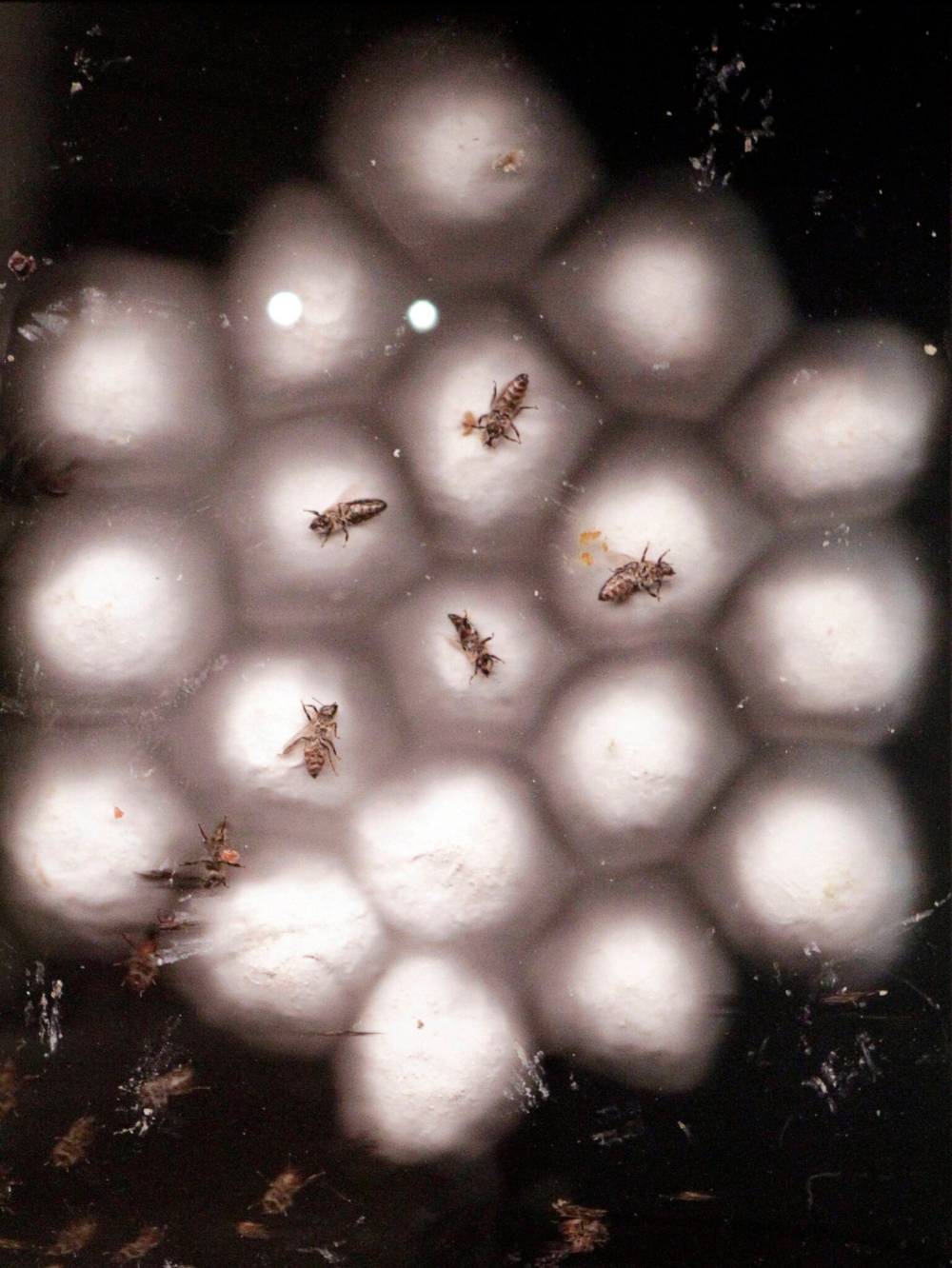
Dyck’s work with the bees spanned decades, and led to residencies with beekeepers and entomologists in Europe; it was featured on David Suzuki’s The Nature of Things TV series.
But in 2009, her collaboration came to an end. Dyck had a strong reaction to a bee sting and returned to working with felt, but the legacy of her honeycomb-filigreed works is long-lasting, and has taken on added resonance as bee populations become more threatened.
Dyck had an influence on Veldhuis, too.
“She got me to think about my bees in a very constructive way. I grew up in a beekeeping family and so, you know, bees are kind of just another day to us. To have someone come in and work who was so excited by it all was very stimulating to me,” he says.
“I’ll never forget her excitement about opening a hive and watching the bees work.”
Last year, Winnipeg visual artist Diana Thorneycroft posted on Facebook. “There is a rumour circulating that Aganetha Dyck has passed away. When I told her about it, she couldn’t stop laughing. Then she beat me at arm wrestling…”
Thorneycroft and fellow artist Reva Stone were studio mates of Dyck’s for decades. Stone was one of her first mentees. Her laugh is one of the things both are going to miss the most about her.
That, and her eye — her discerning, out-of-the-box eye.
Stone recalls taking a flight to New York with Dyck.
“We’re on the plane. She looks out the window and says, ‘Aren’t those clouds beautiful?’ And I say, ‘Yeah, they really are.’ She says, ‘Wouldn’t they look gorgeous on a doily?’”
“We just loved her. It was easy. She’s so easy to love.”–Diana Thorneycroft
Thorneycroft also benefited from Dyck’s eye. She was trying to make a sculpture using a plastic horse and Sculpey, a polymer clay, in her oven at home.
“Sculpey is supposed to harden at 250 degrees, but plastic melts at a much lower temperature, so one of the horses just collapsed and fell apart, and the Sculpey kind of broke. And I thought, ‘Oh God, what a mess. What a mess.’”
Thorneycroft brought the mess to her studio, and later found a note from Dyck: “You’ve had a breakthrough.”
“We just loved her,” Thorneycroft says. “It was easy. She’s so easy to love.”
jen.zoratti@freepress.mb.ca


Jen Zoratti is a columnist and feature writer working in the Arts & Life department, as well as the author of the weekly newsletter NEXT. A National Newspaper Award finalist for arts and entertainment writing, Jen is a graduate of the Creative Communications program at RRC Polytech and was a music writer before joining the Free Press in 2013. Read more about Jen.
Every piece of reporting Jen produces is reviewed by an editing team before it is posted online or published in print – part of the Free Press‘s tradition, since 1872, of producing reliable independent journalism. Read more about Free Press’s history and mandate, and learn how our newsroom operates.
Our newsroom depends on a growing audience of readers to power our journalism. If you are not a paid reader, please consider becoming a subscriber.
Our newsroom depends on its audience of readers to power our journalism. Thank you for your support.
Related Articles
When artists die, they leave gifts to us
History
Updated on Thursday, July 24, 2025 11:10 AM CDT: Fixes punctuation