Born under fire As the only province to enter Confederation to the sound of gunshots, Manitoba’s political history is anything but boring
Read this article for free:
or
Already have an account? Log in here »
To continue reading, please subscribe:

Digital Subscription
One year of digital access for only $205*
- Enjoy unlimited reading on winnipegfreepress.com
- Read the E-Edition, our digital replica newspaper
- Access News Break, our award-winning app
- Play interactive puzzles
*First annual payment billed as $205.00 + GST for one year. This annual subscription will automatically renew at $233.00 + GST every 52 weeks (10% off the regular annual price of $259.35). Offer available to new and qualified returning subscribers only. Cancel any time.
To continue reading, please subscribe:
Add Free Press access to your Brandon Sun subscription for only an additional
$1 for the first 4 weeks*
- Enjoy unlimited reading on winnipegfreepress.com
- Read the E-Edition, our digital replica newspaper
- Access News Break, our award-winning app
- Play interactive puzzles
*Your next Brandon Sun subscription payment will increase by $1.00 and you will be charged $17.95 plus GST for four weeks. After four weeks, your payment will increase to $24.95 plus GST every four weeks.
Read unlimited articles for free today:
or
Already have an account? Log in here »
Hey there, time traveller!
This article was published 03/11/2025 (342 days ago), so information in it may no longer be current.
Is Manitoba’s political history a snore?
A dull narrative about a middling, middle province, lacking the West’s rugged entrepreneurs and pioneers and the East’s Laurentian power brokers and sophisticates?
A mediocrity whose “political tradition” must, as former Manitoba premier Duff Roblin once joked, be invented by its scholars?
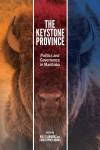
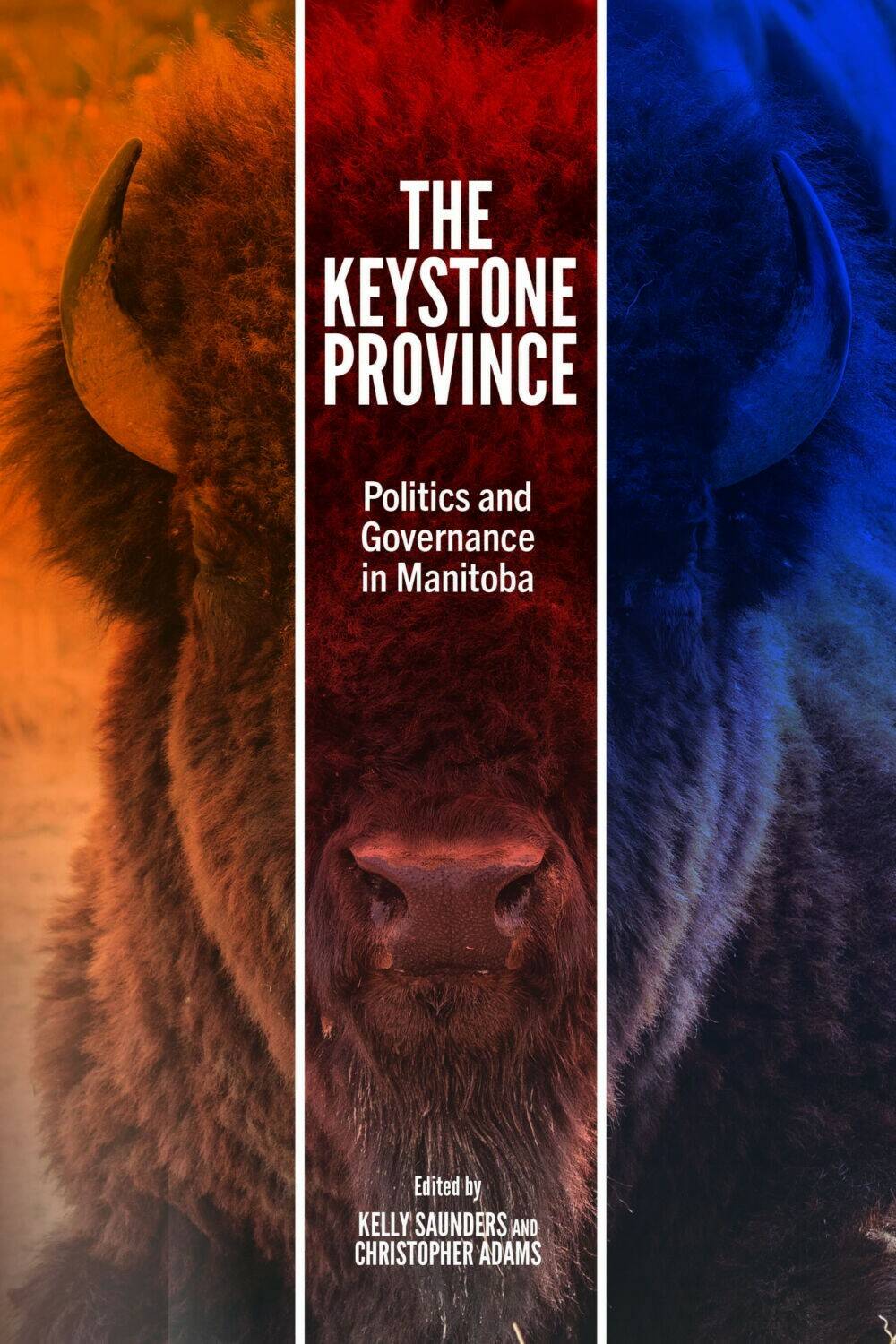
This is, in paraphrased form, the question historian Robert Coutts asks cheekily in the first chapter of The Keystone Province: Politics and Governance in Manitoba, an accessible new collection of essays by many of the usual suspects among Manitoba political experts that launches at McNally Robinson Booksellers on Thursday.
“What sets it apart is, is there’s no other book on Manitoba politics that’s (this) current … we draw on authors from all across the province, including Brandon, U of Winnipeg and U of M also; one is from University of Alberta,” says Christopher Adams, adjunct professor in political science and rector of St. Paul’s College at the University of Manitoba.
With professor Kelly Saunders, associate professor of political science at Brandon University, Adams (an occasional Free Press contributor) is also co-editor of The Keystone Province.
“Bob Coutts, in his opening chapter (on Louis Riel and Manitoba’s origins), points out that Manitoba was the only province that entered Confederation to the sound of gunshots,” Adams adds.
So, Coutts’s answer to the book’s opening rhetorical question is a decisive “no.”
SUPPLIED
Of course, no academic pushing a text in their area of specialty, especially one like this, about Manitoba aimed mostly at Manitobans, wants to say that they’re about to bore you.
But Manitoba’s adventurous, sometimes tragic story of joining Confederation, with its executions, armed rebellions and double-crossings, make most provinces’ origins look humdrum by comparison.
It’s no wonder that we have Louis Riel graphic novels, operas and plays — dramatic yarns reminding us that the West’s first major so-called “populist,” resisting Ontario’s control, was a Métis man from Manitoba.
“Readers will know that we’ve gone through ups and downs in Manitoba and (are) enjoying a little bit of a renaissance right now.”
The dozen chapters and essays, treading through history up until more or less the present, that follow in The Keystone Province often seem determined to shore up Coutts’ point that Manitoba’s early rebellious spirit “would remain woven into the fabric of the new province.”
Other chapters, however, emphasize Manitoba’s relative stability, politically and economically, compared with other provinces.
“We’ve got a chapter by Fletcher Baragar, who’s a respected economist in Manitoba … he’s written on the (economic) situation in Manitoba,” Adams says. “Readers will know that we’ve gone through ups and downs in Manitoba and (are) enjoying a little bit of a renaissance right now.”

Jared Wesley and Lauren Hill’s chapter emphasizes Manitoba’s character as a modest middleman, given to milquetoast slogans such as “Friendly Manitoba,” a province whose accommodating ethos helped get us through “crises” from the 1919 General Strike to the COVID-19 pandemic, when southern Manitoba was a hotbed for anti-Ottawa, anti-lockdown organizing.
To this list of crises, one might one day add the cause of Western separatism — given that, according to a Probe Research study commissioned this spring by the Free Press, more than half of conservative voters in the province now say they favour Manitoba leaving Confederation.
Fittingly, The Keystone Province features a chapter by Probe Research’s principals Curtis Brown and Mary Agnes Welch (a former Free Press reporter). This deals with the symbiotic role and pains of Manitoba’s media and public opinion research firms when so many now scroll Twitter and Facebook to gauge what’s going on and how others feel about it — with even less separation between the realm of facts and opinion.
“If you think what a keystone is like when you look at an arch of a doorway… if you remove that keystone, everything falls down.”
“That’s an interesting chapter — nobody’s really written on the Manitoba media and polling, that I know of, in that scenario,” Adams says.
Whether they emphasize the province’s rebellious or stable character, most chapters seem to agree on Manitoba’s peculiar place as a sort of buffer between East and West.
“If you think what a keystone is like when you look at an arch of a doorway… if you remove that keystone, everything falls down,” says Adams.
“We’ve been a kind of a microcosm of what happens elsewhere in the country … we have strong elements of populism that have arisen in Manitoba. We also have the French, we have Indigenous Peoples… and different immigration patterns,” he goes on.
“But we’re heterogenous within this world.”
One of the book’s themes in this vein is Manitoba’s marked divide between its rural and urban, as well as northern and southern, cultures, even within its political parties.
Manitoba is the only province in Western Canada whose leading conservative party still bears the “progressive” prefix — speaking to the influence of its urban old guard.
And yet Manitoba’s rural south is arguably one of Canada’s most right-wing regions, and its voters have helped give the party win big wins in recent years.
“The Conservative Party in Manitoba really has two strong wings — one is the rural and the other one is the city, (which is the) progressive side of the party. You would have seen that in the last leadership race between Wally Daudrich and Obby Khan,” Adams says.
This is broadly the subject of Royce Koop’s chapter, which analyzes the dynamics of this Big Tent party, contrasting, for instance, the “folksy populism” of former premier Brian Pallister and his successor Heather Stefanson’s “urban … establishment insider” reputation.
Interestingly, Koop suggests that Stefanson’s decision to “stand firm” and not search the Prairie Green landfill for the remains of Indigenous women aimed to appease the party’s rural right wing — at the critical expense of urban support, paving the way for the party’s loss in the 2023 provincial election.
Saunders and Adams further unpack Manitoba’s rural-urban and north-south divide in their chapters, respectively, on the province’s Liberal and New Democratic parties.
The NDP’s core support, as Adams notes in a memorable heuristic, comes from “two norths.”
One is northern Manitoba, with its Indigenous and mining communities; the other is Winnipeg’s traditionally working-class North End, which helped birth the political organizations that evolved into the NDP.
Yet, as he describes, Gary Doer’s NDP in the ’90s and onward also gave into the same “third way” rightward shift of so many labour parties in the West after the Cold War. It became a centrist or centre-left, strongly middle-class party, its radical origins even further in the rearview window.
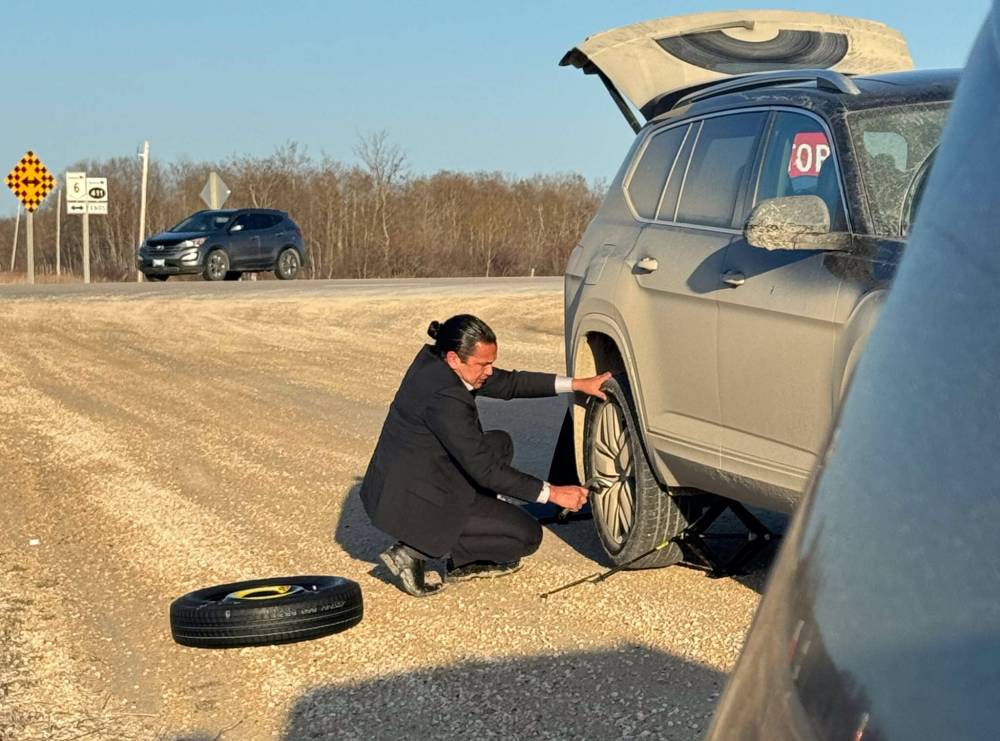
Adams considers NDP Premier Wab Kinew’s “flawless” 2023 campaign — and success, for now, in uniting the party’s Indigenous, working-class and middle-class factions, which clearly has helped made this savvy everyman one of Canada’s most popular leaders.
The Keystone Province — which also covers topics such as Indigenous rights and Manitoba’s economy — is a broad civics class for the Manitoba citizen and student alike.
“(It’s) an enjoyable book for us to launch,” Adams says, adding of the McNally event, “We expect it to be fairly light-hearted and sociable, rather than gloomy and dry.”
Not a snore then — and, one hopes, with opportunity for a little debate in the question period.
conrad.sweatman@freepress.mb.ca
Book launch
The Keystone Province:
Politics and Governance in Manitoba
Edited by Kelly Saunders
and Christopher Adams
● McNally Robinson Booksellers,
Grant Park Shopping Centre
● Thursday, 7 p.m.
● Free

Conrad Sweatman is an arts reporter and feature writer. Before joining the Free Press full-time in 2024, he worked in the U.K. and Canadian cultural sectors and freelanced for outlets including The Walrus, VICE and Prairie Fire. Read more about Conrad.
Our newsroom depends on a growing audience of readers to power our journalism. If you are not a paid reader, please consider becoming a subscriber.
Our newsroom depends on its audience of readers to power our journalism. Thank you for your support.