Ripple effects Artist’s House on Fire chronicles fallout of grandmother’s MK Ultra experience
Read this article for free:
or
Already have an account? Log in here »
To continue reading, please subscribe:

Digital Subscription
One year of digital access for only $205*
- Enjoy unlimited reading on winnipegfreepress.com
- Read the E-Edition, our digital replica newspaper
- Access News Break, our award-winning app
- Play interactive puzzles
*First annual payment billed as $205.00 + GST for one year. This annual subscription will automatically renew at $233.00 + GST every 52 weeks (10% off the regular annual price of $259.35). Offer available to new and qualified returning subscribers only. Cancel any time.
To continue reading, please subscribe:
Add Free Press access to your Brandon Sun subscription for only an additional
$1 for the first 4 weeks*
- Enjoy unlimited reading on winnipegfreepress.com
- Read the E-Edition, our digital replica newspaper
- Access News Break, our award-winning app
- Play interactive puzzles
*Your next Brandon Sun subscription payment will increase by $1.00 and you will be charged $17.95 plus GST for four weeks. After four weeks, your payment will increase to $24.95 plus GST every four weeks.
Read unlimited articles for free today:
or
Already have an account? Log in here »
In the late 1950s, Velma Orlikow sought treatment for postpartum depression at the Allen Memorial Institute at McGill University in Montreal.
Later, it would be discovered that she was unknowingly enrolled in the secret CIA research program now known as MK Ultra, where she was the victim of brainwashing experiments at the hands of Dr. Ewen Cameron. She was injected with LSD and forced to listen to Cameron’s voice on tape for hours.
In the 1980s, Orlikow and eight other victims sued the CIA, which settled out of court.
Winnipeg visual artist Sarah Anne Johnson, Orlikow’s granddaughter, explores this difficult family history through her long-running series of work House on Fire, which is on view now at Plug In ICA.
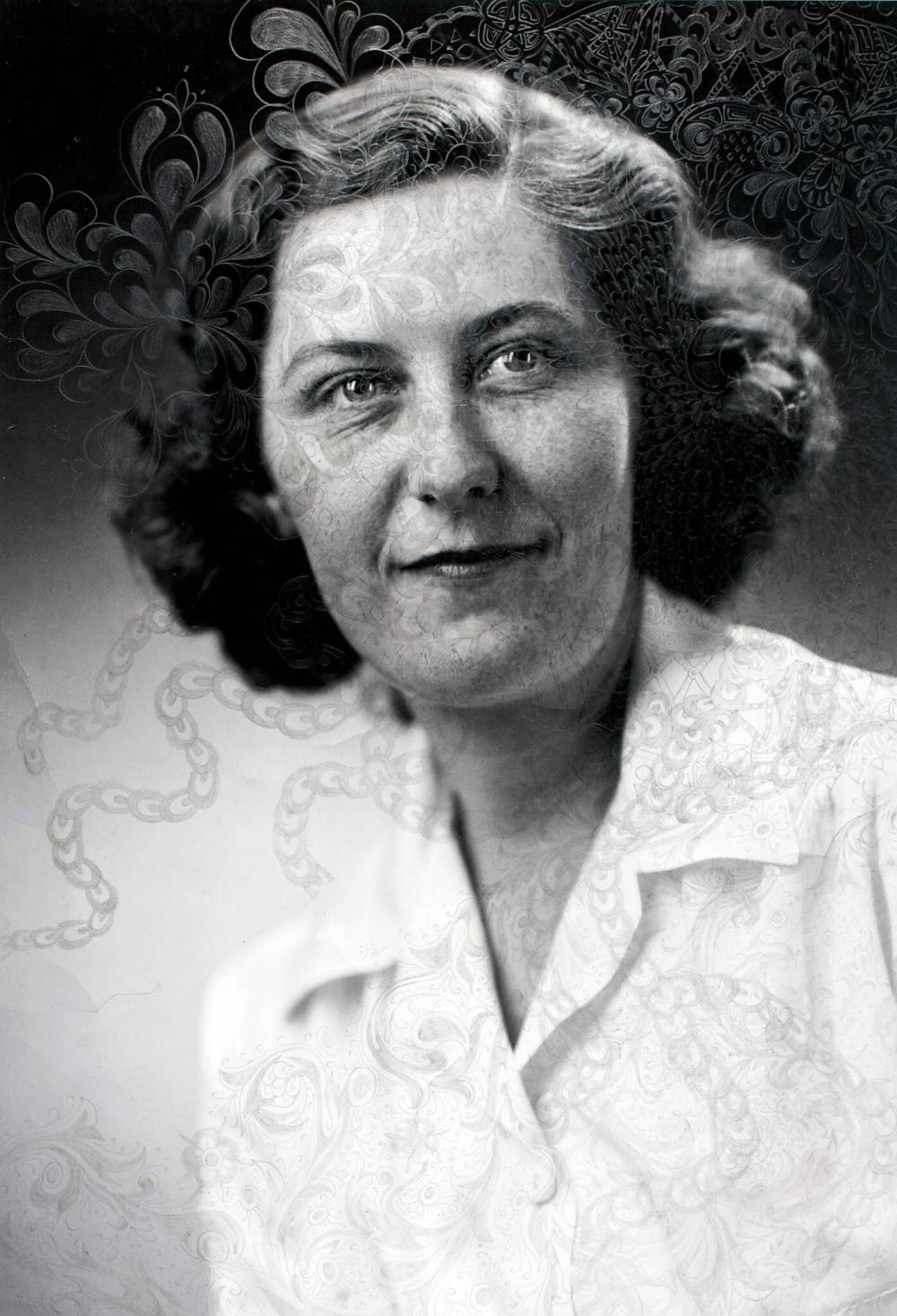
Johnson, 49, was close with her late grandmother, who died in 1990, going over to her house every day after school. What happened in Montreal wasn’t a secret, but Johnson only knew the black-and-white contours of it. She never knew what to say to friends’ parents who would sometimes ask her questions after an article appeared in the newspaper.
“I don’t remember the first time I heard about it — it was just part of my growing up,” she says, taking a break from the installation at Plug In.
“I knew that my grandmother was suing the CIA. I understood that the CIA was like some big American government thing, and that they were bad — this is my young brain.
“I knew that my grandmother was very brave for doing that, and I knew that my grandmother was different from other grandmothers, and I understood that it was probably because of the things that had happened to her.”
Johnson says her grandmother had trouble regulating her nervous system. She was jumpy. Getting cut off while driving, say, or the startle from someone dropping a fork on a plate would jangle her nerves for hours.
“I knew that my grandmother was different from other grandmothers, and I understood that it was probably because of the things that had happened to her.”
Cooking — with all its many moving parts and pressures — was particularly stressful for her.
“I remember her in the kitchen just having a horrible time in there, like banging and screaming and swearing. But I also knew her as my fierce, strong, don’t-mess-with-my-grandma grandmother.”
Johnson felt like she could never ask her grandmother directly about Montreal.
“I don’t know why — we were very close — but I guess because she was so up and down that, like, if she’s up, I don’t want to bring it up.”
SUPPLIED Poison Branch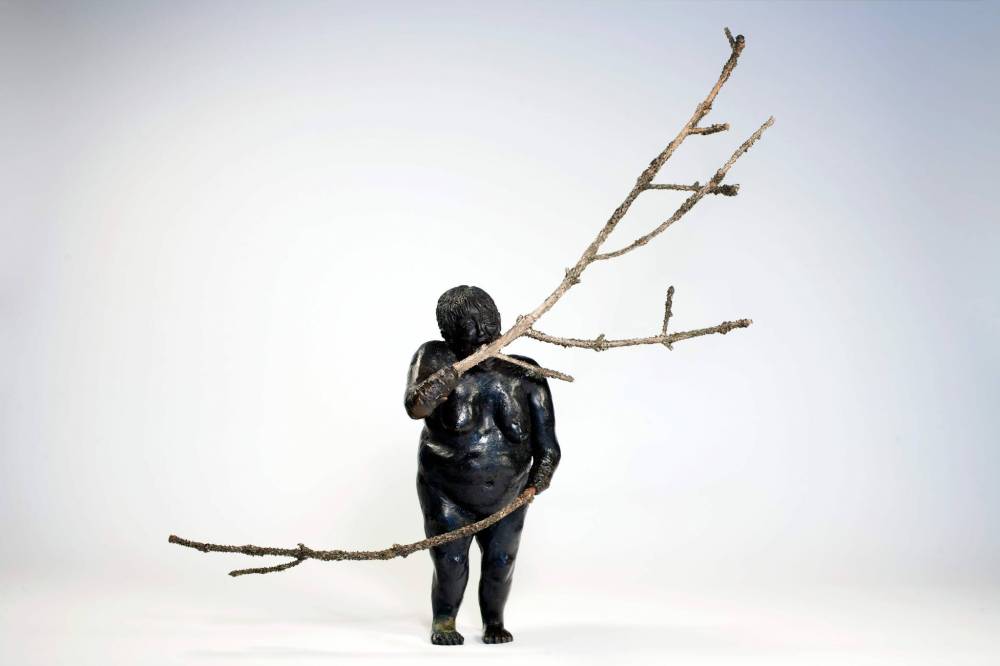
So it was when, as a tween, Johnson found boxes containing the court transcripts in her family’s basement that those black-and-white sketches of her grandmother’s experience were filled in with colour.
“It was her testimony talking about the LSD and the injections and what it did to her, and I read that it made her feel like a squirrel trapped in a cage. And in my young brain I just pictured my grandmother like half-grandma, half-squirrel.”
It was an evocative image revisited often in the works that compose the exhibition, which include bronze figures and works on photographs. Since it was first shown in 2009, House on Fire — which is part of the Art Gallery of Ontario’s permanent collection — has evolved over the years to include performance and video elements.
At the heart of the exhibition is a yellow dollhouse. It’s a meticulously crafted labour of love the way all dollhouses are, except this one is different. The second-floor windows are sideways. A scatter of flames threatens to overtake the roof. A cold, institutional hallway bisects the cosy rooms, but those aren’t right, either.
An office is overtaken by Hitchcockian spirals; the kitchen looks like it’s melting.
“When somebody spends all that time making a dollhouse from scratch, and picking all the exact right furniture, and the perfect design, it’s this idea of total control, total perfection. Which is 100 per cent unattainable in anybody’s life, but I thought that it would be a good container to house my conceptual ideas about how difficult life was for my grandmother. Not just my grandmother, but my grandfather and my mother,” Johnson says.
“So it’s this idea of the perfect house, and then every room is like, like, psychologically messed with.”
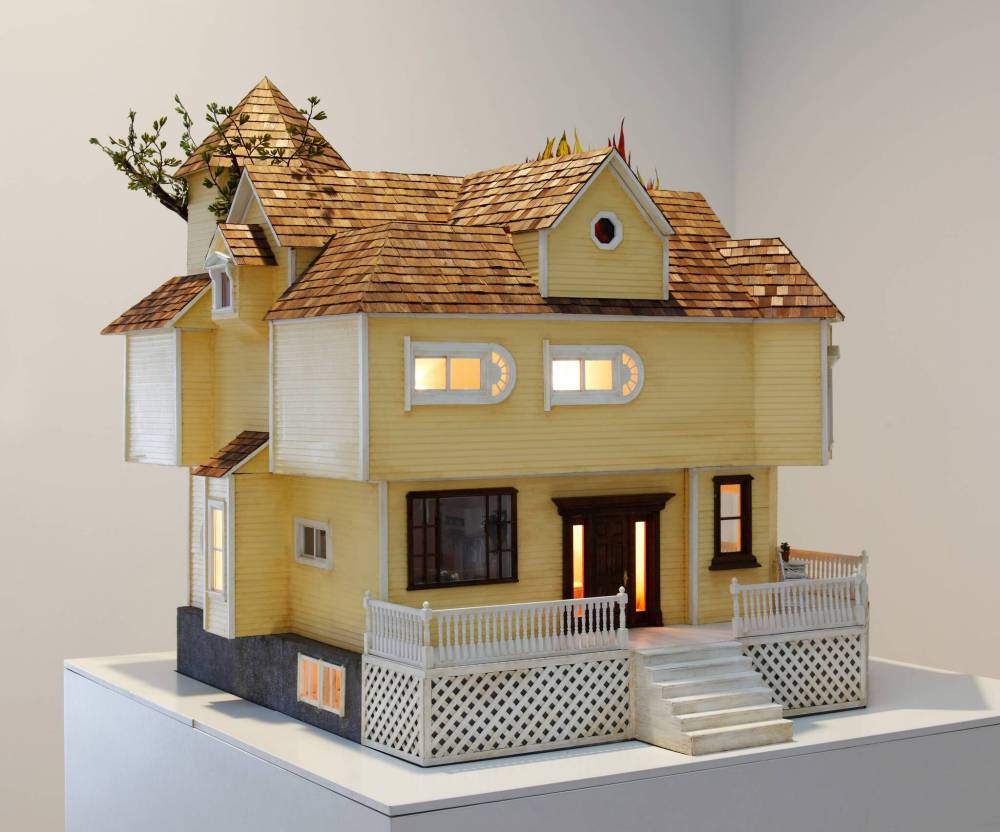
Indeed, many of the works look at the generational ripple effects of trauma. Making this work gave Johnson licence to talk to her mom about what happened to her grandmother, Johnson says. Her mom was supportive; she had actually saved those court documents in case Johnson or her brother ever wanted to write a book.
“Part of why I was making that work is because I was trying to understand why my grandmother was the way that she was, why my mother is the way that she is, and why I am the way that I am. I wasn’t around when it happened, but I am left dealing with some of the fallout,” she says.
“So some of the imagery in the show, there’s a tree growing out of the dollhouse, and there’s a bronze (figure) with tree branch arms, and she’s gnawing on them. I often think about when something comes in out of left field and breaks a branch on the family tree, how long that takes to work itself out.”
Exhibition preview
Sarah Anne Johnson: House on Fire
● Plug In ICA, 460 Portage Ave.
● Opening reception June 4, 7 to 10 p.m.
● Artist talk Friday, Manitoba Hall Boardroom, University of Winnipeg, 5 to 7 p.m.
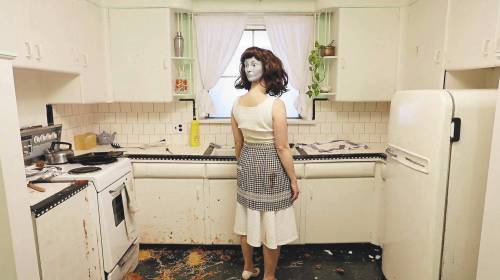
House on Fire also includes a video installation, in which Johnson takes us into one of the rooms of the dollhouse: the kitchen, the site of so much duress for her grandmother.
“She would have to struggle so hard in the kitchen cooking meals, and you would think that if it was that difficult, you would stop. But she did not. She was determined to do the normal things women were expected to do and do her best with it, and I just view that as so heroic.”
In the videos, which play simultaneously on TVs surrounding the viewer, Johnson is wearing a mask on the back of her head, giving the effect that her head is on backwards. Johnson does all manner of domestic activities — separating eggs for a cake, making PB&Js, cleaning up the inevitable messes — with her hands behind her back.
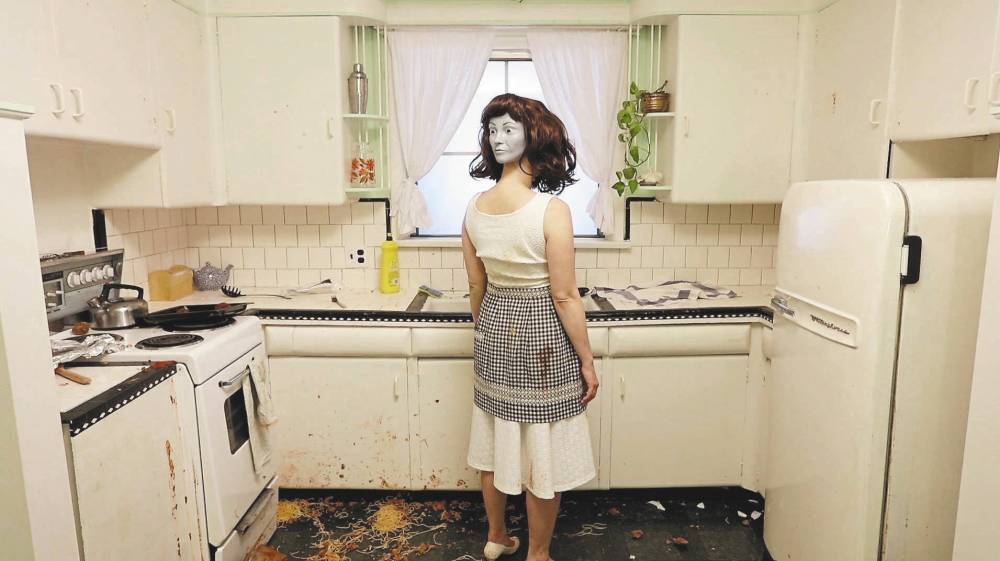
The effect is deeply disquieting.
“The funny thing about the videos is, I’m not even trying to make it real. The mask is not believable at all — but there’s slippages. Even though you know it’s totally not real and that I’m backwards and I’m wearing a mask, there’s a slippage where you believe it for a second. I’m interested in those kinds of moments.”
Johnson had intended to make similar videos for every room in the dollhouse, but stopped after three. She hasn’t felt the pull to do more, and isn’t going to force it.
“Part of the reason why I was making the work is because I had questions and I was exploring myself and, I don’t know, maybe I’m done that — for now.”
“Part of the reason why I was making the work is because I had questions and I was exploring myself.”
These works are about an intensely traumatic experience her grandmother suffered, but they are also a testament to her bravery and resilience. Johnson remembers what she felt reading those court transcripts.
“I was very proud of her,” she says. “This was a very courageous, strong woman who was clearly broken in ways, but was still doing this immensely difficult thing, because it was the right thing to do.”
House on Fire is on view until July 25.
winnipegfreepress.com/jenzoratti

Jen Zoratti is a columnist and feature writer working in the Arts & Life department, as well as the author of the weekly newsletter NEXT. A National Newspaper Award finalist for arts and entertainment writing, Jen is a graduate of the Creative Communications program at RRC Polytech and was a music writer before joining the Free Press in 2013. Read more about Jen.
Every piece of reporting Jen produces is reviewed by an editing team before it is posted online or published in print – part of the Free Press‘s tradition, since 1872, of producing reliable independent journalism. Read more about Free Press’s history and mandate, and learn how our newsroom operates.
Our newsroom depends on a growing audience of readers to power our journalism. If you are not a paid reader, please consider becoming a subscriber.
Our newsroom depends on its audience of readers to power our journalism. Thank you for your support.