On to new frontiers Influential editor leaving Border Crossings after 33 years at the helm
Read this article for free:
or
Already have an account? Log in here »
To continue reading, please subscribe:

Digital Subscription
One year of digital access for only $205*
- Enjoy unlimited reading on winnipegfreepress.com
- Read the E-Edition, our digital replica newspaper
- Access News Break, our award-winning app
- Play interactive puzzles
*First annual payment billed as $205.00 + GST for one year. This annual subscription will automatically renew at $233.00 + GST every 52 weeks (10% off the regular annual price of $259.35). Offer available to new and qualified returning subscribers only. Cancel any time.
To continue reading, please subscribe:
Add Free Press access to your Brandon Sun subscription for only an additional
$1 for the first 4 weeks*
- Enjoy unlimited reading on winnipegfreepress.com
- Read the E-Edition, our digital replica newspaper
- Access News Break, our award-winning app
- Play interactive puzzles
*Your next Brandon Sun subscription payment will increase by $1.00 and you will be charged $17.95 plus GST for four weeks. After four weeks, your payment will increase to $24.95 plus GST every four weeks.
Read unlimited articles for free today:
or
Already have an account? Log in here »
They say that a picture tells a thousand words, but also not to judge a book by its cover.
Meeka Walsh isn’t much one for platitudes. Surveying three decades of Border Crossings’ covers, the back stories she gives — relaying what the pictures may only hint at — are peppered with qualities one recognizes from her writing as the magazine’s flagship editor: the ironic asides, the sculpted turns of phrase and the innocent name-dropping.
Walsh says she remembers every cover, too — though some are judged more warmly than others, even in an exalted light.
Currently, she’s eying the great Swiss-American photographer Robert Frank’s Watching the Crows on issue no. 152 from February 2020. Frank’s best known for his landmark The Americans — a sad, funny, rambling road chronicle of postwar America, a little like On the Road in pictures, that also electrified Jack Kerouac.
MIKE DEAL / FREE PRESS Meeka Walsh, longtime editor of the prairies’ flagship visual arts magazine Border Crossings, is retiring at the end of the summer. 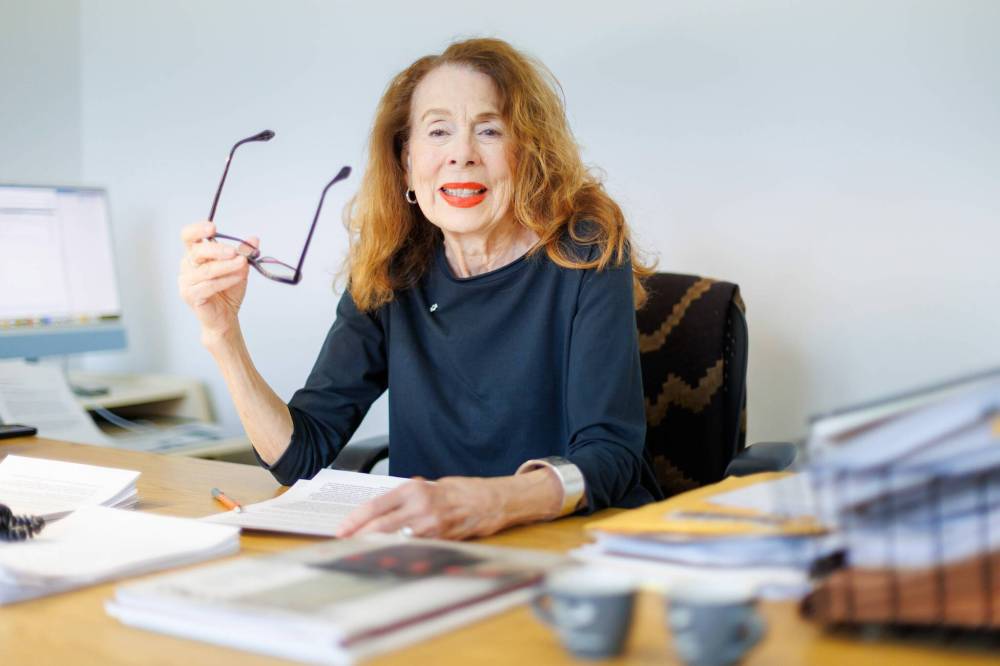
Watching the Crows, however, is set in Mabou, N.S. This is where the famed photographer spent much of his life, fitting right in as a Cape Bretoner, and where Walsh and partner-collaborator Robert Enright first interviewed him in the late 1990s. From that time on, they were all friends.
“Magic. But we had lots of magic moments like these,” Walsh says.
Now, after editing Border Crossings for 33 years, Walsh is leaving the magazine this fall to focus on personal projects.
“While all Canada’s other contemporary art mags started ceasing publication, Border Crossings got thicker each year.”
Some people collect art by big names. Walsh and her colleagues, across the decades, gathered contacts, collaborators and contributors. Few standing Canadian art journals have packed as many major voices — across visual art, film, criticism and architecture — into their pages, turning the magazine’s office in the Exchange into a small capital in the republic of arts and letters.
“For as long as I’ve been trying to make an impression in the wider world outside Winnipeg, I’ve been prouder of Border Crossings as a Winnipeg cultural export than anything else,” says My Winnipeg filmmaker Guy Maddin by email.
“Top-tier artists from around the world seek out Border Crossings when it’s time to go on record with a rigorous interview,” says visual artist and filmmaker Noam Gonick (Hey, Happy), also by email.
Its glossy masthead wasn’t the only Canadian thing circulating through New York galleries, museum bookstores and international art fairs. Alongside the interviews with Yoko Ono and David Lynch, readers have been introduced to an isolated Prairie landscape where artists such as Maddin, Gonick, Marcel Dzama, Kent Monkman, David McMillan, Simon Hughes, Elaine Stocki, Lisa Stinner-Kun and others stayed inside or braved the cold to capture famous slices of Canadian life.
“Meeka’s taste as an editor, supporting cultural production here, played a role in how Winnipeg is known as a heavyweight creative city,” Gonick says.
“While all Canada’s other contemporary art mags started ceasing publication, Border Crossings got thicker each year.”
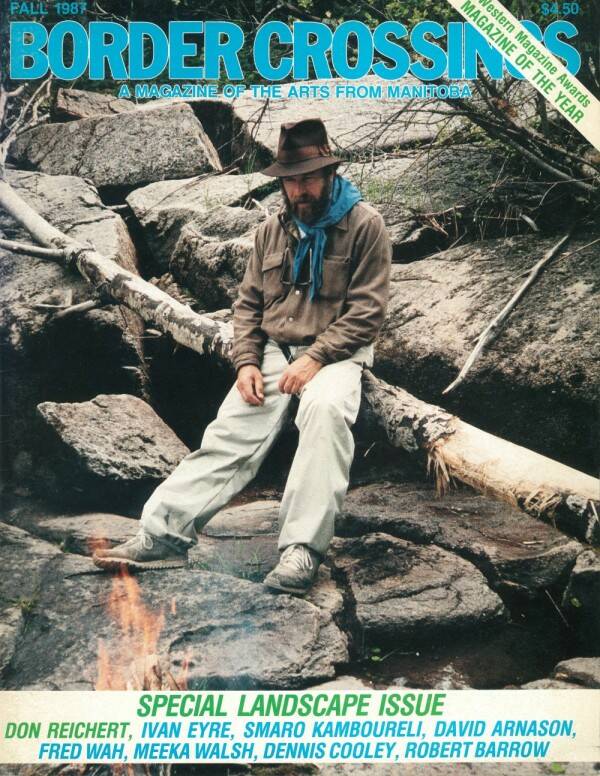
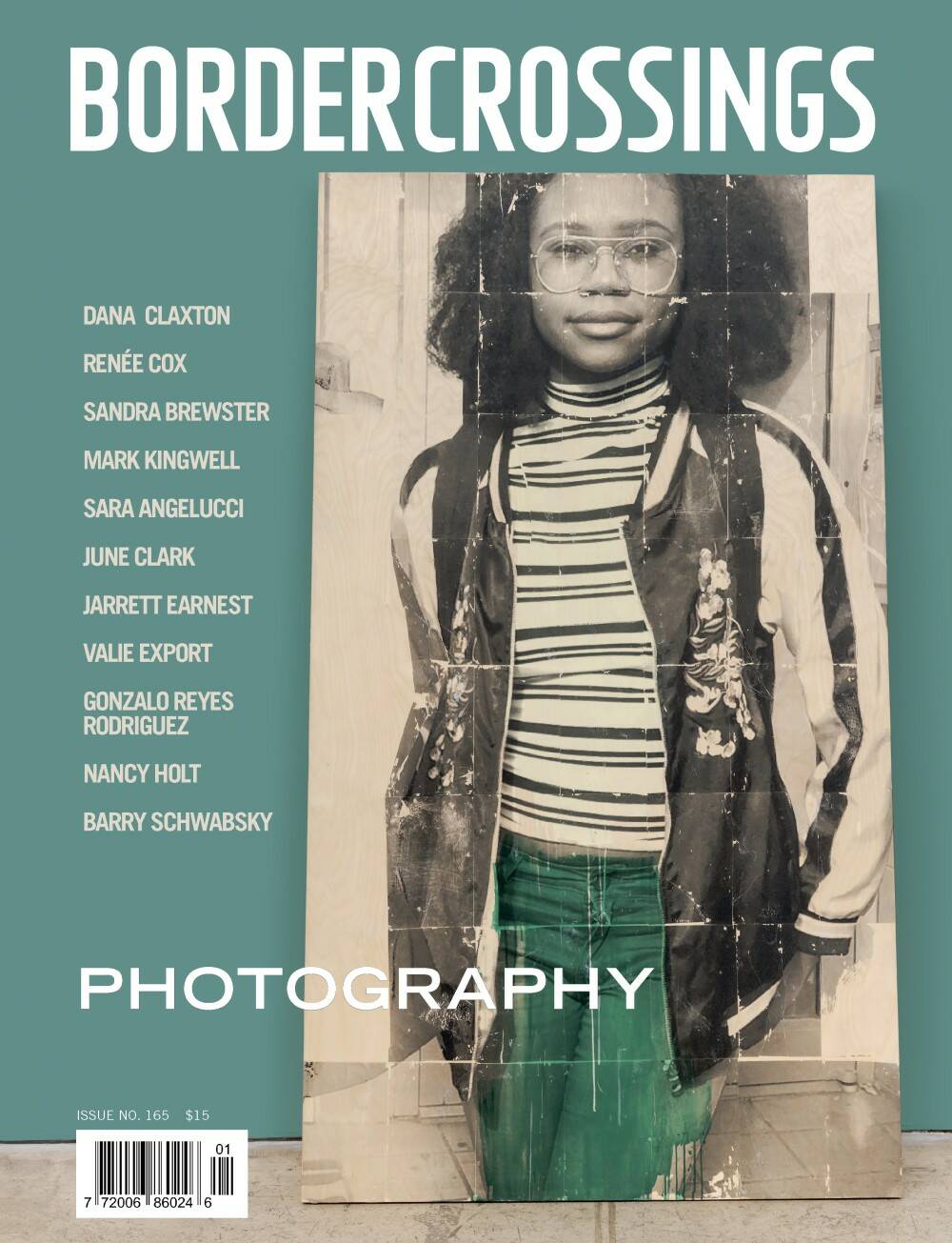
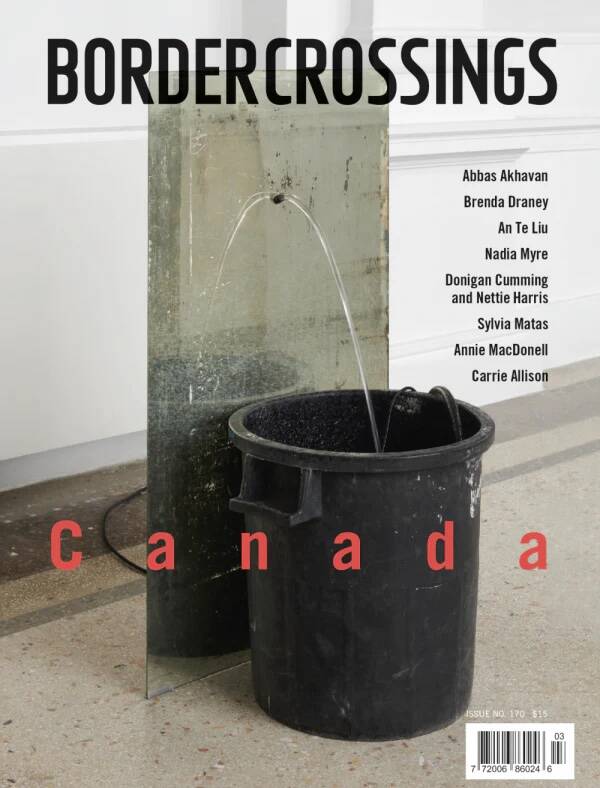

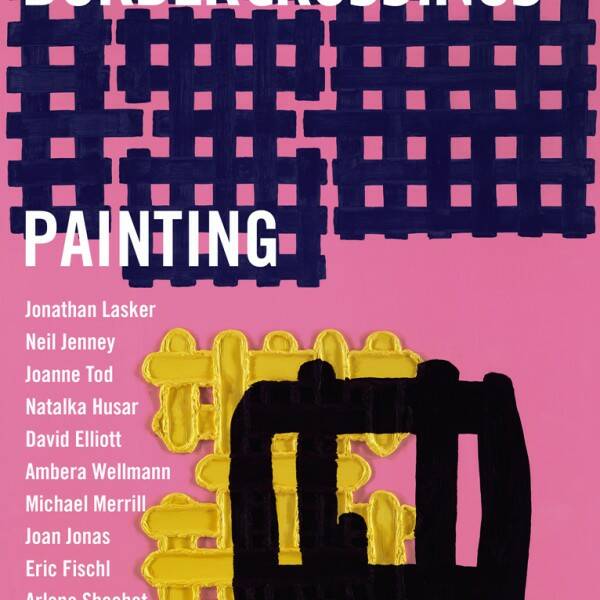
“(Border Crossings) confirmed in me that my hometown was someplace extremely special,” adds Maddin. “It called attention to Winnipeg in all the right ways, and it did so graciously, without boasting — just cogently cool observational takes on art. I trusted and needed it.”
Walsh can engage you with stories about major American art figures such as painter Eric Fischl, critic Arthur Danto and sculptor Richard Serra. Or about carrying suitcases full of her magazine around New York with Enright so she could spread copies to major galleries, where art-world types might discover it.
But like Maddin’s films, many of the stories she tells with relish centre on the local.
After putting away issue no. 152 of the magazine, she lingers on no. 92 from 2004, entitled Young.
“I picked artists that I wagered would have significant careers.”
“I picked artists that I wagered would have significant careers, like (American painter) Dana Schutz and Winnipegger Sarah Anne Johnson. Turns out she panned out all right,” she says of Johnson — whose graduating thesis Tree Planting (2002-05) was purchased by New York’s Guggenheim Museum and who has gone on to international acclaim.
“All Canadian artists need is access. We are passionate about the city (but) the isolation is profound,” says Walsh, who was appointed to the Order of Canada in 2017.
“Artists needed to be taken outside of the city, and they wanted what was outside to be brought back in.”
Not everyone initially understood Border Crossings’ vision of a “local-international” magazine.
The journal emerged in the mid-1980s as a rebirth of Arts Manitoba, renamed Border Crossings in 1985. Quickly, founder Enright and Walsh concluded that a strictly provincial focus would make it, well, too provincial.
MIKE DEAL / FREE PRESS Meeka Walsh says she remembers every cover of Border Crossings sent to print during her career.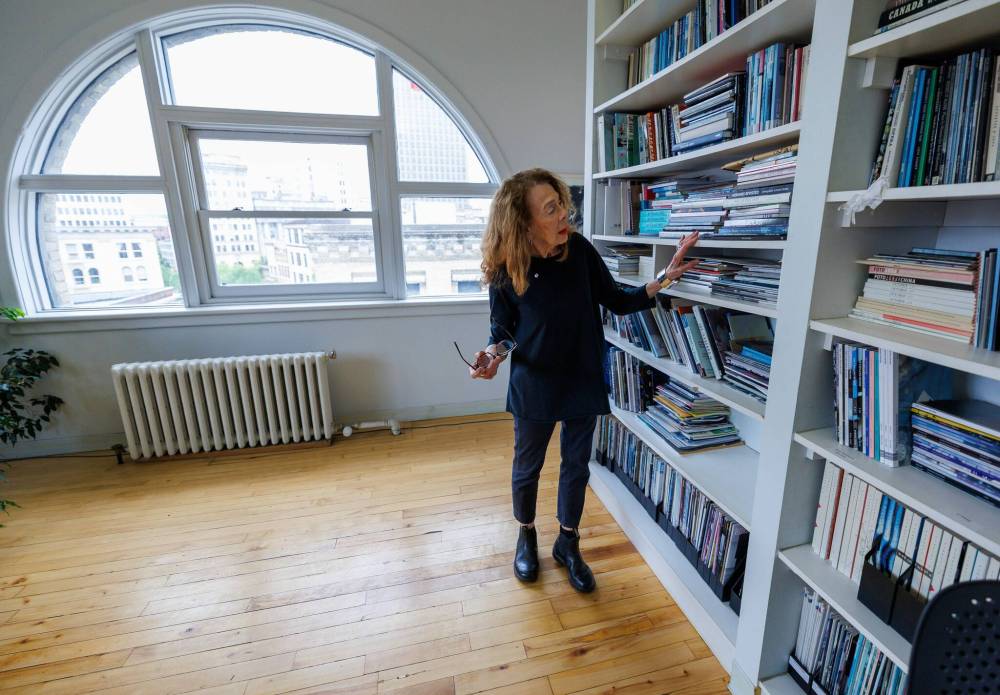
“There were people who were proudly, staunchly Manitoban, and they felt that we had betrayed the roots. Can you imagine how well a magazine called Arts Manitoba would have done on newsstands in Toronto, or even in Manitoba? People do get tired of reading about themselves,” says Walsh.
Walsh’s own roots stretch back generations in Manitoba. Her great-grandfather was the first rabbi in the Prairies west of Winnipeg. In 1966, her mother, Faye Settler, an early board member of the Downtown BIZ, opened the Upstairs Gallery, which exhibited works by local and national contemporary artists in downtown Winnipeg. Her parents were devoted collectors of Inuit art and in 2001 donated the Faye and Bert Settler Inuit Collection to the Winnipeg Art Gallery.
As Walsh sheds the responsibilities of institutional leadership, she also dispenses with some of the usual diplomacy shown toward Canada’s arts councils and cultural bureaucrats, criticizing them for falling short.
“The funding bodies — locally, provincially, federally — are letting original artmakers down, including publishing, smaller visual arts organizations and artists. They’re simply not supporting innovative culture,” she says.
“They’re almost in opposition to the production of culture. The requirement, in the case of magazines, of some funding agencies to count pages and count citizenship — is not productive.”
This last remark also highlights that Border Crossings’ goal, as Walsh describes it, is more cosmopolitan than protectively regional. Its founding mission aims to live up to its name.
JASON HALSTEAD / FREE PRESS FILES From left: Todd Scarth (chairperson of the Border Crossings board of directors and University of Manitoba assistant professor of history), Meeka Walsh (Border Crossings editor), Rob Sobey (sponsor Donald R. Sobey Foundation), artist Sarah Anne Johnson and city Coun. John Orlikow at a 2018 Border Crossings magazine fundraising gala.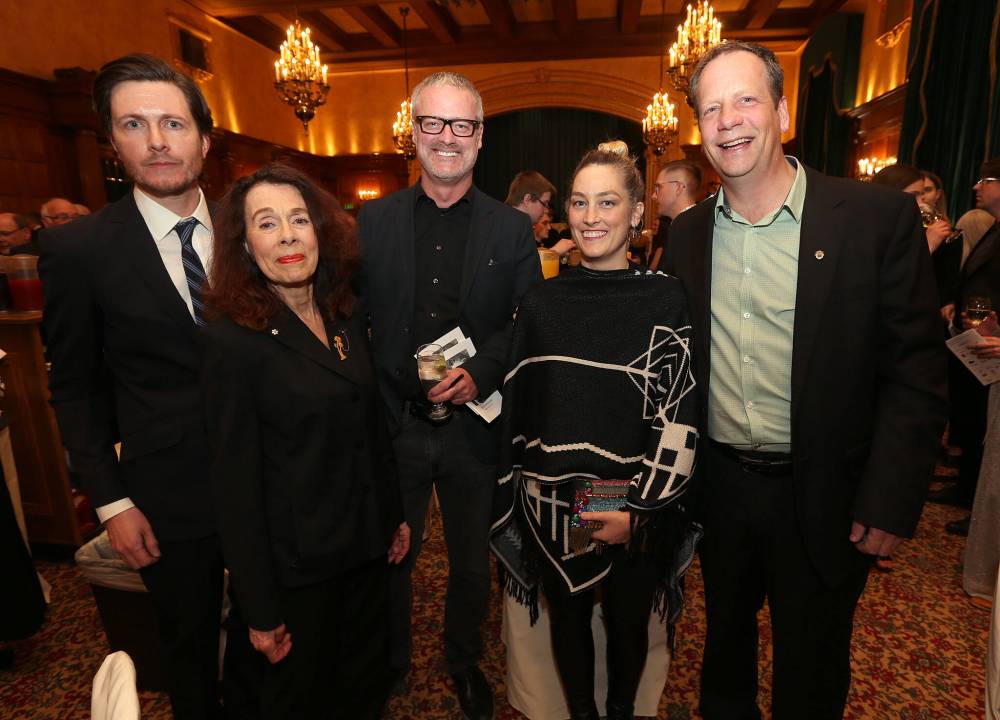
“I jokingly call Meeka my art mom — she’s been there since the beginning,” says Johnson, whose work now exhibits regularly in New York and can be seen locally in House on Fire, on now at Plug In ICA.
“That’s just how she is — incredibly supportive of the Winnipeg art scene. To experience that so young, to have someone so established be genuinely interested in what we were doing, meant everything.”
Maddin also emphasizes the role Border Crossings played in introducing him to international audiences.
“Whatever worldliness I have attained now, all these decades after starting, I owe to Meeka’s Border Crossings and, I suppose, drinking a bit too much at film festivals,” says the Rumours director.
Walsh doesn’t get into all the details about what she plans to do next, except to say “write more.” She’s the author of a recent book, Malleable Forms, a 2022 collection of her BorderNotes — the essays that open every issue of Border Crossings.
Free Press reviewer Alison Gillmor was delighted by their peculiarity, a space where discussions of German artist Joseph Beuys’ hares figure alongside such rabbitty figures as Bugs Bunny and a certain childhood crush. Also delighted was leading U.S. art critic Chris Kraus, who called the essays, “a stunning example of how to look, how to feel, how to see.”

The Nation and Artforum art critic Barry Schwabsky, who supplies the book’s introduction and has been a contributing Border Crossings editor, responded by email to a request for comment about Walsh’s tenure.
“Meeka Walsh cares deeply about writing, cares deeply about art, cares deeply about thinking. … To my mind, that’s what’s made the magazine’s name so apt: those things cross borders, thank goodness, whether openly or surreptitiously,” he writes.
“Meeka’s conversation has been with the world, and she’s entered it from just where she is, in Winnipeg — somewhere I’ve never been but that, thanks to her, is indelibly marked on my mental map of meaningful places.”
winnipegfreepress.com/conradsweatman

Conrad Sweatman is an arts reporter and feature writer. Before joining the Free Press full-time in 2024, he worked in the U.K. and Canadian cultural sectors, freelanced for outlets including The Walrus, VICE and Prairie Fire. Read more about Conrad.
Our newsroom depends on a growing audience of readers to power our journalism. If you are not a paid reader, please consider becoming a subscriber.
Our newsroom depends on its audience of readers to power our journalism. Thank you for your support.