Great plains Manitoba-shot Netflix series sets beloved Ingalls clan in the actual Prairies
Read this article for free:
or
Already have an account? Log in here »
To continue reading, please subscribe:

Digital Subscription
One year of digital access for only $205*
- Enjoy unlimited reading on winnipegfreepress.com
- Read the E-Edition, our digital replica newspaper
- Access News Break, our award-winning app
- Play interactive puzzles
*First annual payment billed as $205.00 + GST for one year. This annual subscription will automatically renew at $233.00 + GST every 52 weeks (10% off the regular annual price of $259.35). Offer available to new and qualified returning subscribers only. Cancel any time.
To continue reading, please subscribe:
Add Free Press access to your Brandon Sun subscription for only an additional
$1 for the first 4 weeks*
- Enjoy unlimited reading on winnipegfreepress.com
- Read the E-Edition, our digital replica newspaper
- Access News Break, our award-winning app
- Play interactive puzzles
*Your next Brandon Sun subscription payment will increase by $1.00 and you will be charged $17.95 plus GST for four weeks. After four weeks, your payment will increase to $24.95 plus GST every four weeks.
Read unlimited articles for free today:
or
Already have an account? Log in here »
Perhaps it should not have been a significant surprise that Manitoba was chosen as the location for a new iteration of the much-beloved TV series Little House on the Prairie.
TV Preview
Little House on the Prairie
Starring: Alice Halsey, Crosby Fitzgerald and Luke Bracey
● Netflix, July 9
● Eight episodes
Much of the southern part of the province is, after all, authentic Prairie, visually unspoiled by power lines and paved roads.
And there is enough of it to portray a frontier wilderness that matches the source material: a series of books by Laura Ingalls Wilder, set in and around Independence, Kan., in the 1860s. (Manitoba also famously doubled for Kansas in the movie Capote, the Oscar-winning story of Truman Capote’s investigation of a 1959 quadruple homicide on a Kansas farm, culminating in the publication of his book In Cold Blood.)
Perhaps it was more of a surprise that the material would inspire a new interpretation landing on the streaming service Netflix.
Credit showrunner Rebecca Sonnenshine. Though Little House may be best known from the original series starring Michael Landon, which ran from 1974 to ’83, she was mostly inspired by Ingalls Wilder’s semi-autobiographical novels when she took up the task of adapting them anew for television.
“I fell in love with the books as a kid,” Sonnenshine says in a Zoom interview. “I read them until they fell apart. I still have the books. I can’t really open them because they’re so fragile at this point.
“I love the spirit of them. I love the family in them, I saw myself in Laura, and I think that the world right now is a place where we want to remember those incredible moments from our childhood. And I just wanted to be able to share it with a new generation of kids.”
Eric Zachanowich / Netflix Alice Halsey as Laura Ingalls in Netflix’s new treatment of Little House on the Prairie, which wa shot in Manitoba.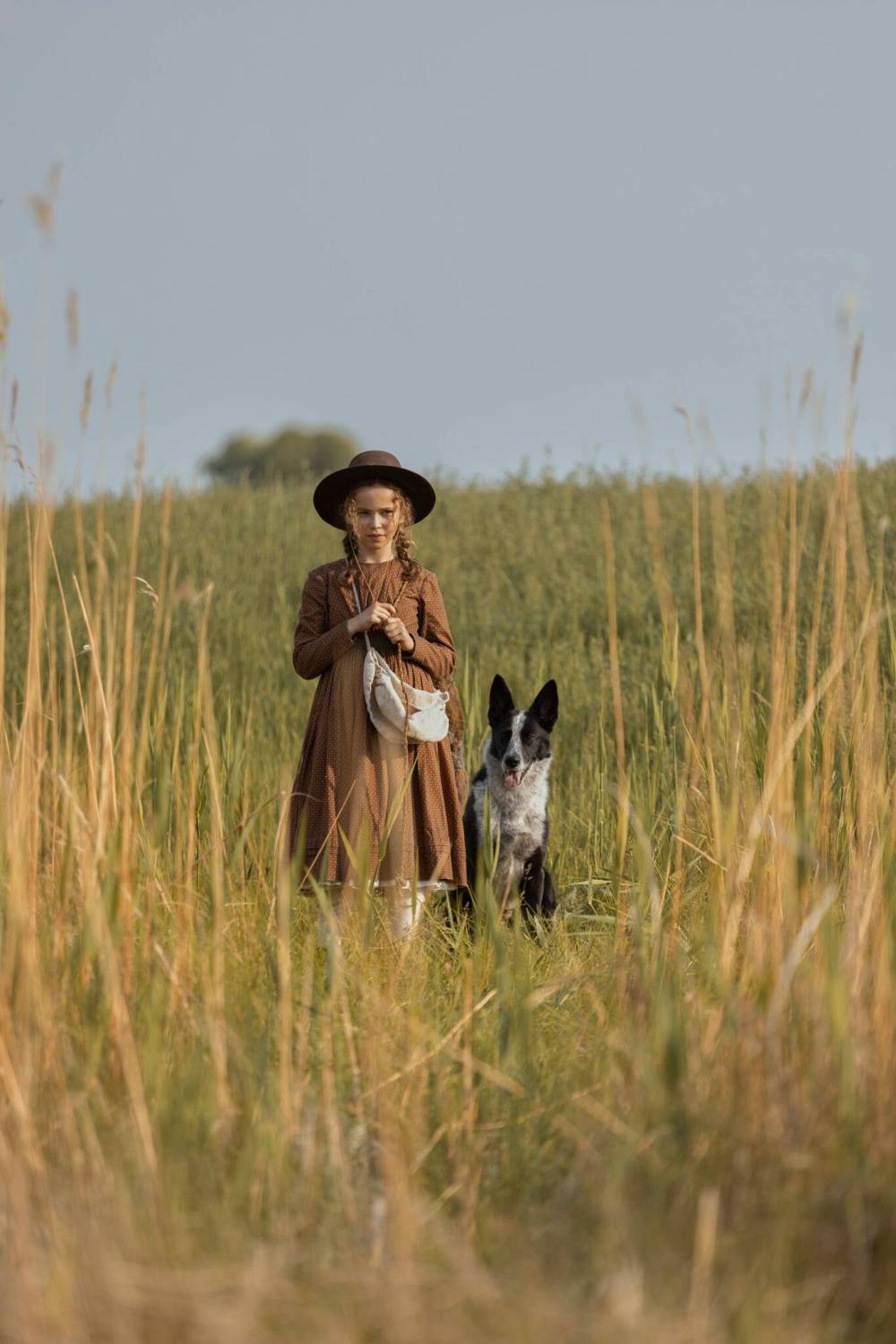
Manitoba’s locations synced up nicely with Sonnenshine’s vision for the show, which stars Alice Halsey (Lessons in Chemistry) as Laura and Australian actor Luke Bracey as Charles (Pa) Ingalls, the role made famous by Landon.
“We came to Winnipeg and we saw the landscape and it really was incredible, all this Prairie, such wonderful skies, such wonderful light and very long days. And also these incredible golden hours,” she says, referring to the last hour of sunlight in a day, which gives a glowing golden hue to the atmosphere.
“That is so valuable for shooting and making it feel cinematic and beautiful. We just love it. And we love the people and we love the crew that we get to work with. It’s an incredible place.”
Even so, Little House on the Prairie shares something in common with other notable shows Sonnenshine has produced, including supernatural teen drama The Vampire Diaries and violent superhero series The Boys.
“I love world-building. I kind of come from a genre world. And the most important thing about working in genre is the emotional resonance of the characters, but also the immersive world-building,” she says.
That’s why the show may feel grittier than the original series, in which the frontier life had an overlay of Hollywood gloss. This version takes advantage of the real-life location to focus on the details of production design and period costuming, as well as shooting in the actual Prairies.
“It’s dirty. There’s wind, there’s weather, there are bugs, and it makes it feel very authentic. It feels, for us, immersive, and I think that translates for the audience that it feels immersive as well,” she says.
The resulting show looked good enough to Netflix that a second season has already been ordered, well in advance of the series première next week.
“They believe in the show and we were able to come back to Winnipeg,” Sonnenshine says. (Production of the second season has begun and will proceed until the end of October.)
In taking on the role of frontier family man Charles Ingalls, Sydney-born actor Bracey says he considers himself lucky he didn’t come with the baggage of familiarity with the character that Landon built decades earlier.
“I was kind of a little bit blissfully ignorant of the Little House world before I came into it,” says Bracey over a Zoom call from Los Angeles to Winnipeg, where he spent months filming the first season last year.
Eric Zachanowich / Netflix Luke Bracey (with Alice Halsey, left) enjoyed shooting in the elements in Manitoba.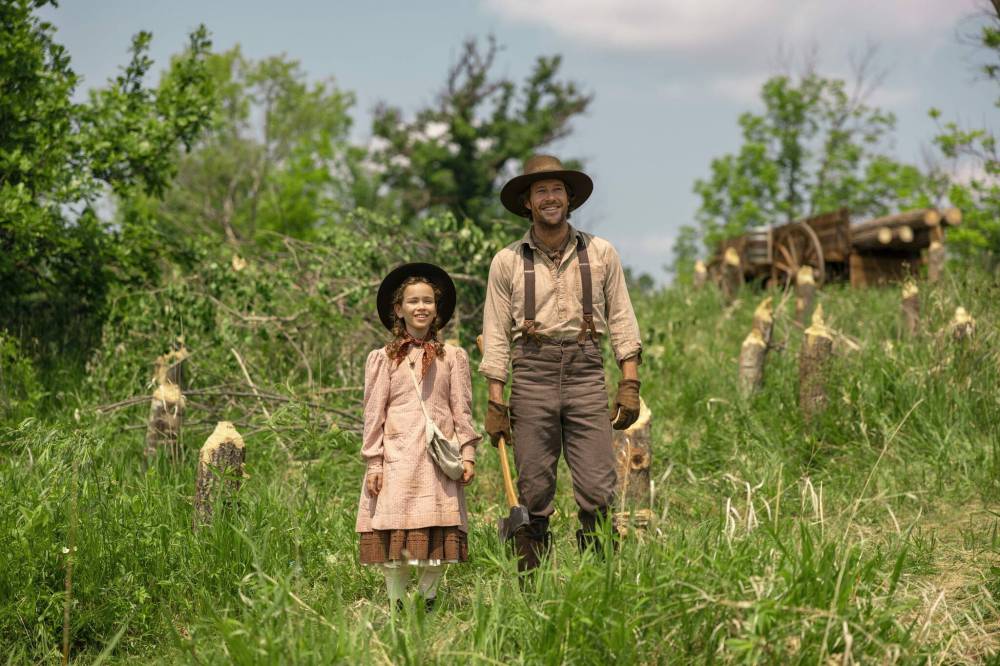
The actor, 37, says he neither grew up with the show, nor was really aware of the worldwide scale of its appeal, which he thinks actually helped him.

“I didn’t feel the burden of it in that way,” he says. “I felt the normal burden that you want to do a good job and you want to be true to these beloved stories. And as I’ve grown to learn all about the books and the show and the stories and how much people love it, it’s less of a burden and more of a privilege, you know, to get this chance to create just a nice, good man.”
The character endures some significant hardships over the course of the series, and for his part, Bracey says shooting in the Prairie environment helps his performance; the majority of the show is shot outside in what he calls “that beautiful nature.”
“And it was such a joy,” Bracey says. “Selfishly, as an actor, it makes acting a bit easier when you’re actually outside feeling the breeze, feeling the heat, experiencing all the beautiful flora and fauna that Winnipeg and Manitoba has. It was one of the most enjoyable five months I’ve had working. And on top of that, Winnipeg is a lovely city and a really lovely community.”
Little House on the Prairie premières Thursday on Netflix.
randall.king.arts@gmail.com

Our newsroom depends on a growing audience of readers to power our journalism. If you are not a paid reader, please consider becoming a subscriber.
Our newsroom depends on its audience of readers to power our journalism. Thank you for your support.
Related Articles
From her bookstore in Nashville, Ann Patchett drives the literary conversation


History
Updated on Monday, July 6, 2026 6:27 AM CDT: Fixes video link