Building optimism Winnipeg’s postwar architecture well-documented by online archive
Read this article for free:
or
Already have an account? Log in here »
To continue reading, please subscribe:

Digital Subscription
One year of digital access for only $205*
- Enjoy unlimited reading on winnipegfreepress.com
- Read the E-Edition, our digital replica newspaper
- Access News Break, our award-winning app
- Play interactive puzzles
*First annual payment billed as $205.00 + GST for one year. This annual subscription will automatically renew at $233.00 + GST every 52 weeks (10% off the regular annual price of $259.35). Offer available to new and qualified returning subscribers only. Cancel any time.
To continue reading, please subscribe:
Add Free Press access to your Brandon Sun subscription for only an additional
$1 for the first 4 weeks*
- Enjoy unlimited reading on winnipegfreepress.com
- Read the E-Edition, our digital replica newspaper
- Access News Break, our award-winning app
- Play interactive puzzles
*Your next Brandon Sun subscription payment will increase by $1.00 and you will be charged $17.95 plus GST for four weeks. After four weeks, your payment will increase to $24.95 plus GST every four weeks.
Read unlimited articles for free today:
or
Already have an account? Log in here »
In a video tour of Winnipeg’s downtown this year, Great Big Sea frontman Alan Doyle said Canada’s best-looking buildings “are all here.”
We live in a city rich with Chicago School highrises, mid-century modernism and much more. And, for the past three decades, Paul Clerkin has amassed arguably the most comprehensive archive of this architecture.

It’s not just Winnipeg featured either: the archive, Archiseek, is bursting at the seams with centuries of Irish, British Commonwealth and European architectural landmarks and obscurities.
But the Irish-born Winnipegger appears particularly fascinated with the city’s architecture of the postwar era. His archive — which is available at archiseek.com to the general public, and is celebrating its 30th anniversary right now — also serves as a rich repository for the lofty Winnipeg ambitions of that era.
“I think it’s interesting that Winnipeg, just generally, was always trying in (the 1950s and ’60s) to be bigger, better … There was an optimism that’s gone,” he says.
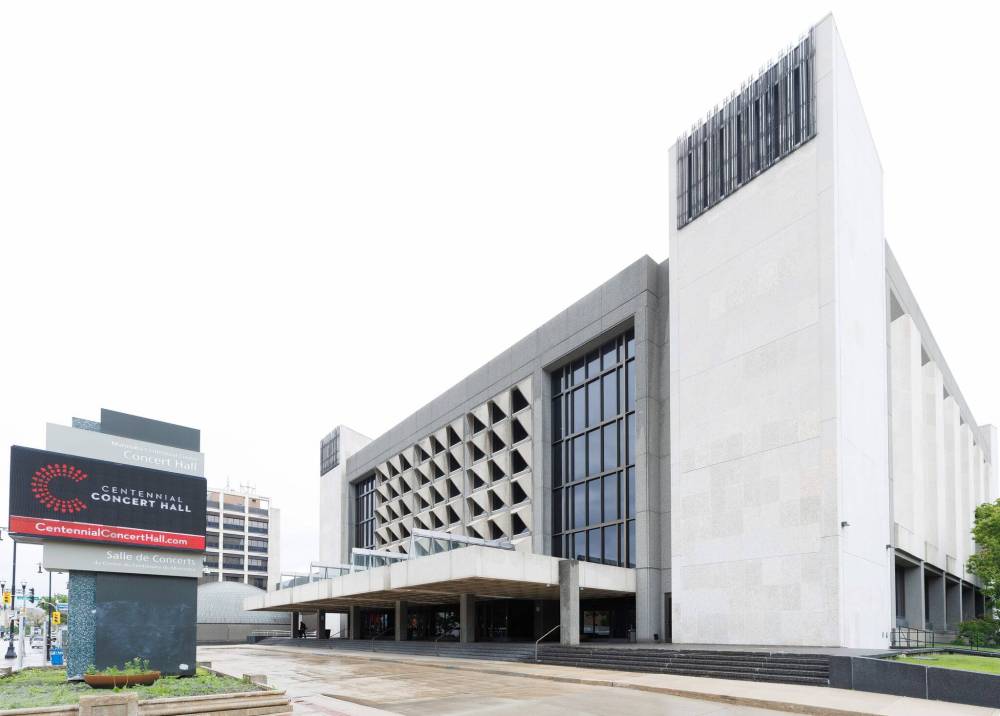
It’s been called the Golden Age of Capitalism: the first three decades after the Second World War saw rapid economic growth and expansion of the middle class throughout Europe and North America. But in Canada this also coincided with a general thrust toward nation-building — manifesting, for instance, in the Centennial Commission, which gives us the Centennial Concert Hall, the Manitoba Museum, the Planetarium, Manitoba Theatre Centre, as well as dozens of recreation centres, public parks, libraries, curling clubs and skating rinks.
This era also saw a greater push toward ambitious civic-minded planning in Winnipeg — including a unified transit system oriented around the downtown (the hub-and-spoke model model replaced with spine and feeder in 2025), a more centralized water and waste system and more — culminating in the 1972 Unicity amalgamation, which consolidated a network of about a dozen small municipalities.
Certain sections of Archiseek are dedicated to exploring lost buildings and incomplete projects, some of them from this era, such as a nearly selected plan to build city hall off Memorial Boulevard.
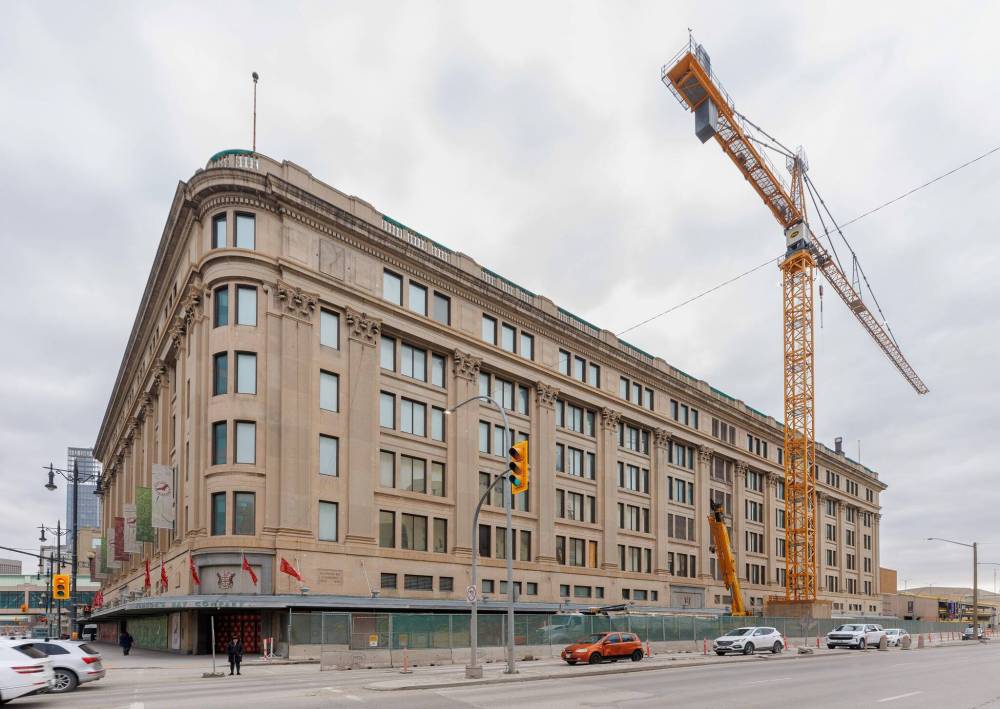
“I think that’s very interesting, because it would have completely twisted the axis of the city. Because instead of city hall being down on Main Street, you’d have city hall on Memorial facing the (Legislative Building), and with U of W (and the Winnipeg Art Gallery) behind it,” he says, adding that he’s pleased to see the Hudson’s Bay department store’s rebirth as a mixed-use community space through Wehwehneh Bahgahkinahgohn.
“Cutting an atrium down through the structure is fantastic. It’s an absolutely genius idea to do that: bring light down, make the floor plates less deep. The building will continue to survive,” he says.
Clerkin hasn’t always been so interested in Winnipeg. In fact, when he started Archiseek in 1996, as a graduate student in Dublin, it was meant to focus solely on Ireland. He says the project’s seeds were planted while using his employer’s office to print his thesis.
“The printer would jam religiously every three or four pages … and it was taking me all night. So I was kind of surfing the internet, as it then was, on my boss’s computer, and discovered that there was really nothing online on Irish architecture at the time.”
Uploading 200 x 200 pixel images of Dublin’s architectural highlights to his newly created website wasn’t much faster in the 1990s, but soon he became obsessed. Many years later, he’s still documenting Irish architecture, but has cast his documentarian net far wider.
“At any one time, I have 1,500 or 1,600 buildings in draft mode that have never been published yet,” he says. It takes time to gather the appropriate facts to publish the textual notes that go with the images.
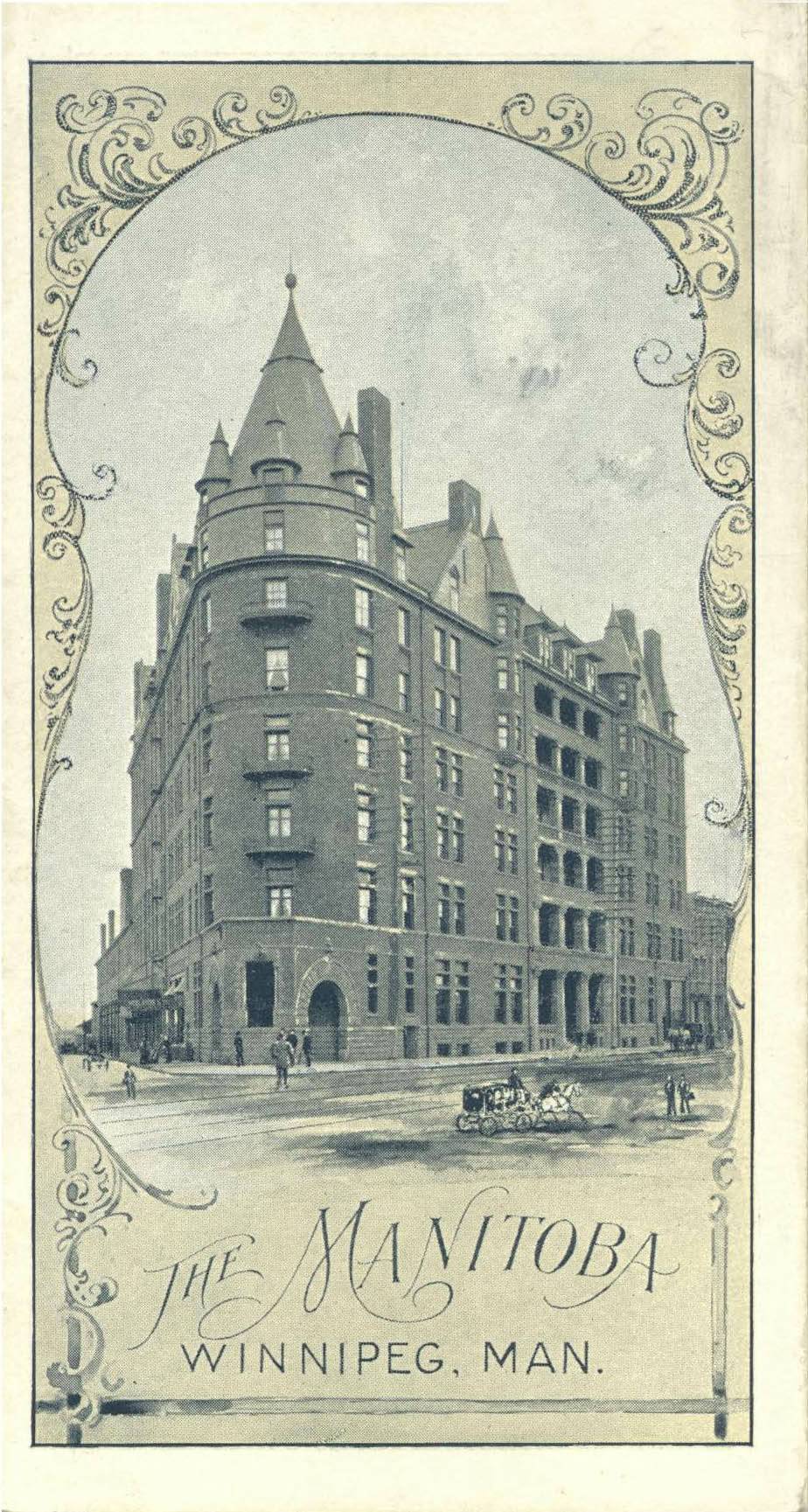
When it comes to our city, the graphic designer and former co-owner of Stone Angel Brewing Co. hopes Archiseek will inspire Winnipeggers to think more progressively both about our physical heritage — and the future of the city’s planning and design.
“To an extent, we’re kind of slightly reactionary against change,” he says. “And politicians lack a certain amount of vision.”
There are no shortages of disappointments to encourage this conservatism: a new bus system floundering for lack of service hours, the disastrous life and demolition of Centre Village, the well-intended reimagining of Graham Avenue as a citizen corridor that has yet to draw a critical mass of users.
The Bay redevelopment’s costs, underwritten partially by the city and province, have also doubled to $310 million.
Clerkin recognizes the strain this imposes. But he suggests that postponing smaller upgrades and repairs sometimes means paying more in the long run and also that ambitious projects, such as The Cube stage at Old Market Square, often become iconic parts of the city’s landscape after initial controversies.
Canadian urban theorist Jane Jacobs has taught generations of Canadians to be skeptical about the top-down visions of city planners, developers and architects. There’s something to be said for more gradualist approaches to change centred on community consultation or fiscal constraint.
But in spending decades documenting Winnipeg architecture and planning, Clerkin has gained, and hopes to spread, an appreciation for a certain boldness of vision.
“Generally architects are optimistic. They think they can imagine a better world,” he says. “You shoot for the stars. Sometimes you miss, sometimes you nail it.”
conrad.sweatman@winnipegfreepress.com

Conrad Sweatman is an arts reporter and feature writer. Before joining the Free Press full-time in 2024, he worked in the U.K. and Canadian cultural sectors and freelanced for outlets including The Walrus, VICE and Prairie Fire. Read more about Conrad.
Our newsroom depends on a growing audience of readers to power our journalism. If you are not a paid reader, please consider becoming a subscriber.
Our newsroom depends on its audience of readers to power our journalism. Thank you for your support.