Imagine nation For the LARPers of Misthaven, adventuring is serious business
Read this article for free:
or
Already have an account? Log in here »
To continue reading, please subscribe:

Digital Subscription
One year of digital access for only $205*
- Enjoy unlimited reading on winnipegfreepress.com
- Read the E-Edition, our digital replica newspaper
- Access News Break, our award-winning app
- Play interactive puzzles
*First annual payment billed as $205.00 + GST for one year. This annual subscription will automatically renew at $233.00 + GST every 52 weeks (10% off the regular annual price of $259.35). Offer available to new and qualified returning subscribers only. Cancel any time.
To continue reading, please subscribe:
Add Free Press access to your Brandon Sun subscription for only an additional
$1 for the first 4 weeks*
- Enjoy unlimited reading on winnipegfreepress.com
- Read the E-Edition, our digital replica newspaper
- Access News Break, our award-winning app
- Play interactive puzzles
*Your next Brandon Sun subscription payment will increase by $1.00 and you will be charged $17.95 plus GST for four weeks. After four weeks, your payment will increase to $24.95 plus GST every four weeks.
Read unlimited articles for free today:
or
Already have an account? Log in here »
I’m about to have my ass handed to me by a burly man in his late 30s wielding a foam sword.
“Don’t hurt him,” a fellow Live Action Role Player (LARPer) tells my opponent before we spar.
“How could he hurt me?” I think. “It’s foam.”
MISTHAVEN / SUPPLIED For some, the world of Misthaven is a second home, though its dense lore and rulebook may intimidate a beginner.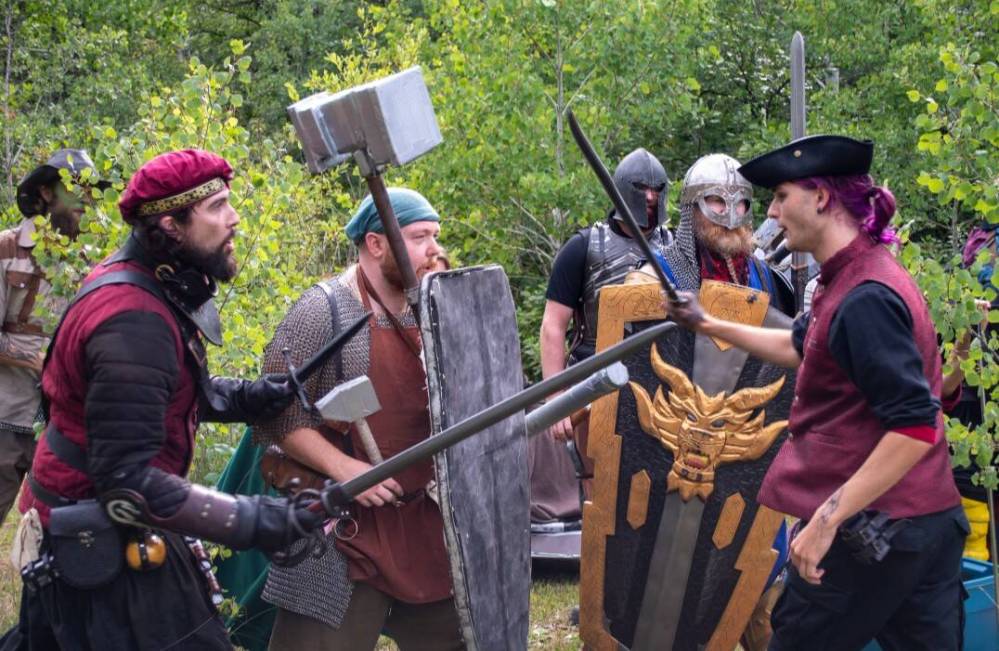
He patiently explains every mistake I make while effortlessly beating me. It’s meant to be instructive, but inadvertently adds insult to injury. And, yes, I do get a little hurt, though it’s my fault: I smack myself in the face with my own shield, hiding the pain like a kid around older, stronger boys at recess.
But the group of LARPers watching my humiliation don’t seem like grown-up versions of the stereotypically popular kids. I have the impression I’m being gently big-dogged by the sort of people who once took refuge on the sidelines of the playground playing Dungeons & Dragons or Magic: The Gathering.
I’m playing a ranger in a LARP at a barnhouse outside Grunthal among 20 or so other men and women dressed in chainmail, corsets and elf ears. For the next couple of days, they will address one another by in-character names such as Volk and Felrohir.
I choose “Stranger Ranger” as my name, which I’m told by guildmaster Coltin Day — a key organizer for this particular LARP group — is a little “memey.”
Irony is tempting for a first-timer like me, a defence mechanism in the face of a fantasy world this immersive. That world is Misthaven, a remote, fog-enshrouded logging hamlet within the universe of Underworld, which has sister guilds all across Canada and parts of the United States.
MISTHAVEN / SUPPLIED Live Action Role Players in Misthaven do battle with sword and shield and more besides — all made of non-lethal foam, of course.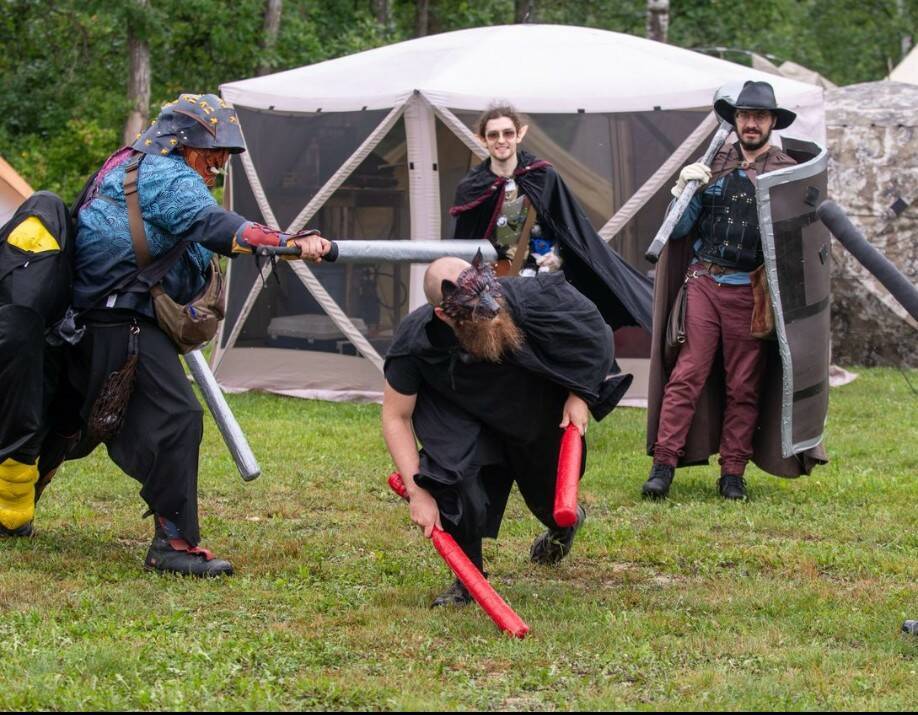
Once a month, spring through fall, this sprawling property becomes Misthaven. Players drive the hour or so from Winnipeg for a weekend of LARPing, stepping into a video-game-like world — think The Lord of the Rings with dark hints of H.P. Lovecraft — that picks up where they left off.
For some, it’s a sort of second home, an escape into a self-contained and magical universe among friends that naturally can be difficult to navigate for the beginner.
First-time players get in free, and are expected to arrive with a pre-made character (elf, human, orc, dwarf, etc.), a name and a class (such as mercenary, ranger, mage, bard), each of which comes with different skills and limitations.
A player starts as a foreigner in this world, but picks up skills, friendships and enemies until they become a part of its history and mythology.
They also get handed a 135-page rulebook, detailing Underworld’s lore, combat system, mechanics, factions, rules of play and so on.
MISTHAVEN / SUPPLIED Role-players admit there’s an escapist element to the game.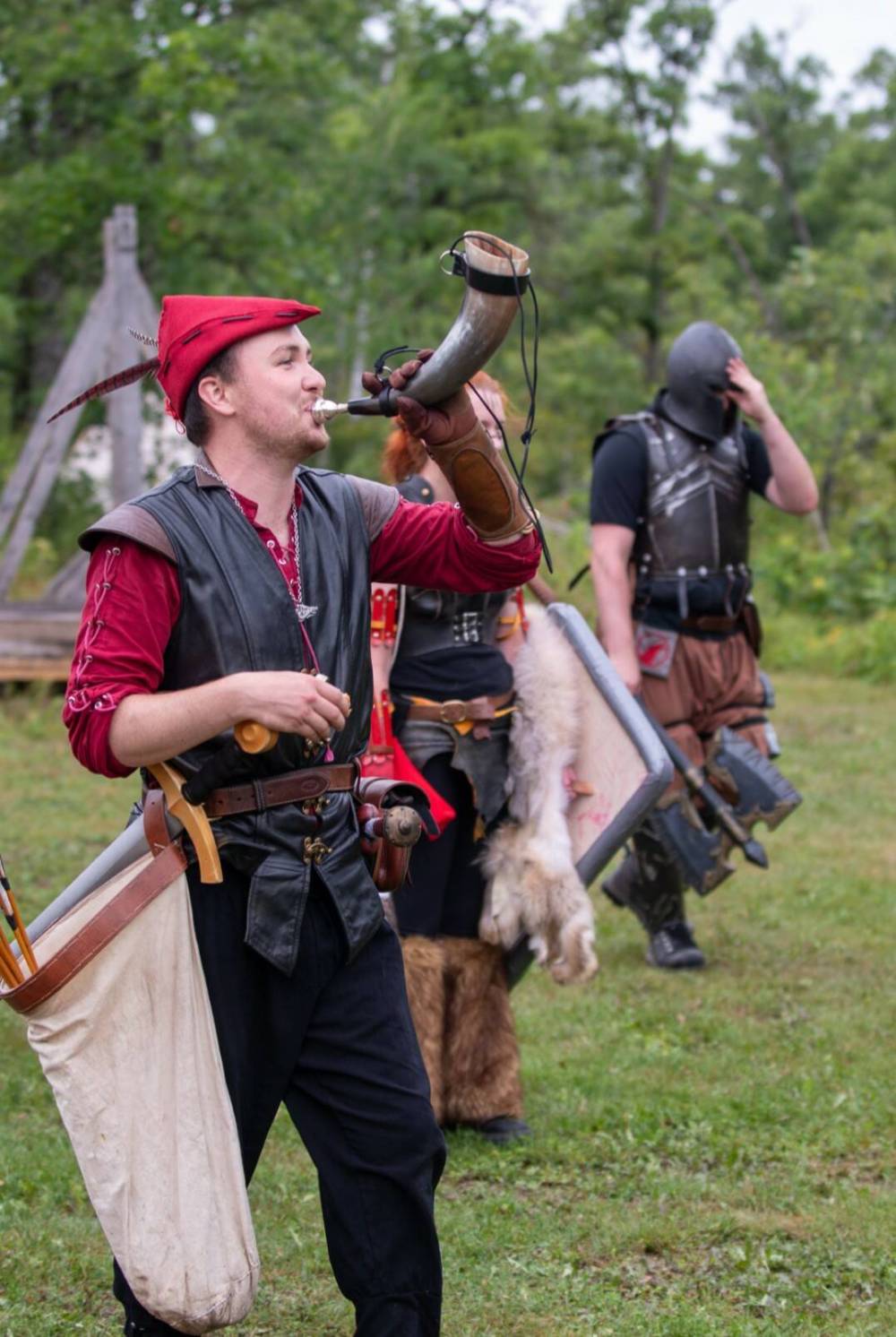
Day, who’s also part of the writing team for Misthaven, which has existed for six years, confides that even he doesn’t know all the rules.
“But you can break character if you have a question, by putting your hand on your head and being like, ‘Hey, guys, like actually, what’s that rule?’” he says.
It helps, during your first LARP, to have a guide or new-player liaison. Miranda Short (who uses they/them pronouns) is ours.
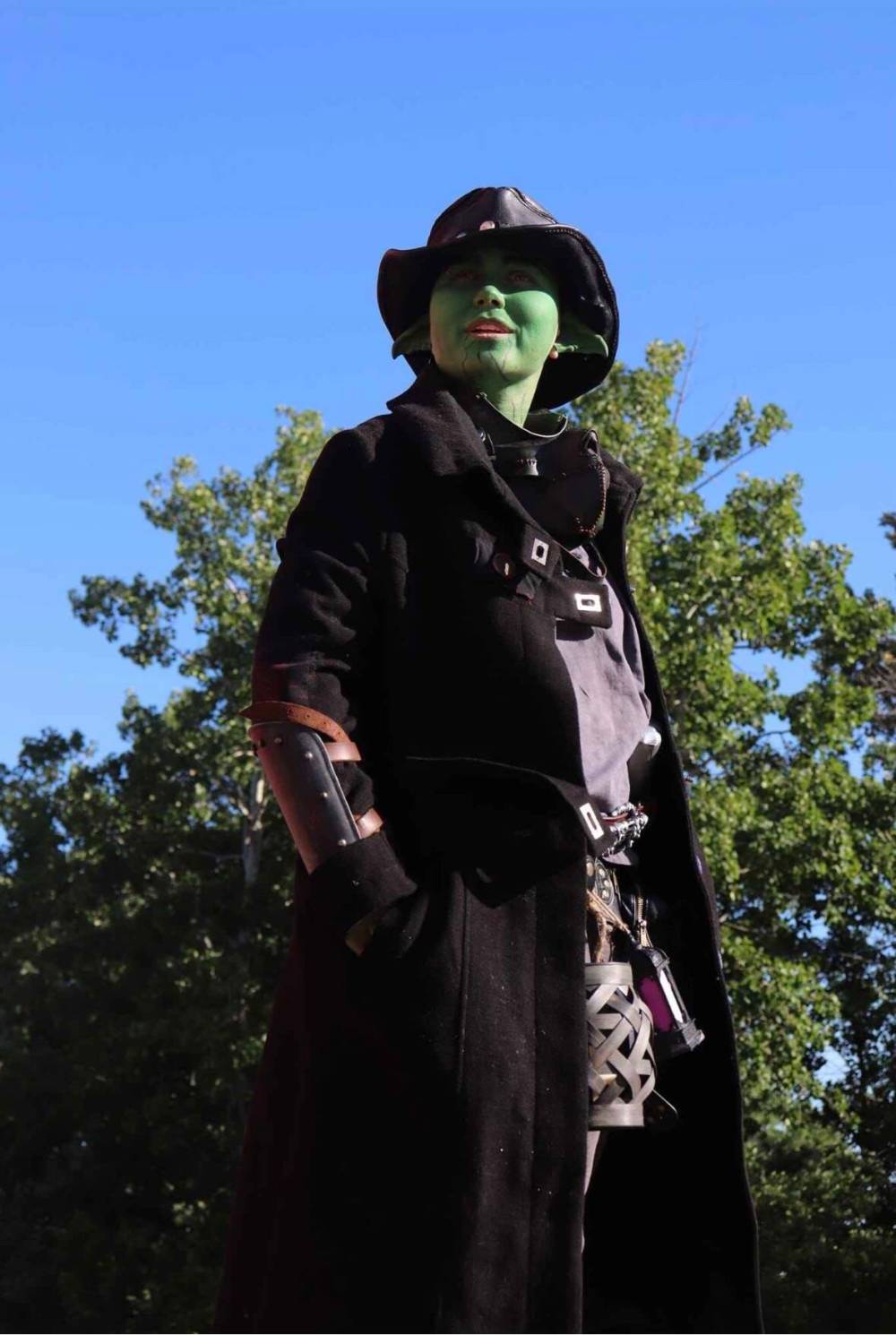
In one moment, Short is reminding me to count the damage I rack up as I cross swords with others on my quests; the next they are slagging off a character (but not the player) they don’t get along with in the mannerisms of their goblin character, Grimwald.
“People who LARP will, without even hesitation, be like, ‘Oh, absolutely, this is 100 per cent nerdy,’” Short says. “From my perspective, I’ve never seen it as a bad thing.”
LARPing is the butt of a lot of jokes. In internet slang, to call someone a LARPer is to accuse them of playing make-believe — wearing an ideology or identity, such as a political revolutionary or a wealthy playboy, that isn’t authentic. And LARPers themselves get teased too, as fantasy nerds — especially of this level of dedication — are bound to.
“I do know that it attracts a lot of neurodivergent people,” says Day, though he says that most people cheat themselves by not trying LARP at least once. “I look at it like, ‘When was the last time you went outside and played?’ You lose that as an adult.”
It’s easy to parody adults in capes talking in accents about made-up gods or kings, as many memes and shows have (see the Paul Rudd comedy Role Models) but below LARP’s nerdy exterior is an often profound interior.
An anthropologist could probably do a sort of participant-observation in Misthaven for weeks and still have questions about its belief systems and legends — the product of the deep overlapping imagination of its writers and adventurers.
“I do know that it attracts a lot of neurodivergent people… I look at it like, ‘When was the last time you went outside and played?’ You lose that as an adult.”
Serious LARPers show brilliant skills, such as the fencers and practitioners of “historical European martial arts” who teach me to spar, or costume and makeup artists such as Short.
While it does not remove the outer goofiness of getting into shouting matches over imaginary beasts, like Don Quixote and Sancho Panza, it elevates the stakes of the inner world.
“Are they really mad at each other?” I ask Short at one point. “No, they’re just in character,” they reply, though they clarify that “bleed” — when emotions or relationships from the game or real life spill into one another — can happen.
Occasionally, the insults take on an otherworldly racial tone, such as when elves are called “knife ears.” Out-of-game-racism about real-world groups is strictly verboten, but in-game racism — epithets and stereotypes relating to Underworld’s imaginary races — is fair game.
MISTHAVEN / SUPPLIED Misthaven has sister guilds across Canada and the U.S.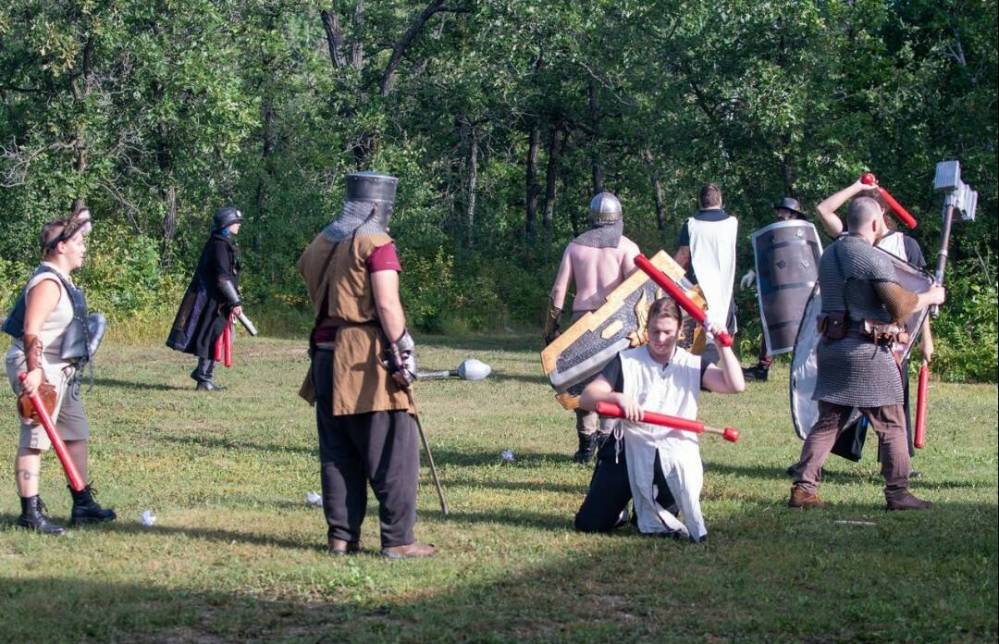
Fantasy, with its apparent nostalgia for a pre-modern world of hierarchy and caste, has occasionally attracted reactionaries. J.R.R. Tolkien himself, a staunch monarchist, has been accused of imbuing Middle-earth with racialized imagery and conservative longings.
But Short — a “green skin,” like the orcs that Tolkien villainized — says Underworld subverts some of these tendencies surrounding classic fantasy. The humans and elves may mostly enjoy elite political and administrative roles within the Empire of Berphaun, but talk to characters in Misthaven and many will tell you all about this order’s corruption and empathize with the bandits, supporting starving families, who challenge it.
No one seems to be waiting for the arrival of the “one true king,” like LOTR’s pale-skinned human Aragorn, to restore order and harmony.
“A lot of the jokes are about the humans themselves,” Short explains while we play. The elves respond to human insults by calling them “round ears.”
“I love playing my little goblin and everyone’s like, ‘Why would you want to do that?’”
While fantasy culture is sometimes described as an escape from the modern world, LARPers face a similar perception: that they are playing someone more heroic than ordinary folks get to be in real life.
Short doesn’t deny LARP’s escapist pleasure, but says for them it’s as much about exploring life’s funky and taboo stuff, everything we keep below the surface.
“I love playing my little goblin and everyone’s like, ‘Why would you want to do that?’ There’s something that I enjoy about being able to just pretend that I’m the most disgusting creature on the planet. I don’t care about all of these social norms and expectations and of society,” Short says.
For Day, this safe exploration — not just of romantic ideals and romanticized versions of ourselves, but the messy parts of human nature we usually keep hidden — is what makes LARPing so therapeutic.
“We’re 18-plus because we’re able to deal with more sensitive topics like politics and theology, all that stuff. But at the same time, we’re healing some people’s inner child in a way,” says Day.
conrad.sweatman@winnipegfreepress.com

Conrad Sweatman is an arts reporter and feature writer. Before joining the Free Press full-time in 2024, he worked in the U.K. and Canadian cultural sectors and freelanced for outlets including The Walrus, VICE and Prairie Fire. Read more about Conrad.
Our newsroom depends on a growing audience of readers to power our journalism. If you are not a paid reader, please consider becoming a subscriber.
Our newsroom depends on its audience of readers to power our journalism. Thank you for your support.