Animals take to the ice The Forks unveils winter warming hut creations

An eagle, a beaver and a catfish, animals that have called The Forks home for ages, will be part of the Nestaweya River Trail this winter.

Read this article for free:


or

Already have an account? Log in here »

To continue reading, please subscribe:

Subscribe and receive a limited-edition Free Press branded hat or tote.

Digital Subscription

One year of digital access for only $205*

  • Enjoy unlimited reading on winnipegfreepress.com
  • Read the E-Edition, our digital replica newspaper
  • Access News Break, our award-winning app
  • Play interactive puzzles

*First annual payment billed as $205.00 + GST for one year. This annual subscription will automatically renew at $233.00 + GST every 52 weeks (10% off the regular annual price of $259.35). Offer available to new and qualified returning subscribers only. Cancel any time.

To continue reading, please subscribe:

Add Free Press access to your Brandon Sun subscription for only an additional

$1 for the first 4 weeks*

  • Enjoy unlimited reading on winnipegfreepress.com
  • Read the E-Edition, our digital replica newspaper
  • Access News Break, our award-winning app
  • Play interactive puzzles
Start now

*Your next Brandon Sun subscription payment will increase by $1.00 and you will be charged $17.95 plus GST for four weeks. After four weeks, your payment will increase to $24.95 plus GST every four weeks.

Hey there, time traveller!
This article was published 23/11/2023 (1014 days ago), so information in it may no longer be current.

An eagle, a beaver and a catfish, animals that have called The Forks home for ages, will be part of the Nestaweya River Trail this winter.

They can be hard to find, but their artistic representations will be captured for the annual Warming Huts arts and architecture competition, which announced three winning designs Thursday, along with three other special-guest creations.

SUPPLIED
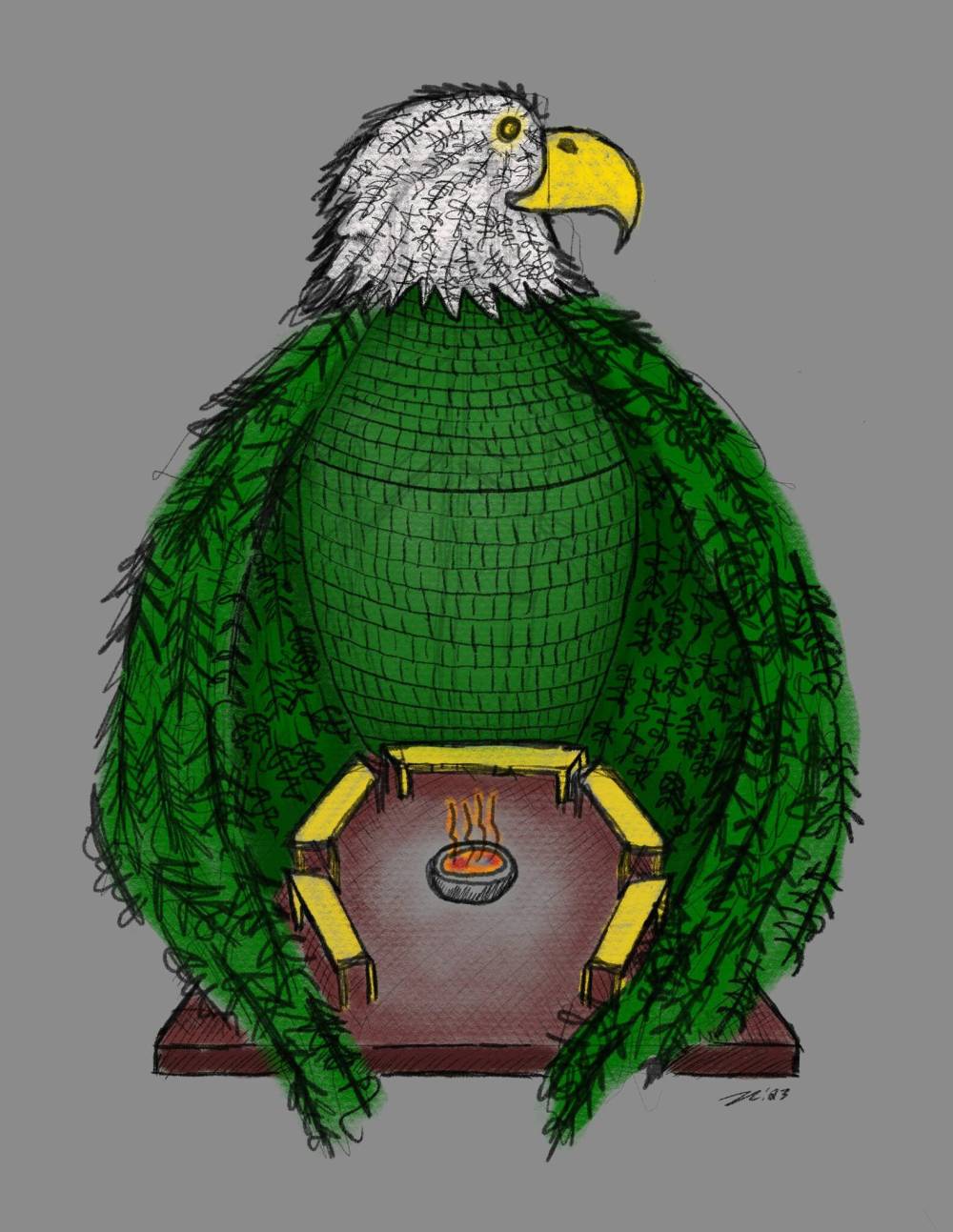
                                Circling Above Us features a five-metre eagle made of cedar created by Wayne and Jordan Stranger from Peguis First Nation.
SUPPLIED

Circling Above Us features a five-metre eagle made of cedar created by Wayne and Jordan Stranger from Peguis First Nation.

A five-metre eagle made of cedar, a combination of two sacred elements of Indigenous cultures, will be perched at the skating trail by father-and-son Peguis First Nation artists Wayne and Jordan Stranger.

Titled Circling Above Us, the eagle will keep skaters, skiers, snowshoers and hikers cosy, with its huge wings serving as walls to block the winter wind.

Eagles have become an important part of Jordan Stranger’s art and life after spending years of learning about Anishinaabe teaching from elders. Many of his paintings adorning The Forks Market include eagles.

“The eagle is flying high, looking for the ones that still are able and who want and can practise our traditions,” says the owner of Totem Doodem art company.

The cedar branches, shakes and benches Wayne Stranger will use to build Circling Above Us hold greater significance than its obvious use as a windbreak.

“It’s one of the four sacred medicines we were given: sage, cedar, sweetgrass and tobacco,” says Wayne Stranger, owner of Stranger Bronzeworks, whose works have been included in The Forks exhibitions and on the river trail. “The cedar is used in ceremonies, in sundance, in sweatlodge, teas, smudges.

SUPPLIED 
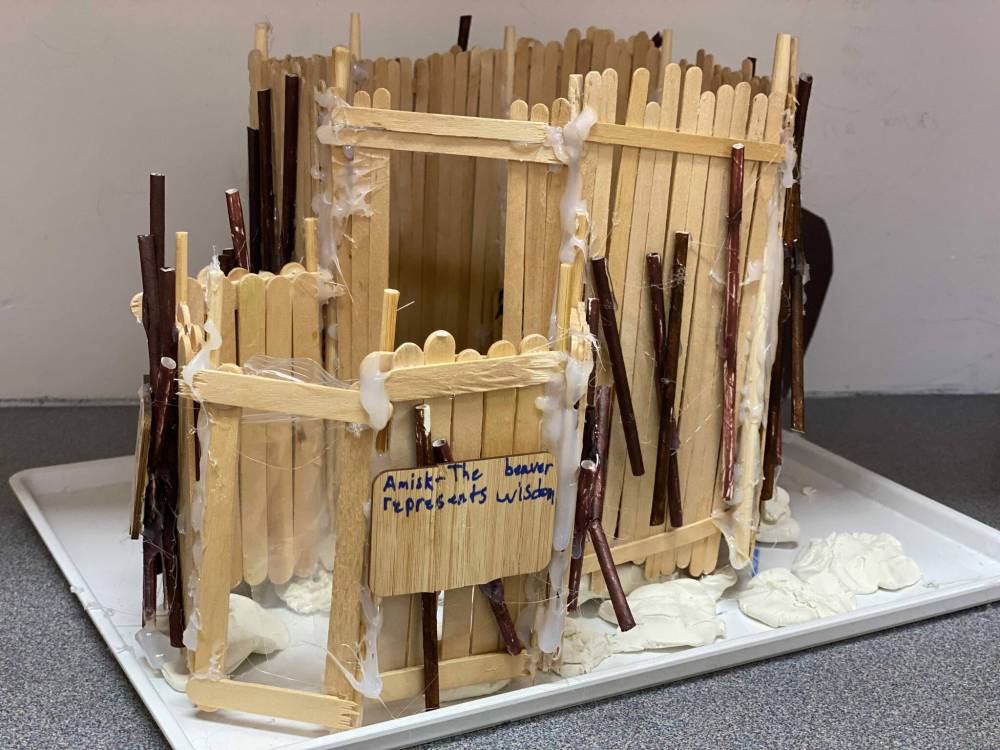
                                Amisk, which means beaver in Cree, is a design from French-immersion school École St. Avila in Fort Richmond.
SUPPLIED

Amisk, which means beaver in Cree, is a design from French-immersion school École St. Avila in Fort Richmond.

“It’s got so many uses, and when we’re finished, we’ll give it back to people who want some.”

A group of seven Grade 5 and 6 students from École St. Avila — Nolan Baker, Tarik Bara, Maksim Grzenda, Jesse Lawley, Jack McLaughlin, Justin Potter and Kevin Wang — represented the winning entry for the warming huts’ school competition at Thursday’s announcement at The Forks Market.

Amisk, which means beaver in Cree, is the title of the design from the French-immersion school in Fort Richmond. It’s a product of what the students have learned about Treaty 1 cultures such as the Anishinaabe, Cree, Oji-Cree, Dakota and Lakota, all of whom used The Forks as a meeting place for centuries.

SUPPLIED
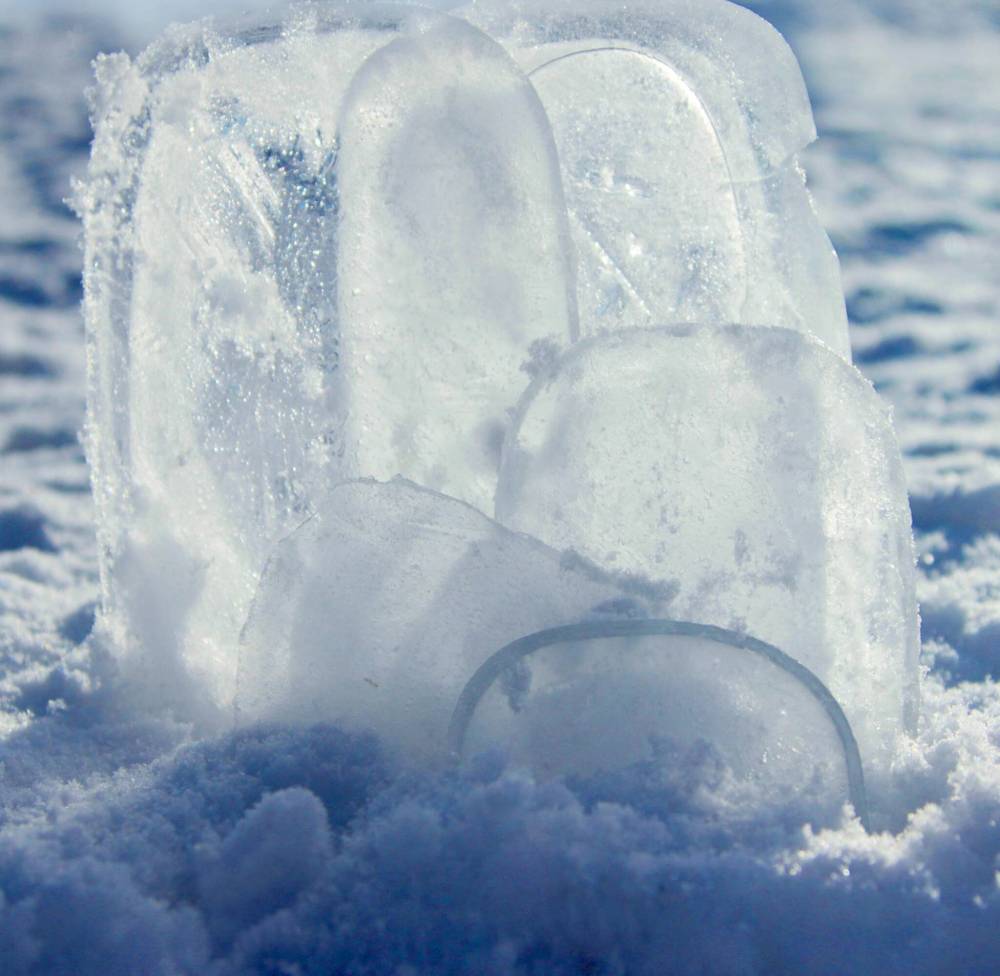
                                Ice Henge by the University of Manitoba’s faculty of architecture.
SUPPLIED

Ice Henge by the University of Manitoba’s faculty of architecture.

“With hard work and dedication comes knowledge,” is one of the statements printed on a model of their warming hut, and Indigenous teachings as well as facts about beavers will be part of the design, which will be written in French, English, Cree and braille.

The University of Manitoba’s faculty of architecture will create Ice Henge, which will have frozen forms emerging from the river-trail ice that will shine in the sun and glow at night.

The three winning designs were selected from more than 200 entries from around the world. Since the competition began in 2010, The Forks has installed 78 innovative works.

Murky Waters — by Oklahoma City architects Christopher Loofs, Jordan Loofs and Kaci Marshall — is a catfish out of water, with the inside of its head serving as a place for trail visitors to catch their breath.

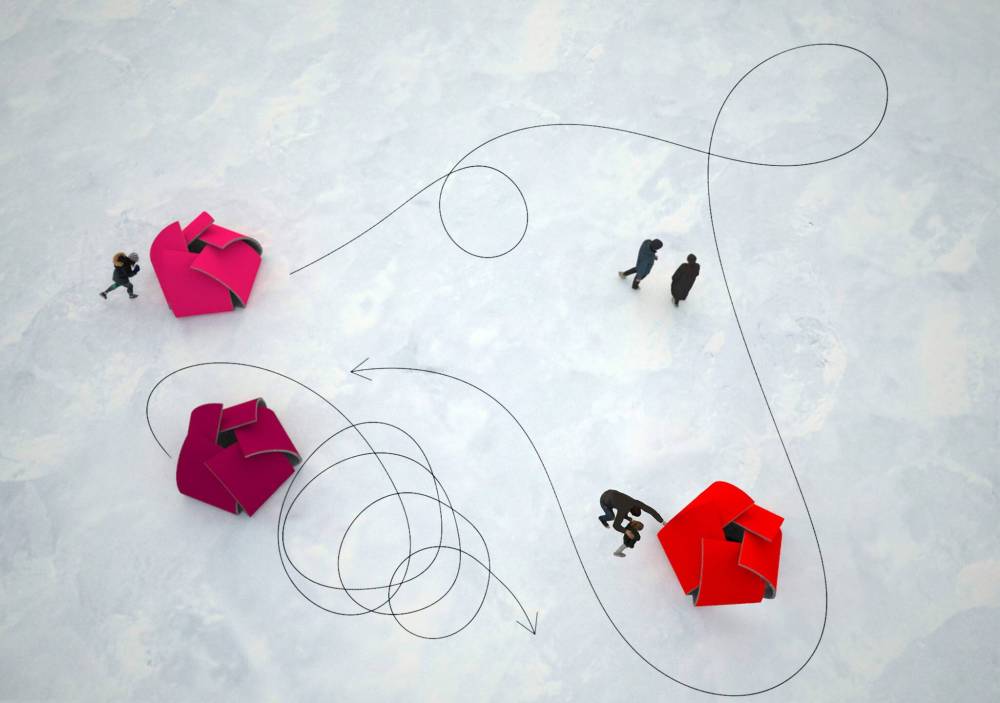
Verena Neiles Kempf and Ilga Neiles of Zurich, Switzerland, and Hamburg, Germany, designed Spinning Dim Sum, which will be three dumpling-shaped movable felt hideouts.

SUPPLIED 
                                Spinning Dim Sum includes three dumpling-shaped huts created by a team from Switzerland and Germany.
SUPPLIED

Spinning Dim Sum includes three dumpling-shaped huts created by a team from Switzerland and Germany.

Sublimation, by Francisco Silva, Barbara Stallone and Alexander Pollard of Paris and London, will let the wintry elements transform a recycled fishing net, supported by large tentpole, to create a translucent pavilion for contemplation and protection.

alan.small@winnipegfreepress.com

X: @AlanDSmall

Alan Small

Alan Small
Reporter

Alan Small was a journalist at the Free Press for more than 22 years in a variety of roles, the last being a reporter in the Arts and Life section.

Our newsroom depends on a growing audience of readers to power our journalism. If you are not a paid reader, please consider becoming a subscriber.

Our newsroom depends on its audience of readers to power our journalism. Thank you for your support.

Report Error Submit a Tip

More Stories

Letters, Sept. 2

7 minute read 3:00 AM CDT

Slow down, save livesRe: Slower speed limits directly ahead (Aug. 31)

I read Maggie Macintosh’s story with frustration at our city’s continued lack of action on pedestrian safety. I was particularly angered by the fact the “WSD board was unsuccessful last year in making an appeal to city council to permanently reduce speeds around its elementary school buildings.”

This alone tells the story of a city administration that cares more about moving cars around schools than it does the children that use those school grounds.

Luna Zúñiga’s story is just one of many (stories of) pedestrians hit at crosswalks and it will not be the last if we do not slow down speeds in our city and in particular around our schools and playgrounds.

Dynacare strike could lead to lab test logjam

Carol Sanders 4 minute read Preview

Dynacare strike could lead to lab test logjam

Carol Sanders 4 minute read Yesterday at 2:00 AM CDT

DOCTORS and health-care advocates are raising concerns about patient care if a Sept. 8 strike goes ahead at the private company that provides nearly all medical lab services in Manitoba.

There is no essential services agreement in place with Dynacare, so if its lab techs are off the job, patients who need blood tests and urinalysis will be directed to hospitals and public clinics for those services.

“There’s only so many of those workers and I’m sure that the public folks are bracing for big crunch of additional patients if the strike really goes ahead,” Noah Schulz of the Manitoba Health Coalition said Monday.

Dynacare serves 1.2 million Manitoba patients a year at 23 community lab locations.

Read
Yesterday at 2:00 AM CDT

Renewed spirit and life: Indigenous treatment centre expands with $21-M revamp

Scott Billeck 5 minute read Preview

Renewed spirit and life: Indigenous treatment centre expands with $21-M revamp

Scott Billeck 5 minute read Yesterday at 3:44 PM CDT

Don Robinson knows first-hand that many people don’t get sober by themselves.

In late June 1984, Robinson downed his last drink. His recovery began at Pritchard House in Winnipeg’s North End, a 22-bed treatment facility run by the Native Addictions Council of Manitoba.

“I didn’t get sober by myself,” said Robinson, a member of Bunibonibee Cree Nation who now works in grief and trauma counselling and traditional knowledge as an elder at Ka Ni Kanichihk Inc.

More than four decades later, Robinson was back at the council on Monday, crowded into a room at its newly renovated treatment centre at 160 Salter St. — a place he once turned to for help and where he helps others now.

Read
Yesterday at 3:44 PM CDT

In the footsteps of a refugee

Josiah Neufeld 6 minute read Preview

In the footsteps of a refugee

Josiah Neufeld 6 minute read 6:00 AM CDT

I used to have a meaningful job, a loving family and a strong community. All that changed overnight.

There was a regime change.

I lost my job and found myself targeted by the new military government. One day I came home to find my father and brother had been beaten by police for refusing to reveal my whereabouts.

I used all my cash to pay a taxi driver to smuggle me over a border into the neighbouring country.

Read
6:00 AM CDT

Docudrama reveals lives of harem’s wilful women

Conrad Sweatman 6 minute read Preview

Docudrama reveals lives of harem’s wilful women

Conrad Sweatman 6 minute read 6:00 AM CDT

A stable of admiring women centred on a domineering patriarch, a secretive world of sexual oppression — the connotations of the word “harem” are not especially positive or progressive.

But there are famous examples of women who navigated this coercive hierarchy not merely to survive but ultimately to command vast influence, some rising from slavery.

The Sultan’s Women — a docudrama written, produced and directed by Emmy- and Peabody-winning, Morden-born filmmaker David Rabinovitch which has recently become available on Tubi, among other platforms — depicts this world in the turbulent final years of the Ottoman Empire, whose collapse also ended the institution.

Told with a Game of Thrones-like relish for elite intrigues, the film opens in the 1870s, with liberal-minded sultan Murad V and his sprawling harem. Ultimately placed under “house arrest” for nearly three decades in Çırağan Palace in what was then called Constantinople (now Istanbul, Turkey), Murad’s harem had women stronger in will, if not formal position, than the unstable, deposed sultan.

Read
6:00 AM CDT

Mayoral rematch between Gillingham, Klein gets ugly on Day 1

Joyanne Pursaga 6 minute read Preview

Mayoral rematch between Gillingham, Klein gets ugly on Day 1

Joyanne Pursaga 6 minute read Updated: Yesterday at 6:25 PM CDT

Former city councillor and provincial cabinet minister Kevin Klein says he will soon enter the race to become Winnipeg’s next mayor — prompting an immediate war of words with incumbent Scott Gillingham.

Gillingham quickly responded to the announcement by calling Klein “toxic” and a “fixer” for Peter Nygard.

Klein said Tuesday he had decided not to enter the mayoral race weeks ago due to an unspecified health scare that required surgery. After recovering, he decided to run.

“The future of the city means a lot to me. I believe that we have so much untapped potential that I felt I should do something about it,” said Klein, noting he felt compelled to run because key city issues, such as perceptions of public safety in the downtown, have grown worse over the past four years.

Read
Updated: Yesterday at 6:25 PM CDT