Dangerous discourse Extremists’ weaponizing of key words could lead to dire consequences, Off warns
Read this article for free:
or
Already have an account? Log in here »
To continue reading, please subscribe:

Digital Subscription
One year of digital access for only $205*
- Enjoy unlimited reading on winnipegfreepress.com
- Read the E-Edition, our digital replica newspaper
- Access News Break, our award-winning app
- Play interactive puzzles
*First annual payment billed as $205.00 + GST for one year. This annual subscription will automatically renew at $233.00 + GST every 52 weeks (10% off the regular annual price of $259.35). Offer available to new and qualified returning subscribers only. Cancel any time.
To continue reading, please subscribe:
Add Free Press access to your Brandon Sun subscription for only an additional
$1 for the first 4 weeks*
- Enjoy unlimited reading on winnipegfreepress.com
- Read the E-Edition, our digital replica newspaper
- Access News Break, our award-winning app
- Play interactive puzzles
*Your next Brandon Sun subscription payment will increase by $1.00 and you will be charged $17.95 plus GST for four weeks. After four weeks, your payment will increase to $24.95 plus GST every four weeks.
Read unlimited articles for free today:
or
Already have an account? Log in here »
Hey there, time traveller!
This article was published 12/10/2024 (695 days ago), so information in it may no longer be current.
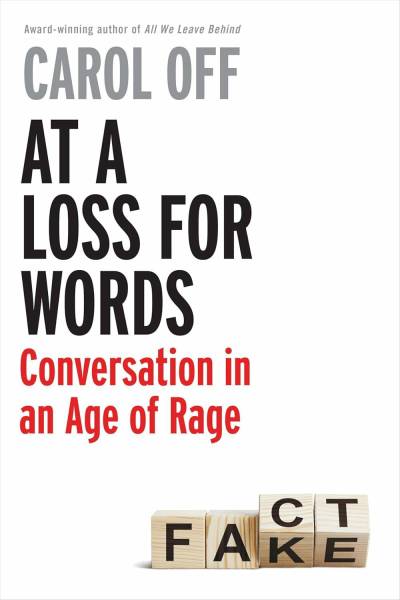
As Canadians head into a federal election in the not-so-distant future, and as many of us watch with anticipation what’s happening south of the border, Carol Off’s At a Loss for Words: Conversation in an Age of Rage offers an excellent background for understanding the dynamics of events in both countries. But it also provides answers for what many of us have been wondering for some time now: What the hell is going on?
For 16 years, the Winnipeg-born Off provided insight as the co-host of CBC’s radio program As It Happens before stepping away in 2022. Before that, Off was a national reporter and journalist for both TV and radio, covering some of the biggest news stories of the last four decades. Along the way, she has won several awards and accolades for her work.
At a Loss for Words will no doubt result in several more awards; this book provides important insight for our understanding of what is happening in the world of politics.
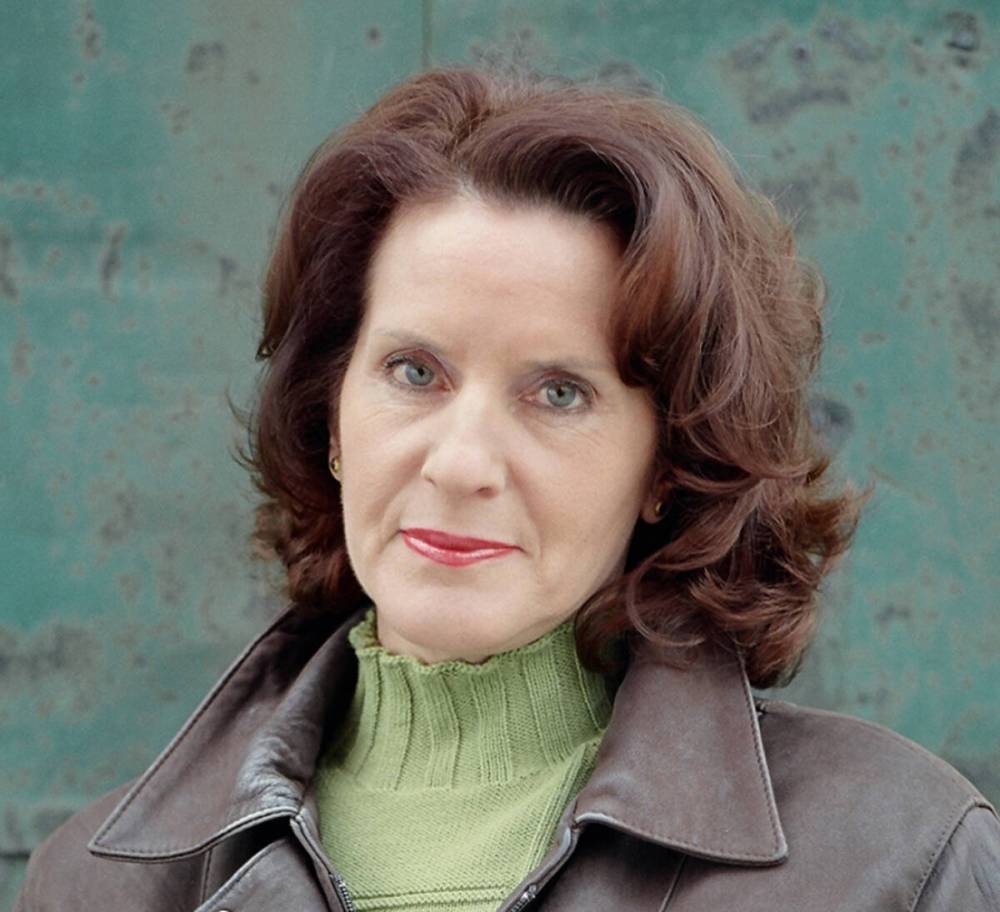
In her new book, Carol Off details how certain words have been co-opted by extremists, pointing to examples such as the 2022 Freedom Convoy in Ottawa.
Off begins with the observation that “we have become incapable of talking to each other. The language we once shared has been co-opted by extremists and we’re reduced to barking and snapping.” She then focuses on six key words — freedom, democracy, truth, woke, choice and taxes — that she feels have been co-opted. These words, she says, have been “hijacked, weaponized or semantically bleached,” and she dedicates a chapter to each one to understand why they are at peril and what is at stake as they lose their potency.
In many of her references, Off uses former U.S. president Donald Trump and his presidency as well as the Jan. 6, 2021 uprising in Washington, D.C. as examples of how these words have become changed. But she also looks to what is happening in Canada — particularly with the Conservatives under leader Pierre Poilievre — and to Europe, with Hungary’s Viktor Orbán, as those who are playing a role in changing language and meaning.
Each of her chapters begins with a formal definition of the individual word, and there’s a nice dollop of history provided as well. Off relies on touches of etymology, history and philosophy to provide context to the evolution of the word.
In the first chapter — on freedom — Off spends time on the Freedom Convoy in Ottawa as well as the Jan. 6 uprising, concluding that the language of rights and freedoms needs to be reinvented in ways that “include more people.” She continues that everyone must seek a balance “between personal liberty and social responsibility,” but those who fought for what they labeled as freedom in Ottawa and Washington (as well as the Brexiteers in the U.K.) can “all rage against their perceived loss of status in society, but excluding the rest of the world from our club only makes your society weaker.”
Perhaps it’s Off’s chapter on truth that is the most compelling. In it, she outlines the “power lie,” a concept introduced by Marsha Gessen of the New Yorker. The power lie or “bully lie” is what Gessen says Trump relied upon while in the White House. According to Off, “the power lie is a different kind of deception.” It’s obviously not true, but by ignoring that it’s fabricated, the believer “can be a part of it, sharing the power by accepting the falsehood as true. You carry the banner… declaring something is true that you know to be false gives you the illusion that you are part of the team.”
The second part of the chapter is a brilliant overview of the relationship between Trump, Russian president Vladimir Putin and online propaganda campaigns, suggesting that the next election cycles in the U.S., Canada and other democracies will be affected by “sophisticated Russian trolling on news consumers who can no longer discern what is true and what isn’t.” More power lies — and they likely are already happening.
At the end of July, Trump told Christian supporters that if they elected him as president in 2024, they would never have to vote again. Off foreshadows this declaration in her chapter on the word woke, in a discussion about Hungary’s Orbán. In 2000, according to Off, when Orbán was losing politically, he told his party members he would create a force field to ensure there would be no more defeats. Orbán would only have to win once, and never hold an election again. Since his win, as Off suggests, Orbán has introduced a new brand of politics which he calls illiberal democracy.
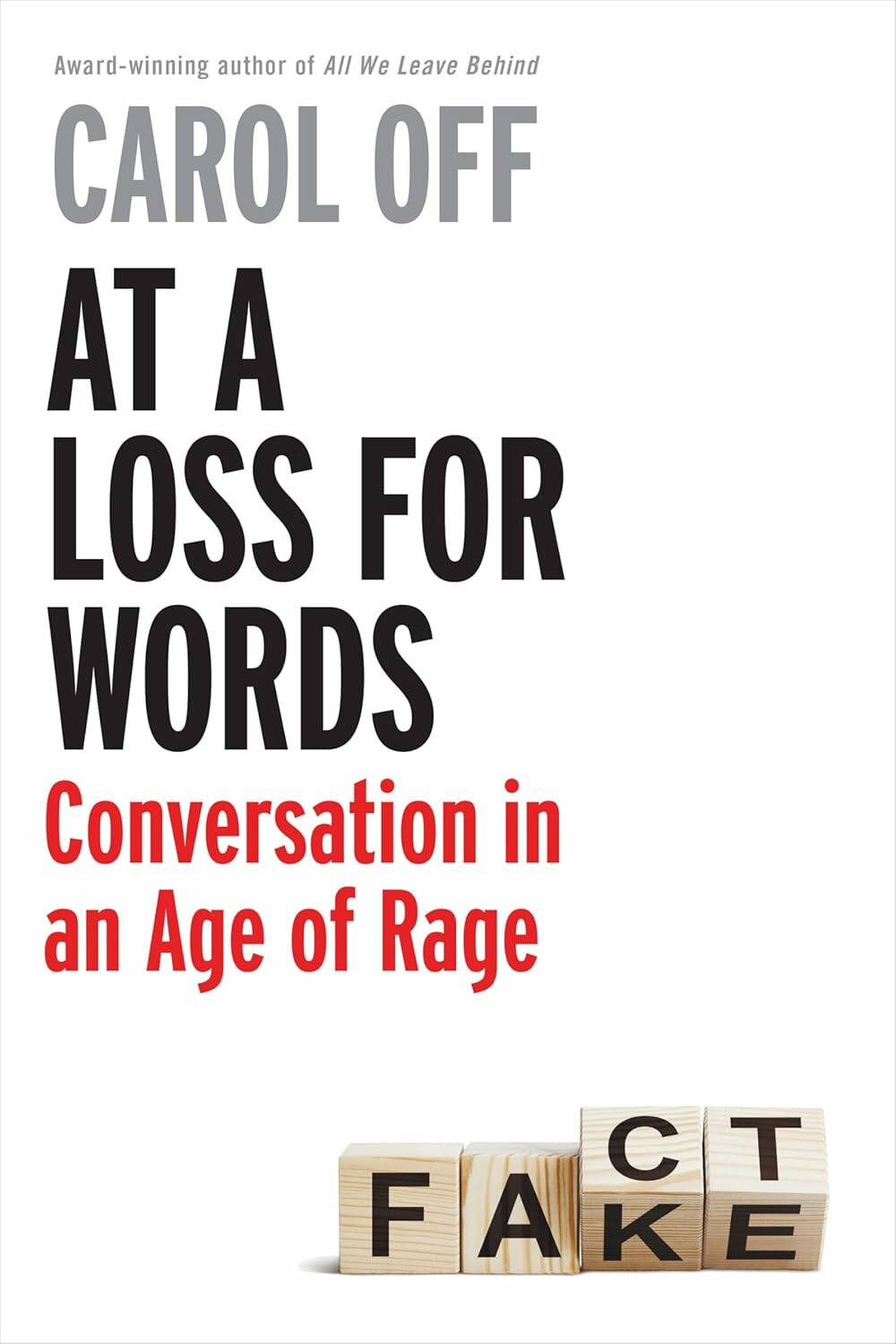
At a Loss for Words by Carol Off
Off deftly outlines Orbán’s roadmap that took a pluralist society with a robust media and vibrant intellectual community on a radical right turn. He took power through restricted elections, limited franchise, supressed the media and then dismantled institutions. The education system was one of Orbán’s biggest targets because it’s “a place where young people get ideas.”
This is the MAGA-roadmap writ large as it applies to the “woke” culture. Off details how Republicans removed access to books and educational materials on sex and race in classrooms and then received financial benefit from the far right and political supporters. Trump and his supporters have widely praised Orbán for his work.
In interviews, Off has said she hopes that this book will eventually become irrelevant. For now, it is incredibly relevant and important. It’s also the kind of book that will scare you half to death.
Shannon Sampert is a political scientist and the former editor of the Free Press opinion pages.
At a Loss for Words:
Conversation in an Age of Rage
By Carol Off
Random House Canada, 368 pages, $37
Related Articles
Carol Off’s new book weighs political power of language