Queer cinema takes spotlight as Reel Pride returns
Read this article for free:
or
Already have an account? Log in here »
To continue reading, please subscribe:

Digital Subscription
One year of digital access for only $205*
- Enjoy unlimited reading on winnipegfreepress.com
- Read the E-Edition, our digital replica newspaper
- Access News Break, our award-winning app
- Play interactive puzzles
*First annual payment billed as $205.00 + GST for one year. This annual subscription will automatically renew at $233.00 + GST every 52 weeks (10% off the regular annual price of $259.35). Offer available to new and qualified returning subscribers only. Cancel any time.
To continue reading, please subscribe:
Add Free Press access to your Brandon Sun subscription for only an additional
$1 for the first 4 weeks*
- Enjoy unlimited reading on winnipegfreepress.com
- Read the E-Edition, our digital replica newspaper
- Access News Break, our award-winning app
- Play interactive puzzles
*Your next Brandon Sun subscription payment will increase by $1.00 and you will be charged $17.95 plus GST for four weeks. After four weeks, your payment will increase to $24.95 plus GST every four weeks.
Read unlimited articles for free today:
or
Already have an account? Log in here »
Xiaodan He believes that the right idea is a slow zoom, not just a jump cut.
To produce a meaningful film, the Montreal-based director says that she needs to be convinced that the core of the story depicted can sustain her creative energies, not only in the movie’s development and in its making, but once it’s shared with the public for a long-lasting afterlife.
“If I find a story that I feel convinces me to put a few years work on it, then I’m very patient to explore it, to find the time to write again and again,” she says. “If I’m convinced by the core of the story, then I feel security so that I can give it the time — even if it takes years.”
Filmoption
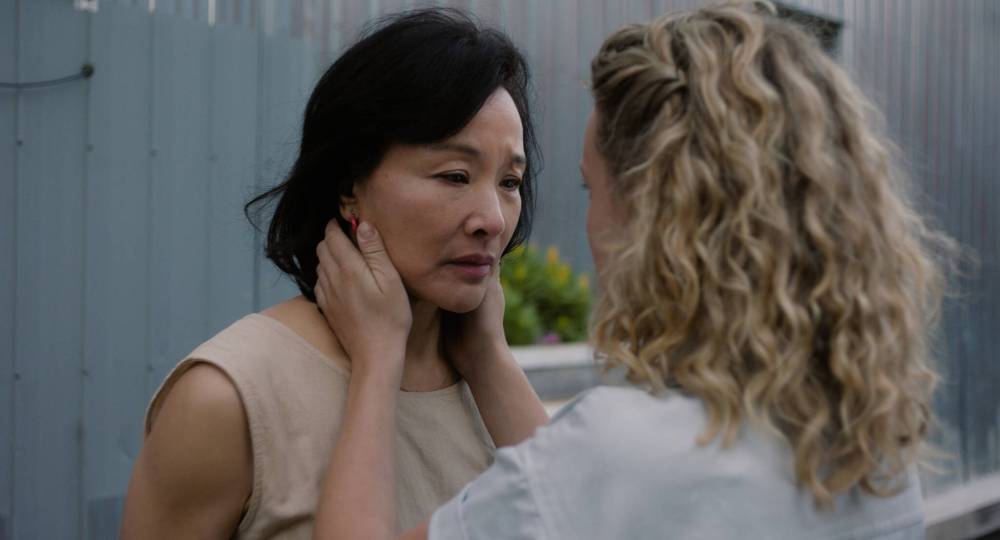
Joan Chen (left) and Charlotte Aubin in Montreal Ma Belle.
The core of Montreal Ma Belle — He’s critically acclaimed 2025 feature, which screens Saturday at the Gas Station Theatre as part of the Reel Pride International Film Festival — has certainly passed that test.
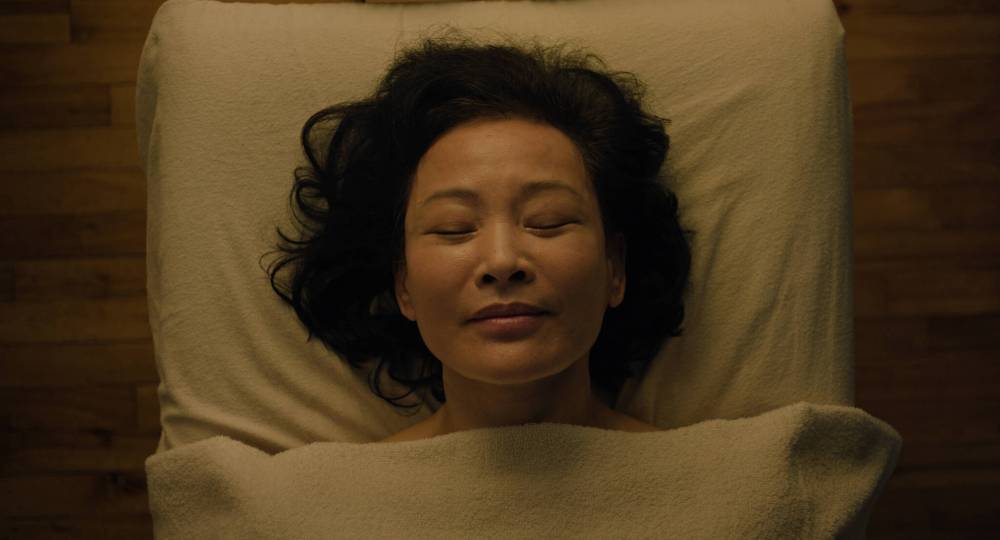
Starring legendary Shanghai-born actress Joan Chen (The Last Emperor, Twin Peaks), Montreal Ma Belle examines the outcomes of coming out for Feng Xia, who, at 53, begins to awaken to repressed desires after a summertime meeting with Camille (Charlotte Aubin), a young Quebecoise woman.
The film takes a close look at the impact of the Mai-Décembre romance on Feng’s family, including her husband and daughter, while also reflecting its protagonist’s experiences as an immigrant carving her own space in a city that takes on newfound meaning in the middle seasons of her life.
For He, the chance to tell an original story about a Chinese immigrant and a middle-aged lesbian within the same character was an opportunity to explore a complex taboo through a humanistic lens.
“I feel it’s such an honest, audacious and beautiful story,” says He, who moved to Montreal from China in 2002. “And it’s something that really hadn’t been done before.”
“The most important thing to me is I should love the stories I tell,” she adds. “I should find the story meaningful. I should say that I don’t want to only make films for entertainment — that isn’t enough for me to do a movie.”
Authenticity — and the pursuit of it — is central to He’s filmmaking ethos when it comes to both her characters and her representations of their environments.
“I love Montreal so much, and I wanted to show what I love,” she says, making the case that the less polished the onscreen depiction of a city is, the better. “I want to show the small cornerstore, the park. I want to put that in my movie and to show the real Montreal. That’s one comment I got very often — this is the real Montreal, not the postcard.”
Last year, Reel Pride celebrated its 40th edition, but longtime volunteer David Wyatt knows that No. 41 is just as important.
Over the course of his involvement with the festival, which was predated by screening series organized in the mid-1980s by the Winnipeg Gay and Lesbian Film Society, Wyatt has become Reel Pride’s unofficial archivist, keeping track of the event’s ongoing influence as the longest-running queer film festival in Canada.
The first festival was nearly its last: despite sold-out screenings for Counterpoints — the former name for Reel Pride — in 1987, the festival faced rabid protest by the Roman Catholic Church and members of the Progressive Conservative caucus over its program, which included the NFB film Passiflora.
Shot over five days, that film documented the juxtaposition of a pair of visiting icons who took the stage at Montreal’s Olympic Stadium in September 1984: Pope John Paul II and Michael Jackson.
Thankfully, the festival persisted, giving local audiences the all-too-rare opportunity to see LGBTTQ+ stories shown onscreen. “It was a unique experience,” says Wyatt, who attended the first festival in 1987 before joining the board in 1991.
Filmoption
Joan Chen stars in Montreal Ma Belle, which screens Saturday as part of Reel Pride.
“This was at a time when movie theatres and television did not show LGBTTQ+ content. The tiny handful of characters in movies were usually stereotypes or punchlines, or negative portrayals like serial killers, so to go out and see all of these different movies — all of them involving gay or lesbian characters — was kind of amazing.”
In addition to showing films, the festival also offered Wyatt the chance to meet perhaps the most important queer film historian in cinema history, Vito Russo.
The author of the groundbreaking The Celluloid Closet — a chronicle of gay and lesbian depictions in cinema — was a guest speaker in 1989, presenting his body of research one year before his death at age 44 from complications of AIDS; Wyatt’s autographed copy of The Celluloid Closet is a prized possession.
In the decades since Russo’s death, the festival — known since 2000 as Reel Pride — has continued to provide local audiences with the opportunity to witness and share in the development of LGBTTQ+ filmmaking, with organizers programming a dynamic mix of documentary, narrative and short films.
This year’s festival, which runs to Saturday at the Gas Station Arts Centre, begins Wednesday with a screening of Barbara Forever (7 p.m.) A documentary portrait of the late avant-garde lesbian filmmaker Barbara Hammer, Barbara Forever was called “a fitting tribute to a woman who never stopped experimenting,” in a review by the New York Times.

After that, another “queer hero” is celebrated on opening night in Uncle Roy (9 p.m.), a documentary feature from Keri Pickett about her 93-year-old relative and the race against dementia to preserve a quickly disappearing treasure trove of queer memory: Pickett didn’t know until it was nearly too late that Uncle Roy was considered a forefather of gay photography.
Screening on Saturday at the Canadian Museum for Human Rights from 1 p.m. to 4 p.m. is the festival’s 22nd annual short film celebration, which will be followed by Re-Emergence, a documentary about the term “two-spirit,” its Manitoban coinage and its legacy (7 p.m.).
Plainclothes — a romantic drama about undercover bathroom stings starring Tom Blyth (People We Meet on Vacation) and Russell Tovey (HBO’s Looking) — screens at 10 p.m. Saturday. The festival closes with The Mysterious Gaze of the Flamingo on Sunday at 2 p.m. at the Canadian Museum for Human Rights.
A full schedule and all ticketing information — $65 for a full festival pass and $12 for individual screenings — is available at reelpride.ca
ben.waldman@winnipegfreepress.com

Ben Waldman is a National Newspaper Award-nominated reporter on the Arts & Life desk at the Free Press. Born and raised in Winnipeg, Ben completed three internships with the Free Press while earning his degree at Ryerson University’s (now Toronto Metropolitan University’s) School of Journalism before joining the newsroom full-time in 2019. Read more about Ben.
Every piece of reporting Ben produces is reviewed by an editing team before it is posted online or published in print — part of the Free Press‘s tradition, since 1872, of producing reliable independent journalism. Read more about Free Press’s history and mandate, and learn how our newsroom operates.
Our newsroom depends on a growing audience of readers to power our journalism. If you are not a paid reader, please consider becoming a subscriber.
Our newsroom depends on its audience of readers to power our journalism. Thank you for your support.