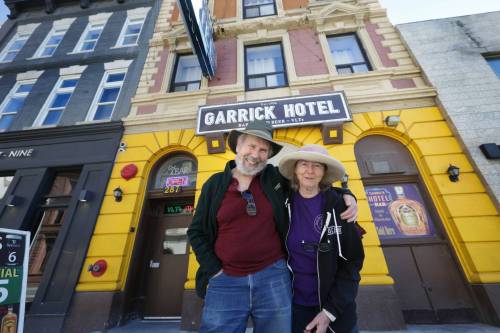
An edge at any age It’s never too late to lace up the figure skates and hit the ice
Read this article for free:
or
Already have an account? Log in here »
To continue reading, please subscribe:

Digital Subscription
One year of digital access for only $205*
- Enjoy unlimited reading on winnipegfreepress.com
- Read the E-Edition, our digital replica newspaper
- Access News Break, our award-winning app
- Play interactive puzzles
*First annual payment billed as $205.00 + GST for one year. This annual subscription will automatically renew at $233.00 + GST every 52 weeks (10% off the regular annual price of $259.35). Offer available to new and qualified returning subscribers only. Cancel any time.
To continue reading, please subscribe:
Add Free Press access to your Brandon Sun subscription for only an additional
$1 for the first 4 weeks*
- Enjoy unlimited reading on winnipegfreepress.com
- Read the E-Edition, our digital replica newspaper
- Access News Break, our award-winning app
- Play interactive puzzles
*Your next Brandon Sun subscription payment will increase by $1.00 and you will be charged $17.95 plus GST for four weeks. After four weeks, your payment will increase to $24.95 plus GST every four weeks.
Read unlimited articles for free today:
or
Already have an account? Log in here »
Hey there, time traveller!
This article was published 12/01/2024 (989 days ago), so information in it may no longer be current.
Pat Noddin of Moncton, N.B., set the sports world abuzz a couple of years ago when she participated in an international figure-skating competition held in Ottawa, at the grand old age of 86.
Noddin, who didn’t take up figure skating until she was 58, and who underwent hip replacement surgery in 2019, failed to return to the Maritimes with a medal, but that didn’t spoil her fun, nor that of an adoring crowd of spectators.
“I’m just lucky to be out there skating and doing what I can do,” Noddin told reporters at the end of a program accompanied by Frank Sinatra’s My Way.
Closer to home, while Skate Winnipeg doesn’t presently boast any octogenarians in its figure-skating division, several members continue to execute lutzes and toe loops at an age not commonly associated with the high-flying sport.
“It’s funny because nobody bats an eye when somebody in their 50s or 60s says they play beer-league hockey, but when I mention that I figure skate, people sometimes look at me like I’m pulling their leg,” says Leanne Gowler, 53, who first laced up a pair of figure skates at the age of seven and hasn’t stopped since, save for a pair of breaks she took when she was pregnant.
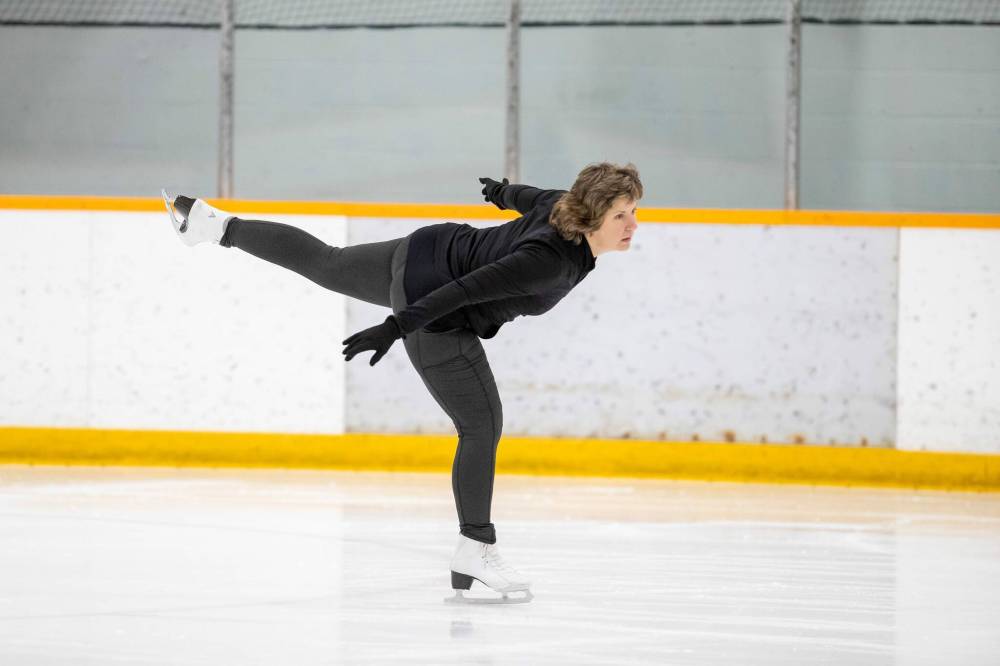
Gowler, who often shares the ice with sons and daughters of people she used to skate alongside, always leaves the rink “feeling like a million bucks,” following a set curriculum that includes twirls, jumps and at least 30 minutes of dance.
“There are definitely occasions when it’s already been a long day, and I arrive with the ‘blahs’ or whatever you want to call it,” she says, seated in a dressing room at Eric Coy Arena, where she and the rest of a Thursday-night group are taking a breather, while a Zamboni floods the ice surface for the second half of their weekly, two-and-a-half-hour session. “Except the second I step onto the ice, it all melts away.”
According to the International Skating Union, athletes are considered to be “adult skaters” at age 28. Skate Winnipeg coach Connie Winning says there are various reasons why people that age and up enlist her services.
Some, like Gowler, have been skating for years, and are hoping to further develop their skills. Others are getting back into it, following an extended hiatus. And then there are those who have never figure skated, period, but always had it on their bucket list.
“It is a group activity so you’re out there with skaters of all ages, but if you’re new to (figure skating), we do make time for one-on-one drills, away from the others,” says Winning, who took up coaching 37 years ago, after twice representing Manitoba in synchronized figure skating at national competitions.
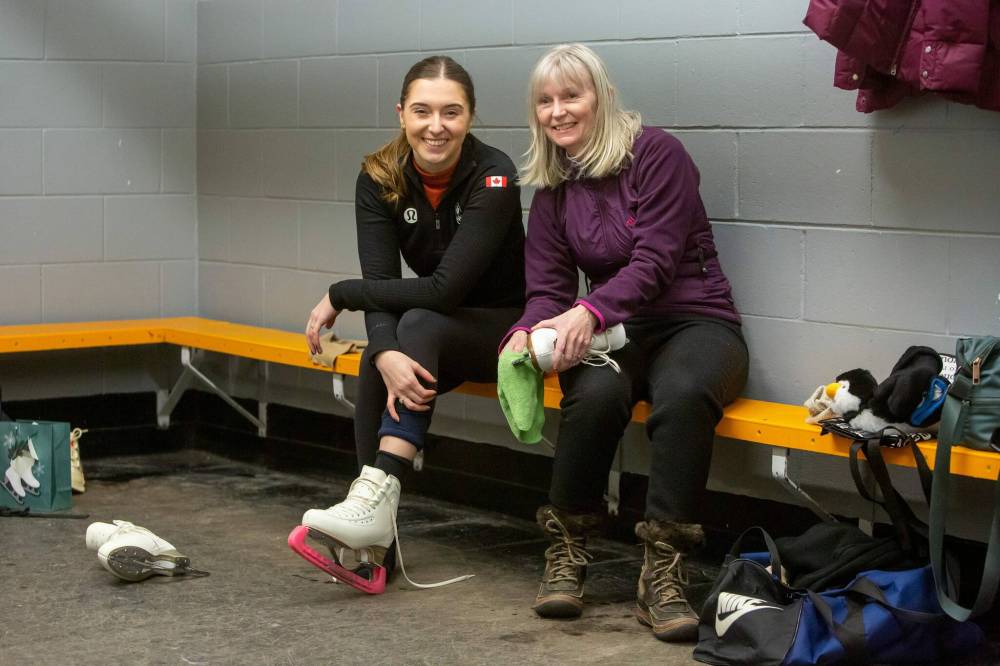
Winning chuckles, saying the biggest difference between teaching a younger skater versus one in their 40s, 50s or 60s is the amount of questions that pop up. For instance, if she instructs a 13-year-old to show her a certain jump, the general response will be “sure, how high?” Ask a more mature skater the same thing and the answer will be closer to “uh, you want me to do what?”
“Adults need to understand the reasoning behind a certain move, before they start flinging themselves into the air,” she says. “If they’re going to end up landing on their tush, they want to know why, exactly.”
At age 63, Keith Levit could be considered the Skate Winnipeg group’s elder skatesman.

Levit, the president and director of Lakeview Management, was a business student at Southern Methodist University in Dallas in the early ’80s, when he chanced upon a skating rink situated inside a shopping mall, close to where he was living.
He was comfortable on skates, having already played hockey for years out of Garden City Community Centre. Except when he inquired about renting a pair for something to do, he was told the only sort available were figure skates.
“I said sure, what the heck, but what I failed to realize was that, as a hockey player, you’re going to practically kill yourself on figure skates,” he says. “Because of the toe pick, the first few times you switch from forward to backward, it’s guaranteed you’re going to crash.”
Those spills mustn’t have left too big a bruise, because when Levit returned to Winnipeg after attaining a master’s degree, he registered for figure-skating lessons with a club operating out of a rink in Seven Oaks. His reason for doing so? He’d taken up hockey again, and he felt learning how to turn on a dime and glide seamlessly would aid his performance, with a stick in his hands.
Unfortunately, while his skating ability improved immensely, his touch around the net didn’t, he says with a shrug.
By the late ’80s, the married father of four had ceased figure skating altogether to concentrate on his family and career. He got back into the sport in 2006, however, after his daughter Hannah, then six, started lessons of her own.
“I told myself, OK, it’s time to put the skates back on so I could go skating with her. That led me to Connie’s group, which I’ve belonged to, off and on, for about 15 years,” he says.
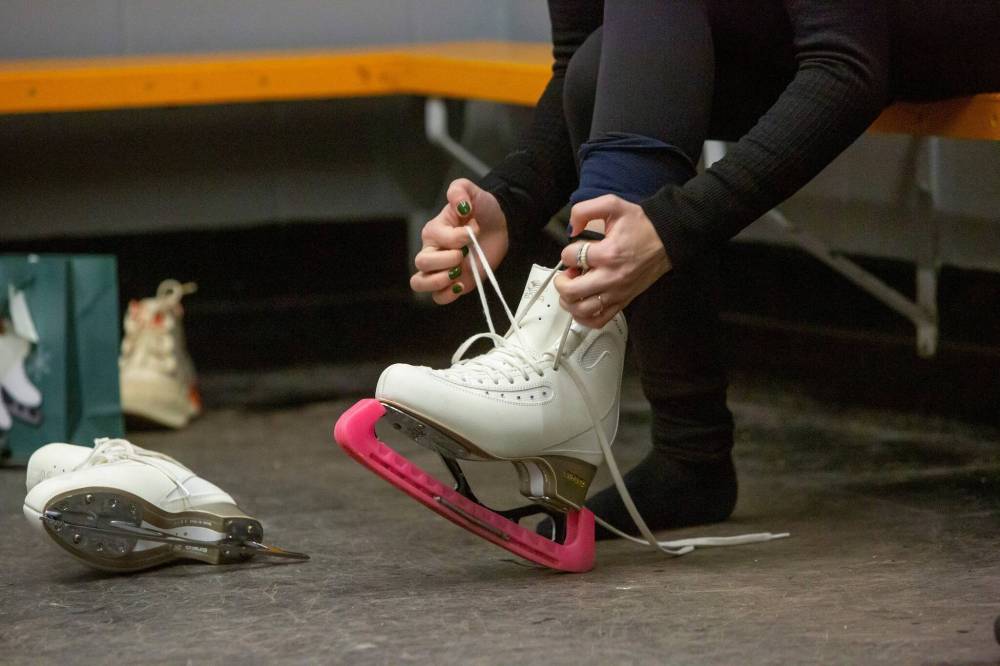
Paola Pacheco, 32, moved to Winnipeg from South America in December 2021. Her four-year-old son was immediately fascinated by hockey, so she signed him up for skating lessons. Problem was, it was a parent-and-tots class, and the lone time she had been on skates was when she was eight years old, and living in Rio de Janeiro.
To prepare to accompany her son, she attended free, public skating sessions held at rinks throughout the city. It didn’t take her long to realize she’d need more than that to feel comfortable on the ice. After being tipped off about the goings-on at Skate Winnipeg, she signed up for a set of private lessons with Winning.
“I started my classes in April 2022 to learn how to skate, but I was already doing it in figure skates because I always wanted to learn figure (skating), as those who live in Brazil dream of things like Christmas (and) ice skating,” she says, adding that observing girls as young as nine and 10 twirling effortlessly was just the motivation she needed to stick with the sport, once her son’s classes were through.
“At the beginning I was much more afraid (but) nowadays I feel a little more confident in jumping. Everyone falls, even at the Olympics, so why not try?” (In an effort to pay it forward, Pacheco, a data scientist, has started a club at Red River College for newcomers to Canada, who have never been on skates previously. She also posts regularly about her figure-skating exploits on Instagram, so family and friends in Brazil can follow her progress.)
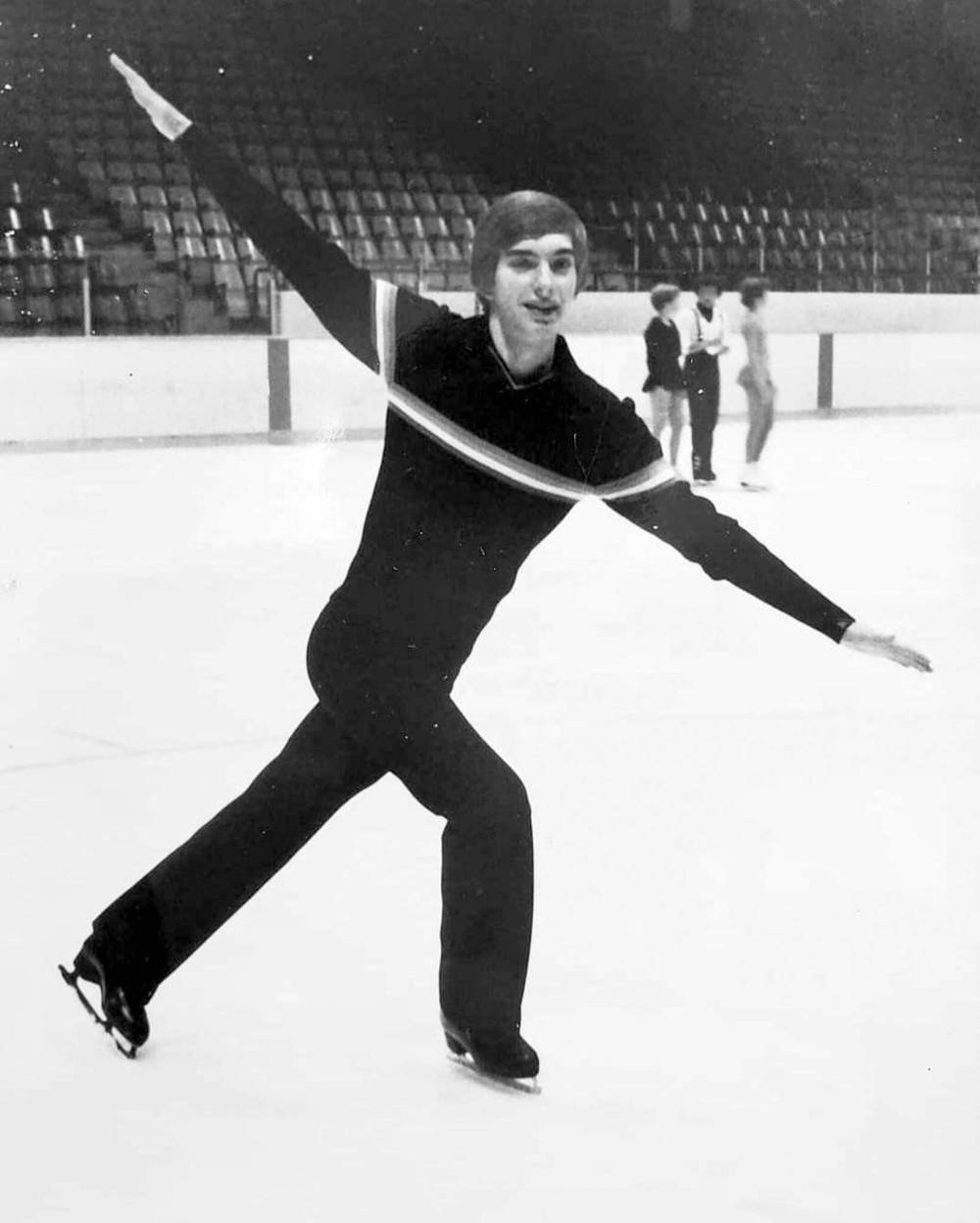
Like Levit, Lorne Edwards, 60, took up figure skating in order to become a stronger hockey player. A funny thing happened on the way to the rink, however; it turned out he enjoyed figure skating so much he parked his gloves and stick, to fully concentrate on his newfound activity.
“One of the things I liked most about figure skating was that it’s both an individual and a team sport. You competed on your own, of course, but when I got into dance, I had a partner I worked closely with, which was also very rewarding,” says Edwards, whose peers during his competitive phase in the late ’70s and early ’80s included Hamiota native Lyndon Johnston, the 1990 Canadian men’s national champion.
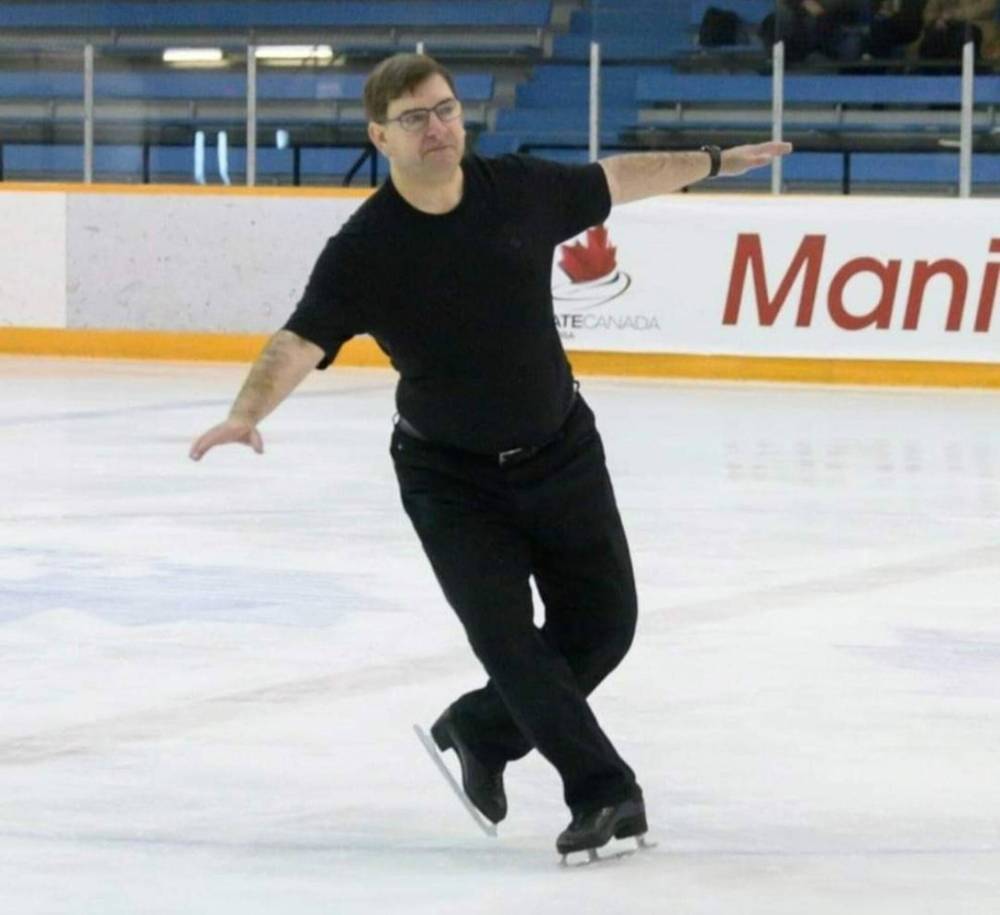
Edwards left skating behind at age 18 to follow in his father’s footsteps, by becoming a radio broadcaster. He eventually ended up at 680 CJOB, where he was a news announcer for 25 years. About eight years ago, his mind returned to skating.
“I was divorced, my two children were grown up, and with time on my hands, I got involved with a group, the Skate Canada Manitoba Grassroots Bursary Fund, that raises money in support of today’s young skaters,” he says. The board consisted largely of alumni skaters, he goes on, which led to somebody remarking one day how they should get back on the ice, themselves.
Edwards smiles, noting that was easier said than done. It’s one thing to whip into a tight spin when you’re 17 years old and weigh 140 pounds, but it’s something else entirely when you’re in your 50s, and tip the scales at closer to 200 pounds.
“I started working with Connie about four years ago, trying to remember various dance steps, but mostly to simply get my legs back under me,” he says, noting his end goal was to perform at an annual skating show staged by the group as a fundraiser.
Edwards’ dream came to fruition months later, when a voice came over a PA system, asking those in attendance to welcome “for the first time in four decades, a former novice men’s champion from Manitoba… Lorne Edwards.” (His music of choice? Sinatra’s It’s Been a Very Good Year.)
Edwards is currently taking a break from Winning’s group to help care for an elderly parent, but he still skates whenever he gets the chance. He also makes an effort to thank his coach for “giving skating back to me,” every time he sees her.
“There’s the physical benefit, obviously, but figure skating is also tremendous for your mental health. It never fails; I’m always in a good place when I’m out on the ice.”
david.sanderson@freepress.mb.ca
Dave Sanderson was born in Regina but please, don’t hold that against him.
Our newsroom depends on a growing audience of readers to power our journalism. If you are not a paid reader, please consider becoming a subscriber.
Our newsroom depends on its audience of readers to power our journalism. Thank you for your support.