The Order of Cannabis Canadian government cannabis researcher Ernest Small was just made a Member of the Order of Canada. Meet the man who created the dividing line between hemp and marijuana.
Read this article for free:
or
Already have an account? Log in here »
To continue reading, please subscribe:

Digital Subscription
One year of digital access for only $205*
- Enjoy unlimited reading on winnipegfreepress.com
- Read the E-Edition, our digital replica newspaper
- Access News Break, our award-winning app
- Play interactive puzzles
*First annual payment billed as $205.00 + GST for one year. This annual subscription will automatically renew at $233.00 + GST every 52 weeks (10% off the regular annual price of $259.35). Offer available to new and qualified returning subscribers only. Cancel any time.
To continue reading, please subscribe:
Add Free Press access to your Brandon Sun subscription for only an additional
$1 for the first 4 weeks*
- Enjoy unlimited reading on winnipegfreepress.com
- Read the E-Edition, our digital replica newspaper
- Access News Break, our award-winning app
- Play interactive puzzles
*Your next Brandon Sun subscription payment will increase by $1.00 and you will be charged $17.95 plus GST for four weeks. After four weeks, your payment will increase to $24.95 plus GST every four weeks.
Read unlimited articles for free today:
or
Already have an account? Log in here »
Hey there, time traveller!
This article was published 04/01/2018 (3163 days ago), so information in it may no longer be current.
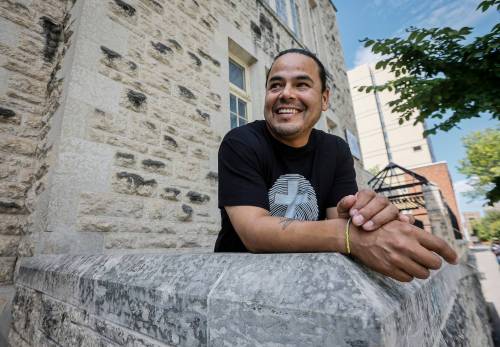
Of the one hundred and twenty five new appointees to the Order of Canada, Ernest Small must be the only one who’s grown marijuana on behalf of the Canadian government.
Small, a research scientist with Agriculture and Agri-food Canada, has studied cannabis and many other crops for that federal department for almost 49 years. A botanist by training, Small holds a PhD in plant evolution and has authored a number of academic articles and books, most recently Cannabis: A Complete Guide.
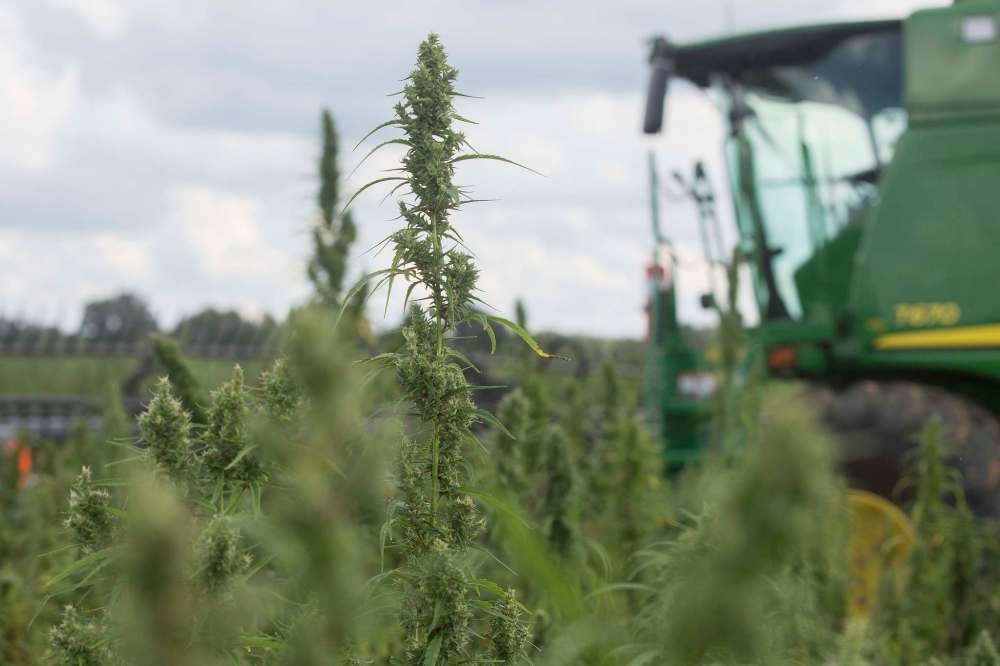
Much of his work has focused on industrial hemp, breeds of cannabis sativa that are grown for their fibre, seeds, and oils rather than for drug purposes. That includes calculating the original legal dividing line between industrial-type cannabis and drug-type cannabis; his limit is still used today in Canada and around the world.

The Leaf recently spoke with Small by phone. This interview has been lightly edited for clarity.
The Leaf: Congratulations, first of all, on becoming a member of the Order of Canada.
Ernest Small: Thank you.
TL: You’ve studied a number of plants, but much of your research has focused on cannabis sativa. From a scientific perspective, what is it that’s kept you coming back to cannabis throughout your career?
ES: The fact that it’s an important and interesting crop. My specialty is economically important plants with an emphasis on crops and a further emphasis on crops that are important to Canadian agriculture.
TL: Why do you believe cannabis is important to Canadian agriculture right now?
ES: Right now, it’s pretty obvious that it’s a multi-billion dollar entity. Now, it wasn’t always that way, certainly not when I started — at least, it wasn’t a multi-billion dollar white market entity, although nevertheless it was a hugely important black market crop.
The interest of the Canadian government in the early years of my attention to the plant had to do more with the fact of controlling it, working on behalf of the justice department and the health department of the government in order to find out information that would be helpful in controlling and understanding its harm potential, not so much its economic profit potential.
TL: When we’re talking about the licit profit potential of non-drug-type cannabis, is Canada living up to its potential as a producer of industrial hemp right now?
ES: No. But there always is a long developmental stage for crop plants that are relatively new on the marketplace, so it’s hardly surprising that the pace of development has been rather slow. But nonetheless it’s coming along nicely.

TL: What’s the endpoint when it comes to Canada’s potential for growing industrial hemp?
ES: The chief drawback of industrial hemp at the present time is simply its productivity. It’s something like a tonne, a tonne and a half per hectare, and it needs to be close to double that to be competitive with other oilseed crops in Canada — which is absolutely possible.
The problem is basically that hemp seed as a crop is really fairly new. And unlike most crops, because it’s been illegal, research and development has really been suppressed for most of the century, and in particular the kind of sophisticated breeding research that’s gone on with all modern major crops has not gone on with respect to cannabis.
So it’s in a relatively primitive stage of development. That’s bad and that’s good. It’s bad because the present productivities are limited. It’s good because unlike most crops that have pretty much come close to their maximum yield possibility, the yield potential of cannabis is enormous.
I said that basically its yield should be doubled to be competitive with other oilseed crops — well, that’s very, very possible. So breeders are paying attention to that now, and I expect that in the fullness of time, cannabis hemp seed will become a pretty important crop. Just how important? Hard to say.
“The problem is basically that hemp seed as a crop is really fairly new. And unlike most crops, because it’s been illegal, research and development has really been suppressed for most of the century.”
TL: You mentioned in a 1999 interview with the International Hemp Association that you were at one point in charge of the cultivation of the Canadian government’s supply of medical marijuana.
ES: A long time ago.
TL: Tell me about that — when was that?
ES: That was way back in 1971, that we were asked to grow a supply of marijuana for experimental purposes to supply the needs of authorized researchers. And that’s exactly what we did. We had a two-acre site and we grew tonnes of marijuana for Health Canada.
TL: And to be clear, this was drug-type cannabis?
ES: Yes, absolutely. Mind you, it was really weak stuff compared to what’s available today.

TL: Can you characterize that breed that you were growing?
ES: The main part was a Mexican strain that we obtained from the United States.
TL: Do you have a rough idea what the THC content might have been?
ES: I’m ashamed to say, we basically did leaf material so it was only about three or four per cent.
TL: Wow — so it wouldn’t have been particularly potent stuff for research, I guess.
ES: Well, you’re talking about 45 years ago. That was not considered bad back then. And also, it was kind of what was available in the trade.
TL: And how did that experiment come to an end?
ES: Well, it did. We completed the harvest and at the same time a lot of the material that we grew was for my own research purposes for Agriculture Canada, and publications resulted from that.
TL: I was also interested to read that you played a role in setting the legal dividing line between industrial cannabis and drug-purpose cannabis in the 1970s — 0.3 per cent THC by dry weight of the leaves and flowers. That’s a criterion that’s still being used today in Canada and around the world. Can you tell us about how you reached that particular threshold?
ES: Basically, on the basis ofclassificatory criteria. I’m a specialist in plant classification, that’s part of the area of plant evolution. And certainly at that time, numerical, mathematical techniques were in widespread use for how to classify on the basis of populational measurements, and I was closely involved in that kind of work.
I had grown hundreds of different kinds of cannabis, measured them for a wide variety of criteria, for example the height, the weight, size of the seeds, that kind of thing. And in classificatory studies of this nature, you subject the data to numerical techniques, and on the basis of criteria that you specify, you come up with dividing lines. I came up with a dividing line based on the data that I collected, and it just happened to be 0.3 per cent THC.
In other words, basically on the basis of study of hundreds of different kinds of cannabis, I found that they nicely separated out into two big groups. One happened to be plants which, on the basis of their THC concentration, were less than 0.3 per cent, and on the other hand, more than that figure.
At that time, when I did that study and published it, I had no idea that that would be used as a practical measure for countries licensing the amount of THC that would be permitted in order to grow it. Now, it just so happens that that 0.3 per cent (figure) is a conservative figure for making sure that the plants would have very little — excuse the expression — abuse potential. That is, that they would be used to get high.
In fact, it’s now pretty well-known that a level of about one per cent THC is a more reasonable dividing line. So as I said, that 0.3, that figure is very, very conservative, a very safe figure that just has been adopted by much of the world.
TL: Do you think that dividing line is due for an adjustment?
ES: Actually, I do. But it’s very hard to change things once they’re established.
TL: There has been a debate over when cannabis sativa first made its way to North America, and that could have implications for First Nations’ rights to use cannabis as a traditional medicine. What does the best archeological and botanical evidence today tell us about when cannabis sativa came to North America?
ES: Well, it is simply that it came post-Columbian, that is, after European explorers came to the New World. Now, I’ll point out that I believe the source of the confusion is the expression “Indian hemp.” That requires a little bit of explanation.
The expression “Indian hemp” is very confusing. In the past, it was used to refer to marijuana, the kind of intoxicant cannabis sativa that comes from India. And in French, the expression chanvre indien is often encountered. And once again, it can be quite ambiguous.
The ambiguity comes from the fact that native peoples, First Nations, used a totally different plant called apocynum — it’s a relative of milkweed — as a fibre source. Europeans called it “Indian hemp” because the “Indians” of North America used the stems in the same way that in the Old World, hemp — cannabis sativa — was used as a source of stem fibre.
And that has given rise to enormous confusion, I think on the part, also, of many First Nations people who have gotten confused by that. It’s a totally different plant, and as I say, it’s just given rise to enormous confusion.
TL: If young scientists-to-be are interested in studying cannabis in some way, what kind of education would you recommend they get?
ES: I think certainly in biotechnology. Now, there are all kinds of fields that one can go into. In fact, the kind of work you’re doing yourself right now, journalistically, popular writing, technical writing — there’s really no end of subfields that one can go into.
But in terms of my own discipline, biology, I would certainly recommend biotechnological aspects. In fact, there’s an explosion of interest right now in how to harvest cannabinoids and other substances biotechnologically, how to reproduce the plant, how to — probably in the near future — grow it in vat culture. All kinds of amazing possibilities.