‘An affront to the administration of justice’ Lawyers who spied on judge barred from practising law in Canada for three years
Read this article for free:
or
Already have an account? Log in here »
To continue reading, please subscribe:
Digital Subscription
One year of digital access for only $1.44 a week*
- Enjoy unlimited reading on winnipegfreepress.com
- Read the E-Edition, our digital replica newspaper
- Access News Break, our award-winning app
- Play interactive puzzles
*Billed as $5.77 plus GST every four weeks. After 52 weeks, price increases to the regular rate of $19.95 plus GST every four weeks. Offer available to new and qualified returning subscribers only. Cancel any time.
To continue reading, please subscribe:
Add Free Press access to your Brandon Sun subscription for only an additional
$1 for the first 4 weeks*
- Enjoy unlimited reading on winnipegfreepress.com
- Read the E-Edition, our digital replica newspaper
- Access News Break, our award-winning app
- Play interactive puzzles
*Your next Brandon Sun subscription payment will increase by $1.00 and you will be charged $17.95 plus GST for four weeks. After four weeks, your payment will increase to $24.95 plus GST every four weeks.
Read unlimited articles for free today:
or
Already have an account? Log in here »
Hey there, time traveller!
This article was published 27/10/2023 (1089 days ago), so information in it may no longer be current.
Two lawyers already banned from practising law in Manitoba after they hired a private investigator to spy on a judge have now agreed not to practise law anywhere in Canada for three years as part of a plea bargain with prosecutors to stay criminal charges against them.
John Carpay, founder of the Calgary-based Justice Centre for Constitutional Freedoms, and Randal Jay Cameron, a lawyer with the justice centre, were charged with intimidation of a justice system participant and attempting to obstruct justice after a private investigator was hired to follow King’s Bench Chief Justice Glenn Joyal in the summer of 2021.
At the time, Joyal was presiding over a high-profile court challenge by several local churches and individuals seeking to end public health orders put in place to stem the spread of COVID-19 declared unconstitutional.
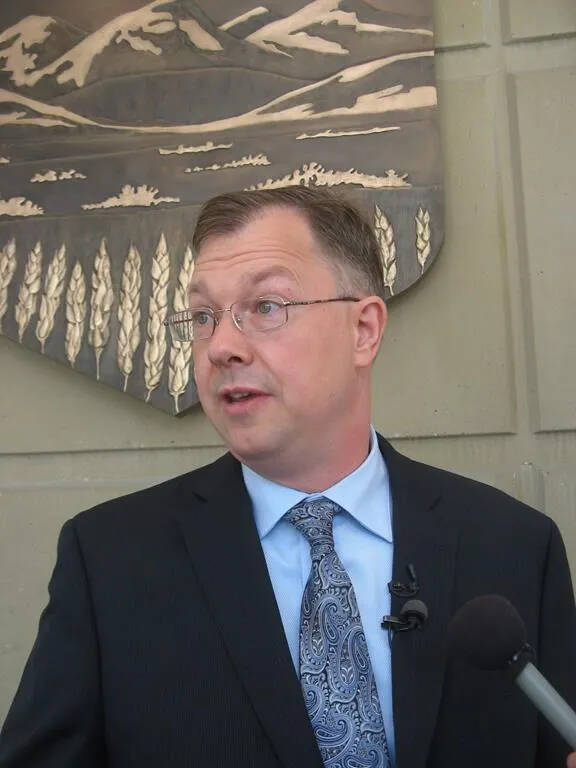
John Carpay, one of two lawyers charged with intimidation of a justice system participant and attempting to obstruct justice. (Bill Graveland/The Canadian Press files)
Court heard Friday that Carpay, on Cameron’s recommendation, hired a private investigator to follow then-premier Brian Pallister, chief provincial public health officer Dr. Brent Roussin and Joyal to see if they were following pandemic public health orders.
“I have a scenario before me today that can only be described as extraordinary,” King’s Bench Associate Chief Justice Shane Perlmutter said. “What these lawyers did was nothing short of an affront to the administration of justice… What they did was unprofessional, unethical and dishonourable.”
Carpay pleaded guilty to breach of integrity and Cameron admitted to professional misconduct in a hearing before the Law Society of Manitoba in August. They were both fined $5,000 and banned from practising law in Manitoba for life.
Carpay and Cameron, appearing via video Friday from Calgary, agreed to the Canada-wide ban as the main condition in a three-year peace bond. The Crown agreed to the peace bond in a plea bargain that accepted the pair’s contention they did not intend to intimidate Joyal or obstruct justice, while acknowledging “their conduct could have had that effect,” said prosecutor Chris Vanderhooft.
On June 8, 2021, after hearings in the church case had concluded and before Joyal had rendered his decision, Cameron suggested in an email to Carpay that a private investigator be hired “to get pictures of a few key people breaking health orders,” Vanderhooft told court, reading from an agreed statement of facts.
“Cameron described the course of action as a ‘legitimate litigation expense,’” Vanderhooft said. “Mr. Cameron made the suggestion because he had been provided unverified information that some notable government representatives may have been observed breaking public health orders.
“In his email to Mr. Carpay, Mr. Cameron proposed using any proof of public officials breaking public health restrictions in an affidavit to potentially support an argument the orders were arbitrary,” Vanderhooft said.
Carpay hired Chase Investigations to conduct “passive surveillance” of Pallister and Roussin, and, after a further suggestion from Cameron, Joyal.
Joyal was running errands July 8, 2021 when he noticed he was being followed, confronted the driver, got his licence number and contacted police.
Joyal raised the incident in court July 12 and Carpay and Cameron admitted their involvement. Carpay told court he hired the investigator on behalf of the justice centre to detect if government officials were complying with public health orders, claiming it had nothing to do with the court case.
The next day, Carpay deleted the contents of an email account that included all communications with Chase Investigations.
Defence lawyers Saul Simmonds, representing Carpay, and Alex Steigerwald, representing Cameron, said their clients never intended to break the law and that the issue of intent would have been a key issue had the case gone to trial.
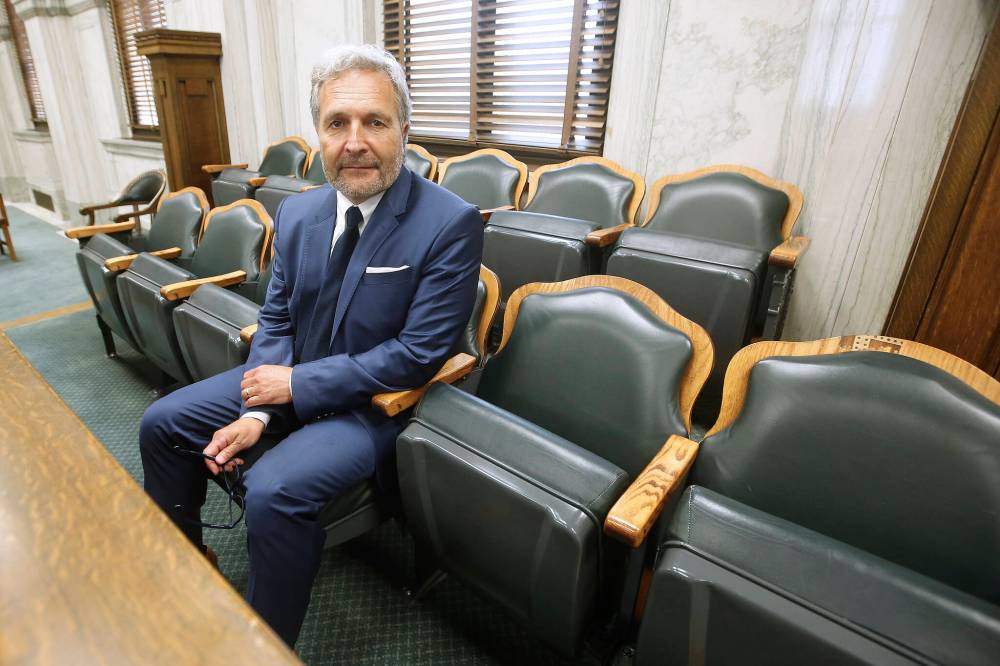
King’s Bench Chief Justice Glenn Joyal was presiding over a high-profile court challenge by several local churches and individuals seeking to have public health orders put in place to stem the spread of COVID-19 declared unconstitutional. (John Woods / Winnipeg Free Press files)
Vanderhooft said the resolution does not mean the Crown believes there was no reasonable likelihood of conviction.
“We acknowledge there were triable issues regarding intent and we were prepared to resolve this matter, as both individuals are acknowledging what they did had the potential to cause fear or obstruct justice.”
Joyal dismissed the court challenge in October 2021, finding the public health orders were constitutional and justified as a pandemic response based on credible science. The Manitoba Court of Appeal upheld the ruling in a decision last June.
Joyal did not attend Friday’s hearing.
“I do not pretend to speak for (Joyal), but I have consulted him,” Vanderhooft said. “While he remains unimpressed by the conduct, he understands the resolution and the closure that this will bring and the consequences for each of the accused.”
University of Manitoba law professor Brandon Trask said the outcome appeared reasonable in the circumstances, but predicted the lawyers will face further consequences, including lasting damage to their reputations.
“I think the full cost to the two lawyers has yet to be seen,” Trask said. “How public this got may very much call their judgment into question for some people.
“Even if the Crown did not say that, I think that is something that is in the back of everyone’s mind in how this has played out.”
dean.pritchard@freepress.mb.ca

Dean Pritchard is courts reporter for the Free Press. He has covered the justice system since 1999, working for the Brandon Sun and Winnipeg Sun before joining the Free Press in 2019. Read more about Dean.
Every piece of reporting Dean produces is reviewed by an editing team before it is posted online or published in print — part of the Free Press‘s tradition, since 1872, of producing reliable independent journalism. Read more about Free Press’s history and mandate, and learn how our newsroom operates.
Our newsroom depends on a growing audience of readers to power our journalism. If you are not a paid reader, please consider becoming a subscriber.
Our newsroom depends on its audience of readers to power our journalism. Thank you for your support.
Related Articles
Alberta lawyers planned surveillance of Manitoba premier, top doctor in 2021 COVID challenge







History
Updated on Friday, October 27, 2023 1:02 PM CDT: Corrects spelling
Updated on Friday, October 27, 2023 4:34 PM CDT: Updated with quotes, more information.