Former Manitoba inmate launches proposed class action against province over use of solitary confinement
Read this article for free:
or
Already have an account? Log in here »
To continue reading, please subscribe:

Digital Subscription
One year of digital access for only $205*
- Enjoy unlimited reading on winnipegfreepress.com
- Read the E-Edition, our digital replica newspaper
- Access News Break, our award-winning app
- Play interactive puzzles
*First annual payment billed as $205.00 + GST for one year. This annual subscription will automatically renew at $233.00 + GST every 52 weeks (10% off the regular annual price of $259.35). Offer available to new and qualified returning subscribers only. Cancel any time.
To continue reading, please subscribe:
Add Free Press access to your Brandon Sun subscription for only an additional
$1 for the first 4 weeks*
- Enjoy unlimited reading on winnipegfreepress.com
- Read the E-Edition, our digital replica newspaper
- Access News Break, our award-winning app
- Play interactive puzzles
*Your next Brandon Sun subscription payment will increase by $1.00 and you will be charged $17.95 plus GST for four weeks. After four weeks, your payment will increase to $24.95 plus GST every four weeks.
Read unlimited articles for free today:
or
Already have an account? Log in here »
Hey there, time traveller!
This article was published 07/05/2024 (888 days ago), so information in it may no longer be current.
A former provincial jail inmate has filed a proposed class-action lawsuit against the Manitoba government over solitary confinement, calling the use of the widely condemned practice a “reprehensible dereliction” of responsibilities to the incarcerated.
Lawyers from Toronto firm Koskie Minsky LLP — which specializes in class-action lawsuits; it has filed an ongoing action in Ontario over that province’s use of solitary confinement — filed the lawsuit in Manitoba Court of King’s Bench last Thursday on behalf of James Darren Audy, a 36-year-old Indigenous man.
“The (Manitoba government) has continued to rely on the practice of solitary confinement in the face of widespread recommendations to eliminate its use and accumulating judicial decisions finding the practice contrary to both the charter and the other legal duties owed to inmates,” reads the lawsuit.
“The defendant’s conduct constitutes a reprehensible dereliction of its responsibilities to the class members, and demands deterrent and punitive relief so as to bring the defendant into compliance with basic constitutional, international, statutory equitable and common law standards.”
The provincial government has not yet filed a statement of defence.
DAVID LIPNOWSKI / THE CANADIAN PRESS FILES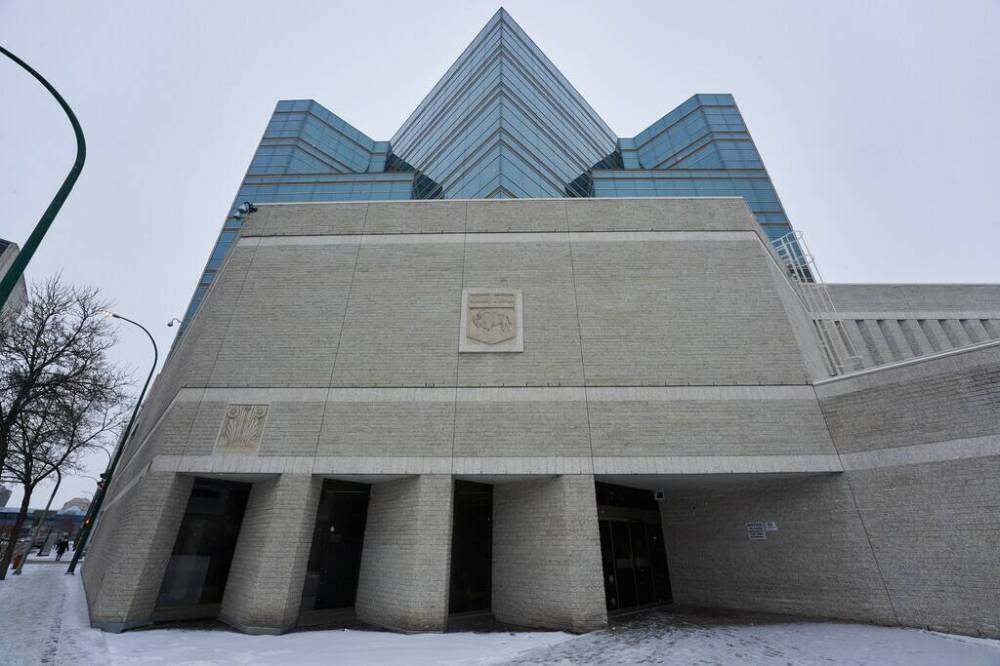
The lawsuit, which has not yet been certified as a class action, is seeking unspecified damages or compensation for negligence or breach of duty, damages for breaches of charter rights and punitive damages as well as interest and court costs.
Audy’s lawsuit seeks declarations from the court that the province’s use of solitary confinement breaches common law and statutory duties, the charter right to life, liberty and security, as well as a declaration that the practice constitutes cruel, inhumane and degrading treatment or punishment, breaching the charter guarantee against cruel or unusual punishment by the state.
The proposed class would include provincial inmates with serious mental illnesses who have been put in disciplinary or preventative segregation, youth inmates placed into preventative segregation between May 4, 2022 and the present, and any inmate placed in solitary for 15 or more days between May 4, 2022 and the present.
The same firm filed a similar suit related to Manitoba’s use of solitary confinement in 2021, involving an earlier time period. It remains before the court.
The United Nations has deemed prolonged solitary confinement — 15 days or more — as a form of torture.
The Canadian government banned the use of solitary confinement, commonly referred to in corrections as segregation, in its federal prisons in 2019 and replaced it with “structured intervention.” Isolated federal inmates in the new system must be granted four hours a day outside their cells, including two hours of “meaningful human contact.”
However, some advocates, including the John Howard Society, have said some inmates are still experiencing forms of solitary confinement in federal prisons. The federal corrections officers’ union has said the ban hampers its members’ ability to properly punish inmates accused of wrongdoing.
Provincial policies inadequate: lawsuit
Sentences of two years or longer are served in federal institutions. Shorter terms are served in provincial facilities.
Audy, who records show remains before the court on two counts of robbery, a mischief charge and court order breach, said in the legal documents that he was placed in approximately four months of solitary confinement at the Winnipeg Remand Centre in 2023, on top of periods of solitary at other provincial jails throughout his life. His record includes convictions for weapons offences, robbery, theft and numerous court order breaches.
In Manitoba, the documents say, the use of segregation for discipline or to prevent security risks or danger to inmates’ safety or the safety of others amounts to solitary confinement.
A recent Free Press investigation found that Headingley Correctional Centre — the province’s largest jail — frequently uses periods of segregation for most disciplinary infractions.
Related Articles
Bad blood behind bars at overcrowded Headingley Correctional Centre








The lawsuit alleges the province’s corrections officials often provide no reason when an inmate is placed in preventive segregation and that the process is not subject to an independent review. Inmates are placed into preventive segregation for weeks, months and years, in some cases, it claims.
Disciplinary segregation in provincial jails is meant to last only 15 days, according to the court papers, but in practice, inmates are placed into disciplinary segregation after preventive segregation, meaning the period of time in solitary confinement can be much longer.
Manitoba policies define segregation as 18 or more hours a day, according to the lawsuit. But in practice, inmates are often isolated for at least 22 hours a day, with little time provided outside their cells to take showers, make phone calls and attend to other matters.
Manitoba has, in recent years, adopted policies meant to reduce the harm of solitary, including allowing for “meaningful human contact,” but the lawsuit claims such contact is not actually possible for inmates in provincial jails.
The province’s policies are inadequate compared to domestic and international standards, with inmates subjected to extreme isolation for extended periods without access to proper medical care, the documents say.
Solitary causes harm: authorities
Provincial segregation cells are typically smaller than a standard parking space.
The lawsuit alleges all provincial inmates who have been in segregation have suffered serious and lasting psychological harms, including self-harm and suicide, as well as physical effects. It says time in segregation for youths and those with existing mental health disorders can be “catastrophic.”
The province is well-aware of the harms of solitary confinement, the lawsuit claims, as both the Manitoba ombudsman and the Manitoba Advocate for Children and Youth have raised concerns.
A provincial court judge found in a 2023 inquest report that a prolonged period of isolation contributed to the death by suicide of inmate Jeffrey Owen Tait.
Other authorities in Canada and internationally have long accepted that solitary causes harms that can’t be justified, the lawsuit says.
A spokesperson for the provincial government declined to comment on the lawsuit. A statement from the Manitoba Government and General Employees’ Union, which represents provincial corrections officers, did not address questions about why solitary confinement is used.
“Our top priority is ensuring everyone’s safety, whether that’s officers, inmates or anyone else in the correctional system,” said the statement from union president Kyle Ross.
erik.pindera@freepress.mb.ca

Erik Pindera is a reporter for the Free Press, mostly focusing on crime and justice. The born-and-bred Winnipegger attended Red River College Polytechnic, wrote for the community newspaper in Kenora, Ont. and reported on television and radio in Winnipeg before joining the Free Press in 2020. Read more about Erik.
Every piece of reporting Erik produces is reviewed by an editing team before it is posted online or published in print — part of the Free Press‘s tradition, since 1872, of producing reliable independent journalism. Read more about Free Press’s history and mandate, and learn how our newsroom operates.
Our newsroom depends on a growing audience of readers to power our journalism. If you are not a paid reader, please consider becoming a subscriber.
Our newsroom depends on its audience of readers to power our journalism. Thank you for your support.
History
Updated on Tuesday, May 7, 2024 5:07 PM CDT: Adds the same firm filed a similar suit in 2021.