In Mexico’s Yucatan Peninsula, a hidden underground world is under threat by the Maya Train
Read this article for free:
or
Already have an account? Log in here »
To continue reading, please subscribe:

Digital Subscription
One year of digital access for only $205*
- Enjoy unlimited reading on winnipegfreepress.com
- Read the E-Edition, our digital replica newspaper
- Access News Break, our award-winning app
- Play interactive puzzles
*First annual payment billed as $205.00 + GST for one year. This annual subscription will automatically renew at $233.00 + GST every 52 weeks (10% off the regular annual price of $259.35). Offer available to new and qualified returning subscribers only. Cancel any time.
To continue reading, please subscribe:
Add Free Press access to your Brandon Sun subscription for only an additional
$1 for the first 4 weeks*
- Enjoy unlimited reading on winnipegfreepress.com
- Read the E-Edition, our digital replica newspaper
- Access News Break, our award-winning app
- Play interactive puzzles
*Your next Brandon Sun subscription payment will increase by $1.00 and you will be charged $17.95 plus GST for four weeks. After four weeks, your payment will increase to $24.95 plus GST every four weeks.
Read unlimited articles for free today:
or
Already have an account? Log in here »
Hey there, time traveller!
This article was published 30/05/2024 (856 days ago), so information in it may no longer be current.
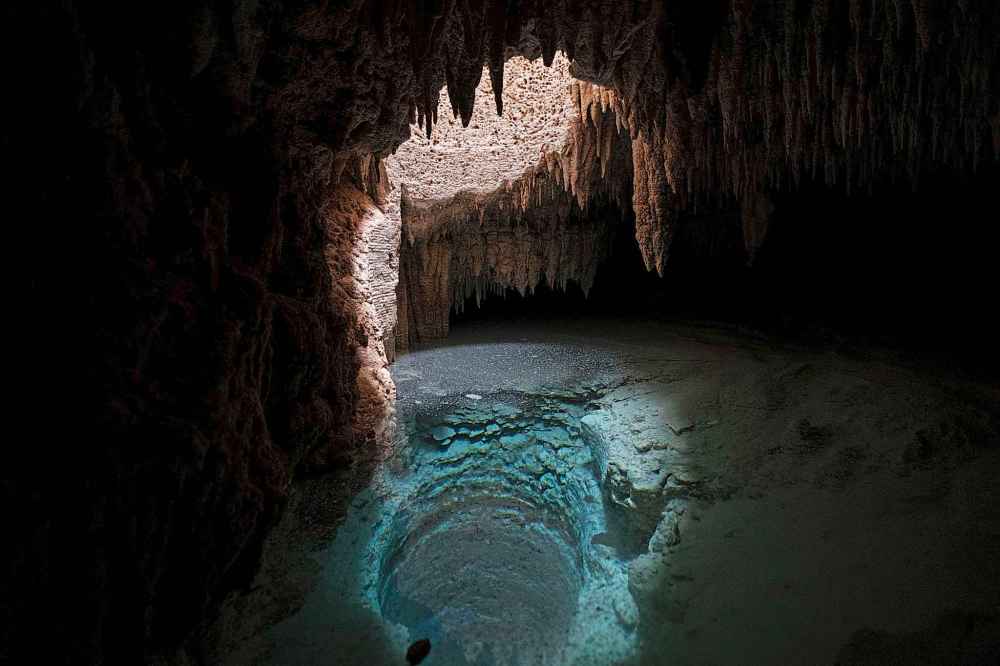
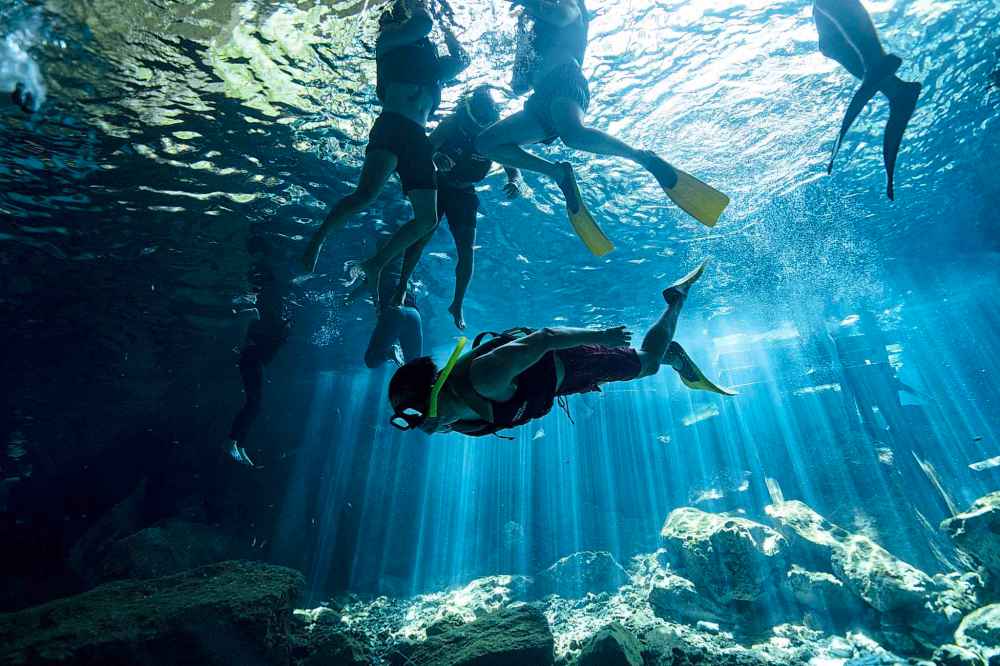
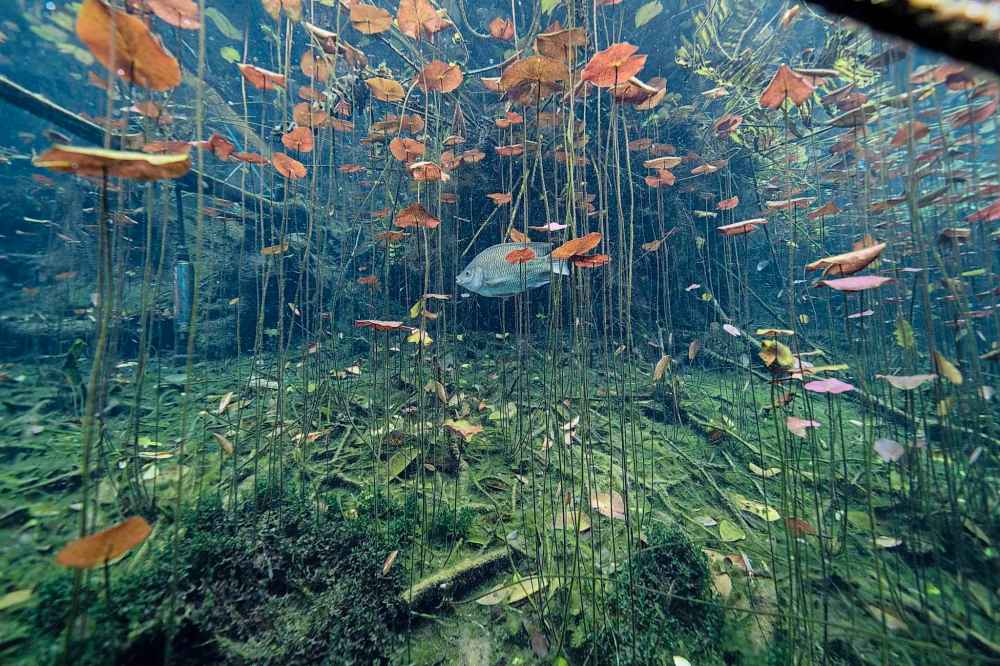
AKTUN TUYUL CAVE SYSTEM, Mexico (AP) — Rays of sunlight slice through pools of crystal water as clusters of fish cast shadows on the limestone below. Arching over the emerald basin are walls of stalactites dripping down the cavern ceiling, which opens to a dense jungle.
These glowing sinkhole lakes — known as cenotes — are a part of one of Mexico’s natural wonders: A fragile system of an estimated 10,000 subterranean caverns, rivers and lakes that wind almost surreptitiously beneath Mexico’s southern Yucatan peninsula.
Now, construction of President Andrés Manuel López Obrador’s crown jewel project — the Maya Train — is rapidly destroying part of that hidden underground world, already under threat by development and mass tourism. As the caverns are thrust into the spotlight in the lead-up to the country’s presidential elections, scientists and environmentalists warn that the train will mean long-term environmental ruin.
“Pouring concrete into a cavern, directly into the aquifer, without any concern or care, that’s total ecocide.”–Engineer Guillermo D. Christy
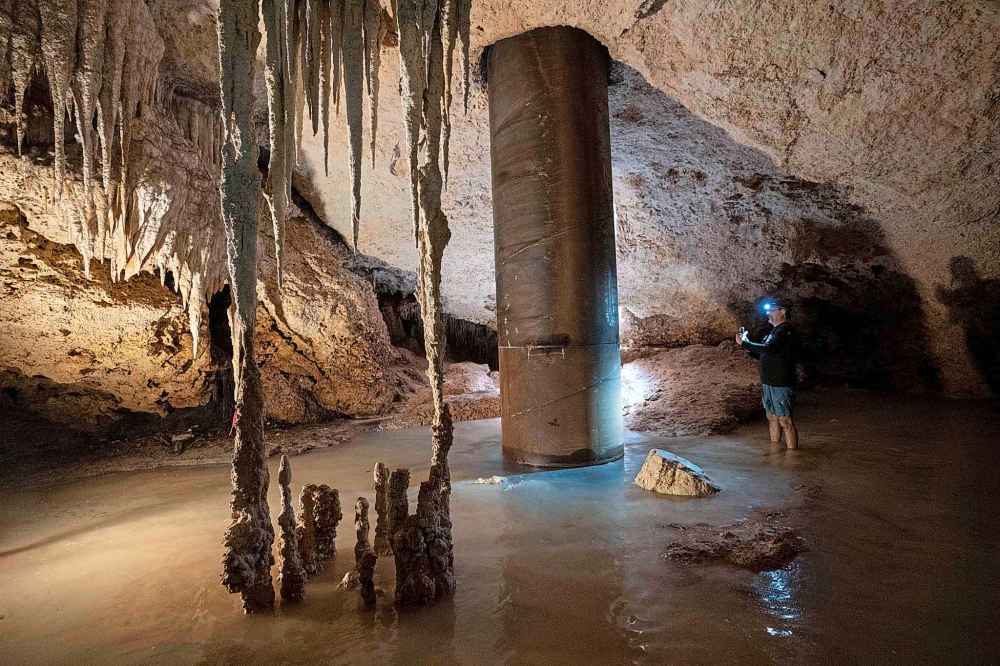
Deep in the jungle, the roar of heavy machinery cuts through the cave’s gentle “drip, drip, drip.” Just a few meters above, construction of the train line is in full swing. The caverns rumble as government workers use massive metal drills that bore into limestone, embedding an estimated 15,000 steel pillars into the caverns.
Engineer Guillermo D. Christy looks upon the once immaculate cave, now coated with a layer of concrete and broken stalactites, icicle-shaped rock formations normally hanging from the roof of the cave. A mix of grief and anger is painted upon the face of D. Christy, who has long studied the waters running through the caves.
“Pouring concrete into a cavern, directly into the aquifer, without any concern or care,” D. Christy said. “That’s total ecocide.”
A tourism boon, but at what cost?
For nearly a thousand miles, (1,460 kilometers) the high-speed Maya Train will wind its way around Mexico’s southern Yucatan Peninsula. When it’s completed, it’ll connect tourist hubs like Cancun and Playa del Carmen to dense jungle, remote communities and archaeological sites, drawing development and money into long-neglected rural swathes of the country.
The more than $30 billion train is among the keystone projects of Mexico’s outgoing President López Obrador, who has spent his six years in office portraying himself as a champion of the country’s long-forgotten poor.
“The Maya Train will be our legacy of development for the southeast of Mexico,” the president wrote in a post on the social platform X last year.
With elections on Sunday, the future of the train, and López Obrador’s legacy, is uncertain. Both leading candidates to replace him have made promises for a green agenda, but also supported the economic promises the train brings.
At issue is the path the train takes.
It was originally planned to run along the region’s highway in more urban areas. But after waves of complaints by hotel owners, the government moved one of the final sections of the line deeper into the jungle, atop the most important cave system in the country. It’s plowed down millions of trees, a chunk of the largest tropical forest in the Americas after the Amazon.
The caves contain one of the biggest aquifers in Mexico and act as the region’s main water source, crucial at a time when the nation faces a deepening water crisis. In 2022, archaeologists also discovered some of the oldest human remains in North America within the caverns.
The area was once a reef nestled beneath the Caribbean Sea, but changing sea levels pushed Mexico’s southern peninsula out of the ocean as a mass of limestone. Water sculpted the porous stone into caves over millions of years.
It produced the open-face freshwater caverns, “cenotes,” and underground rivers that are in equal parts awe-inspiring and delicate, explained Emiliano Monroy-Ríos, a geologist at Northwestern University studying the region.
“These ecosystems are very, very fragile,” Monroy-Ríos said. “They are building upon a land that is like Gruyere cheese, full of caves and cavities of different sizes and at different depths.”
“They are building upon a land that is like Gruyere cheese, full of caves and cavities of different sizes and at different depths.”–Geologist Emiliano Monroy-Ríos
López Obrador promised his government would prevent damage to the Great Mayan Aquifer by elevating the sections of the train on thousands of hefty steel pillars buried deep into the ground.
But the populist leader was met with an uproar in late January when environmentalists and scientists posted videos showing government drills carving tunnels into the tops of caverns, implanting rows of 6-foot-wide (2-meter-wide) steel pillars.
López Obrador responded angrily to the videos, calling them “staged” by his political enemies.
“These pseudo-environmentalists are liars,” López Obrador said in a news briefing. “Don’t watch those videos because they’re specialists in staging.”
Associated Press journalists traveled to construction sites along the Maya Train route where López Obrador denied causing any environmental damage. What they saw directly contradicted the president’s claims.
Documenting destruction
D. Christy treks through dense rainforest and clicks on his headlight as he climbs into a split in a rock.
The engineer and hydrological expert has spent 25 years roving the intricate cave system, tracking the quality of the waters. Like many of the people studying the mysteries of the ancient cave system, his once tame job was inadvertently turned turbulent with the rise of the train project.
Today, he wanders into a small section of the caverns known as Aktun Tuyul, less than an hour from the tourist city of Playa del Carmen. As the 58-year-old Mexican walks past layers of stalactites and steel pillars burrowing into the rock formations, the cave’s darkness is broken by wagon wheel-sized holes drilled into the roof of the cave, where even more pillars will be implanted.
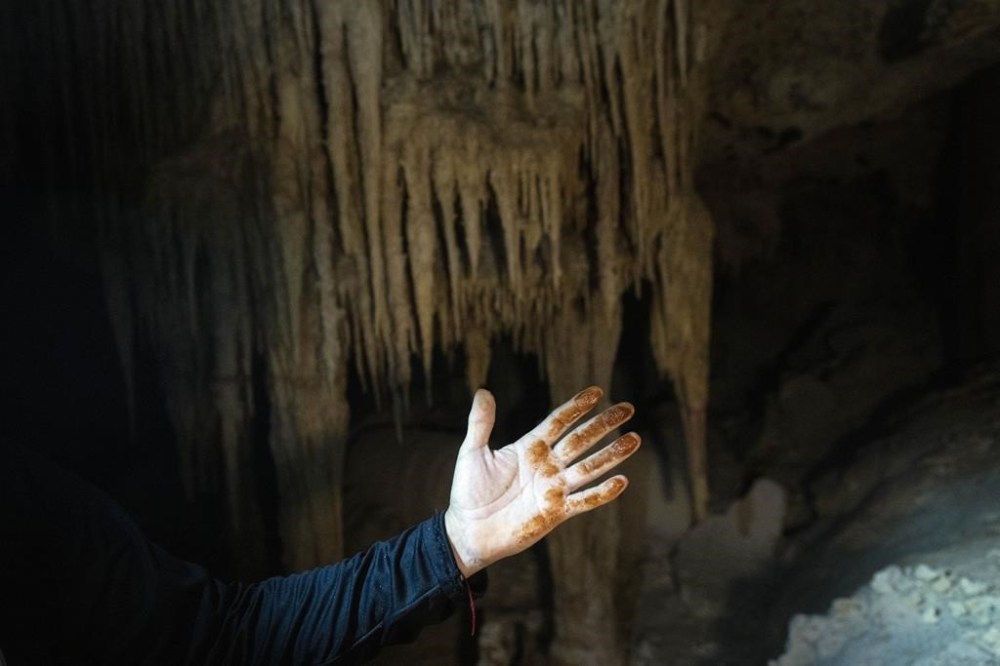
D. Christy wades through waist-deep water, now turned a murky brown by corroded metal from the pillars, and pushes his body through a narrow passage in the rock.
Sitting next to one of more than a dozen pillars embedded into this cavern, he pulls out a series of syringes and bottles, taking a sample of the water next to the metal.
“It clearly has a color characteristic of iron contamination,” he said, holding up a syringe of foggy yellow water. “We’re going to take a sample.”
D. Christy pours the water into a glass vial, mixing it with a chemical that turns it a deep blue, indicating the water contains traces of iron from the poles. Next to other pillars, he presses his ear to the metal, listening to globs of concrete pour into the hollow tube.
Across the cave system, stalactites broken off by vibrations from train construction litter the ground like rubble following an earthquake. In other caverns, the concrete filling the pillars has spilled out to coat the limestone ground.
While the long-term environmental consequences of the construction are unknown, what is certain is that it is transforming the entire ecosystem, said geologist Monroy-Ríos.
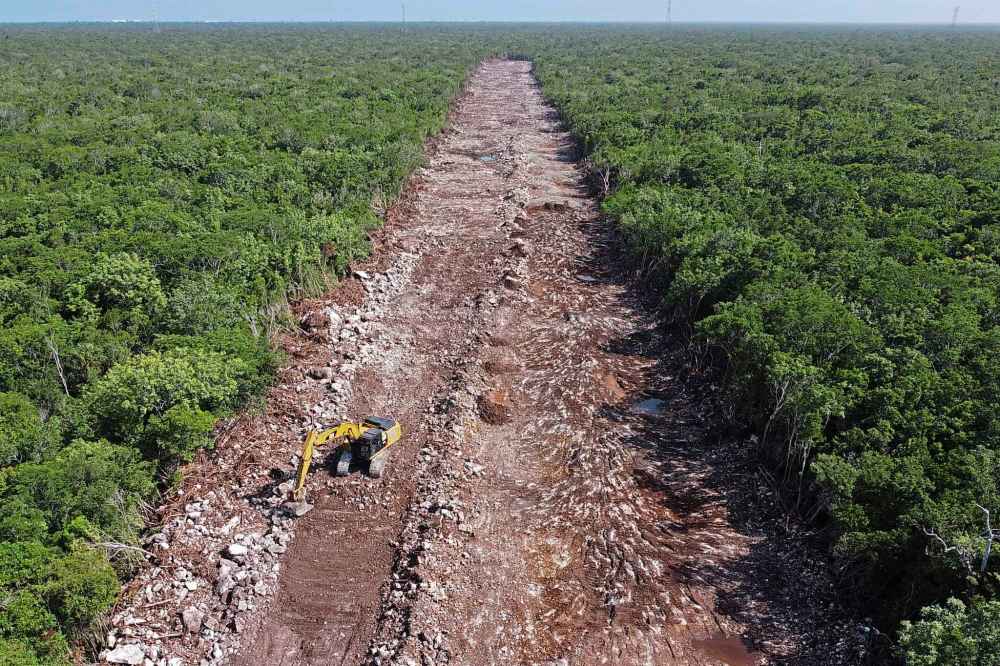
“Just by drilling, before you even put in the pillars, you are killing an entire ecosystem that was in those caves” he said. “Why? Because now light is coming in, the gasses within have changed, and there are very sensitive species that live in total darkness. They have already killed hundreds of millions” of organisms.
But the geologist’s greatest concern continues to be that the morphing limestone upon which the train is built and caves underneath the pillars could cause a collapse of the line. Scientists have long warned of the risks of building on soluble rock like limestone.
Already, sections of highway in the Yucatan have warped or caved in, and the Maya Train has been marred by a series of accidents, including a March train derailment, which government officials blamed on a loose clamp set by contractors.
Further damage to the limestone could lead to another accident that could be deadly. If a cargo train derailed, it could cause an oil spill that could permanently devastate the aquifer, Monroy-Ríos said.
‘It will benefit us all’
Not everyone is opposed to the train running through the remote communities. Some see an unprecedented economic opportunity, a chance to help poor families earn money.
Maria Norma de los Angeles and her family have long lived off a modest flow of tourists in their community of Jacinto Pat, tucked in a stretch of jungle in the southern coastal state, Quintana Roo.
They offer temazcal baths, traditional Mayan steam rooms meant to purify and relax the body, and charge visiting foreigners to swim in a nearby cenote.
The family, like many along the train’s path, was originally opposed of the project because they worried it would destroy the cenotes drawing tourists.
But their feelings about the train began to change when government officials contracted local people to build the track, De los Angeles said. They also promised to bring communities electricity, a sewage system and running water, and agreed to pay more for the land the train would pass over.
“It has its pros and its cons,” De los Angeles said as her family gathered to kill a pig to eat for her father’s birthday. “But there will be a moment when we see an economic spillover … I know that it will benefit us all.”
That’s the mentality of many Mexicans toward both the train and López Obrador. Many are willing to overlook the controversies of the populist and his train, in favor of his charisma and the strong economy seen during his presidency.
“Whenever you build something, something else is destroyed. This is for the good of the people.”–California resident Luruama de la Cruz
The 70-year-old leader has connected with Mexico’s long-invisible working class in a way few leaders have in recent history. López Obrador’s government has raised the minimum wage and provided cash handouts to older Mexicans and students. The government says more than 5 million people have been pulled out of poverty while López Obrador was president.
Luruama de la Cruz, a California resident whose family comes from the local town of Leona Vicario, said she bought her father tickets to the train for his birthday because it was a dream of his.
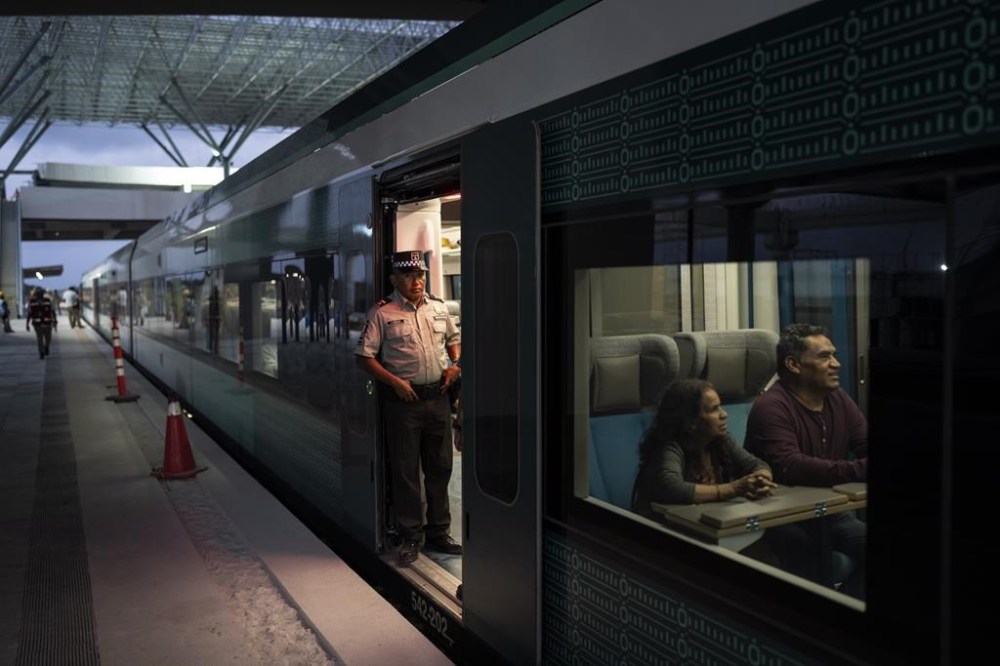
“A dream made reality,” De la Cruz says as she rode the train and took a video on her phone, meandering past passengers wearing “Maya Train” T-shirts and watching an interview between López Obrador and Russian state media.
“Whenever you build something, something else is destroyed,” she said, adding that family members worked on train construction. “This is for the good of the people.”
A rush to build the track
López Obrador has fast-tracked construction of the train to try to keep promises to complete it before June elections, something that has appeared all but impossible. The moves he’s made have only deepened his ongoing clashes with the country’s judiciary, further fueling criticisms that his government is undermining democratic institutions.
In a violation of Mexican law, the government didn’t carry out a comprehensive study to assess the potential environmental impacts before starting construction. That’s led to blindly plowing into caverns with no clue what’s being damaged, scientists and independent lawyers say.

“Our president has little respect for the law. He’s in a sort of tug of war for power and he does what he wants,” said Claudia Aguilar, a lawyer at Mexico’s Free School of Law.
When a judge ordered construction of the line be suspended until an adequate report of how the train would affect the caves was carried out, López Obrador ignored the ruling, and the work continued.
At the same time, much of the project has been cloaked in secrecy as López Obrador has charged Mexico’s military with construction and blocked the release of information in the name of “national security.”
While Mexico’s Supreme Court ruled that unconstitutional, López Obrador disregarded that ruling, too, saying it was to protect his project from “corrupt” critics.
When the AP requested an interview with leadership of the Maya Train project, spokesperson Mariana Galicia said they were “ordered that we cannot give interviews” but could respond to questions sent over email to “better control” the information shared. They did not respond to questions sent by email.
‘Swimming in poop’
Meanwhile, thousands of passengers are already riding sections of the train that have been built. The atmosphere above is far-removed from the conflicts playing out around the caverns.
Hotels and clubs host raves and even music festivals in some of the cenotes, with one club boasting it “takes the relaxation and wellness experience to another level. Let yourself be enveloped by this sacred, timeless place.”
Luxurious beach hotels and booming clubs packed with drunk, khaki-clad tourists dominate the coastal tourist city of Playa del Carmen. Once a Mayan settlement, the city is among many in the Yucatan Peninsula that in recent decades have been converted into a party hub for vacationing foreigners.
In the caves below, biologist Roberto Rojo paddles through a sea of trash.
Under the arching cavern roof, Rojo and a group of volunteers push a green kayak through a cenote, filling bulking bags of glass beer bottles, plastic tubes, metal grating, plastic Coca-Cola bottles, rotten wooden planks and even a printer.
“You don’t even want to know what many of those things are,” Rojo said.
It’s a fate Rojo and many others worry may await hundreds of cenotes, caves and underground lakes and rivers along the new Maya Train line.
“It’s not just the train, but everything the train brings with it – urban developments, hotel developments,” said water expert D. Christy. “Rather than solving a problem, they’re coming in and making a big problem worse.”
Millions of tourists a year flock to the region, affecting the entire underground as the industry guzzles water and sewage seeps through the earth and into the caves, killing fish and other wildlife. In 2022, authorities found that the water of more than a dozen of the caverns near the tourist city of Tulum was tainted with E. Coli bacteria.
Last year, the environmental organization Va Por La Tierra estimated that approximately 95% of the cenotes in Yucatan state — where the Maya Train cuts through — were already contaminated due to the lack of a sufficient sewage system. Scuba diving master Bernardette Carrión even told the AP that tourists admiring the splendor of the caves “are swimming in poop.”
The underground system is connected to the sea, so waste trickles out to the ocean, where scientists say it feeds seaweed-like algae piling up on Caribbean coastlines, spurring on a slate of other environmental and health hazards.
Rojo and other volunteers created the organization known as “Urban Cenotes” in Playa del Carmen to clean the water system, cave by cave.
“We’re trying to return the dignity that these spaces have had for thousands of years, that are now being turned into landfills, sewers and drains,” Rojo said.
But it’s an uphill battle for the hundreds of volunteers, and something they worry will become impossible as pollution expands into rural areas with the Maya Train, deepening ongoing pollution caused by pig farms and massive soy plantations.
Looking forward, they’re uncertain about what will come as June elections loom, with López Obrador leaving office in the coming months. The leader will likely be replaced by either race front-runner and ally Claudia Sheinbaum or rival ex-senator Xóchitl Gálvez.
Sheinbaum, an environmental scientist who leads the race by a comfortable margin, has portrayed herself as a champion for the environment, but has supported López Obrador’s fossil-fuel agenda and made few remarks about the environmental damage the train has wrought.
Little more than a week before the presidential election, Sheinbaum said she was meeting with leaders of neighboring Guatemala and Belize in talks to extend the Maya Train to Central America.
Gálvez, a López Obrador opponent, has taken advantage of the controversy to tear into her adversaries, calling the train’s damage “irreversible” and a “consequence of the negligence of the government because they didn’t do any environmental impact studies.” Months earlier, though, she said she would also continue with plans to extend the train.
Meanwhile, groups like Rojo’s do everything they can to salvage an ecosystem that took millennia to form. They worry they might not have all that much time left.
“I’m not going to sit quietly and wait for the government to solve things,” Rojo said. “The people who live in the Yucatan peninsula are on the verge of a water crisis.”