All quiet on the espionage front U of M has taken steps to protect research in the five years since Qiu and Cheng were fired from the National Microbiology Lab under a cloud of national-security concerns
Read this article for free:
or
Already have an account? Log in here »
To continue reading, please subscribe:
Digital Subscription
One year of digital access for only $1.44 a week*
- Enjoy unlimited reading on winnipegfreepress.com
- Read the E-Edition, our digital replica newspaper
- Access News Break, our award-winning app
- Play interactive puzzles
*Billed as $5.77 plus GST every four weeks. After 52 weeks, price increases to the regular rate of $19.95 plus GST every four weeks. Offer available to new and qualified returning subscribers only. Cancel any time.
To continue reading, please subscribe:
Add Free Press access to your Brandon Sun subscription for only an additional
$1 for the first 4 weeks*
- Enjoy unlimited reading on winnipegfreepress.com
- Read the E-Edition, our digital replica newspaper
- Access News Break, our award-winning app
- Play interactive puzzles
*Your next Brandon Sun subscription payment will increase by $1.00 and you will be charged $17.95 plus GST for four weeks. After four weeks, your payment will increase to $24.95 plus GST every four weeks.
Read unlimited articles for free today:
or
Already have an account? Log in here »
Hey there, time traveller!
This article was published 29/11/2024 (690 days ago), so information in it may no longer be current.
More than five years on, the University of Manitoba remains tight-lipped over its handling of a case involving two former adjunct instructors whose firings from the National Microbiology Laboratory sparked concerns about Chinese espionage.
Similarly, the province is mum on whether or not it will use a civil court process to seize assets the duo reportedly own in Manitoba.
FREE PRESS FILES Photo of Dr. Xiangguo Qiu and her husband Keding Cheng taken from a video produced for the Governor General’s Innovation Awards in 2018.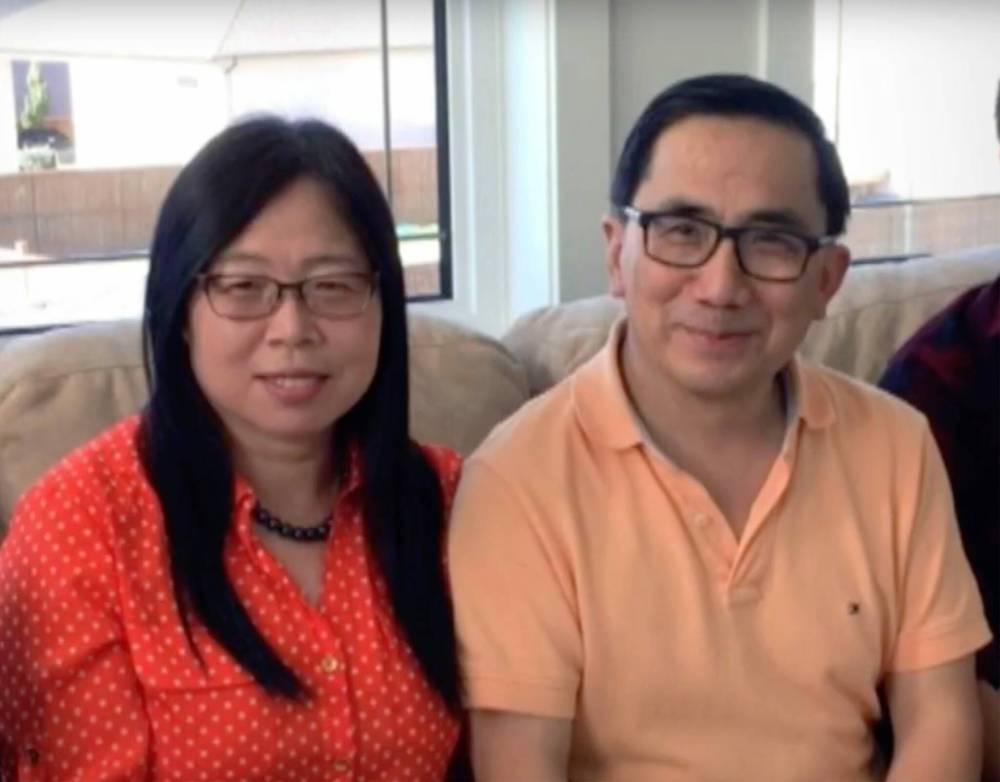
In July 2019, infectious-disease scientists Xiangguo Qiu and Keding Cheng, a married couple who are Canadian citizens originally from China, were escorted out of Winnipeg’s Level-4 National Microbiology Lab under mysterious circumstances.
Two years later, they were fired. The couple also held non-salaried academic appointments with the University of Manitoba, positions the university terminated in July 2019.
Since then, declassified documents from the Canadian Security Intelligence Service show Qiu hid her connections with China, was associated with Chinese “talent programs” and that the couple shared confidential scientific information with China.
CSIS has deemed they posed a credible threat to national security in Canada.
An RCMP national security investigation into the case is ongoing but no charges have been laid.
To this day, little is known about the university’s handling of the two scientists’ cases.
The Free Press filed six freedom of information requests seeking information about how the university internally handled the cases involving Qiu and Cheng, as well as what was discussed during briefings to the university from the Canadian Security Intelligence Service regarding the risk of intellectual-property theft by China in 2018.
Half were rejected, including a request for information about the CSIS briefing, with the university citing Freedom of Information and Privacy of Protection Act exemptions that included advice to the university and information of third parties that was provided in confidence.
U of M also said it can’t discuss the employment of current or past employees due to privacy legislation.
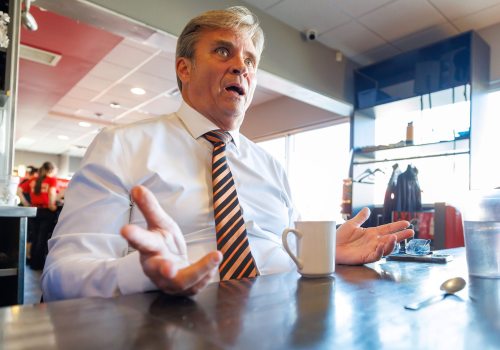
In an interview, Hans-Joachim Wieden, an associate vice-president with U of M, said the university continues to co-operate with the RCMP’s ongoing investigation. He would not say if the university conducted or is conducting any internal investigation into the matter.
In the wake of the scandal, the university has upped its security surrounding research.
MIKAELA MACKENZIE / FREE PRESS FILES The University of Manitoba is complying with a new federal directive regarding “sensitive technology research and affiliations of concern.”
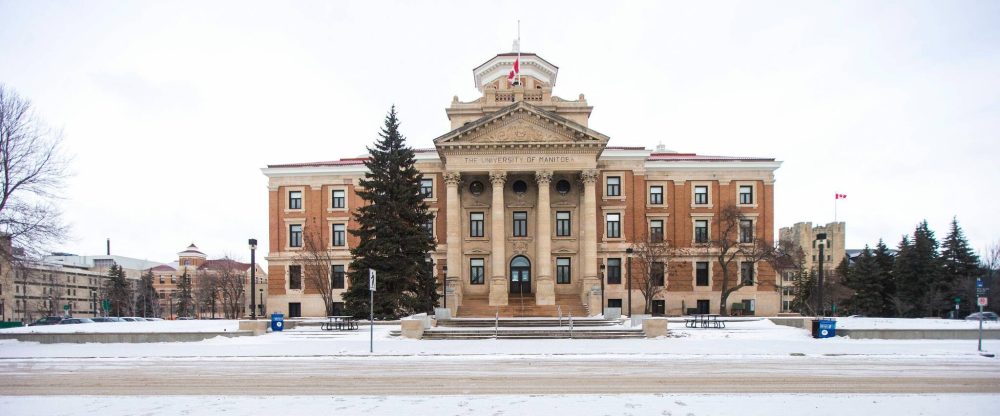
Wieden said the U of M has made strides in recent years regarding safeguarding research, particularly with the creation of the university’s office of research security two years ago. He oversees the office, which he said has become a valuable resource for other post-secondary institutions in the province that don’t have the resources for an initiative.
Part of the office’s work involves training researchers to be on the lookout for red flags indicating potential improper access or misuse of their work. Some of this is “common sense,” he said.
“If somebody gives you a USB key, you don’t necessarily just plug it in,” Wieden said.
“Or, if one of your lab members starts copying lab books or only shows up late at night alone, these are the kind of classic things… that raise red flags.”
Ultimately, the goal is for researchers to independently “self-assess” risks, he said. The training is voluntary and may be more relevant to researchers working with more sensitive files.
The university is also complying with a new federal directive regarding “sensitive technology research and affiliations of concern.”
The policy bans researchers receiving government funding from collaborations with groups and people affiliated with a list of 103 foreign organizations connected to military, national defence or state security entities in China, Iran and Russia.
But Wieden, who is also a microbiologist, said it’s a delicate balance to cut out groups in a world where collaboration is the norm.
“Science and idea exchange should be open but the question is, how much information does one share?” he said.
“Science and idea exchange should be open but the question is, how much information does one share?”–Hans-Joachim Wieden
Wieden, who started with U of M in 2021, said he couldn’t speak to the briefing from CSIS about intellectual property theft by China in 2018 but did say when CSIS connects with the university, it is sharing non-classified information.
He said the university welcomes early warnings about changes regarding which countries and organizations are no longer friendly collaborators, particularly for researchers trying to establish networks.
“That has impacts to the career trajectory of that particular person, because they build their relationships and collaborations with them,” he said. “So for them, it’s always very difficult for them to pivot into a different situation with different partners.”
Speaking generally about what a non-salaried academic appointment involves — the type of appointment Qiu and Cheng held — Wieden said it typically involves people who are experts in their field affiliated with another organization who are working with and overseeing the work of graduate students. They may have access to university resources or labs, he said.
Christian Leuprecht, a professor and national security expert at the Royal Military College and Queen’s University in Kingston, Ont., said it’s hard to assess what the university should or shouldn’t have done in the wake of revelations surrounding the two researchers.
“It’s difficult to gauge what risk they have posed,” he said, since the extent of access to sensitive information at the university, labs and other resources the pair had is unclear.
However, post-secondary institutions need to take seriously risks of foreign interference, intellectual property theft and espionage, particularly by China, he said, noting many researchers work with universities.
“There are lots of things at University of Manitoba that, for various reasons, would be interesting to adversaries,” he said, pointing to everything from straightforward theft of intellectual property and espionage to using research here to get ahead in areas where adversarial countries are behind.
“It means they don’t have to invest the money to do the research.”
“There are lots of things at University of Manitoba that, for various reasons, would be interesting to adversaries.”–Christian Leuprecht
More nefariously, the intention could be to undermine, sabotage or manipulate Canadians and Canadian interests, he said.
“Things that look innocuous to researchers themselves have the potential to be weaponized,” he said.
He said he’s glad to see these conversations reaching the senior offices of university administrators in Manitoba.
“I think there’s a growing awareness of the problem,” he said. “If you can achieve that, that’s already a big win.”
Still, he is critical of the limited approach the federal government has taken with respect to clamping down on threats to academics and universities.
“The federal government has chosen to take an absolutely minimalist approach, yet again putting Canada’s economic relationship with China ahead of our security,” he said.
Meanwhile, questions are not just swirling around Qiu and Cheng, but also international students who worked with them and, in certain cases, international students from countries Canada has an adversarial relationship with, in general.
“The students are a notorious problem,” Leuprecht said. “Are you here as a student, or are you also here as mole?”
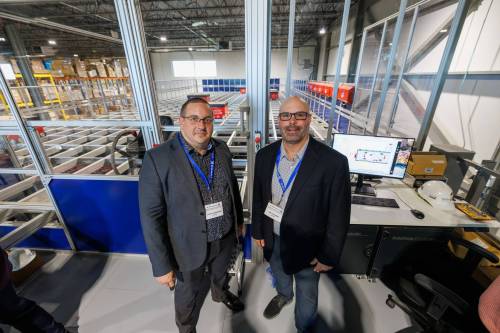
It is known that students worked alongside the two scientists at the National Microbiology Lab, which is Canada’s only Level 4 virology facility, housing deadly pathogens such as Ebola.
LYLE STAFFORD / THE CANADIAN PRESS FILES The National Microbiology Lab is Canada’s only Level 4 virology facility, housing deadly pathogens such as Ebola.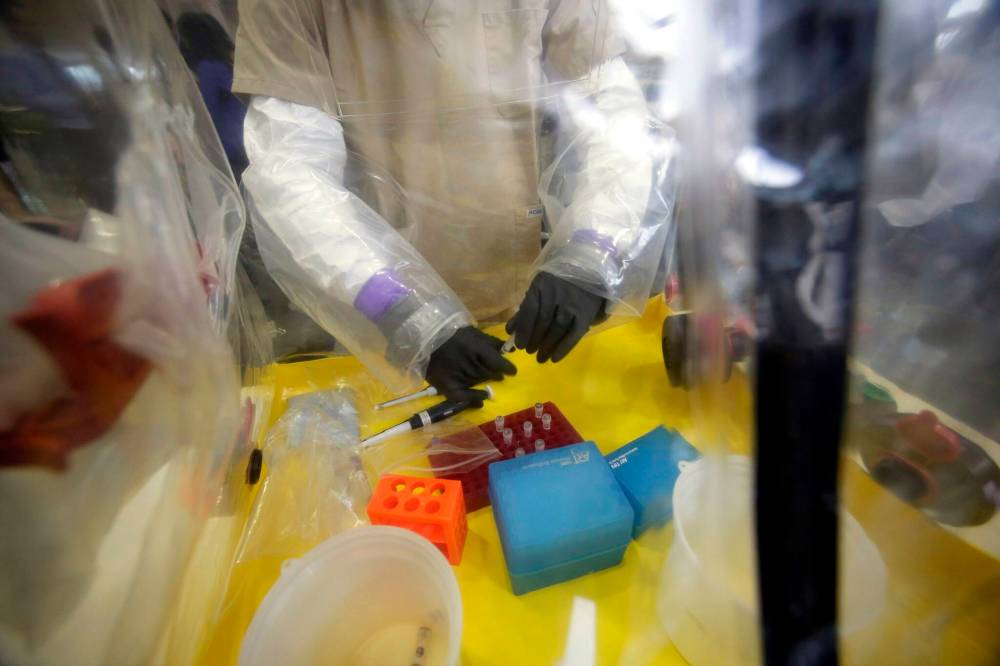
The Public Health Agency of Canada, which oversees the lab, was investigating possible policy breaches involving Cheng and his students. Security passes for at least two students of Chinese origin were revoked alongside those of Qiu and Cheng in July 2019, the Free Press previously reported.
U of M has said it reassigned Qiu and Cheng’s students to other supervisors after suspending the scientists.
Asked if any students were sent home or removed from the university or their programs, spokesperson Eleanor Coopsammy said the university can’t provide personal details about students due to privacy legislation.
One of the Free Press freedom of information requests asked for correspondence sent to students after Qiu’s suspension. The response includes a letter from Grant McClarty, then-acting department head with Medical Microbiology and Infectious Diseases, to individuals whose names are redacted, on July 23, 2019.
It stated that Qiu “was placed on leave from her employment at the National Microbiology Lab pending an internal NML investigation relating to administrative matters and an RCMP investigation. Pending the outcome of these investigations, the University has suspended the appointments of Dr. Qiu.”
Other information in the letter was redacted.
“The students are a notorious problem. Are you here as a student, or are you also here as mole?”–Christian Leuprecht
Asked if the university vets students or adjunct instructors, Wieden said the university relies on recommendations from the primary organization the academic appointee is connected to or employed with. Students and supervisors are required to sign standard confidentiality and intellectual property agreements, he said.
Meanwhile, media reports reveal that the two are back in China but still appear to hold assets in Canada.
The Globe and Mail reported in March that property records indicate they own two houses in the South Pointe neighbourhood in the southwest part of the city and an undeveloped property in Gimli. The Globe also reported the two are now in China using pseudonyms.
The properties could potentially end up in the crosshairs of the province’s criminal property forfeiture branch, said Michelle Gallant, a professor of law at the U of M.
Two houses in South Pointe and property in Gimli could potentially end up in the crosshairs of the province’s criminal property forfeiture branch, said Michelle Gallant, a professor of law at the U of M.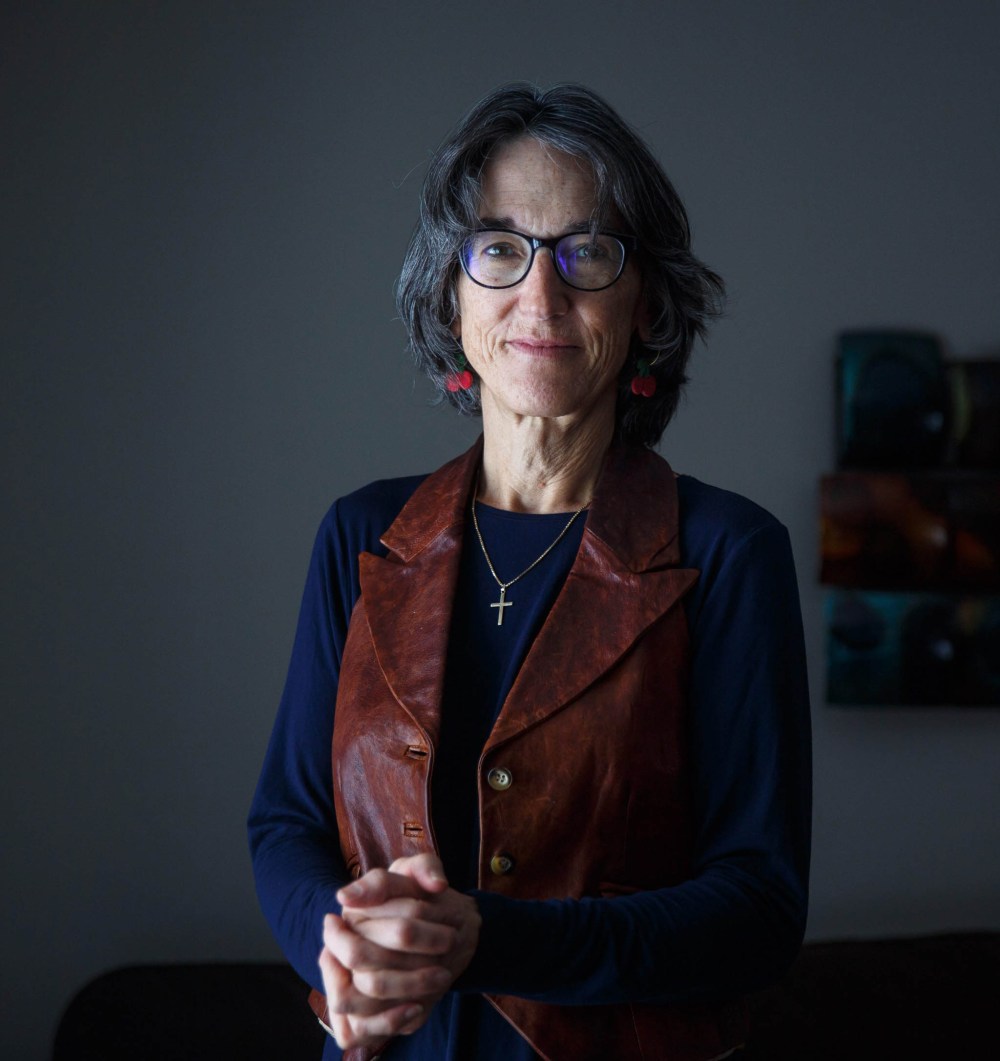
Gallant said Manitoba’s Criminal Property Forfeiture Act allows the provincial government to confiscate property or assets connected to crime via the civil courts. Charges don’t need to be laid for the civil court process to unfold.
“I don’t know of anyone seizing assets for spying, but why not?” she said. (Qiu and Cheng are not currently facing charges.)
The province won’t say if it plans to do so.
“It would not be appropriate to comment on ongoing investigations and the possibility of referrals to the Criminal Property Forfeiture Branch given the need to protect any investigation and any possible court case,” a provincial spokesperson wrote in a statement when asked if the province plans to seize Qiu and Cheng’s properties.
Speaking generally, the spokesperson said if a law enforcement agency refers a case to the branch, it then considers “the strength of the evidence and whether the seizure would be in the public interest.”
Gallant said there could be some parallels drawn between this case and that of Russian assets seized by countries amid the war in Ukraine. Such actions can be “a powerful way of getting some measure of justice,” she said.
As for Qiu and Cheng, seizing their property might be among the last tangible steps a government could take.
“The only thing left of these two individuals is the property,” Gallant said.
The Free Press was unable to reach Qiu or Cheng for comment.
katrina.clarke@freepress.mb.ca
Related Articles
Head of federal lab in Winnipeg resigns











Katrina Clarke
Investigative reporter
Katrina Clarke is an investigative reporter at the Winnipeg Free Press. Katrina holds a bachelor’s degree in politics from Queen’s University and a master’s degree in journalism from Western University. She has worked at newspapers across Canada, including the National Post and the Toronto Star. She joined the Free Press in 2022. Read more about Katrina.
Every piece of reporting Katrina produces is reviewed by an editing team before it is posted online or published in print — part of the Free Press‘s tradition, since 1872, of producing reliable independent journalism. Read more about Free Press’s history and mandate, and learn how our newsroom operates.
Our newsroom depends on a growing audience of readers to power our journalism. If you are not a paid reader, please consider becoming a subscriber.
Our newsroom depends on its audience of readers to power our journalism. Thank you for your support.
History
Updated on Wednesday, December 4, 2024 5:22 PM CST: Corrects Michelle Gallant's title