
Take your ‘facts’ with a grain of salt Students develop critical aptitude essential for navigating boundless sea of content, increasingly polarized media landscape
Read this article for free:
or
Already have an account? Log in here »
To continue reading, please subscribe:

Digital Subscription
One year of digital access for only $205*
- Enjoy unlimited reading on winnipegfreepress.com
- Read the E-Edition, our digital replica newspaper
- Access News Break, our award-winning app
- Play interactive puzzles
*First annual payment billed as $205.00 + GST for one year. This annual subscription will automatically renew at $233.00 + GST every 52 weeks (10% off the regular annual price of $259.35). Offer available to new and qualified returning subscribers only. Cancel any time.
To continue reading, please subscribe:
Add Free Press access to your Brandon Sun subscription for only an additional
$1 for the first 4 weeks*
- Enjoy unlimited reading on winnipegfreepress.com
- Read the E-Edition, our digital replica newspaper
- Access News Break, our award-winning app
- Play interactive puzzles
*Your next Brandon Sun subscription payment will increase by $1.00 and you will be charged $17.95 plus GST for four weeks. After four weeks, your payment will increase to $24.95 plus GST every four weeks.
Read unlimited articles for free today:
or
Already have an account? Log in here »
Hey there, time traveller!
This article was published 31/10/2025 (348 days ago), so information in it may no longer be current.
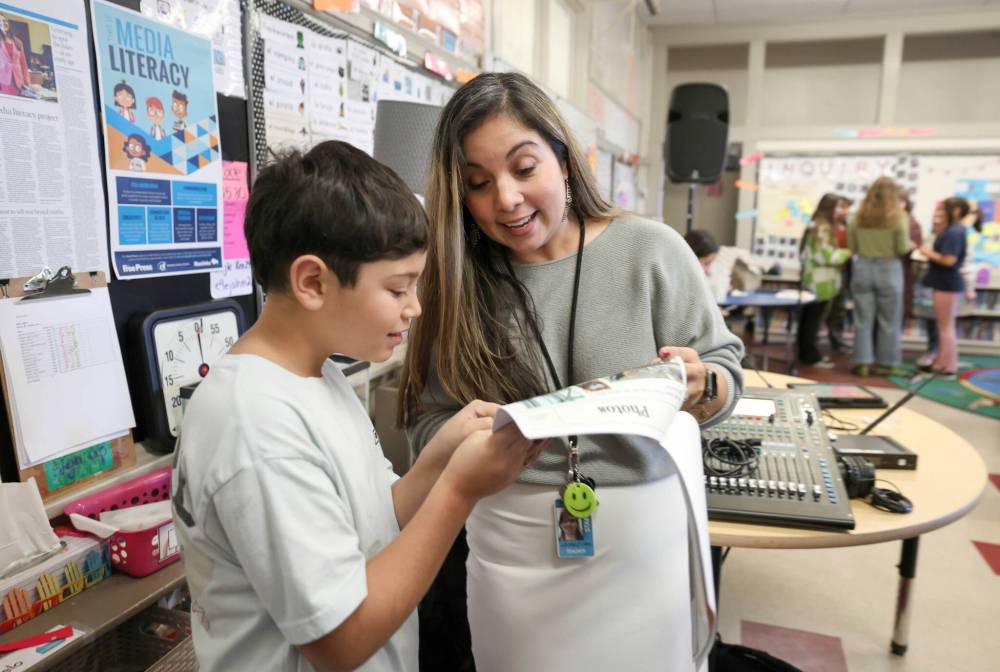
One day in the fall of 2024, two of Lily Godinez Goodman’s Grade 5 students came to her with a question: why didn’t their Earl Grey School have a newspaper, they wondered — and if they started one, would she serve as editor-in-chief?
The query fit right in with the school’s mission. In recent years, Earl Grey has been encouraging students to start their own extracurricular clubs. “We really are focusing on developing student voice,” principal Tricia Penner says. “We just want the kids to be invested in what we’re doing.”
The only catch is, to start a club, they need to find a teacher to sign on as supervisor. It means a lot of extra work — but when those two students asked, Godinez Goodman, a lifelong writer, just “couldn’t say no,” she says with a laugh. “Knowing the two students, it didn’t surprise me. They have such a strong voice in all of their writing assignments.”
With that — and the eager participation of other students — the Earl Grey Press was born.
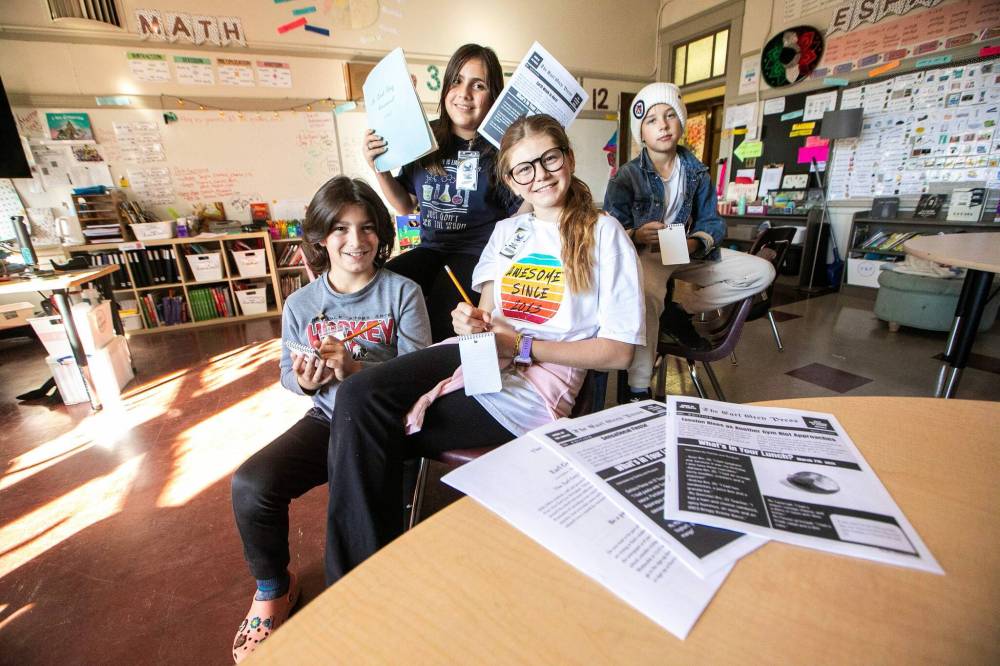
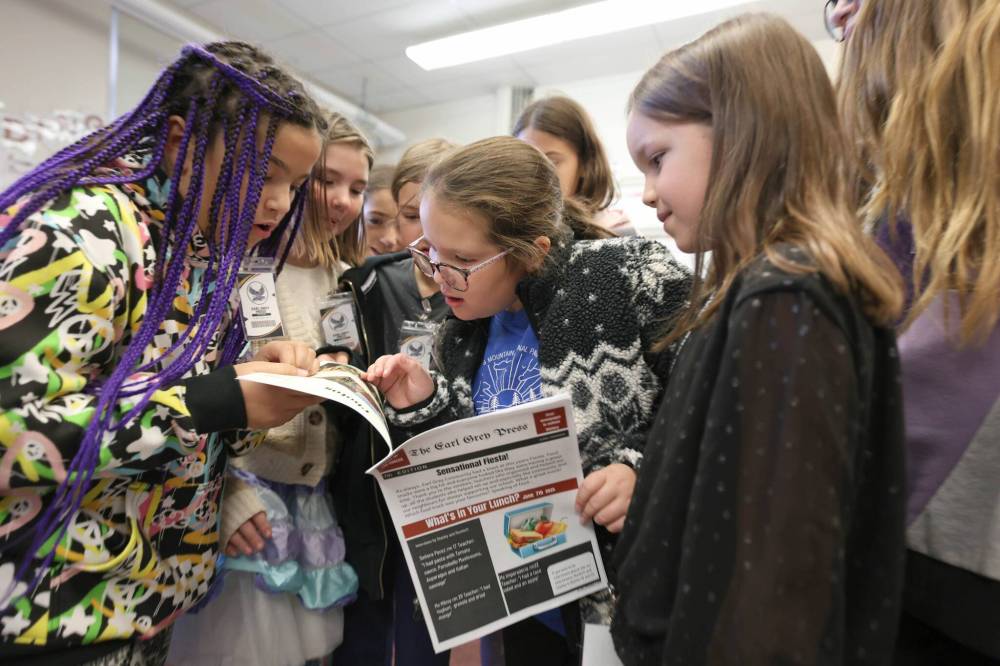
The monthly paper reports on the issues most pressing to the K-8 student body. The headlines are gripping: Tension Rises as Gym Riot Approaches. A recurring feature, “What’s In Your Lunch,” involving young reporters asking peers and staff what they brought for lunch, is wildly popular with readers. So is news of school sports teams and a joke section.
The kids made press passes emblazoned with the school’s logo. And every lunch hour, they gather in Godinez Goodman’s classroom for editorial meetings, which have become rather more boisterous as the staff has grown.
In the newspaper’s first year, eight kids took part; this year, a whopping 38 signed up, and the issues are about to get much bigger as a result.
“Last year, we could all fit at that table,” says 11-year-old Isabel, now in her second year with the Earl Grey Press. “Now we fill up an entire room.”
The reason for that growth might point to something interesting about how people — not just youth — perceive media. In the first year, Isabel thinks, “everyone knew about the Press, but not everyone knew how to join, or they didn’t know they could.” In that first year, there was also a minor test for new contributors who wanted to write or draw comics.
“So they were like, ‘Well, I don’t want to get rejected,’ so they never even asked,” Isabel says. “It was a just a little complicated for people to join last year.”
This year, returning students set out with a message: making the Earl Grey Press is for everyone. In other words, helping to create the record and public dialogue of the school’s life. They dropped the tests, posted a sign-up sheet outside Godinez Goodman’s classroom door and went around speaking to every class in grades 4 to 8.
“Then you just see kids lining up just wanting to write their name,” says Sebastian, 11, who is also back for the second year at the paper. “They just wanted to try it; it was interesting.”
This momentum is all the more remarkable when one considers the youthfulness of the Earl Grey Press staff. Not yet in their teens — some are still in single-digit age territory — most of its reporters are not quite at the age to seek out mainstream news media. And at this age, teachers say, it’s “a bit of a mix” whether kids have phones, or access to media on their phones.
So it’s no surprise most students have never read the work of media outlets such as the Free Press, though of course it’s all around them: Isabel likes to do the Free Press sudoku with her older sister, and Sebastian likes to read the comics. Other students say for now, their main media exposure comes when their parents turn on the radio on the drive home from school.
Perhaps that makes doing the Earl Grey Press now, at this point of their lives, even more valuable. Because these students stand at the cusp: by the time they graduate high school, they will be fully immersed in an unending ocean of content, in a vast and increasingly tumultuous media world.
And as parents, teachers and the educational system wrestle with how best to prepare kids for that world, it would seem encouraging them to have hands-on experience making media is a pretty good start. It’s one thing to read a newspaper; quite another to discover for oneself how headlines are built from the ground up.
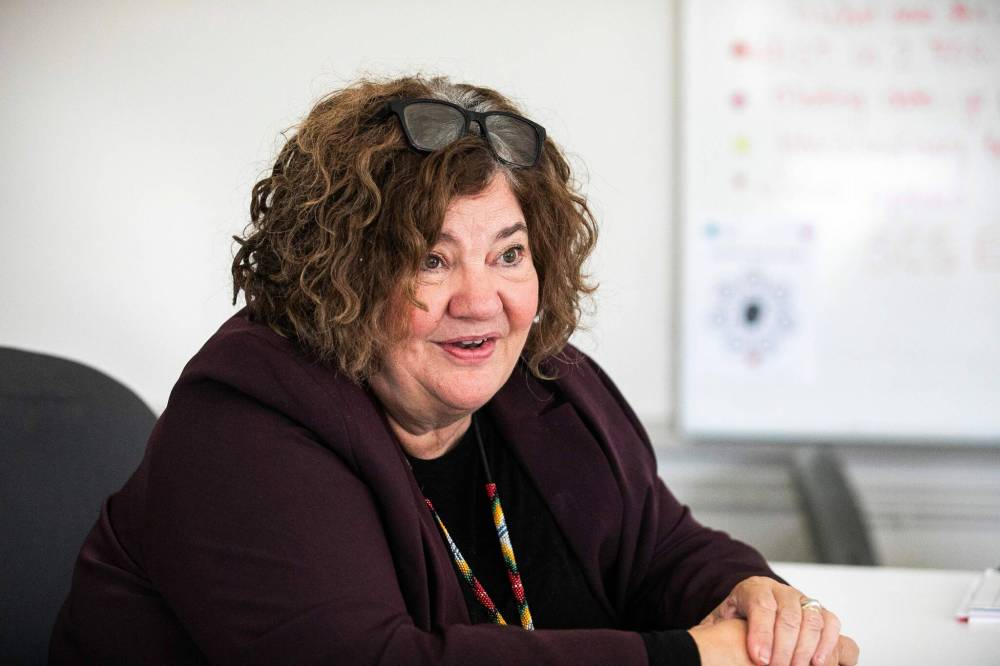
“When I think about what critical thinking is, it’s when a child thinks of something that’s novel to them,” explains Winnipeg School Division superintendent Matt Henderson. “When they’re actually creating something that’s new, and they are able to really look at a particular issue from a variety of domains, and then to be able to contribute to that larger conversation.
“That to me is critical thinking, as opposed to just like, ‘Oh, we’re looking at an article and talking about it.’”
On that end, new tools are on the way. This week, the province — in partnership with the Free Press and WSD — officially launched the first phase of the Media Literacy Resource. The new website, available to educators across Manitoba and all over the world at winnipegfreepress.com/education, aims to put more knowledge in teachers and students’ hands.
That includes resources, designed by teachers and for teachers, to engage students in developing media literacy. The centerpiece of the project is a student journalism kit, giving kids the templates and other resources to start their own newspaper — much like Earl Grey youth are already doing.
“The platform’s resources can spark full school-based journalism initiatives, or it could be sparking ideas and ways to support meaningful documentation of learning across subject areas in any classroom,” WSD assistant superintendent Shelley Warkentin said at the project’s launch. “There are all sorts of possibilities with this platform.”
Here, it’s worth emphasizing that the need for media literacy skills isn’t new.
“I think with every advent of new technology, we always think the next generation will be at a deficit,” Henderson says. “Whether that was with radio or television or the printing press, or whatever these seismic technological and media-based interventions have been, we’ve always sort of thought that this is going to have a negative impact on kids.”
There is one caveat to that thought: smartphones, particularly the social media they enable.
“That’s taken things to the next level,” he continues. “We’ve taken the most powerful device and given it to kids, adolescents and early adolescents. And we missed the boat to be able to slow down on that.”
It is, after all, not just newspapers and broadcast anymore. It’s TikTok and Instagram and new forms of social media yet to be created. It’s YouTube and podcasts; it’s streaming sites; it’s artificial intelligence and self-promoting influencers. People now take in more raw media information in an hour than our great-grandparents might have encountered in weeks.
“We are compelled to really teach kids deeply on how to navigate that, how to protect themselves, their own identity, how to be able to question what’s reliable and what’s not.”
That means boundless access to news from all over the world, to stories once less-covered, and voices unheard. On the flip side, it also means limitless access to dubious reporting, edited or outright faked images, and misrepresentations — some of it innocent mistakes, some of it malicious distortions by state or non-state actors.
At the same time, our ability to tell what is trustworthy is getting murkier. Earlier this month, a large, international study led by the BBC found that already-ubiquitous AI “assistants” make major errors in summaries of news content 45 per cent of the time, a finding that held steady regardless of language or region.
Meanwhile, a 2025 report by the Reuters Institute found that one in six people under the age of 25 use those assistants to get news, alongside — and increasingly in place of — traditional search engines.
So if youth coming of age in the 20th century had to learn how to think critically about the information they were getting on the nightly TV news broadcast, those coming of age today will need to peel back opaque layers of algorithmic manipulations, AI-generated content and shadowy disinformation campaigns to even find an original source — or, sometimes, the truth.
“I think we are compelled to really teach kids deeply on how to navigate that, how to protect themselves, their own identity, how to be able to question what’s reliable and what’s not,” Henderson says. “And to have children who are open to differing opinions that have solid foundations, to identify what is good journalism and what is not, I think is really important.”
A key part of that strategy is to create the right environment for open discussion. At Earl Grey, teachers stay with a class cohort as they move up grades; Godinez Goodman has taught many of her now-Grade 6 students for years. The trust that develops in that time helps: sometimes, her students approach her with questions about things they’ve seen.
“It’s really great, because when they have those questions, they see something on TikTok or they see something on the media, they’re like ‘Is that real?’” Godinez Goodman says. “Then we can have a conversation about it. They can ask me anything and then we can explore it together.”
At their age, she says it’s usually fairly innocent stuff: things like, “If you put a Mentos mint in a Pepsi bottle, does it actually explode that much?” But that’s where it should start, with age-appropriate curiosity that grows in step with the content and topics that are most relevant to them.
“We are huge advocates of looking for credible sources,” the teacher says. “So we are always researching everything, we come up with questions and then we want to answer them. I always tell them Google is just a search engine. It doesn’t give you the answer.”
Can dreaming up, and reporting, editing and creating their own media outlet help students to build some of those skills? At the least, it offers them direct, inside experience of how media gets made: how reporters decide on stories, how they check facts, how they look to interview a variety of people to better understand a topic.
Recently, Free Press investigative reporter Marsha McLeod spoke to the young staff of the Earl Grey Press; they were fascinated to learn about how the paper is made, about different roles in journalism — “I didn’t know about copy editors, like that they existed,” Isabel says — and about the similarities and differences between the two newspapers.
Some students have found themselves more attuned to the skills that go into factual reporting. Sebastian has begun to notice little variations in how different kids describe the same thing, or the same event: for instance, he was writing about a student who sells treats at recess, when he noted that some kids call the offering a “store,” while others call it a “canteen.”
“Most of the time, a lot of what we hear, we hear (the same thing) from multiple people,” he says. “But it’s very interesting to see how there are so many different sides to one story.”
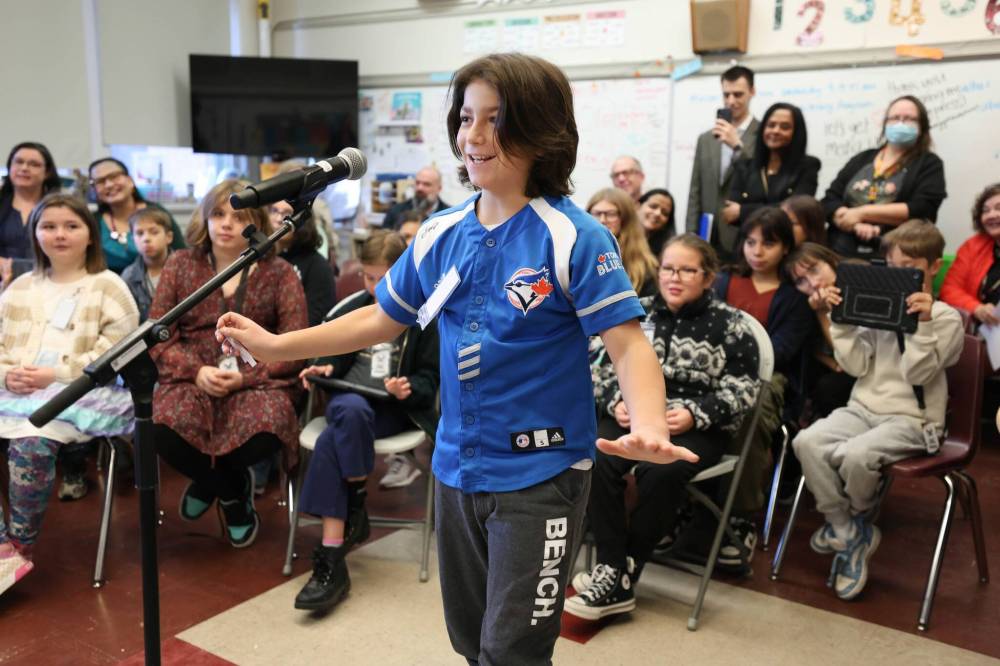
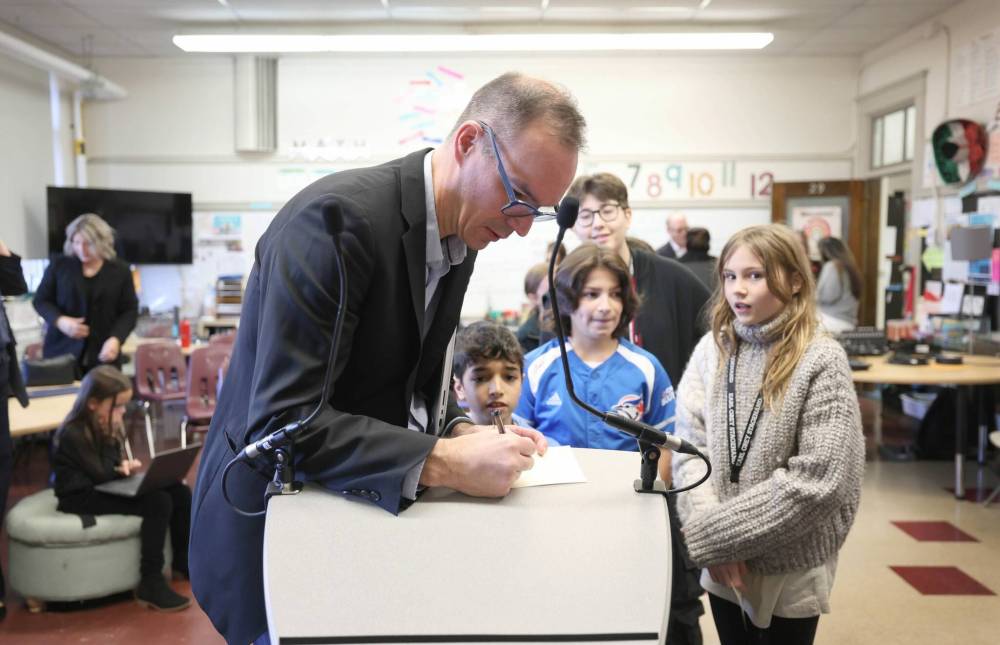
And on Wednesday, when delegates from the province, the Winnipeg School Division and the Free Press came to Earl Grey for a press conference to launch the Media Literacy Resource, many Earl Grey Press kids filled the seats. When it came time to ask questions, the young reporters jumped up for a chance to question officials.

Some of their queries were delightfully robust: one student asked Manitoba Education Minister Tracy Schmidt whether the province will expand bilingual education. (Earl Grey is the province’s only Spanish-English bilingual school.) Others asked Henderson about how the division will increase school safety and improve assistance for kids with learning disabilities.
That growing confidence in asking questions is a good sign. So is many students’ newfound interest in news stories. Before working on the Earl Grey Press, Isabel didn’t pay much attention to print media, she says. But since working on the school paper, she looks at the Free Press and other news reporting with more knowing eyes.
“It’s very interesting how much it’s changed,” she says. “Before, honestly, I didn’t find it that interesting because I just didn’t understand a lot of it. But now that I’m doing my own, I understand more of it and I find the stories a lot more interesting.”
For Godinez Goodman, watching the kids’ curiosity blossom has been a reward in itself.
“I want my kids to be critical thinkers, and I want them to know what that means,” she says. “I want them to think about what they’re hearing. I don’t want them to believe the first thing their best friend tells them. I want them to to think ‘Hmm, does that make sense?’
“Because those are the building blocks. That’s going to help them for all the good things and all the bad things that are in all of our journeys of life.”
The universality of these lessons — that’s a key point. Some Earl Grey Press students have expressed interest in becoming journalists when they grow up; but most won’t go into media work, and they don’t have to. The skills they are learning will serve them well in all parts of life: skills to question information, to synthesize and understand it and to communicate.
“I want my kids to be critical thinkers, and I want them to know what that means.”
That latter bit is key. Media is, above all, a place for communities to have discussions about themselves, whether that’s in a school, a city, a country or the whole world. To fill that role in a healthy way, the information must be true, fair and relevant to its target audience — and on that end, these young reporters are learning quick.
For instance, that regular Earl Grey Press feature, What’s In Your Lunch. It’s the kind of lighthearted column readers everywhere, no matter their age, tend to love. It’s a subtle community-builder, inviting people to connect with each other through our innate curiosity about the differences and similarities in their peers’ daily lives.
Heck, maybe the Free Press ought to borrow that idea.
“I mean, we don’t mind if you do,” Isabel says, laughing. “Saying we inspired the Free Press? Wow.”
melissa.martin@freepress.mb.ca

Melissa Martin
Reporter-at-large
Melissa Martin reports and opines for the Winnipeg Free Press.
Every piece of reporting Melissa produces is reviewed by an editing team before it is posted online or published in print — part of the Free Press‘s tradition, since 1872, of producing reliable independent journalism. Read more about Free Press’s history and mandate, and learn how our newsroom operates.
Our newsroom depends on a growing audience of readers to power our journalism. If you are not a paid reader, please consider becoming a subscriber.
Our newsroom depends on its audience of readers to power our journalism. Thank you for your support.
Related Articles
Students write next chapter in Free Press media literacy project







History
Updated on Friday, October 31, 2025 12:57 PM CDT: Cleans up cutlines




