The senior squeeze Increasingly precarious financial situation of many older Manitobans is accompanied by costs including social isolation and declining physical and mental health
Read this article for free:
or
Already have an account? Log in here »
To continue reading, please subscribe:

Digital Subscription
One year of digital access for only $205*
- Enjoy unlimited reading on winnipegfreepress.com
- Read the E-Edition, our digital replica newspaper
- Access News Break, our award-winning app
- Play interactive puzzles
*First annual payment billed as $205.00 + GST for one year. This annual subscription will automatically renew at $233.00 + GST every 52 weeks (10% off the regular annual price of $259.35). Offer available to new and qualified returning subscribers only. Cancel any time.
To continue reading, please subscribe:
Add Free Press access to your Brandon Sun subscription for only an additional
$1 for the first 4 weeks*
- Enjoy unlimited reading on winnipegfreepress.com
- Read the E-Edition, our digital replica newspaper
- Access News Break, our award-winning app
- Play interactive puzzles
*Your next Brandon Sun subscription payment will increase by $1.00 and you will be charged $17.95 plus GST for four weeks. After four weeks, your payment will increase to $24.95 plus GST every four weeks.
Read unlimited articles for free today:
or
Already have an account? Log in here »
Terisa Taylor is deemed a low-income senior, based on the federal tax bracket classification, but the numbers don’t take a full measure of the person.
At age 73, the St. Boniface resident relies on the three acronyms synonymous with aging — CPP, GIS and OAS — to make ends meet.
Manitoba Rental Assistance helps cover about half her apartment costs, but she gave up her car when it became clear it was no longer affordable.
Despite that, Taylor considers herself one of Manitoba’s more fortunate seniors since she’s able to continue to pursue a meaningful life.
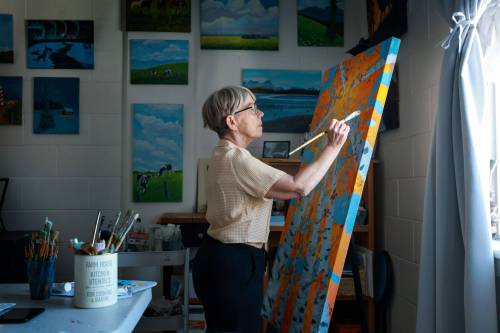
Taylor is a visual artist who has spent the past 50 years focusing primarily on landscape painting. In her 60s, she obtained certification to be a professional trainer, and today, can stand on one foot while doing bicep curls with weights. She completes a thorough workout involving stretching and exercising at least three times a week and is an avid walker.
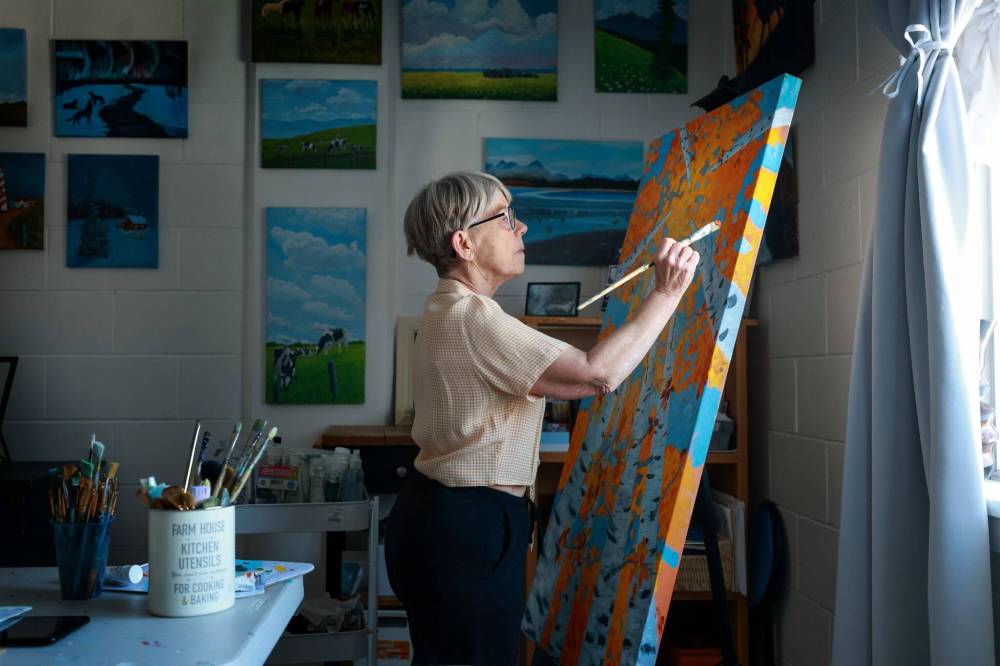
“Moving is everything,” Taylor says. “If you stop moving, you’re not going to last all that long and you’re not going to feel good.”
So, she keeps making active “deposits” that enrich her physical and emotional state, even though her actual bank account may pale in comparison to many of her peers’ savings.
“I hear people talk about going to other countries like it’s going to the store — winters in Mexico — like everybody does it,” Taylor says. “There are people that can’t even leave downtown.”
The federal government considers seniors living on an annual income of less than $22,488 as low-income. According to the University of Manitoba’s Centre on Aging, single adults 65 and older make up 13.8 per cent of Manitoba’s low-income earners.
That exacts a human cost — from substandard housing to a lack of nutrition, and from mental and emotional health issues, such as isolation, loneliness, anxiety and depression, to physical health concerns.
Unless steps are taken, the issue will only get worse with the number of adults over 55 years of age in Manitoba expected to grow to 520,000 by 2041, a 30 per cent increase from 2021.
“We often assume all older adults are rolling in retirement income, and this assumption hides the very real variation that exists in older adults’ financial situations,” says Laura Funk, a sociology professor at the University of Manitoba.
“This variation reflects the late-life effects of social inequality experienced over a lifetime.”
Living on a fixed income — from the Canadian Pension Plan, Guaranteed Income Supplement and Old Age Security — Taylor watches her money closely. But she does allow herself a daily treat.
“I do go out for coffee a lot — I have to — for mental health,” she says.
“I have to have people around me. I spend $5 per day on buying coffee. I used to feel guilty about that. This is an investment, the privilege of being in a restaurant and being surrounded by people. I talk to people. I go to Le Croissant. The staff knows me; they spoil me, they know what I like.”
It’s a small investment into Taylor’s well-being since the feeling of loneliness, something many seniors know all too well, is inextricably linked to living in poverty.
“I spend $5 per day on buying coffee. I used to feel guilty about that.”
Almost one in five Canadian seniors aged 65 and older reported experiencing loneliness in 2019 and 2020, with women — at 23 per cent — more likely to report being lonely than men (15 per cent), according to Statistics Canada. For seniors in the lowest income group, the rate was higher, at 25 per cent.
The National Institute on Aging has called isolation and loneliness among older Canadians an epidemic, while a 2023 paper published in the journal Nature Human Behaviour indicated people who experienced social isolation had a 32 per cent higher risk of dying early from any cause compared with those who weren’t socially isolated.
“Loneliness is awful,” Taylor says. “Lots of seniors are in their own cubicles. We need to be forming communities, doing things together, some type of work. We are living contrary to what we are meant to live.”
In more communal communities, Taylor says, seniors are revered and sought after for their wisdom.
“We are all meant to live as an entire family together, where seniors are and feel valued. They can usually at least hold a baby or shell some peas — they can still be of value. We are meant to be elders spreading our wisdom, but instead we are not valued — we are seen as a burden.”
The U of M’s Funk echoes that sentiment.
“Low-income renters are less likely to be able to age in place, or to age well in place,” Funk says. “Those with physical or mental challenges, or who live in unsafe housing, tend to be more isolated, however, and so we don’t often see what they’re going through.
“This is made that much worse by our public tendency to subtly blame or shame people for using limited public resources, while praising others who are independent of services.”
Canadian Mental Health Association CEO Teresa Dukes says seniors’ mental health is a significant issue that tends to be understated or under-reported.
“Living in poverty, where you have those intersectional barriers begin to stack up, puts you at risk of mental health conditions and poor quality of life,” Dukes says of the correlation between mental well-being and finances.
“If one is worse, it makes the other one worse — they reinforce each other in a negative way.”
However, there are ways to break through some of the isolation.
“Volunteering is good for a lot of people,” Dukes says, pointing to Age and Opportunity support services for older adults as a starting point.
Senior years are often marked by transition — a loss of purpose following retirement, an erosion of independence, grief from losing a spouse, lack of connection due to having fewer friends, more health challenges — all of which results in a sense of vulnerability that can contribute to not wanting to go out and connect with others, Dukes says.
Programming through the CMHA, such as the Well-being Learning Centre, offers opportunities for connection and a range of supports, she says. “There are two things we focus on: helping establish relationships with others, and overcoming mental hurdles.”
In the fall of 2022, community leaders Lucille Bruce and Joanne Mason formed the Indigenous Seniors Research Committee in order to understand the housing and additional support needs of Indigenous seniors in Winnipeg.
The resulting paper, Minosin Kikiwa (A Good Home), found a disproportionate number of Indigenous seniors face unstable living conditions, from experiencing homelessness to living in shelters and rooming houses, and noted the inappropriateness of existing housing models, which are based on western views that look at aging as a disease or a problem and tends to reduce the quality of life for seniors.
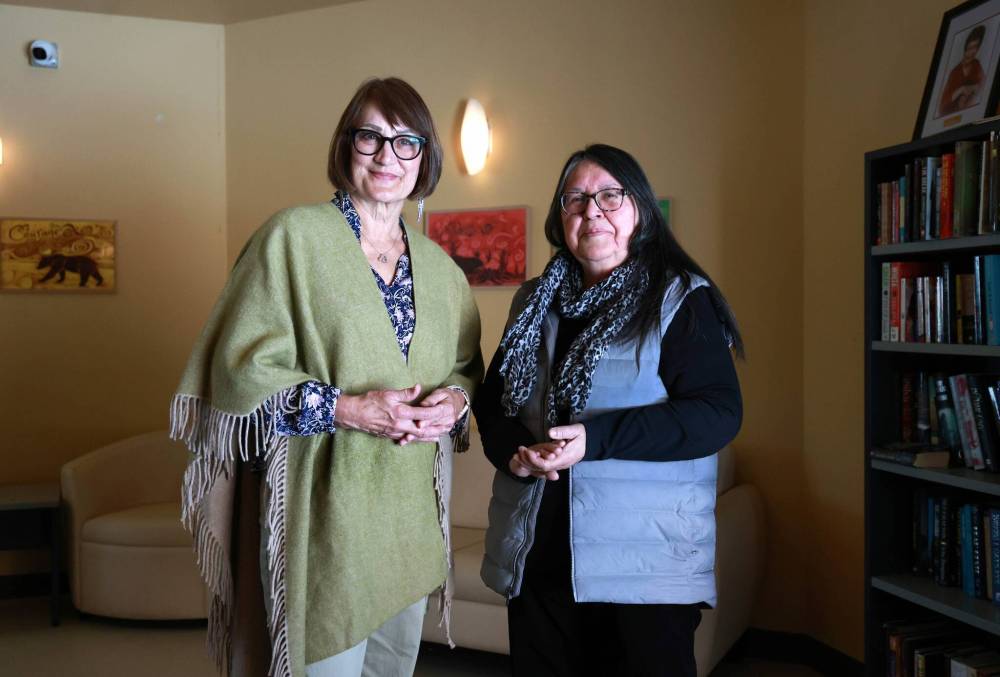
“The legacy of colonialism continues to impact our community, resulting in many of our aging adults and seniors struggling to secure rental accommodations in safe neighbourhoods,” says Mason, a 71-year-old mother, grandmother and great-grandmother who takes pride in her Métis heritage and as a member of Peguis First Nation.
“Consequently, many are forced to reside in substandard, dilapidated housing…. The cumulative effect of these challenges is a significant impact on our Indigenous peoples’ physical and mental health, with many experiencing health issues at an earlier age.”
Mason says an additional 10,000 affordable housing units are urgently needed in the city, with a focus on units specifically designed for Indigenous seniors that incorporate cultural values that allow for extended family and community connections.
“In our golden years, our Indigenous population should not have to face sleeping on the floor of shelters.”
“As of 2026, a severe shortage of available housing units exists, particularly in the realm of affordable housing,” Mason says. “This is a critical issue that needs to be addressed, especially for our Indigenous aging adult population, who require advocate housing that caters to their specific needs.
“In our golden years, our Indigenous population should not have to face sleeping on the floor of shelters, or in dilapidated housing or couch surfing.”
Val Brown has two children, four grandchildren and one great-grandchild. She’s held a lot of jobs in her lifetime — candy factory worker, telephone operator, a support worker in children’s shelters and a nurse’s aide at a hospital.
She loves live music and any kind of art and colour. Known for her vibrant tie-dyed shirts and accessories, the 75-year-old embodies the peace and love symbolism she regularly wears.
The West End resident lives in a co-op apartment, which she says would not be affordable if it wasn’t subsidized.
Brown still considers herself fortunate, as she has the daily support of her daughter, Christie Dawn, who lives in the same building. Together, they have weekly dinners and movie nights and they do what they can to stretch their budgets.
They try to eat food that’s fresh and healthier, though is often more costly, and keep an eye out for discounts and sales. They’re also members in the Good Food Club, which distributes locally produced food and coupons for neighbourhood markets in exchange for volunteer hours.
“I’m watching the prices,” Brown says.
When it comes to buying food, Taylor also considers herself fortunate, having access either by bus or on foot to two major grocery stores in her neighbourhood. But the cost is eating away at her fixed income. A grocery bill that once totalled $300 a month has now climbed to $450.
“The coffee I buy went up a lot. The package got smaller. Where is the integrity? It seems like everybody is doing that — charging more, giving less. I definitely don’t buy the things I used to buy,” Taylor says.
The struggle is more pronounced for others. According to Harvest Manitoba, the province’s largest food bank, 14 per cent of its clients are between the ages of 56 and 65, while four per cent are 66 and older.
With rising food prices, fixed incomes are being squeezed further, Funk says. And there are many other challenges for seniors to getting food on the tables, from having limited physical mobility, to no access to a vehicle and no one to help them shop for groceries, to paying for delivery service that was provided for free by many stores prior to the COVID-19 pandemic.
“This is a really tough situation,” Funk says.
“I am a huge advocate for (guaranteed) basic income. Then people could focus on other things other than surviving.”
Because Brown and her daughter live in the same building and share their resources, they are able to overcome many of those challenges.
“I definitely couldn’t be doing this without her,” Brown says, adding that her daughter was also able to transport her to cancer treatments and medical appointments.
Brown maintains an active lifestyle, enjoying walks in the nearby Wolseley neighbourhood both with her daughter and on her own. Taking care of herself is important.
And it helps that her daughter runs Daytripper, a day-trip service that allows women over 40 to enjoy nature and explore different areas of the province.
“I enjoy hikes, that’s my health fix,” Brown says. “I love being in nature. I go on as many day trips as I’m able to.”
Dawn, 47, is also a low-income earner who understands what it’s like to live below the poverty line.
“It’s a constant struggle for me,” she says. “I am a huge advocate for (guaranteed) basic income. Then people could focus on other things other than surviving. Nobody should ever have to worry about having a roof over their head or food to eat.
“Ageism is very real,” she says. “I realize how lonely some people are, every day. They have nobody to talk to. If they’re alone, they don’t have anyone to advocate for them.”
Multiple seniors, who did not want to be identified for this story, recounted stories of hardship — from being evicted from unsanitary living conditions to having mobility issues and from no longer relying on the transit system following its overhaul last year to living alone. None of which surprised Funk.
“Decades of eroding public services in Canada are having disproportionate impacts on lower-income older adults and their families,” Funk says.
Not having internet service was also identified as a significant issue, resulting in limited access to information and services and not having the ability to communicate by text or email. But even for tech-savvy seniors, trying to navigate the online world, such as accessing the Canada Dental Plan or filing tax forms, can be overwhelming.
These issues are top of mind for Manitoba’s new seniors’ advocate, a role created following the ongoing crisis in personal care homes during the pandemic. Leigh Anne Caron began the job in November in which she’ll examine individual complaints as well as systemic issues facing seniors.
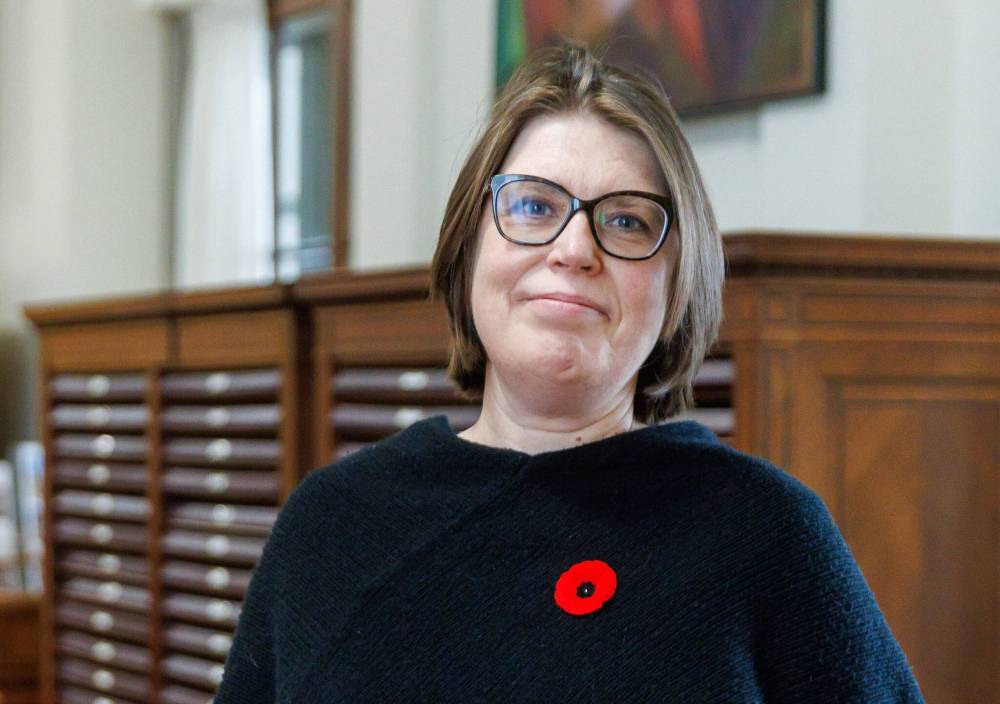
Caron says one of her biggest concerns is the disparity in access to services for seniors living in rural communities. While there are good supports available, notably provided by senior-resource co-ordinators, they are limited to the geographic area they serve and in their ability to keep pace with demand, she says.
“Senior-resource co-ordinators are an exceptional resource for communities and there are co-ordinators throughout the province, but the funding for them is limited and the further out from Winnipeg you go, the number of resource co-ordinators is small,” Caron says.
That urban-rural disparity is reflected in housing options, she adds. When a senior is able to stay in their home community and be close to family, the cost of living is more manageable, she says, but in many cases housing in rural and remote communities is lacking.
“Many seniors who need housing could live very well with minimal supports, but that type of housing is not available in many communities.”
“There needs to be more than long-term care available, as many seniors who need housing could live very well with minimal supports, but that type of housing is not available in many communities,” she says.
“Because there is no seniors’ housing in their communities and then when they move to a town or city, the cost of living increases.”
And those issues are only more pronounced for people with low incomes.
“Health and social-care systems and services are increasingly fragmented in Canada, creating navigation challenges for the public,” Funk says. “Highly educated, wealthy people are often more advantaged in being able to find and access different kinds of services and benefits, and in advocating for themselves and their families with service providers.”
Her St. Boniface apartment is small — two bachelor suites that were combined into one, but Taylor says she’s OK with that.
The stairwells could use a deep cleaning, but it’s not filthy. There isn’t a balcony or a yard and she regularly hears sirens because she lives close to St. Boniface Hospital.
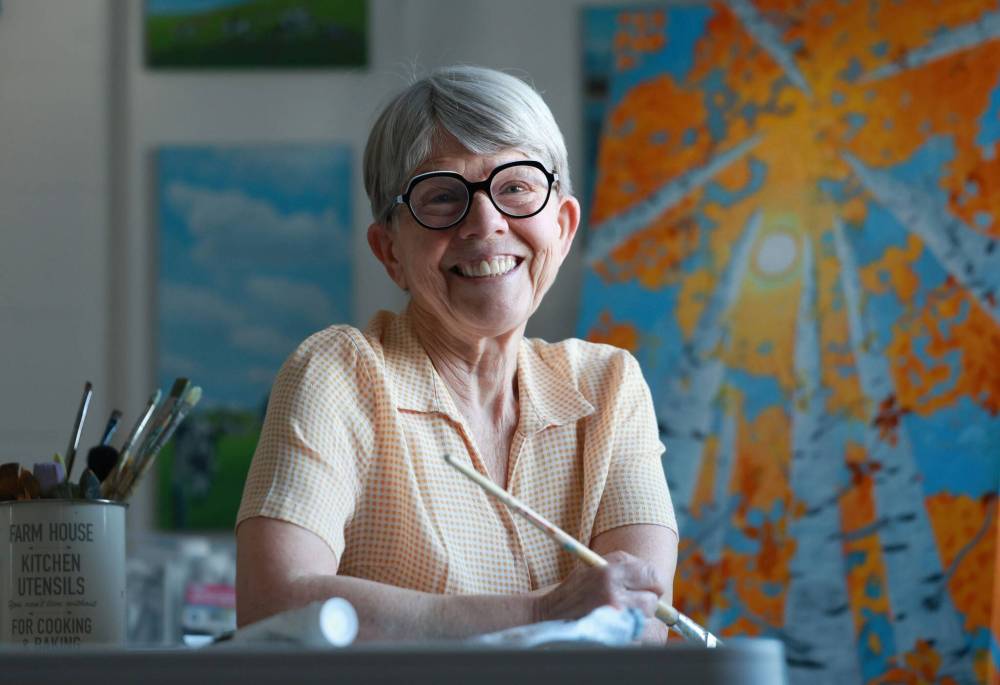
“I have accepted this because I know that the costs of living, of rent, are high,” she says. “I feel fortunate that I can even have this.”
While Taylor says she manages her money well, she still lives month-to-month. Yet despite the financial challenges, Taylor still dreams of pursuing other creative endeavours, maybe even writing a book.
“I feel like we need to find reasons to be excited about our life. It doesn’t matter how old we are.”
“I feel like we need to find reasons to be excited about our life,” she says. “It doesn’t matter how old we are. If all we hear is ‘don’t do this because you might fall, watch out for that’ — it’s discouraging and it makes us think there’s nothing to live for except getting older and getting decrepit. We are getting closer to death every day, (but) we can keep up our quality of life until the end.
“Old age doesn’t have to be horrible, it can be beautiful.”