Supervised drug consumption site will be grounded in culture, compassion: facility’s leader
Read this article for free:
or
Already have an account? Log in here »
To continue reading, please subscribe:
Digital Subscription
One year of digital access for only $1.44 a week*
- Enjoy unlimited reading on winnipegfreepress.com
- Read the E-Edition, our digital replica newspaper
- Access News Break, our award-winning app
- Play interactive puzzles
*Billed as $5.77 plus GST every four weeks. After 52 weeks, price increases to the regular rate of $19.95 plus GST every four weeks. Offer available to new and qualified returning subscribers only. Cancel any time.
To continue reading, please subscribe:
Add Free Press access to your Brandon Sun subscription for only an additional
$1 for the first 4 weeks*
- Enjoy unlimited reading on winnipegfreepress.com
- Read the E-Edition, our digital replica newspaper
- Access News Break, our award-winning app
- Play interactive puzzles
*Your next Brandon Sun subscription payment will increase by $1.00 and you will be charged $17.95 plus GST for four weeks. After four weeks, your payment will increase to $24.95 plus GST every four weeks.
Read unlimited articles for free today:
or
Already have an account? Log in here »
Hey there, time traveller!
This article was published 17/04/2026 (192 days ago), so information in it may no longer be current.
Winnipeg’s first supervised consumption site is being designed as a culturally grounded health space where people struggling with addiction will be met with familiarity, dignity and support from the moment they enter.
“When somebody walks through a door and they see people that look like themselves, that automatically gives them a sense that they’re in a space with people like themselves,” said Aboriginal Health and Wellness Centre CEO Monica Cyr.
“They’re amongst their own, and that’s the way it should be.”
That philosophy — paired with the city’s disproportionately Indigenous population affected by substance-use disorders — will guide daily operations at 366 Henry Ave. when the proposed site is approved by Health Canada.
There, people will be able to use their own drugs under supervision to prevent overdoses, access drug-testing services, and connect to treatment options and social supports.
’Role made sense’
Monica Cyr, a Red River Métis woman, has spent eight years with the Aboriginal Health and Wellness Centre. She earned her master’s degree in food and nutritional sciences from the University of Manitoba in 2018 and is now completing a PhD in community health sciences, with plans to defend her thesis later this year.
Monica Cyr, a Red River Métis woman, has spent eight years with the Aboriginal Health and Wellness Centre. She earned her master’s degree in food and nutritional sciences from the University of Manitoba in 2018 and is now completing a PhD in community health sciences, with plans to defend her thesis later this year.
Her rise to CEO followed a steady progression through the organization. After becoming director of primary health in 2018, she moved into research leadership, helped establish Manitoba and Canada’s first Indigenous-led rapid access to addiction medicine clinic and led the launch of a mobile health clinic. Most recently, she served as senior director of clinical operations and research.
“Stepping into this role made sense because of my historical context, my understanding, my deep, staunch advocacy on Indigenous determination and sovereignty,” she said. “It became a natural progression.”
— Scott Billeck
Cyr, newly appointed as AHWC’s CEO, is leading the launch of Canada’s first Indigenous-led supervised consumption site.
She believes the model is the right response to a complex and deeply human issue.
In an exclusive interview with the Free Press, Cyr described what someone can expect from the moment they walk through the facility’s front doors , including some experiences that can already be had at AHWC’s nearby offices at 181 Higgins Ave.
“When you come into our doors, It would not be uncommon that you smell medicine burning,” Cyr said as a sweet, burning scent lingered in the air earlier this week. “There’s all different types of medicines that we burn for various reasons.”
Those sensory cues are intentional. Cyr said sacred practices such as smudging, the use of traditional languages and the wearing of regalia are central to creating a sense of familiarity and belonging.
Staff are trained from the outset to respect cultural protocols, including proper pronunciation and engagement.
That same philosophy extends to how the site will be run. Policies are rooted in tolerance and understanding, a deliberate shift from more rigid approaches elsewhere.
“People are struggling with homelessness, people who are struggling with poly-substance use disorder, sexual assaults,” Cyr said. “If they’re having a bad day and they come in and they’re using inappropriate language, the tolerance threshold, in many, many spaces is, ‘You’re out.’”
At the supervised consumption site, staff will be trained to de-escalate rather than exclude, recognizing the layers of trauma many clients carry.
RUTH BONNEVILLE / FREE PRESS Monica Cyr said sacred practices such as smudging, the use of traditional languages and the wearing of regalia are central to creating a sense of familiarity and belonging.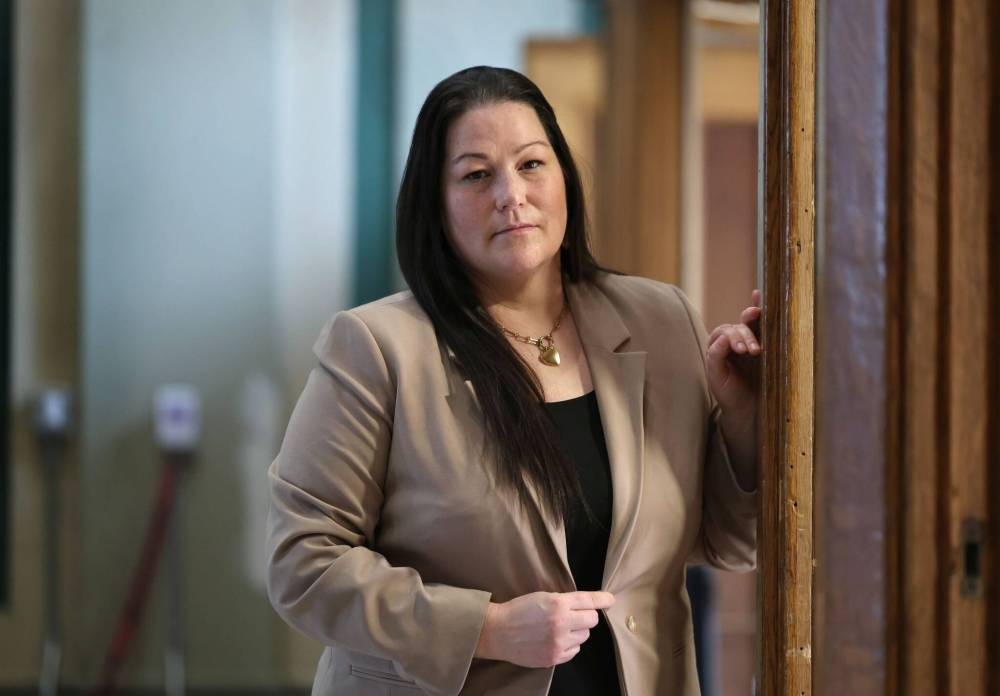
“At a time when we are so desperately leading community members to be connected to these very important services, whether health care, social services, justice, education, what have you, we can’t be turning people away,” she said.
“What we need to do is actually train our people in terms of understanding what are some of these layers that people are actually managing, so that we can manage them appropriately and not take them personally, or take offence to them.”
Cyr is working to shift the narrative around a project that has drawn charged political debate, urging critics to give the Indigenous-led model a chance. She believes it offers a framework that can succeed where others have struggled, and one that can be duplicated.
“The whole premise here is to support people, making sure they don’t overdose, and try to begin to create those linkages to detox treatment and recovery,” she said. “And so, we will become a point of contact to allow for that because we are a health-care operation.”
The model integrates many of the 14 existing AHWC programs and services. The site will allow up to 12 people inside at a time, with a staffing ratio of one nurse for every six clients. It will serve adults over the age of 18; youth who arrive will be redirected to appropriate supports. An informed judgment call will be made for people who show up without identification, Cyr said.
The facility will have separate entrances and exits to manage flow. Upon arrival, clients will undergo an initial screening, including questions about how they travelled there — information used to help plan their safe departure.
MIKAELA MACKENZIE / FREE PRESS The future supervised drug-consumption site location at 366 Henry Ave. 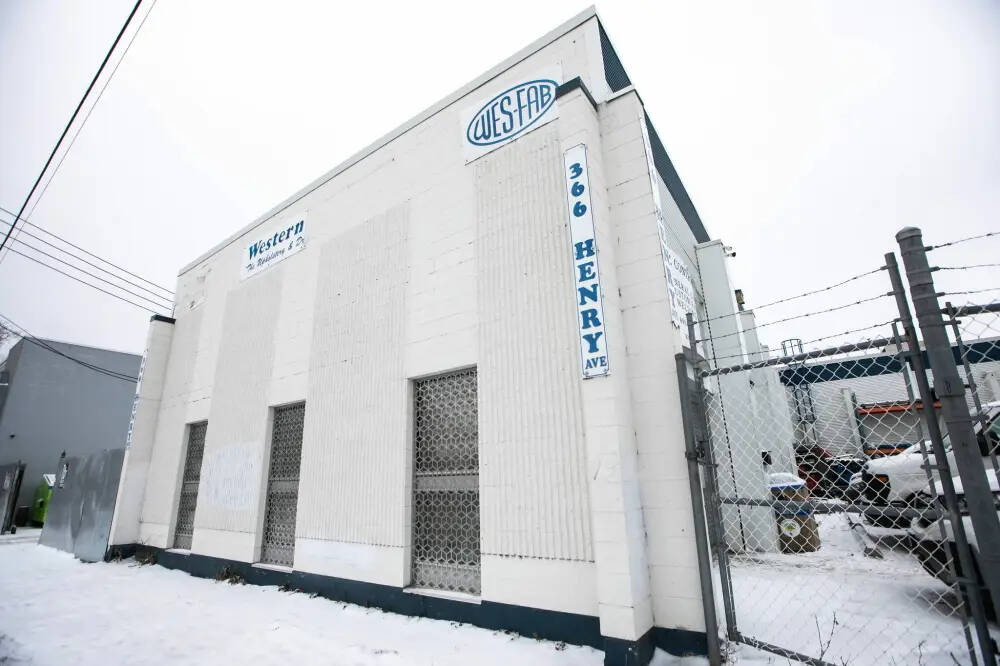
Clients will be able to choose how they use substances — either by inhalation or injection — in a supervised setting that also offers optional drug testing, crisis support, peer workers and cultural services.
After intake, individuals will be directed to designated spaces based on their method of use, such as an inhalation tent at the mobile unit expected to begin operation initially or, once the federally approved permanent site opens, dedicated inhalation and injection rooms.
Sterile equipment will be provided, including syringes and other necessary supplies.
Due to space limits, the mobile clinic will restrict injections to one or two people at a time, while the permanent facility will include larger, specialized rooms with medical-grade ventilation and set nurse-to-client ratios.
Testing for sexually transmitted and blood-borne infections is expected to be offered at the permanent site.
Clients arriving by car will be strongly encouraged to use a provided taxi slip rather than drive, and any overdoses will be handled according to established response protocols.
“All staff have extensive training in OD response and we have clinical staff to manage this,” Cyr said. “We respect the dignity and privacy of our relatives and will take measures to vacate spaces where responses are required.”

Cyr said the benefits extend beyond individual care — from culturally grounded compassion to easing pressure on emergency services by reversing overdoses on-site, reducing ambulance calls and emergency-room visits and the safety of front-line workers.
She emphasizes the model is inclusive, despite its Indigenous leadership.
“The SCS is a health-care service, with trained clinicians and professionals,” she said.
Cyr also pointed to research suggesting supervised consumption sites do not significantly impact neighbourhood crime rates, while clearly demonstrating their ability to save lives.
scott.billeck@freepress.mb.ca

Scott Billeck is a general assignment reporter for the Free Press. A Creative Communications graduate from Red River College, Scott has more than a decade’s worth of experience covering hockey, football and global pandemics. He joined the Free Press in 2024. Read more about Scott.
Every piece of reporting Scott produces is reviewed by an editing team before it is posted online or published in print — part of the Free Press‘s tradition, since 1872, of producing reliable independent journalism. Read more about Free Press’s history and mandate, and learn how our newsroom operates.
Our newsroom depends on a growing audience of readers to power our journalism. If you are not a paid reader, please consider becoming a subscriber.
Our newsroom depends on its audience of readers to power our journalism. Thank you for your support.
Related Articles
Supervised drug-site operators commit to neighbourhood with transparency, security