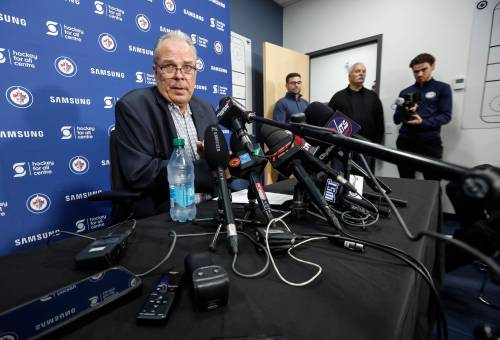
Grief, hope and justice; hundreds march to honour missing, murdered on Red Dress Day
Read this article for free:
or
Already have an account? Log in here »
To continue reading, please subscribe:

Digital Subscription
One year of digital access for only $205*
- Enjoy unlimited reading on winnipegfreepress.com
- Read the E-Edition, our digital replica newspaper
- Access News Break, our award-winning app
- Play interactive puzzles
*First annual payment billed as $205.00 + GST for one year. This annual subscription will automatically renew at $233.00 + GST every 52 weeks (10% off the regular annual price of $259.35). Offer available to new and qualified returning subscribers only. Cancel any time.
To continue reading, please subscribe:
Add Free Press access to your Brandon Sun subscription for only an additional
$1 for the first 4 weeks*
- Enjoy unlimited reading on winnipegfreepress.com
- Read the E-Edition, our digital replica newspaper
- Access News Break, our award-winning app
- Play interactive puzzles
*Your next Brandon Sun subscription payment will increase by $1.00 and you will be charged $17.95 plus GST for four weeks. After four weeks, your payment will increase to $24.95 plus GST every four weeks.
Read unlimited articles for free today:
or
Already have an account? Log in here »
Housing, Addictions and Homelessness Minister Bernadette Smith was overcome by emotion in the Manitoba legislature Tuesday as she spoke about her family’s search for her sister, Claudette Osborne-Tyo, who vanished in 2008 and has never been found.
With family members watching online, Smith remembered how her stepmother, Brenda Osborne, never gave up hope — continuing the search until her death last November.
Osborne-Tyo was among the more than 400 missing and murdered Indigenous women, girls and two-spirit people in Manitoba honoured Tuesday as part of Red Dress Day.
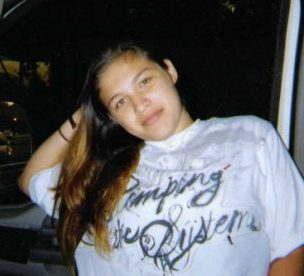
“(Osborne) was a pillar of strength, not only for our family, but for a whole movement of missing and murdered families searching for justice,” Smith said, fighting back tears. “Her life was defined by a singular, fierce motion—finding her daughter.”
Osborne-Tyo went missing from Winnipeg’s North End on July, 25, 2008.
“Brenda never stopped searching,” Smith said. “She walked thousands of miles with Walk for Justice across Canada. She led her own courageous walks across Manitoba, pleading for answers every mother deserves.”
She added of her stepmother: “you took the heaviest of burdens and turned it into a beacon of light and hope.”
The annual day of remembrance began in 2010, when Métis artist Jaime Black created an installation at the University of Winnipeg, hanging more than 100 red dresses to raise awareness — an image that has since become a powerful national symbol.
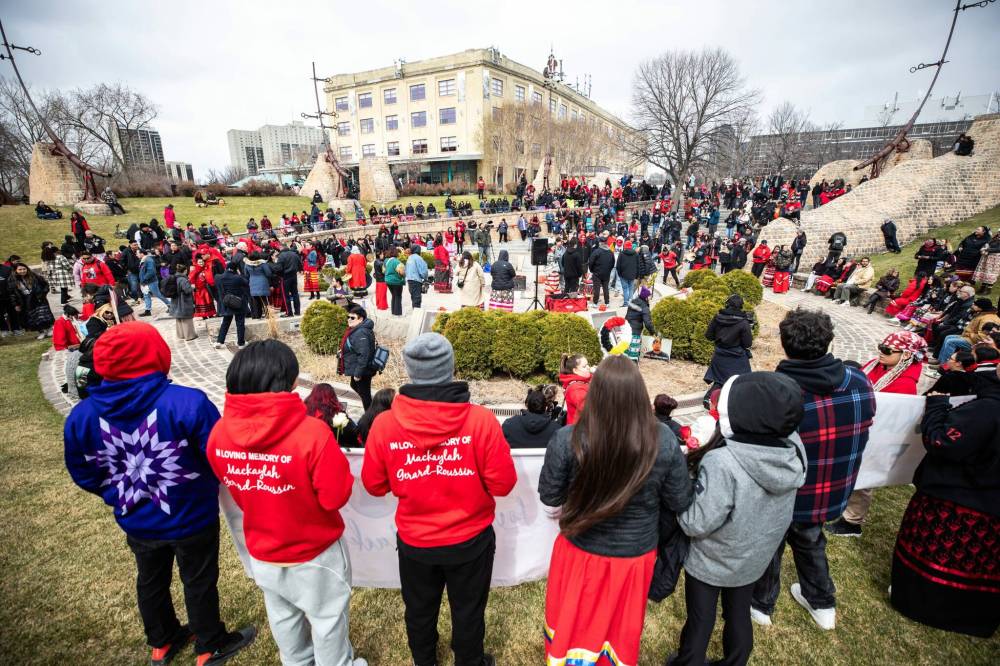
On Tuesday morning, Smith joined hundreds who marched east from the Winnipeg Law Courts to Oodena Celebration Circle at The Forks, where grief and remembrance mingled with hope and resilience.
“We love you, Mackaylah Gerard-Roussin,” the crowd yelled as they marched, celebrating the guilty verdict for Josh Benoit on a first-degree murder charge in Gerard-Roussin’s 2022 slaying that came down earlier in the day.
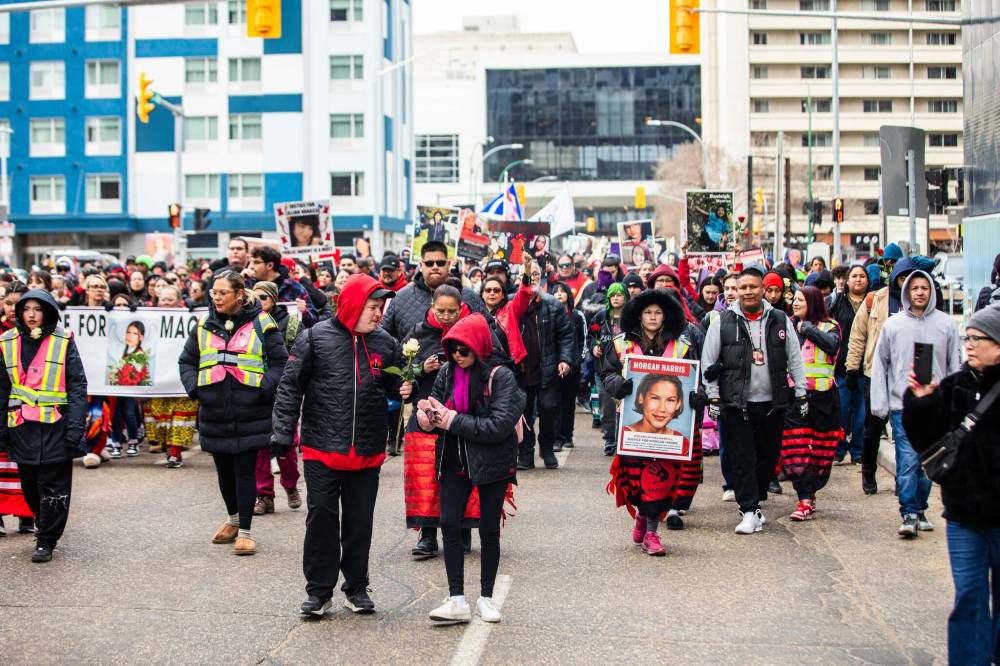
What began as a gathering of about 100 outside the Law Courts quickly swelled into the hundreds, as marchers clad in red strode east along York Avenue, turned onto Israel Asper Way past the Canadian Museum for Human Rights and arrived at the amphitheatre for ceremony and remembrance.
“I feel there’s a unified spirit,” said Geraldine (Gramma) Shingoose, a local elder and residential school survivor who offered the opening prayer. “We’re all here in solidarity with all of the families. They want to bring their daughters home, some of them. Others are seeking justice.”
For the family of Gerard-Roussin, that justice had come just hours earlier. Her parents, Melissa Roussin and Kirby Gerard, addressed the crowd.
“I wish I could find the words to make everything better for everybody else,” Gerard said. “With my daughter’s last breath, I’m trying to live a better life, make better decisions.”
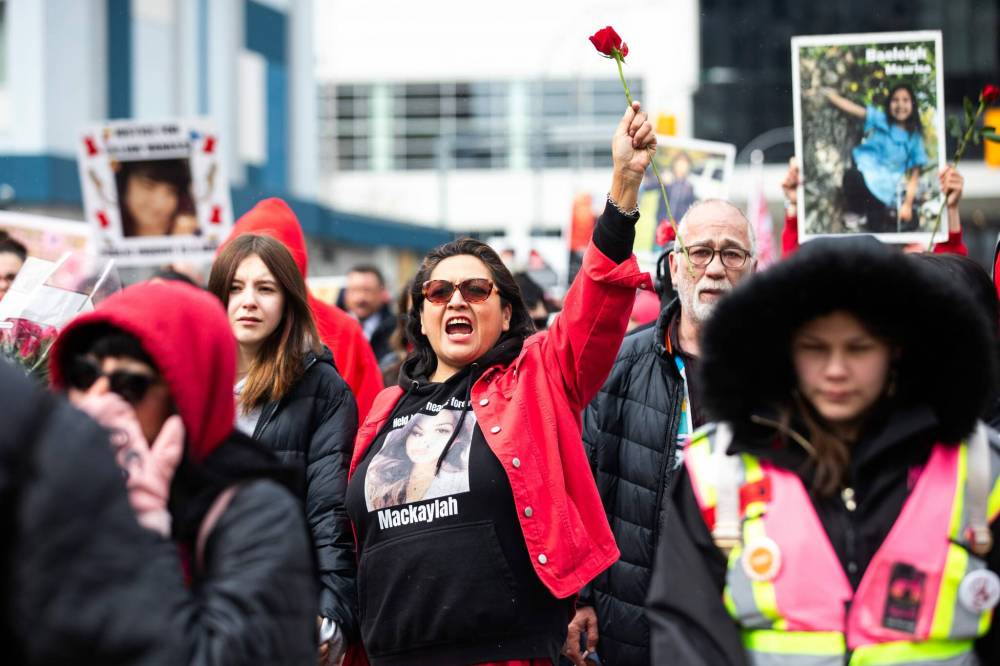
Around the gathering, dozens of signs leaned against the concrete circle—each one carrying the weight of a name, a photo and a family still searching, some for decades.
Melissa Robinson, director of the Assembly of Manitoba Chiefs’ Missing and Murdered First Nation Peoples Unit, said May 5 may feel like an ordinary day to some, but for many others, it carries profound significance.
“They have to walk with this grief every single day, something that families live with and carry and have to wonder,” she said. “It’s a hard day. It’s a lot to take in.”
Robinson is the cousin of Morgan Harris, one of four Indigenous women murdered by serial killer Jeremy Skibicki. Harris’s remains were found at Prairie Green Landfill north of the city last year. The remains of Marcedes Myran, another of Skibicki’s victims, were also found at the landfill, where search efforts were dismantled last week by the provincial government.
“This is why we come together,” Robinson said, “to show these families that they’re not alone, that we will be there to support them every step of the way.”
William Hudson, whose daughter Eishia Hudson was shot and killed by a Winnipeg police officer in April 2020 following a pursuit, called Tuesday a “good day.”
“Justice for Eishia, justice for all,” he said, drawing cheers from the crowd. A provincial inquest into Hudson’s death is ongoing.
Gene Bowers, chief of the Winnipeg Police Service, acknowledged the challenges of achieving justice.
“We can’t do this on our own,” he said. “We have to work with community. That is something that I’ve been able to do, and I’m honoured to be allowed today to speak.”
Robinson said Bowers has been “amazing” since being named successor to Danny Smyth in March 2025.
“He immediately reached out to the grassroots people, asking, ‘What can I do, what can we do to better serve the community, to better serve First Nations?’” Robinson said. “That was a huge move on his part, for him to reach out to us, because we heard crickets under the last police chief. Chief Bowers wants change, and we’re seeing it happen.”
scott.billeck@freepress.mb.ca


Scott Billeck is a general assignment reporter for the Free Press. A Creative Communications graduate from Red River College, Scott has more than a decade’s worth of experience covering hockey, football and global pandemics. He joined the Free Press in 2024. Read more about Scott.
Every piece of reporting Scott produces is reviewed by an editing team before it is posted online or published in print — part of the Free Press‘s tradition, since 1872, of producing reliable independent journalism. Read more about Free Press’s history and mandate, and learn how our newsroom operates.
Our newsroom depends on a growing audience of readers to power our journalism. If you are not a paid reader, please consider becoming a subscriber.
Our newsroom depends on its audience of readers to power our journalism. Thank you for your support.
Related Articles
Manitoba man, 24, found guilty on national Red Dress Day of first-degree murder in slaying of Indigenous woman