Gone with the wind? Westman residents fear power project’s breeze-harnessing turbines will sully their idyllic landscape
Read this article for free:
or
Already have an account? Log in here »
To continue reading, please subscribe:

Digital Subscription
One year of digital access for only $205*
- Enjoy unlimited reading on winnipegfreepress.com
- Read the E-Edition, our digital replica newspaper
- Access News Break, our award-winning app
- Play interactive puzzles
*First annual payment billed as $205.00 + GST for one year. This annual subscription will automatically renew at $233.00 + GST every 52 weeks (10% off the regular annual price of $259.35). Offer available to new and qualified returning subscribers only. Cancel any time.
To continue reading, please subscribe:
Add Free Press access to your Brandon Sun subscription for only an additional
$1 for the first 4 weeks*
- Enjoy unlimited reading on winnipegfreepress.com
- Read the E-Edition, our digital replica newspaper
- Access News Break, our award-winning app
- Play interactive puzzles
*Your next Brandon Sun subscription payment will increase by $1.00 and you will be charged $17.95 plus GST for four weeks. After four weeks, your payment will increase to $24.95 plus GST every four weeks.
Read unlimited articles for free today:
or
Already have an account? Log in here »
POLONIA — Leonard Kaspick can list just about every household in the valley.
“There’s someone living right across the northeast, someone living behind here, about a quarter mile there’s a house there, then a half mile there’s another house there, I’m here, and then on top of the hill there’s someone else there,” he says, standing in the heart of the hamlet — a community hall just off the main drag.
Besides the hall and the smattering of homes, there’s a historic (though out-of-commission) church next door and a single general store further down the road.
“There’s less people here now than there was in 1885,” Kaspick, 83, jokes as he wraps up a condensed history of the western-Manitoba community.
“The people that come here like the solitude and the beauty of the area.”
CHERYL HNATIUK / FREE PRESS The landscape around the Village of Polonia is rolling hills — and the area is one of the windiest places in southern Manitoba.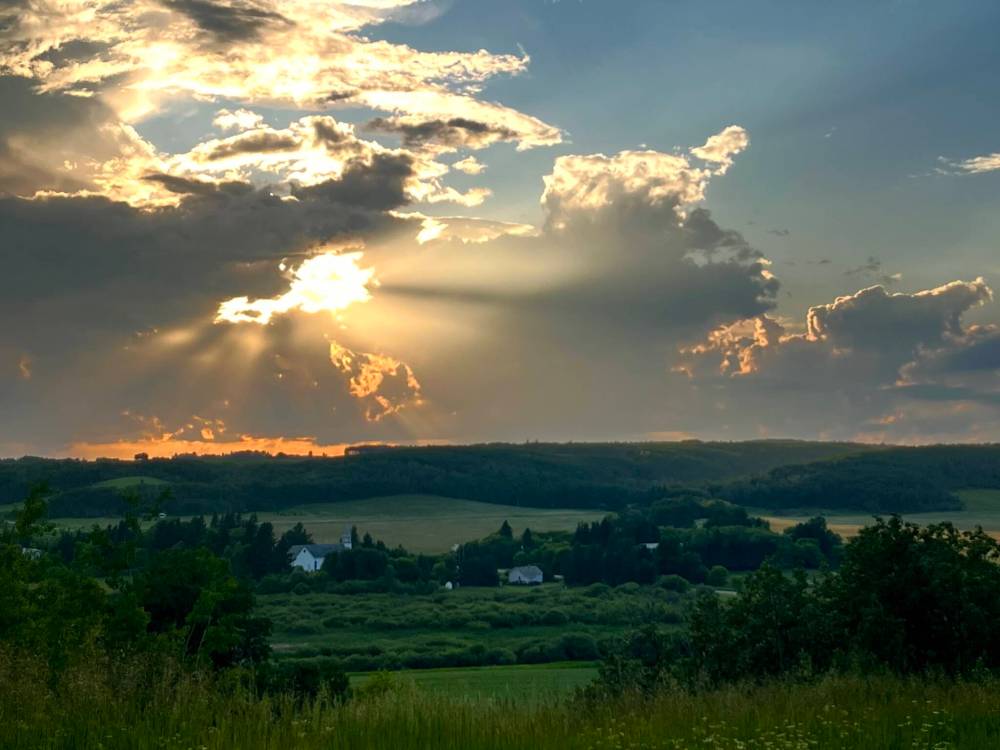
Polonia itself isn’t in the census, but together with the five nearby towns that make up the Rural Municipality of Rosedale, the population is listed at just over 1,500. Situated 13 kilometres beyond the southern tip of Riding Mountain National Park and more than 200 kilometres west of Winnipeg, it sits along the edge of the Manitoba Escarpment, a steep ridgeline carved out by glacial Lake Agassiz thousands of years ago.
It is not a typical Prairie landscape. Instead of open patchwork fields stretching flat across the horizon, the valley is all rolling hills, dotted with cattle farms, crop lands, wetlands and forests. The ecology is unique; microclimates and fertile soils allow for rare and diverse species of plants and animals.
It’s unique in another way too: thanks in part to the ridgeline, this pocket of the province boasts some of the strongest winds in southern Manitoba, according to federal wind atlas data. And with its proximity to the Manitoba Hydro substation in Neepawa, it’s an ideal place for wind turbines.
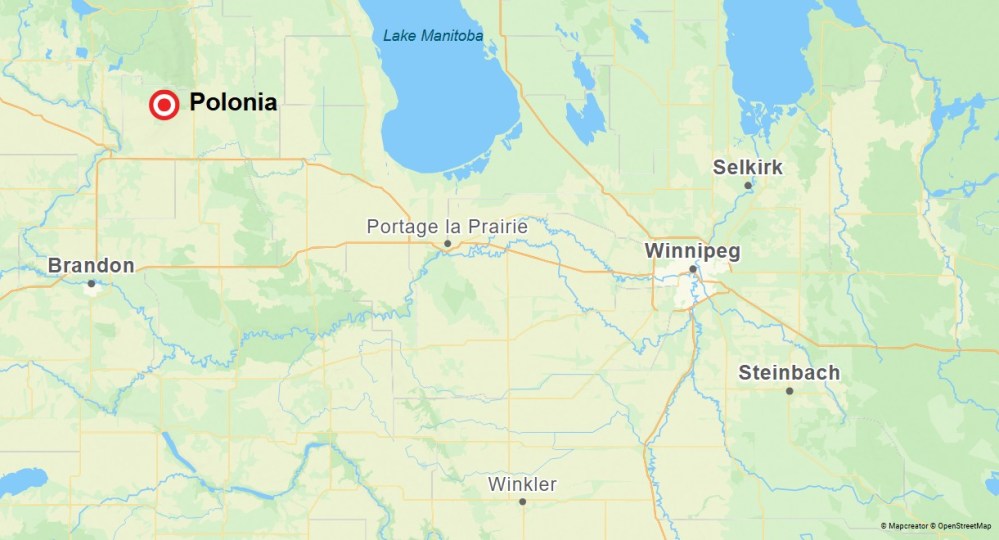
In April, the Manitoba Métis Federation and U.K.-based Renewable Energy Systems announced a joint proposal to build a 200-megawatt wind farm in the area.
The Fleury Winds project, majority-owned by the MMF, would consist of about 30 turbines, each more than 700-feet tall, situated on private farmland around Polonia.
The pitch is part of a provincial initiative to install 600 megawatts of majority Indigenous-owned wind power by 2035 to both address a looming electricity shortfall and progress toward net-zero targets.
“When we think about these projects and the meaningfulness for us, it’s as much about provision of energy for the province and the opportunity to participate economically as it is … a source of pride to be part of a project of this size and scope for our people,” Lorne Pelletier, senior economic adviser to MMF president David Chartrand, says in an interview.
Fleury Winds is the first energy infrastructure project to be undertaken by the Red River Métis Power Corporation, a newly created arm of the MMF.
But many in the area aren’t sold on the project.
TIM SMITH / BRANDON SUN Trevor Bennett, a resident of the RM of Rosedale, holds a box of letters from area residents in opposition to a proposed windmill project.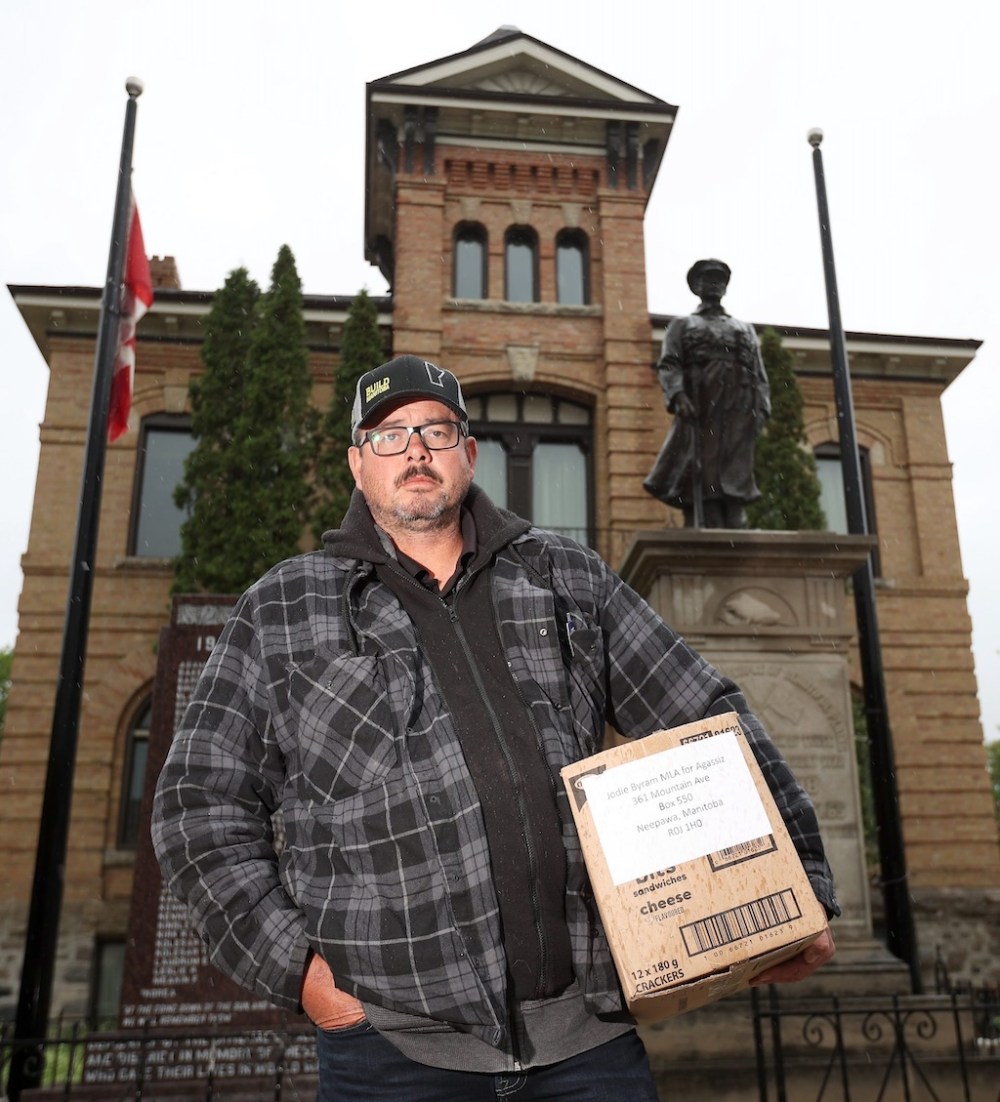
Some object to wind turbines disrupting the region’s beauty and tranquility, Kaspick says. Others worry the turbines could cause negative health effects, disturb wildlife habitat and migratory birds, or strain the municipality’s infrastructure.
“I looked at the map and where my house is located, straight out my picture window, I will see a roughly 705-foot-tall wind tower,” Polonia resident Trevor Bennett says. “And they say I will not only see it, I potentially will hear it all the time and will potentially even feel it.”
While the MMF and the energy company have been putting the final touches on a proposal that will be presented to Manitoba Hydro this month, some Rosedale residents, including Bennett, have formed a citizens’ group that’s working to elevate community concerns and preserve their “piece of heaven.”
Bennett works in the agricultural equipment industry and has a young family. After about 15 years working in nearby Neepawa, he moved his family to Polonia a little over a year ago for “the peace and quiet and tranquility,” he says.
“I moved here because there wasn’t stuff like that (the wind farm) here.”
Several months ago, he started hearing “rumblings” his countryside oasis was being considered as the site for a major wind-power development.
He later learned the project’s proponents were meeting with landowners to secure lease agreements that would allow wind towers to be built on their land in exchange for financial compensation.
“I moved here because there wasn’t stuff like that here.”
In April, some landowners who have signed agreements with the Fleury Winds project told the Brandon Sun the opposition may not reflect the feelings of all community members. Pelletier says the project has “a strong base of landowner support.”
But according to James Mitchell, another Polonia-based member of Piece of Heaven, the citizen group opposing the Fleury Winds project, those early whispers created a sense of secrecy around the development. The first time Mitchell and Bennett heard any concrete details was during an open house at the community hall in April.
“It went from ‘that’s just a rumour’ to a reality for me,” Bennett says.
The open house event was structured as a drop-in information session, with representatives from the MMF and Renewable Energy Systems stationed around the room with poster boards outlining the basic details of the proposal.
The project would consist of between 28 and 36 wind turbines, situated on private farmland between the towns of Neepawa, Minnedosa, Birnie and Hilltop. A project map highlighted the 40-odd properties that had already signed agreements, the locations of nearby houses and proposed turbine sites.
Fleurywinds.ca A map of the proposed project identifies locations of turbine sites and nearby residences; land in green designates signed lands.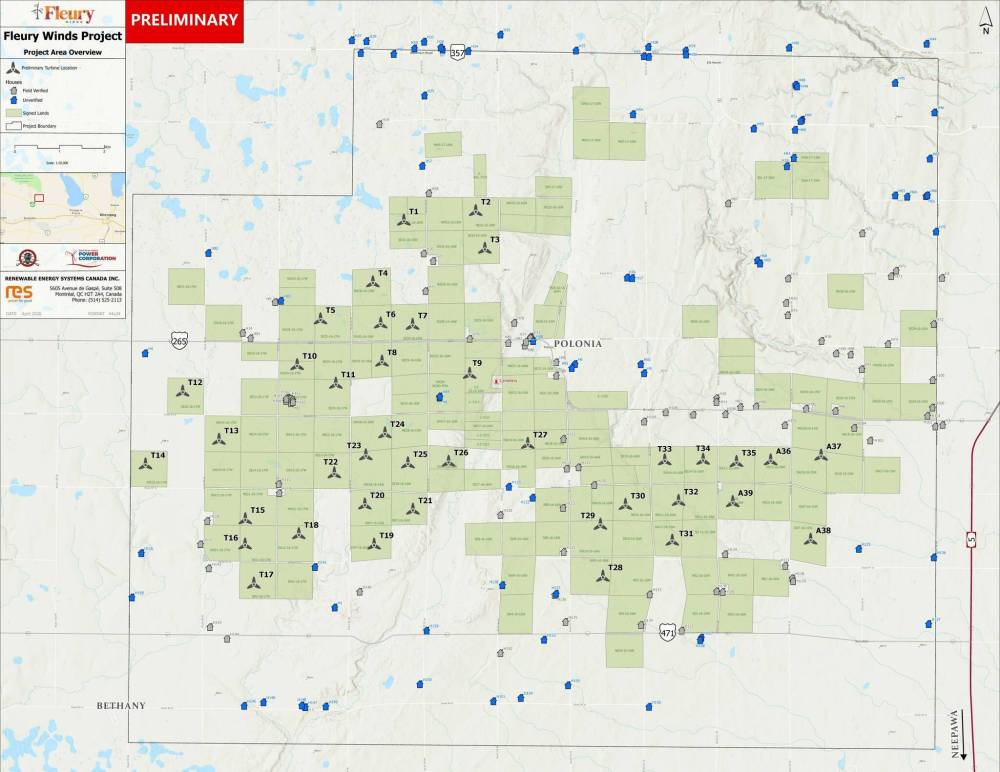
Each of these “modern” turbines would be up to 210 metres (705 feet) tall, including the length of the blades, and built atop concrete foundations more than 20 metres wide and buried four metres deep.
They would generate between six and eight megawatts each for a total project capacity of 200 megawatts — enough to power 59,000 homes — in ideal circumstances. This energy would be linked to the Manitoba Hydro grid via buried cables connected to an existing substation in Neepawa.
“It’s an incredible way of generating energy and electricity for Manitobans,” says Pelletier, who attended the open house.
“It means a lot to our people: the job creation that it entails, the opportunity that it presents for us to be … contributors in the economy, and the benefits that it will bring not just for Red River Métis but all Manitobans.”
But some Polonia residents, including Mitchell and Bennett, believe the company should have done more in advance to build trust in the community. Now that the proposal is in motion, it feels like it can’t be stopped, Bennett says.
“I think they were trying to label it as a consultation. I really don’t feel that was a consultation at all,” Bennett says.
As a father, Bennett worries how living so close to a tower might affect the well-being of his children.
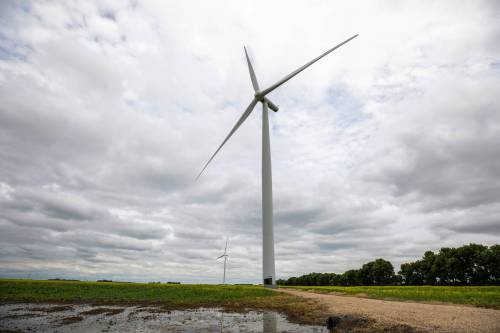
MIKAELA MACKENZIE / FREE PRESS Wind turbines south of Winnipeg, some active since 2006, are about 120 metres in height. Turbines proposed as part of the Fleury Winds project would tower as high as 210 metres, including their blades.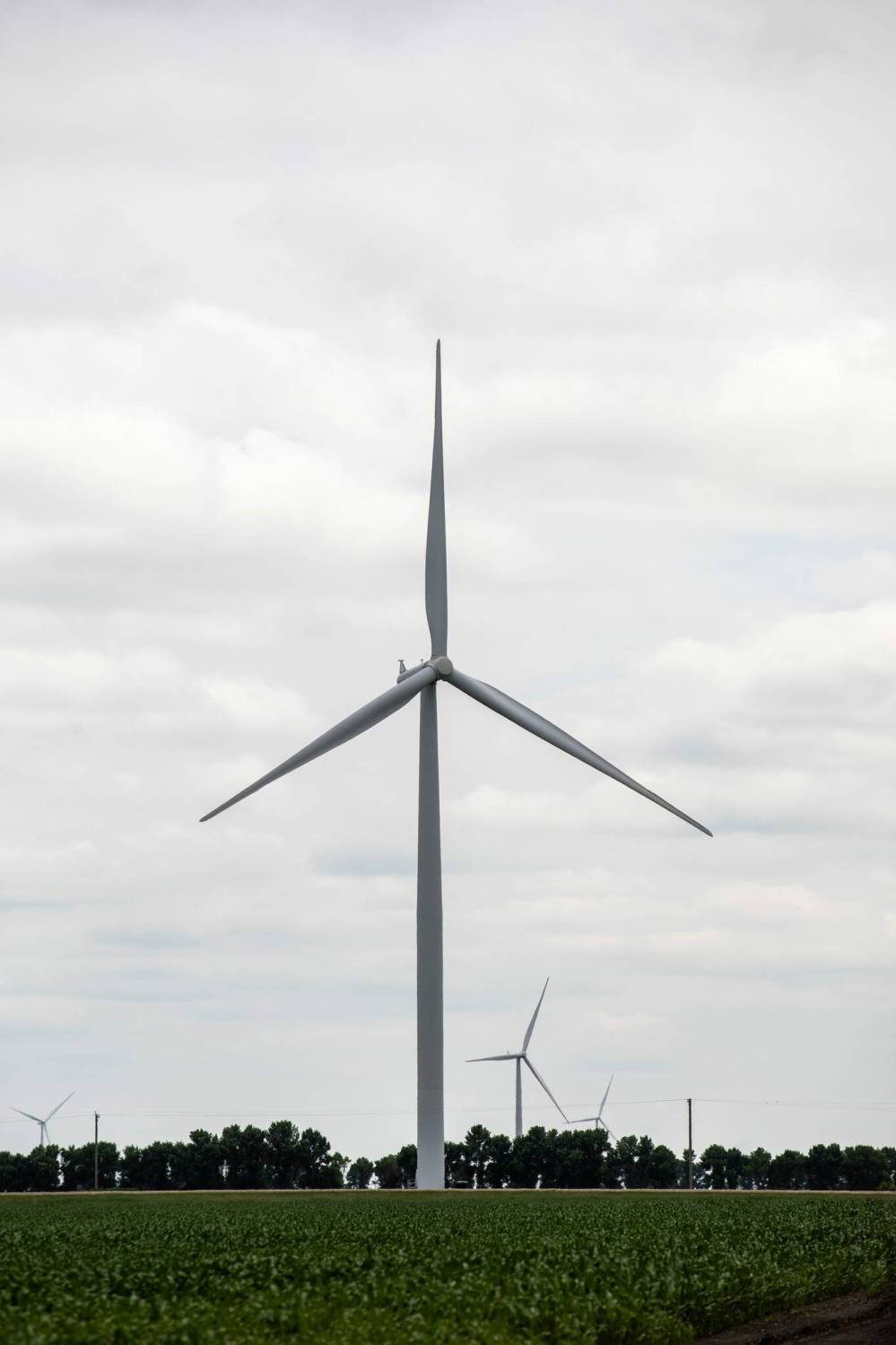
As wind turbines have become more common worldwide, several jurisdictions have reported receiving complaints of hearing issues, heart palpitations, vertigo, disrupted sleep, migraines and other noise-related health impacts from people living in close proximity to the towers.
The majority of peer-reviewed research has found no direct correlation between these symptoms and turbine noise. Many studies do, however, acknowledge turbines can cause “annoyance.”
Other residents in Polonia worry about the impacts of shadow flicker — a term for the intermittent shadows created by spinning turbine blades.
And they are concerned for the birds, bats and other wildlife that criss-cross the region’s fields and could be driven away — or killed — by the turbines.
The area is, as Mitchell describes it, “strictly rural.” The largest industrial developments are a handful of gravel quarries. Off the main highway, the roads are all gravel; some are hardly more than twin tire tracks scything through the rugged hills. The tallest structure around is a spindly 250-foot-tall cellphone tower.
“Imagine something two-and-half times as high on a base that’s 100 feet in diameter. It’s not just a little pole up in the air, it’s a massive, massive structure,” Mitchell says.
To put it in perspective, the tallest building in downtown Winnipeg — 300 Main St. — is about 465 feet tall. The turbines at Manitoba’s existing wind farms are about 120 metres, or 400 feet in height. The proposed Fleury Winds turbines would dwarf them both.
Mitchell worries the equipment needed to build the behemoth towers — cement and gravel trucks, massive trailers hauling 90-metre-long turbine blades — will cause costly damage to the region’s roads.
When the towers reach the end of their life 30 years down the line, Bennett and Mitchell worry Polonia will be left to clean up the aging infrastructure while the company takes its money elsewhere.
“My big concern is that the proposed economic benefits to individuals and the (RM) … is not even going to come close to outweighing the drawbacks,” Mitchell says.
CHERYL HNATIUK / FREE PRESS James Mitchell is among a group of residents in and around Polonia opposed to a wind farm project.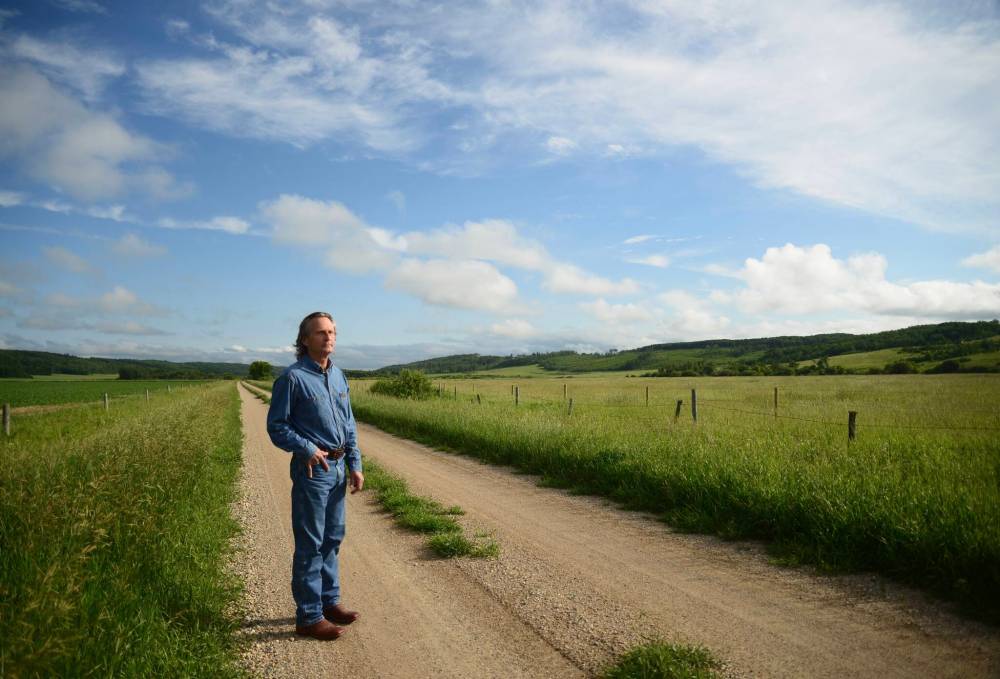
With these and many other questions in mind, a group of residents took to the hall’s stage partway through the April open house, turning what was conceived as a smattering of one-on-one conversations into a community-led question-and-answer period.
While Mitchell believes the company’s representatives were trying their best, the information they offered was broad, and many of the questions remained unanswered.
At the MMF, Pelletier says the meeting’s spontaneous turn came as a surprise. While he understands that some community members felt the open house lacked transparency, the project group thought it would be more respectful to speak directly with residents and answer questions as they arose, he explains.
“We went there with the intent to talk about the project, present the project, but really to engage one-on-one with the community,” he says.
The project is still in early stages; the open house is just the beginning of the planned consultation. While figuring out the timing of engagement sessions like the open house can be “tricky,” the MMF takes the community’s concerns seriously, he adds.
If the project is selected to proceed, the organizations expect to undergo two years of licensing and permitting before construction would begin in 2029.
“The project is proposed within our homeland as Indigenous people, and we have a long-standing and very strong commitment on the part of our government for environmental stewardship,” Pelletier says.
Renewable Energy Systems Canada’s director of development, Isabelle Deguise, said in a statement: “There will be real opportunity in the months and years ahead to sit down with people in the Polonia area again, hear what matters to them and shape this project together.
“We know residents have questions, and we want to listen. Our commitment is to keep turning up, keep listening and keep working with this community throughout the life of the project.”
Wind-power developments are not new in Manitoba. The St. Leon and St. Joseph wind farms, built in 2006 and 2011 respectively, are located about 100 kilometres south of Winnipeg and together produce about four per cent of the provincial power supply.
St. Leon has about 70 turbines; St. Joseph has 60. Each produces approximately two megawatts and their towers, including the blades, stand roughly 120 metres tall.
Pattern Energy, which operates the St. Joseph farm, estimates that over the project’s first 27-year power sale contract, it will pay $44 million in property taxes and generate $38 million in revenues for landowners.
At the time it was built, St. Joseph was one of the largest wind farms in Canada, according to then-premier Greg Selinger.
“This project builds on Manitoba’s position as a leader in renewable energy development, complementing our existing hydroelectricity supply, geothermal activities, bio-fuel production and aggressive energy-conservation programming,” Selinger said in a news release the day the turbines started spinning.
But momentum for wind power developments petered out after St. Joseph was built. As of 2025, Manitoba has installed fewer than 260 megawatts of wind power, while neighbouring Saskatchewan has more than 800 megawatts, Quebec has more than 4,000 megawatts, and Ontario and Alberta have more than 5,500 megawatts each.
MIKAELA MACKENZIE / FREE PRESS As of 2025, Manitoba has installed fewer than 260 megawatts of wind power, while neighbouring Saskatchewan has more than 800 megawatts.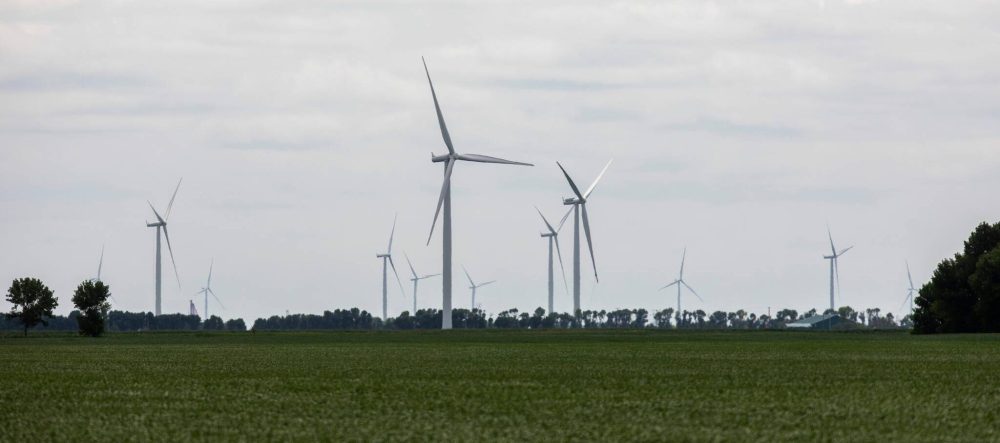
Some in the province would like to see Manitoba pick up the pace of wind-power development. According to research from Climate Action Team Manitoba, the technology is well-suited to winter production, with Manitoba’s existing wind farms already generating more energy in fall and winter than summer, and the province is no stranger to the kinds of high-wind speeds that make turbines a sensible investment.
At the national level, the Canada Energy Regulator projects wind will make up about 70 per cent of renewable energy growth in the coming years.
Scott Blyth, a retired doctor from nearby Brandon, volunteers with the Manitoba committee of the Canadian Association of Physicians for the Environment. Following the open house, he wrote an opinion piece criticizing Polonia residents for “hijacking” the meeting.
Reflecting on that article in an interview last month, Blyth said he could “understand people’s concerns” about the turbine development, but stressed his excitement for renewable energy projects in the province.
“There’s so much good that can come from this approach to generating energy, and boy, my bottom line is, get rid of fossil fuels … and why haven’t we done this sooner?” he says.
“There’s so much good that can come from this approach to generating energy, and boy, my bottom line is, get rid of fossil fuels … and why haven’t we done this sooner?”
Fleury Winds is part of a provincial initiative that looks to turn the tide on wind power in Manitoba by installing 600 megawatts of majority Indigenous-owned, utility-scale wind farms.
The initiative was first introduced as part of the provincial government’s 2024 affordable-energy plan, then re-affirmed in 2025, when Manitoba Hydro released a roadmap outlining its path to a reliable net-zero energy grid.
The initiative is intended to help add capacity to the province’s strained energy grid, while providing Indigenous Nations “new opportunities to participate and benefit from the energy transition,” according to the affordable energy plan.
The additional grid capacity is necessary to address a projected shortfall as soon as 2030, the utility noted in 2025. Other measures outlined include efficiency programs to reduce demand, enhancements to the existing hydroelectric power grid, new natural gas-powered combustion turbines (currently slated to be built in Brandon) and the addition of five megawatts of utility-scale battery storage.
While the best-case scenario for wind power in the province is 600-megawatts of production, the reality is that wind — and the power it produces — is intermittent. Hydro expects that in reality, the wind-power developments will generate 120 megawatts of reliable, accredited capacity.
Hydro issued the official call for proposals in March, with submissions due by early July.
It received proposals from 11 eligible proponents representing seven Indigenous Nations (including the MMF, Swan Lake, Dakota Tipi, Gambler and Pinaymootang First Nations, Fisher River Cree Nation and Keeseekoowenin Ojibway First Nation) and six established wind-power companies.
The utility is expected to announce its preferred proponents in spring 2027, with projects complete by 2035.
Polonia isn’t the only community pushing back against the proposed developments.
A wind farm proposed by Swan Lake First Nation and Innergex Renewable Energy is facing opposition from residents from the Rural Municipality of Lorne, some 150 kilometres southwest of Winnipeg. They worry about negative environmental and economic impacts in the agriculture-dominant region, and would like to see towers built on Crown land, or further north.
Progress will be slow. The proposed turbines are not expected to come online until 2035, according to Manitoba Hydro.
In the meantime, proponents whose projects are selected by Hydro will need to complete environmental licensing processes to address the myriad of environmental and community impacts.
The provincial wind power guidelines require companies to assess the extent of shadow flicker within 1.5 kilometres of each turbine, the impact of noise across the entire development and the potential impacts to wildlife including migratory birds, bats, roosting and foraging habitats, and endangered species.
As for human impacts, a 2013 Health Canada study that surveyed about 1,200 Ontario and P.E.I. households in proximity to wind towers found no correlation between negative symptoms such as headaches, tinnitus and dizziness and turbine noise levels.
The study did, however, find a correlation between turbine noise and community annoyance, with participants highlighting the effects of shadow flicker, vibrations, sound, visual impacts and blinking lights.
Long-term annoyance was linked to stress indicators such as high blood pressure and cortisol, the study found, particularly for those living closest to the turbines.
As a result, best practices indicate turbines should not be built within close proximity to people’s homes. In Manitoba, turbines may not be within one kilometre of a residence.
Pelletier stresses that the well-being of community members and the local environment is paramount for the Métis.
“These are our lands too, right? We’re not just a corporation coming in from afar. We live in the area, we demonstrate a strong commitment to environmental stewardship,” he says.
“These are our lands too, right? We’re not just a corporation coming in from afar. We live in the area.”
Turbine technology has evolved, he adds, and many of the community’s concerns can be mitigated by choosing turbines with lower noise specifications, conducting thorough environmental assessments and by taking responsibility for the turbines through their lifetime and decommissioning.
“For us, it’s not just about meeting the regulatory requirements, it’s pushing beyond that. From an Indigenous perspective, these are things that are integrated in the way we think,” he says.
The Piece of Heaven group plans to keep making their voices heard. Most recently, they organized a letter-writing campaign, delivering a list of concerns to municipal councillors, MLAs and provincial ministers.
Response from Rosedale councillors has been positive, Bennett says. Some have reached out to arrange meetings and hear more about residents’ concerns, while the provincial government sent acknowledgement letters, he adds.
Bennett could envision a version of the project with smaller towers, larger setbacks and more equity for landowners. He would like to see more-stringent regulations on where the turbines are placed, given the existing rules were written for smaller turbines.
But there are others, like Mitchell, who would rather the project be moved out of the area entirely. In his mind, the rewards will never outweigh the risks.
julia-simone.rutgers@freepress.mb.ca

Julia-Simone Rutgers is an investigative reporter who joined the Free Press in 2020. Read more about Julia-Simone.
Every piece of reporting Julia-Simone produces is reviewed by an editing team before it is posted online or published in print — part of the Free Press‘s tradition, since 1872, of producing reliable independent journalism. Read more about Free Press’s history and mandate, and learn how our newsroom operates.
Our newsroom depends on a growing audience of readers to power our journalism. If you are not a paid reader, please consider becoming a subscriber.
Our newsroom depends on its audience of readers to power our journalism. Thank you for your support.