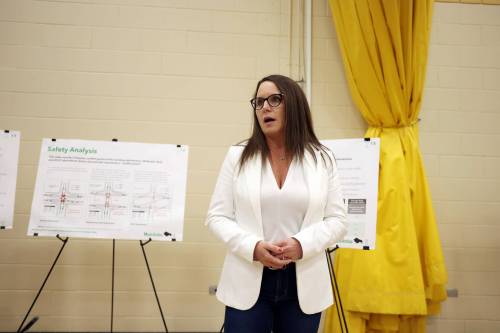
Federal government to build $267-M emergency research lab in Winnipeg Vaccines, therapeutics and diagnostic tools to be developed at Arlington Street facility
Read this article for free:
or
Already have an account? Log in here »
To continue reading, please subscribe:

Digital Subscription
One year of digital access for only $205*
- Enjoy unlimited reading on winnipegfreepress.com
- Read the E-Edition, our digital replica newspaper
- Access News Break, our award-winning app
- Play interactive puzzles
*First annual payment billed as $205.00 + GST for one year. This annual subscription will automatically renew at $233.00 + GST every 52 weeks (10% off the regular annual price of $259.35). Offer available to new and qualified returning subscribers only. Cancel any time.
To continue reading, please subscribe:
Add Free Press access to your Brandon Sun subscription for only an additional
$1 for the first 4 weeks*
- Enjoy unlimited reading on winnipegfreepress.com
- Read the E-Edition, our digital replica newspaper
- Access News Break, our award-winning app
- Play interactive puzzles
*Your next Brandon Sun subscription payment will increase by $1.00 and you will be charged $17.95 plus GST for four weeks. After four weeks, your payment will increase to $24.95 plus GST every four weeks.
Read unlimited articles for free today:
or
Already have an account? Log in here »
The federal government says it will build a $267-million medical countermeasures laboratory in Winnipeg with the goal of preparing Canada for future pandemics or outbreaks.
Expected to open in 2033, the national site will help the country develop vaccines, therapeutics and diagnostic tools, Winnipeg Liberal MP Terry Duguid said.
“This is a big deal for our city and for our province, a big deal for life sciences in Canada,” he told reporters Wednesday. “This facility is going to help protect the nation and help protect the world.”
JOHN WOODS / THE CANADIAN PRESS FILES
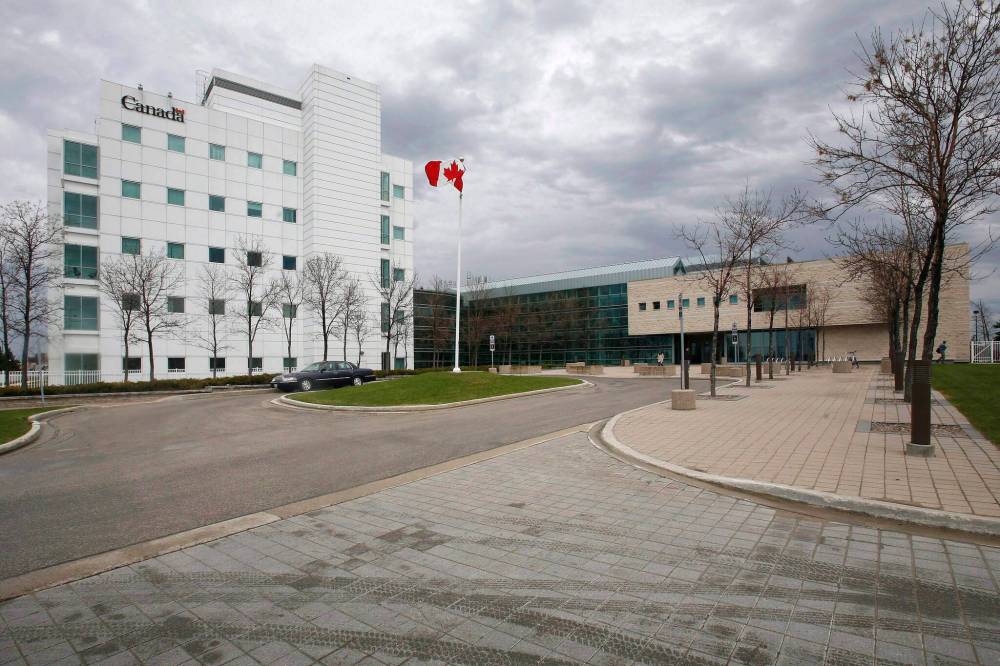
The new medical countermeasures laboratory will be located next to the National Microbiology Laboratory on Arlington Street.
Ottawa said the site — to be located next to the National Microbiology Laboratory’s Canadian Science Centre for Human and Animal Health on Arlington Street, just north of William Avenue — draws on lessons learned during the COVID-19 pandemic.
“A big deal for life sciences in Canada.”
A $10.2-million architectural and engineering services contract was awarded to Winnipeg’s Architecture49 Inc. Duguid, who represents Winnipeg South, said it is the first step toward building the facility, which will have high-containment laboratories.
A request for proposals, which closed in December, said the building will be about 140,000 square feet.
Design work is expected to be completed by 2029. Construction is expected to begin in 2030.
Duguid said such labs take a long time to design and build because they are “very technically complex,” noting the microbiology lab’s Arlington facility opened 10 years after a location was selected.
He said hundreds of people will work on the design and construction phases, with the lab itself supporting highly skilled scientific and technical careers for decades.
It’s too early to say how many people will work at the facility, Health Canada spokesman Mark Johnson said.
Duguid said the lab will reinforce Winnipeg’s place as one of the world’s leading centres for infectious diseases research, innovation and collaboration.
NML employees in Winnipeg developed the world’s first Ebola vaccine in 2002. They were involved in Canada’s response to SARS, H1N1 and COVID-19.
This week, Health Canada authorized the first Canadian clinical trial of a next-generation mRNA vaccine targeting the Bundibugyo strain of Ebola. The Arlington facility, which opened in 1999, is Canada’s highest-security virology facility.
Dr. Keith Fowke, department head and professor of medical microbiology and infectious diseases at the University of Manitoba’s Max Rady College of Medicine, said the new lab will produce experimental vaccines and therapeutics against pathogens that have the potential to cause pandemics.
High-quality test vaccines and therapeutics will undergo further testing, which closes the existing gap in Canada, he said.
“Then you narrow down which of your products are the most effective in the testing phase, and then you can go ahead with the single product and engage a larger-scale manufacturer,” said Fowke, who was recently appointed scientific director of the Canadian Institutes of Health Research’s Institute of Infection and Immunity.
“A fantastic opportunity for industry and academia across Canada to be able to develop products.”
Federal scientists, the private sector and universities will collaborate at the lab, which will be blocks away from Manitoba’s largest hospital.
“The facility needs to be fed products to develop. While the NML may be able to develop some… clearly, industry throughout Canada as well as academia is going to need to feed that pipeline,” Fowke said.
“I think this is a fantastic opportunity for industry and academia across Canada to be able to develop products and get them to a point where they can be tested at the highest level.”
The announcement was welcomed by Bioscience Association Manitoba, which represents more than 200 companies in a sector that generates almost $10 billion annually in the province.
“The size of the (federal) investment and the scope of the work is fantastic,” president and CEO Andrea Ladouceur said. “Manitoba is a medical countermeasure hub of Canada. We have such amazing companies and research here — bigger and broader than anywhere in Canada — so having this research brought here makes perfect sense.”
The microbiology lab is key to Manitoba’s bioscience sector, which provides more than 14,000 direct and indirect jobs, she said.
“We have been really highlighting the capabilities the facility has to make sure that if there are other federal projects or investments, that they are very strongly considered for the asset in Winnipeg,” Ladouceur said.
She said medicine is Manitoba’s leading export, representing 18 to 20 per cent of Canada’s overall exports.
In a news release, Mayor Scott Gillingham said Ottawa’s major investment is a “strong vote of confidence in the expertise that already exists here.”
Duguid and Fowke said Architecture49 is a world leader in designing high-level containment labs in Canada and other countries.
The company formed during a merger that included Smith Carter Architects, which helped develop the NML facility on Arlington. Architecture49 worked on the JC Wilt Infectious Diseases Research Centre, an NML facility on Logan Avenue.
Officials also announced Celia Lourenco is the new vice-president and head of the microbiology lab in Winnipeg as of July 20. She is the first woman to hold the role.
Lourenco was recently the associate assistant deputy minister for Health Canada’s health products and food branch.

Fowke and Duguid said Winnipeg is positioned as a leader in life sciences thanks to the NML, other existing federal and provincial facilities and expertise at the U of M and in the private sector.
“Part of the reason for the excellence of the science that the NML produces is the critical mass of infectious disease organizations that are here in Winnipeg,” Fowke said. “I think that’s underappreciated by many.”
The federal and provincial governments recently announced a combined $73.8 million for two biological research facilities at the U of M to help develop and test vaccines. The facilities will contribute to the new PRAIRIE Hub on Pandemic Preparedness, which includes universities in Alberta and Saskatchewan.
“The COVID-19 pandemic reminded us of a fundamental truth: that the strength of our response at a time of crisis is determined by the choices we make before it arrives,” provincial Innovation and New Technology Minister Mike Moroz said at Wednesday’s news conference.
chris.kitching@freepress.mb.ca

Chris Kitching is a general assignment reporter at the Free Press. He began his newspaper career in 2001, with stops in Winnipeg, Toronto and London, England, along the way. After returning to Winnipeg, he joined the Free Press in 2021, and now covers a little bit of everything for the newspaper. Read more about Chris.
Every piece of reporting Chris produces is reviewed by an editing team before it is posted online or published in print — part of the Free Press‘s tradition, since 1872, of producing reliable independent journalism. Read more about Free Press’s history and mandate, and learn how our newsroom operates.
Our newsroom depends on a growing audience of readers to power our journalism. If you are not a paid reader, please consider becoming a subscriber.
Our newsroom depends on its audience of readers to power our journalism. Thank you for your support.
History
Updated on Wednesday, August 5, 2026 2:07 PM CDT: Adds details
Updated on Wednesday, August 5, 2026 4:42 PM CDT: Adds details.