Somali refugee admits he helped to smuggle African migrants into Manitoba for money
Read this article for free:
or
Already have an account? Log in here »
To continue reading, please subscribe:

Digital Subscription
One year of digital access for only $205*
- Enjoy unlimited reading on winnipegfreepress.com
- Read the E-Edition, our digital replica newspaper
- Access News Break, our award-winning app
- Play interactive puzzles
*First annual payment billed as $205.00 + GST for one year. This annual subscription will automatically renew at $233.00 + GST every 52 weeks (10% off the regular annual price of $259.35). Offer available to new and qualified returning subscribers only. Cancel any time.
To continue reading, please subscribe:
Add Free Press access to your Brandon Sun subscription for only an additional
$1 for the first 4 weeks*
- Enjoy unlimited reading on winnipegfreepress.com
- Read the E-Edition, our digital replica newspaper
- Access News Break, our award-winning app
- Play interactive puzzles
*Your next Brandon Sun subscription payment will increase by $1.00 and you will be charged $17.95 plus GST for four weeks. After four weeks, your payment will increase to $24.95 plus GST every four weeks.
Read unlimited articles for free today:
or
Already have an account? Log in here »
A Somali refugee who was twice caught by RCMP assisting in the smuggling of desperate African migrants into Manitoba during the frigid winter — including while out on bail, months after he was first arrested with eight foreign nationals in his vehicle — has admitted he did so for money.
Abdi Hassan Ali, 33, pleaded guilty Wednesday to one count of violating the Immigration and Refugee Act by organizing, inducing, aiding or abetting people not in possession of a visa or passport or other document as required by the act.
He did so twice in 2024 — on Feb. 22 and Dec. 1 — and was paid for his efforts, said federal Crown prosecutor Colin Gray.
“We’re talking about two independent transports for money.”
He was arrested by RCMP and found to have transported eight and six migrants, respectively, inside his vehicle on those dates. Many of the migrants were from the Republic of Chad, in north-central Africa, which has been in political crisis for several years.
The migrants had paid thousands of dollars to get from their home countries into the United States and eventually to Minnesota, before they walked for hours in the bitter cold into Manitoba, where Ali picked them up, Gray said.
“We’re talking about two independent transports for money,” said Gray.
Provincial court Judge Rachel Rusen sentenced Ali to four years on a joint recommendation from Gray and Ali’s defence lawyer Brett Gladstone.
The deal was a plea bargain, in part considering potential issues at trial with the Crown proving Ali was motivated by profit in both cases.
John Woods / THE CANADIAN PRESS FILES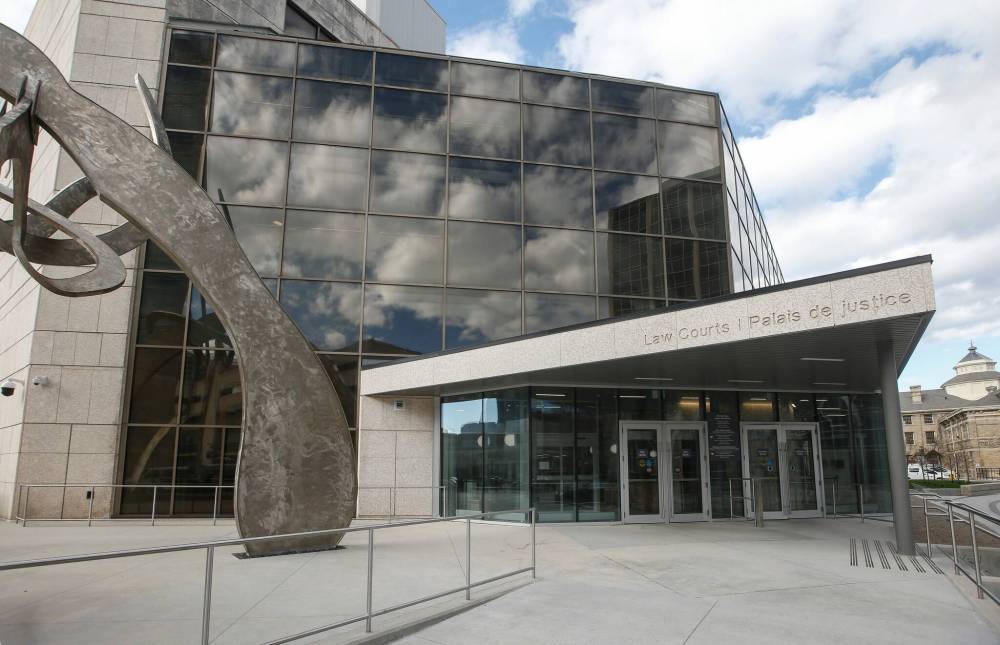
Considering time served since his second arrest in December 2024, Ali will serve 500 more days behind bars.
Gray, who outlined the facts of the case after Ali’s guilty plea, said an RCMP officer conducting traffic patrols on Feb. 22, 2024, in the Rural Municipality of MacDonald spotted Ali’s Kia Sedona speeding on Highway 3.
The officer pulled Ali over, who said he was an Uber driver taking “them to the shelter” and pointed to the rear of the vehicle, where the Mountie saw several passengers crammed into the back.
The Mountie let them go on a warning, but then ran Ali’s name in a police database and discovered he had been spotted by RCMP border officers in the area earlier that year.
The officer spoke with a member of the border team, who advised Ali should be arrested under suspicion of human smuggling.
The traffic officer caught up with Ali on McGillivray Boulevard in Winnipeg and pulled him over again. He was found with $2,300 in American cash and the eight migrants — seven men and one woman — in the vehicle.
Several of the migrants relayed “harrowing travel stories from their country of origin, into the United States and through the United States to Canada,” said Gray.
“The fact that nobody was injured or killed walking hours in cold weather conditions in a foreign land is by luck.”
Several said it cost hundreds of dollars to get to the border in Minnesota, and thousands of dollars in total.
One migrant told Mounties he travelled from Chad to New York, where he stayed in a shelter before travelling to Minneapolis, where he paid $800 to get taken to the border. He shelled out about $12,000 in total.
The migrants followed maps on their cellphones and walked for several hours through the cold to get into Manitoba, said Gray.
Ali was let out of jail on March 6, 2024, after the Crown agreed to his release, given he was a refugee claimant in Winnipeg with ties to the city. He was ordered to stay in the city to restrict him from being involved in future transports, said Gray.
But on the night of Dec. 1, 2024, when it was between -20 and -25 C, RCMP were called by a farmer who spotted footprints headed north from the border into a field.
As Mounties patrolled the area, a couple pulled up to an officer and said they had picked up a migrant who had been left in a ditch, after they spotted several people getting into a white pickup truck.
Related Articles
Police in three countries track journey of family who died at Canada-U.S. border


On Highway 6, RCMP officers pulled over the pickup truck — which Ali had rented — and pulled Ali from the driver’s seat as five migrants fled into another field, said Gray.
Mounties, using infrared cameras, managed to locate the people who had fled into the cold winter’s night.
Ali was arrested again.
Emphasizing the seriousness of Ali’s crimes, both Rusen and Gray pointed to the tragic deaths of an Indian family of four who froze to death near Emerson in January 2022, as they attempted to walk into Minnesota with a group of other migrants but were lost in a blizzard.
The frozen bodies of parents Jagdish Patel, 39, and Vaishaliben Patel, 37, their three-year-old son, Dharmik, and their 11-year-old daughter, Vihangi, were found just metres north of the border. Two men have been convicted in the United States in the case.
“The fact that nobody was injured or killed walking hours in cold weather conditions in a foreign land is by luck. It would be a different story if that were not the case,” Rusen told Ali of the potential consequences of his actions.
“This is a case where the reasons for sentencing are sending the message to the public.”
“The court is permitted to consider the local situation (when issuing sentences) and in this case, the devastating effect on the (Patel) family is the local situation.”
Gladstone said that although Ali was motivated by profit, as he faced money struggles, he also wanted to help fellow migrants find a safe place in Canada, as he had after fleeing from political violence in Somalia as a refugee. He had no prior criminal record.
“It’s difficult because you can understand from his perspective, having found a safe home, he wanted to help people find a safe home,” said Gladstone. “This was not the right way to go about it.”
Ali has a wife and six children and has lined up a job in Winnipeg for when he’s released.

Gladstone described Ali as a person with “kindness in his heart,” who cares for his family and community, but made choices he now realizes were wrong in circumstances that were close to desperation.
“This is not a case where it is important to punish this gentleman, to get the message through to him. He gets the message,” said Gladstone.
“This is a case where the reasons for sentencing are sending the message to the public.”
Ali is likely to face immigration consequences, including potential deportation, as a result of his conviction.
erik.pindera@freepress.mb.ca

Erik Pindera is a reporter for the Free Press, mostly focusing on crime and justice. The born-and-bred Winnipegger attended Red River College Polytechnic, wrote for the community newspaper in Kenora, Ont. and reported on television and radio in Winnipeg before joining the Free Press in 2020. Read more about Erik.
Every piece of reporting Erik produces is reviewed by an editing team before it is posted online or published in print — part of the Free Press‘s tradition, since 1872, of producing reliable independent journalism. Read more about Free Press’s history and mandate, and learn how our newsroom operates.
Our newsroom depends on a growing audience of readers to power our journalism. If you are not a paid reader, please consider becoming a subscriber.
Our newsroom depends on its audience of readers to power our journalism. Thank you for your support.