‘Almost too much to contemplate’ Unease stirs as clock ticks down on destruction of records documenting residential school abuses
Read this article for free:
or
Already have an account? Log in here »
To continue reading, please subscribe:

Digital Subscription
One year of digital access for only $205*
- Enjoy unlimited reading on winnipegfreepress.com
- Read the E-Edition, our digital replica newspaper
- Access News Break, our award-winning app
- Play interactive puzzles
*First annual payment billed as $205.00 + GST for one year. This annual subscription will automatically renew at $233.00 + GST every 52 weeks (10% off the regular annual price of $259.35). Offer available to new and qualified returning subscribers only. Cancel any time.
To continue reading, please subscribe:
Add Free Press access to your Brandon Sun subscription for only an additional
$1 for the first 4 weeks*
- Enjoy unlimited reading on winnipegfreepress.com
- Read the E-Edition, our digital replica newspaper
- Access News Break, our award-winning app
- Play interactive puzzles
*Your next Brandon Sun subscription payment will increase by $1.00 and you will be charged $17.95 plus GST for four weeks. After four weeks, your payment will increase to $24.95 plus GST every four weeks.
Read unlimited articles for free today:
or
Already have an account? Log in here »
In less than a year, a private company is set to destroy the largest cache of records detailing the widespread abuse of Indigenous children at residential schools in Canada.
The destruction, which was ordered by an Ontario court in 2014 and later upheld by the Supreme Court, is set to take place on Sept. 19, 2027.
This countdown is igniting emotional conversations that seek to balance the immense historical value of the records alongside the confidentiality survivors were promised as part of the process of providing detailed testimony about abuses they’d suffered.
The records were created as part of the Indian Residential Schools Settlement Agreement, a class-action settlement stemming from survivors who began suing the federal government in the late 1990s over the harm they’d been subjected to at residential schools.
JOHN WOODS / FREE PRESS University of Manitoba Prof. Sean Carleton says steps can be taken that preserve the records in perpetuity, without jeopardizing the promise of confidentiality.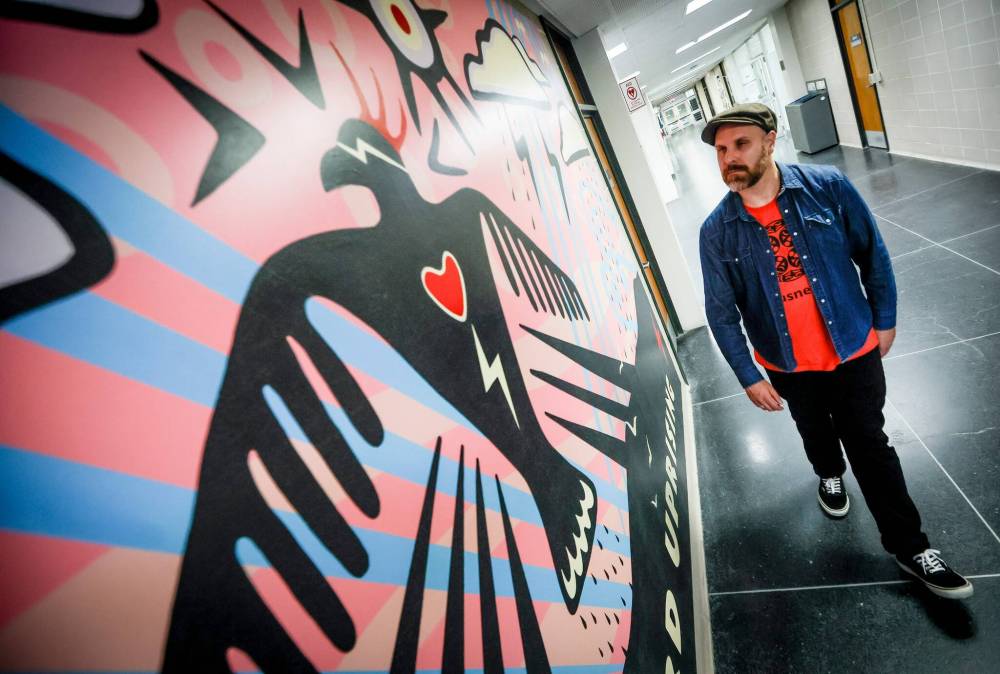
While survivors have had the option to request that their testimonies and other records be preserved with the Winnipeg-based National Centre for Truth and Reconciliation, less than 100 have done so. From 2021-25, 138 records requests were made to the company that controls the documents, half of which were deemed invalid due to “a form submitted by someone other than the Claimant, on behalf of a deceased claimant, or missing information is not provided,” according to a 2026 progress report.
If a survivor has died since their testimony without filling out the required paperwork, their descendants are not allowed to request their records on their behalf.
“These are legal and historical records of the genocide that occurred in Canada and they must be protected,” said Winnipeg Centre NDP MP Leah Gazan, who is calling for the governing Liberals to introduce legislation to stop the records’ imminent destruction.
Gazan, who is also working to advance legislation that would criminalize residential school denialism, said in an interview that “the most violent thing you can do when somebody tells a story, when they share their truth, is to destroy and hide the story.”
Residential schools operated in Canada for more than 150 years, removing Indigenous children from the care of their families, and forcing them into institutions where they faced a range of mistreatment: they were often underfed; subjected to extreme physical punishments, including for speaking their own languages; given sub-standard education; and exposed to the unchecked spread of diseases and fires in crowded living conditions. Many were sexually abused. The last residential school in Canada wasn’t shuttered until 1997.
The residential school settlement agreement of 2006 included the Independent Assessment Process (IAP), where survivors who had suffered physical, sexual and emotional abuse gave detailed and gruelling testimony to adjudicators in order to receive financial compensation that went beyond the “common experience payment,” which was based on the number of years a survivor spent in the institutions.
More than 38,000 survivors took part in the IAP; it is these records that are set to be destroyed next fall.
Across Canada, there are calls to stop the destruction of these records, which, amid a rising tide of unfounded residential school denialism, document the scope of the abuse perpetrated on Indigenous children in residential schools, where thousands did not survive.

The company that manages the records, Epiq Class Action Services Canada Inc., declined to answer questions for this story, citing their role as “the neutral, Court-appointed records agent.”
While a massive awareness campaign was promised by the Indian Residential Schools Adjudication Secretariat in 2017, it appears efforts to inform survivors have largely ceased. The records agent, which runs a website called My Records, My Choice where survivors can request their records, has stopped posting on its social media channels. The most recent post is nearly six years old. Dan Shapiro, who led the secretariat, did not respond to a request for comment.
The federal government, which funded the secretariat, also declined an interview request, instead answering certain written questions. A spokesperson for Crown-Indigenous Relations said: “following the court decisions, Canada funded a notice campaign to inform Survivors that they could choose to obtain their records and/or preserve their records with the NCTR,” adding that this work has since been completed.
The spokesperson said the government is working to hire a company to raise awareness of the records’ upcoming destruction, including by placing “radio ads in English, French, and several Indigenous languages, online and social media advertising, information packages sent to First Nations and Friendship Centres across Canada, and media outreach.”
The story of how these records are on the verge of destruction follows an unexpected narrative.
The federal government, which has a long history of blocking access to residential school records, argued before the Supreme Court for the testimonies to be retained. The National Centre for Truth and Reconciliation also argued for their preservation, saying their destruction would “deny future generations … the collective knowledge and history essential to healing.”
The Assembly of First Nations (AFN), a national advocacy organization for First Nations across Canada, advocated for the records’ destruction after a 15-year retention period. Former AFN National Chief Phil Fontaine, who, in 1990, became one of the first survivors to speak publicly about the abuse he’d suffered at residential school, said in an affidavit that even if the testimonies were sealed for 100 years, if the identities of residential school perpetrators became known, it “would continue the legacy of dysfunction and trauma that was created by the residential schools,” given that some perpetrators were fellow students.
The head of the secretariat wrote in an affidavit, reported CBC News, that the confidentiality promised to survivors “was often the key factor in allowing the claimant to gain sufficient comfort to proceed with the hearing.”
However, survivors were never asked during the process whether or not they wished their testimony to be retained for historical and archival purposes. Canada’s highest court ultimately ordered the records’ destruction.
Sean Carleton, a professor at the University of Manitoba who focuses on the history of residential schools and who recently co-authored a book on residential school denialism with Free Press columnist Niigaan Sinclair, said in an interview that the planned destruction of the records comes at a sensitive time.
“Church and state continue to drag their feet on providing communities with records in a variety of situations. We are seeing abhorrent, racist, anti-Indigenous denialism become rampant, where people are actually questioning and downplaying and minimizing survivor testimony and truth at the same time that these records are up to be destroyed,” he said.
He directs his frustration at the IAP, which, from the beginning, was a “legal strategy of containment” on the part of the federal government, he said. Because the IAP was an out-of-court settlement, it meant the worst abuses of the residential school system didn’t lead to criminal charges, civil settlement, or create court records.
“I don’t care if it takes a civil servant like 30 years to black out every name in there. (But find) some way that this doesn’t just get destroyed.”
The fact that less than 100 survivors — out of more than 38,000 — have preserved their records with the NCTR indicates to Carleton that “bureaucratic risk-management,” on the part of the federal government, was in effect from the beginning.
“I would imagine a much higher number would have wanted these preserved for public record,” he said.
Because survivors were promised confidentiality as part of the IAP hearings, opening the records up would violate the “ethical code” under which they were created, Carleton said. But he believes there are alternatives that don’t override confidentiality.
“Extend the deadline in perpetuity. Do something symbolic where they never get destroyed, but they’re not publicly released in honour of the courage of survivors to testify,” he said.
It would give survivors the rest of their lives to decide whether to request and preserve their records, he said. Or, he suggested, the government could move forward with redaction of all the perpetrators in the records, making all testimonies anonymous.
“I don’t care if it takes a civil servant like 30 years to black out every name in there. (But find) some way that this doesn’t just get destroyed.”
Though non-Indigenous himself, Carleton, through marriage, has a family member who participated in the IAP. Before he died, that family member said he wanted his testimony to be preserved with the National Centre for Truth and Reconciliation. His relatives believe they filled out and submitted the required forms for this to happen but asked Carleton to confirm, which he has been attempting to do.
Upon learning that fewer than 100 records have been archived, Carleton said his stomach dropped.
“Is (my family member) one of those 100?”
Jesse Boiteau, the acting head of archives at the National Centre for Truth and Reconciliation and a member of the Métis Nation, told the Free Press the impending destruction has created a lot of confusion.
For one, some incorrectly believe the NCTR currently possesses the IAP records and is the entity that will destroy them. Epiq, the court-ordered, class-action management company, maintains the records and will be responsible for their destruction.
“The NCTR is not destroying anything. We will continue to provide access in perpetuity,” Boiteau said.
The reams of records currently held by the NCTR, including residential school histories, photos and student rolls, are safe, Boiteau stressed. None of the records produced by the Truth and Reconciliation Commission, which was a largely public-facing process meant to document the harms of residential schools led by the late Justice Murray Sinclair, are up for destruction.
“This is a big part of that history that will be destroyed. The NCTR’s position was that this information could have been kept locked down and restricted for a very long time, and then eventually, working with stakeholders, privacy legislation, at one point in time, you could look at unpacking that.”
Any survivor who wishes to obtain their IAP records, including their application, oral testimony, transcripts and final decision, must first request them from Epiq, through their My Records, My Choice platform, and, if they choose, can also request they be provided to the NCTR to be kept in perpetuity, either available to the public or researchers, or kept restricted.
“This is the largest documentation of abuse that occurred to Indigenous peoples in Canadian history in one central space,” Boiteau said, adding that of the four million records the centre already cares for, most are from the perspective of the government or the churches. The IAP records, meanwhile, are in survivors’ own words.
“This is a big part of that history that will be destroyed. The NCTR’s position was that this information could have been kept locked down and restricted for a very long time, and then eventually, working with stakeholders, privacy legislation, at one point in time, you could look at unpacking that,” he said.
Wayne Glowacki / Free Press files Artist Carey Newman with Witness Blanket, which features objects recovered from residential schools. Newman hopes legislation can be introduced to preserve records detailing abuse at the schools.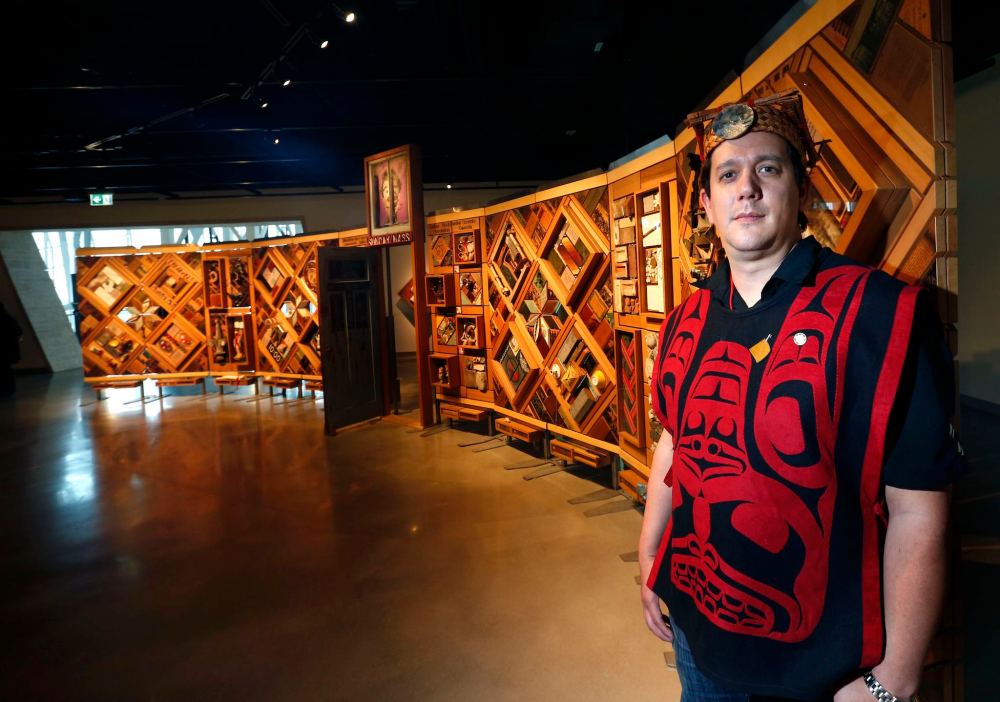
Carey Newman remembers the moment he heard the Supreme Court would uphold the lower court’s ruling to destroy the IAP records.
“I felt hollow,” said Newman, a multi-disciplinary artist who is Kwakwak’awakw and Coast Salish through his father, a residential school survivor. “I still feel hollow.”
“For one thing, it’s emotional, right? Because I know how important it is. I’ve seen it in my own life. I’ve seen it in the lives of so many people around me, in our communities. I know how important knowing is,” he said.
One of Newman’s best-known works is Witness Blanket, a large installation of items from residential schools (now in the collection of the Canadian Museum for Human Rights), the making of which included visiting 77 communities, meeting with survivors and collecting hundreds of objects.
To fight the destruction of the records, Newman founded the Coalition to Preserve Truth, which gained intervener status at the Supreme Court to help share the perspectives of intergenerational survivors. They had five minutes before the court to make their case. The coalition proposed the records to be sealed for 100 years, when no more survivors or their close descendants would be alive. Or, they suggested, redact the records for privacy.
Wayne Glowacki / Free Press files A child's shoe found at the site of Carcross Residential School in the Yukon that burned down in the early 1900's.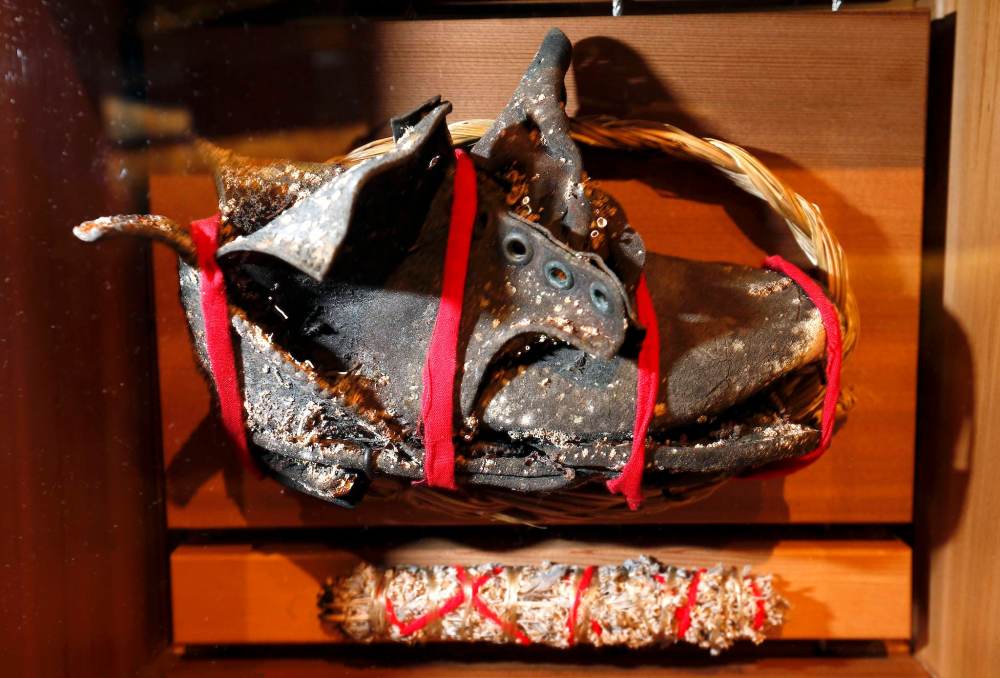
Newman, speaking for himself and not for the coalition, said he has encountered many misconceptions about the records, notably that most people think it was the federal government that wanted to destroy them.
“They don’t know that (the destroy side) was backed by a huge portion of Indigenous representational politicians,” he said. “It’s easy when people think this is just another thing that’s getting done to us, to file that under the persecution that is part of being Indigenous, or the lack of access to justice that’s part of being Indigenous, and it’s a much more uncomfortable question when you see that it was the AFN and the (Inuit Tapiriit Kanatami) and Fontaine himself who wanted these records destroyed.”
Newman’s father received the collective-experience payment of the settlement, but did not participate in the IAP, which would have required giving testimony.
“He said that if he were to go there, he wouldn’t survive. When I think about just that, just that sentence, and then you think about all the people who did it,” Newman said.
Asked about the possibility of records being destroyed that survivors would have wanted to see preserved, Newman grew emotional.
“That’s after they’ve literally put themselves in harm’s way and turned themselves inside out. For something that they thought was going to be permanent. That’s almost too much to contemplate,” he said.
With less than one year left until the court’s deadline, Newman, like Gazan, wants to see legislation introduced that would stop the destruction, not to simply “open up the records,” but to continue the conversation, he said.
“What’s at stake is an enormous part of our collective history.”
marsha.mcleod@winnipegfreepress.com

Marsha McLeod
Investigative reporter
Signal
Marsha McLeod is an investigative reporter at the Free Press. She joined the Free Press in 2023. Read more about Marsha.
Every piece of reporting Marsha produces is reviewed by an editing team before it is posted online or published in print — part of the Free Press‘s tradition, since 1872, of producing reliable independent journalism. Read more about Free Press’s history and mandate, and learn how our newsroom operates.
Our newsroom depends on a growing audience of readers to power our journalism. If you are not a paid reader, please consider becoming a subscriber.
Our newsroom depends on its audience of readers to power our journalism. Thank you for your support.