‘It’s nice to get crop in the ground’ Manitoba farm seeding off to solid, thankfully quiet start
Read this article for free:
or
Already have an account? Log in here »
To continue reading, please subscribe:

Digital Subscription
One year of digital access for only $205*
- Enjoy unlimited reading on winnipegfreepress.com
- Read the E-Edition, our digital replica newspaper
- Access News Break, our award-winning app
- Play interactive puzzles
*First annual payment billed as $205.00 + GST for one year. This annual subscription will automatically renew at $233.00 + GST every 52 weeks (10% off the regular annual price of $259.35). Offer available to new and qualified returning subscribers only. Cancel any time.
To continue reading, please subscribe:
Add Free Press access to your Brandon Sun subscription for only an additional
$1 for the first 4 weeks*
- Enjoy unlimited reading on winnipegfreepress.com
- Read the E-Edition, our digital replica newspaper
- Access News Break, our award-winning app
- Play interactive puzzles
*Your next Brandon Sun subscription payment will increase by $1.00 and you will be charged $17.95 plus GST for four weeks. After four weeks, your payment will increase to $24.95 plus GST every four weeks.
Read unlimited articles for free today:
or
Already have an account? Log in here »
Hey there, time traveller!
This article was published 15/05/2024 (833 days ago), so information in it may no longer be current.
With about 60 per cent of cereal and corn crops in the ground in Manitoba, the planting season is off to an uneventful start — and that’s a good thing.
Jake Ayre, who farms about 3,500 acres near Minto with his family, is ahead of schedule.
“We’ve been fortunate,” he said Wednesday. “We were on the drier side to start, but we had some rain two weeks ago, so it’s not as dry as the last two years.”
SUPPLIED Jake Ayre farms about 3,500 acres near Minto.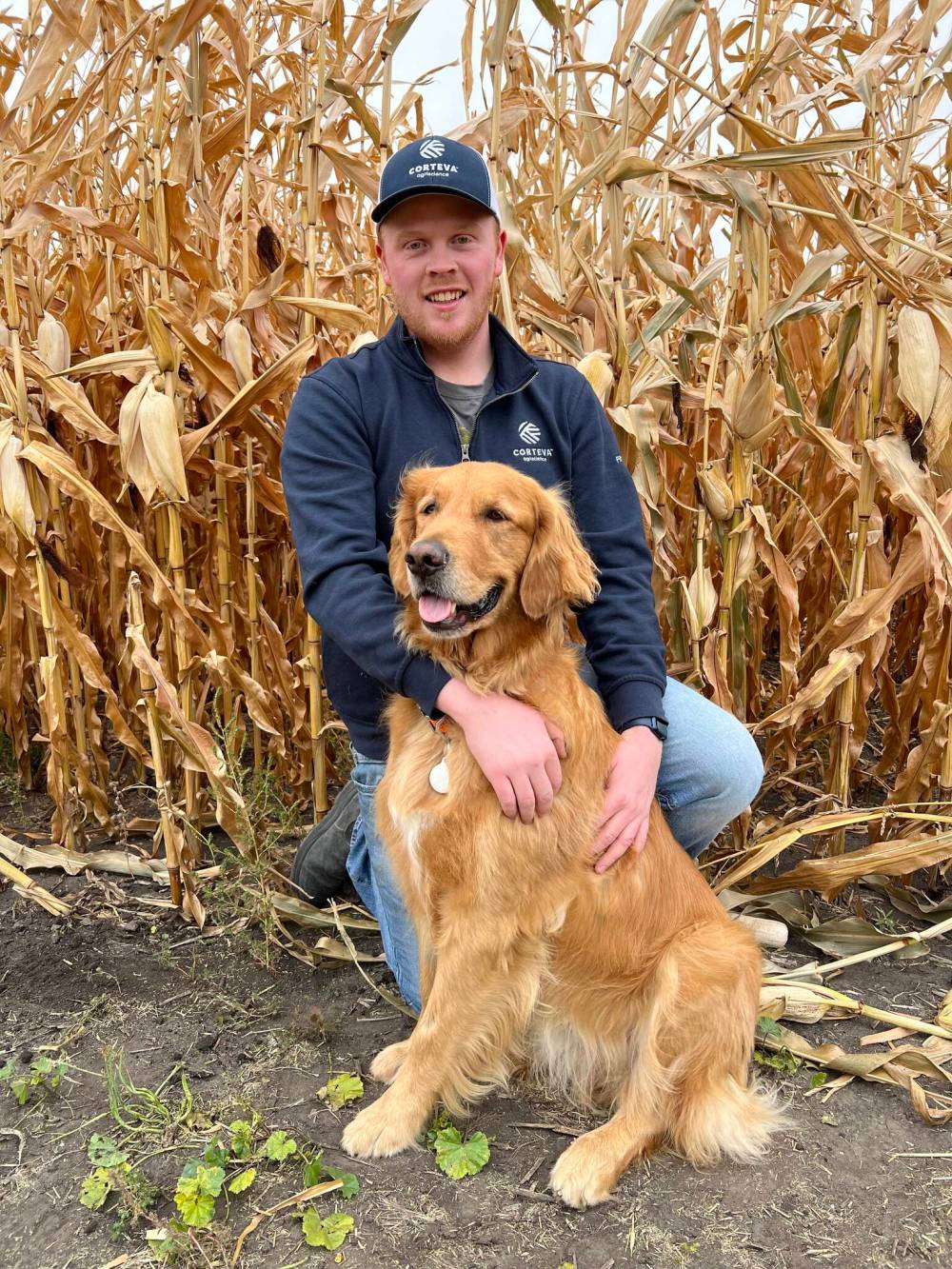
With little snow this winter, Ayre was concerned his winter wheat crop might not have survived. (Winter wheat is planted in the fall, germinates, then lies dormant under snow which insulates it from the cold before it starts growing again in the spring.)
“We were very surprised to have minimal amounts of winter kill,” said Ayre, 27, who runs a pedigree seed operation growing wheat, canola, barley, oats and soybeans.
The province’s most recent weekly Crop Report says overall seeding is now at 30 per cent complete, with producers focused on planting corn (60 per cent complete), cereals (58 per cent complete) and peas (72 per cent complete).
Canola planting has just started, with six per cent of acres done. Seeding of more sensitive crop types, such as soybeans, has begun and is about 15 per cent complete.
Farming south of Brandon is obviously different weather than may be found in the Interlake or southeastern Manitoba.
Jill Verwey farms about 8,000 acres with her husband and his three brothers near Portage la Prairie.
Their operations cover a pretty wide swath of territory and get a bit of everything when it comes to the weather.
“From a soil temperature and moisture levels, I don’t want to jinx it, but conditions are pretty good this spring,” she said. “There are probably some who will cringe when they hear that because they might be fighting excess moisture in some areas.”
For the most part, Manitoba farmers have been able to get equipment on the fields and are generally not dealing with the drought conditions that existed to some degree over the past couple of years.
However, conditions during seeding are not necessarily predictive of yields or quality of crops at harvest time.
“The most important weather lies ahead of us. But we always start out the year assuming average weather and trend yields and nothing has happened that would shake us off that so far,” said Neil Townsend, senior market analyst at FarmLink Marketing Solutions.
“The most important weather lies ahead of us.”–Neil Townsend
Townsend added global warming means weather extremes are more extreme.
“We don’t know what the weather will be,” he said. “Ten years ago (with planting season going so smoothly), we might have said the likely result is a good result. Now, we’re not so sure.”
But at least the crop is getting in the ground.
Verwey, who is in her second year as president of Keystone Agricultural Producers, said province-wide planting is ahead of the five-year average.
Things are going so well even smoke from devastating wildfires in northern Manitoba can have positive effects on agricultural production. Smoke in the atmosphere can mitigate damaging effects of extreme heat; but it is tough on the farmers themselves, Verwey said.
Meantime, Verwey said inflationary pressures have driven up prices on most crop inputs and actual grain prices have come down since the highs during the COVID-19 pandemic and after Russia invaded Ukraine.
That means farmers are going to have to be particularly focused on cash management this year, she said.
“The real issue for farmers is that we’re looking at escalated input costs with huge increases in equipment and parts costs and availability of input supplies is still a concern,” Verwey said. “If you look at the margins farmers are having to end up with, it’s a lot tighter than it was.”
Adding to those concerns is the fact many still have last year’s grain in storage because of unsatisfactory prices in 2023.
“The amount of money invested in this crop is significantly more than what it was 10 years ago,” she said. “And in a lot of cases, there’s still money invested in grain sitting in bins.”
In the end, Verwey echoed what may be the general consensus: “It’s nice to get crop in the ground and get ready for another year.”
martin.cash@freepress.mb.ca