Icelandic cultural connection ‘We’re small, but we’re strong and mighty’: Lögberg-Heimskringla newspaper celebrates 140 years in Manitoba
Read this article for free:
or
Already have an account? Log in here »
To continue reading, please subscribe:

Digital Subscription
One year of digital access for only $205*
- Enjoy unlimited reading on winnipegfreepress.com
- Read the E-Edition, our digital replica newspaper
- Access News Break, our award-winning app
- Play interactive puzzles
*First annual payment billed as $205.00 + GST for one year. This annual subscription will automatically renew at $233.00 + GST every 52 weeks (10% off the regular annual price of $259.35). Offer available to new and qualified returning subscribers only. Cancel any time.
To continue reading, please subscribe:
Add Free Press access to your Brandon Sun subscription for only an additional
$1 for the first 4 weeks*
- Enjoy unlimited reading on winnipegfreepress.com
- Read the E-Edition, our digital replica newspaper
- Access News Break, our award-winning app
- Play interactive puzzles
*Your next Brandon Sun subscription payment will increase by $1.00 and you will be charged $17.95 plus GST for four weeks. After four weeks, your payment will increase to $24.95 plus GST every four weeks.
Read unlimited articles for free today:
or
Already have an account? Log in here »
A “friend” of the Icelandic community is now 140 years old.
Lögberg-Heimskringla, a Winnipeg-based newspaper that serves the Icelandic diaspora throughout North America, has published continuously for nearly a century-and-a-half. Staff and supporters celebrated the anniversary Saturday afternoon during a gathering at the Scandinavian Cultural Centre.
“Whatever else it may be, Lögberg-Heimskringla is a friend in print — a familiar cultural institution that has enriched our lives and understanding, informing us and entertaining us at the same time,” editor Stefan Jonasson wrote in the paper’s anniversary issue, published on Sept. 15.
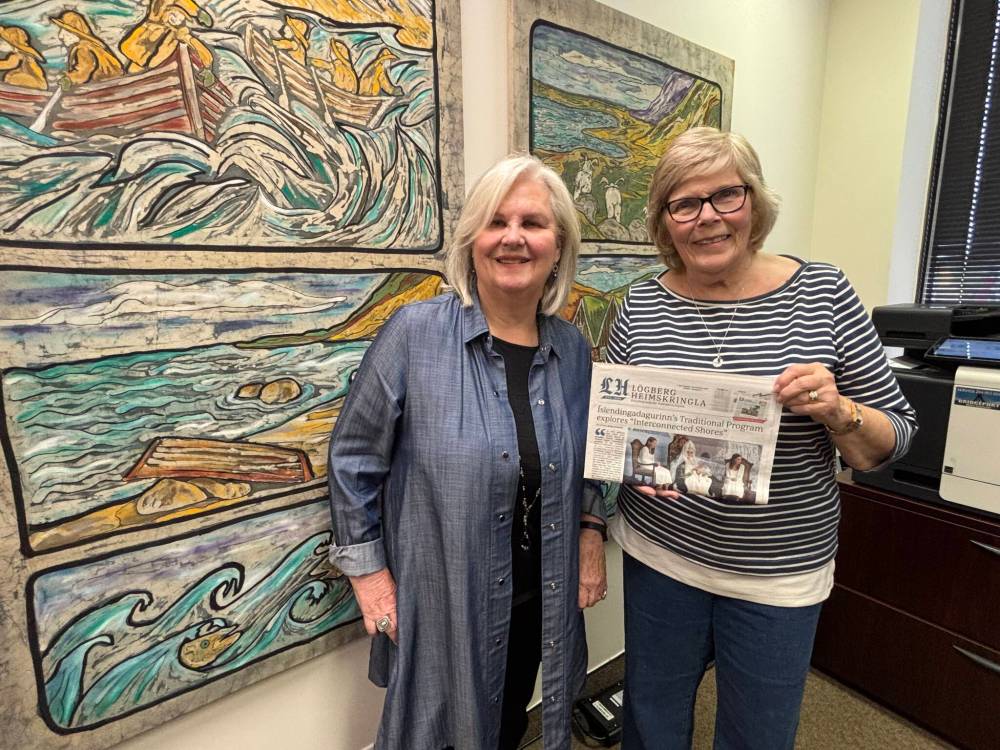
“It has served as a vessel to convey the Icelandic culture and heritage in North America through the course of several generations and changing circumstances, preserving memories from the past, imagining what lies ahead and reinventing itself along the way.”
In spite of the challenges facing small, community-based publications in 2026 — rising costs, dwindling ad revenue, fewer subscribers and social media platforms that won’t share news from Canadian outlets — the four part-time staffers at Lögberg-Heimskringla and the many volunteers who assist them soldier on, publishing 22 issues annually.
“There’s a great pride in the Icelandic culture,” said Cathie Eliasson, a longtime subscriber who volunteers with the paper’s marketing committee. “People will talk about a strong Viking spirit that rises to the occasion.”
“I feel a certain responsibility and duty to keep the paper moving forward,” added Karen Botting, board president. “We don’t want to see it go down on our watch … We’re small, but we’re strong and mighty. By keeping these institutions alive, we can support each other and build community with each other.”
Saturday’s celebration included the premiere of A Modern Icelandic Saga: the Story of Lögberg-Heimskringla, a 17-minute film that recounts the publication’s history.
Because of food shortages, climate shifts and poverty, around 15,000 Icelanders — nearly one-quarter of the country’s population — migrated to North America between 1870 and 1914.
They formed small Icelandic communities in the United States and Canada, with many settling in Manitoba.
“We’re small, but we’re strong and mighty.”
Most were poor and spoke neither English nor French. But they came from a highly literate society that valued the written word, and it wasn’t long before Icelandic newspapers started popping up.
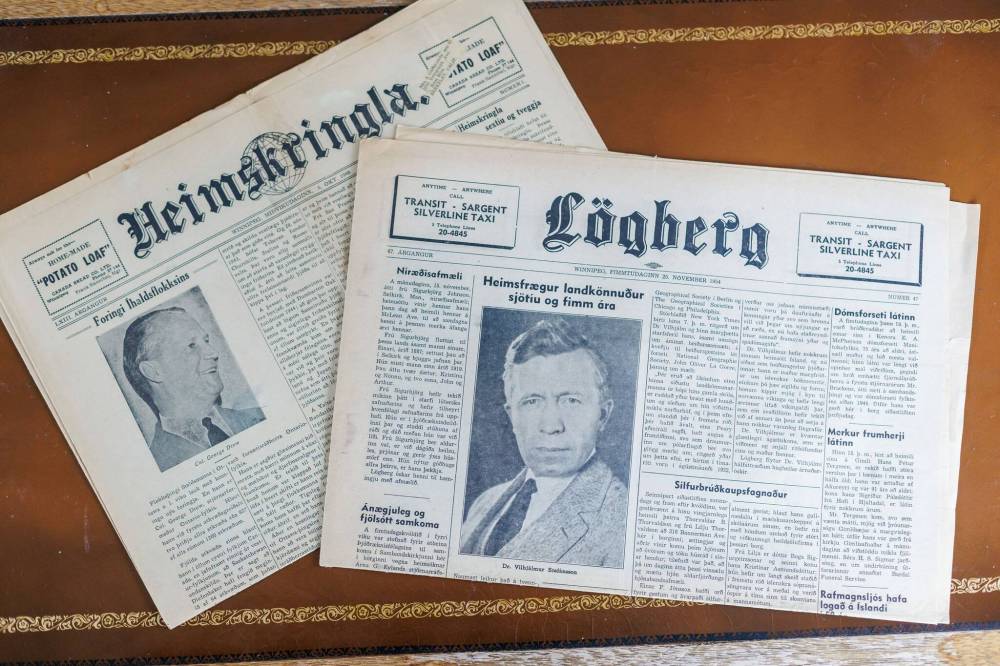
Three Icelanders purchased a printing press, and on Sept. 9, 1886, they published the first issue of Heimskringla, a name meaning “circle of the world.”
The paper soon took a conservative bent, and members of the community who supported liberal politics called for an alternative. Lögberg debuted on Jan. 14, 1888, taking its name from a rocky outcrop in southwest Iceland where parliamentarians read aloud codified laws.
Published in Icelandic, Heimskringla and Lögberg became important sources of community news, religious and political debate, and literary expression. They formed a historical record of the Icelandic diaspora and played an important role in preserving the Icelandic language.
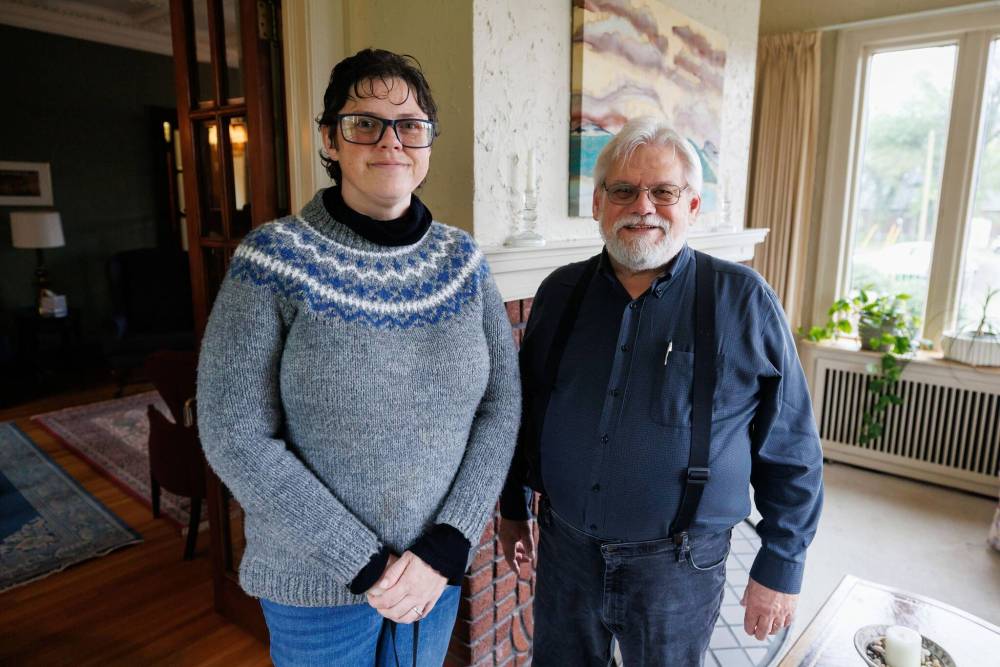
Winnipeg effectively became the capital of the Icelandic community in North America, Jonasson said, producing publications that covered what was happening in all Icelandic settlements.
At its peak, Heimskringla had eight full-time employees and about 2,000 subscribers, Jonasson said. Lögberg, meanwhile, had 12 full-time staffers and around 3,000 subscribers.
“Icelanders shared papers, so the readership was estimated to be five or six times larger than the subscription rate,” Jonasson told the Free Press. “One person would subscribe to Lögberg and the person next door would subscribe to Heimskringla, and they’d trade papers during the course of the week.”
“Icelanders shared papers, so the readership was estimated to be five or six times larger than the subscription rate.”
Both publications were substantial businesses that did well until after the Second World War. By then, people spoke and read Icelandic less than they once had, and a generation was coming up that couldn’t read the language in the papers.
Readers realized the community could sustain just one newspaper, Jonasson said. Since nobody wanted either paper to go away, Lögberg and Heimskringla merged in 1959.
Lögberg-Heimskringla began publishing an increasing amount of English-language articles, and by the 1980s, almost everything was in English. In that same decade, the publication, which had been a private business, reorganized as a non-profit.
Lögberg-Heimskringla published an issue every week until around 20 years ago, when it switched to its current publication schedule, Jonasson said.
The first issue of Heimskringla was published on Sept. 9, 1886.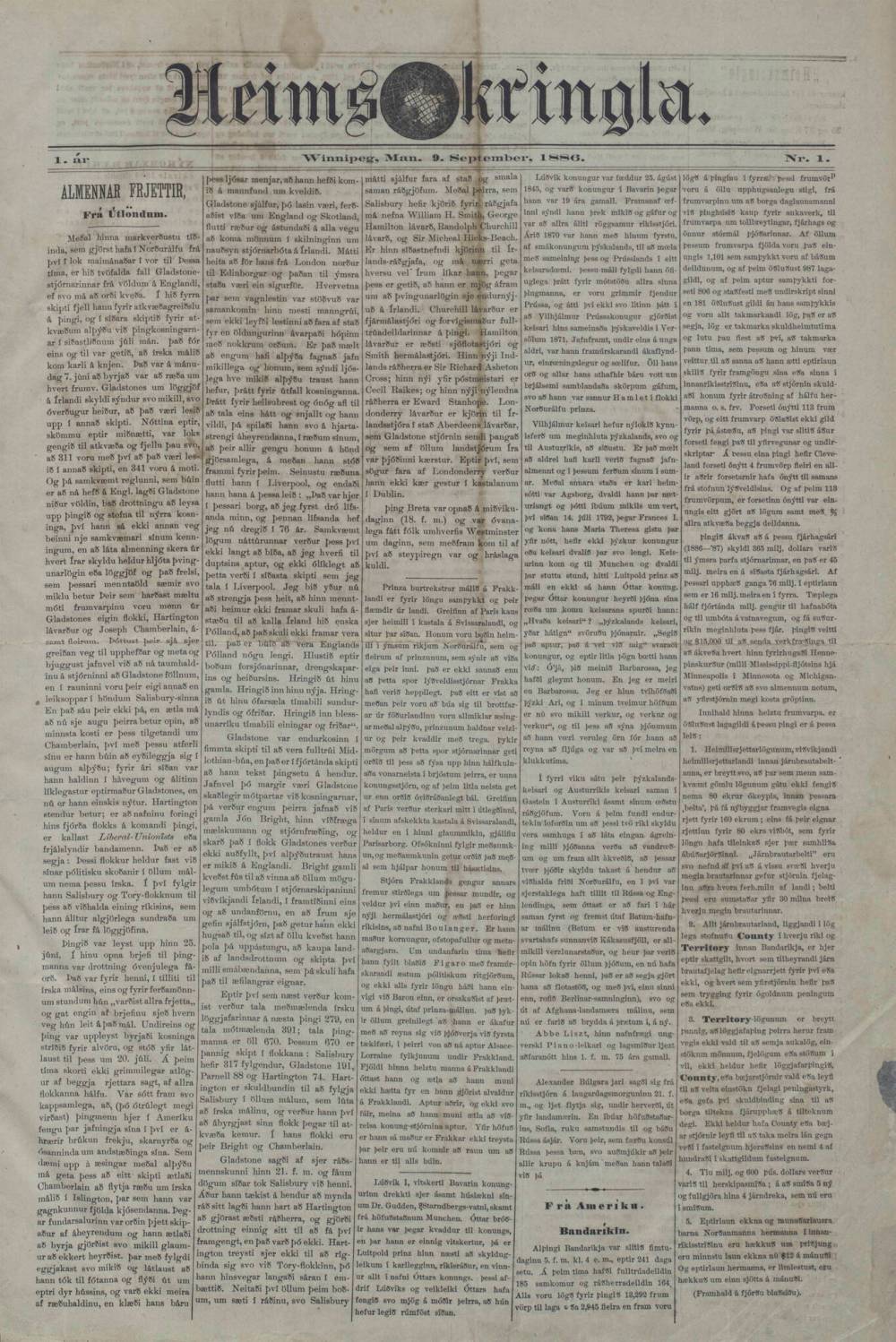
Today, the paper has around 1,000 subscribers. Just under 90 per cent of subscribers are in Canada and the rest are mostly in the United States. The paper maintains a business office on Donald Street, but staff members work remotely.
Jonasson was appointed the paper’s editor 12 years ago. For the last eight years, he’s balanced the part-time role with his work as a Unitarian Universalist minister. Now 66, Jonasson said when he took over the paper, one of his goals was to increase the amount of news from Iceland, and report on the Nordic island country from a North American perspective.
“I decided … there was a burning need to reacquaint Icelandic descendants in North America with what was happening in real time back in Iceland — with the political currents in Iceland, with the music and cinema … (with) some of the idiosyncrasies of modern Icelandic life, and to make them more familiar with the geography and with travel opportunities to Iceland.”
Jonasson is stepping down as editor at the end of the month. Katrin Nielsdottir has been hired to take over.
The 45-year-old was born in Saskatoon and raised across Saskatchewan and Alberta. She spent nearly 20 years living in Iceland, learning the language along the way and earning degrees in Icelandic literature and library science.
The first issue of Lögberg was published on Jan. 14, 1888.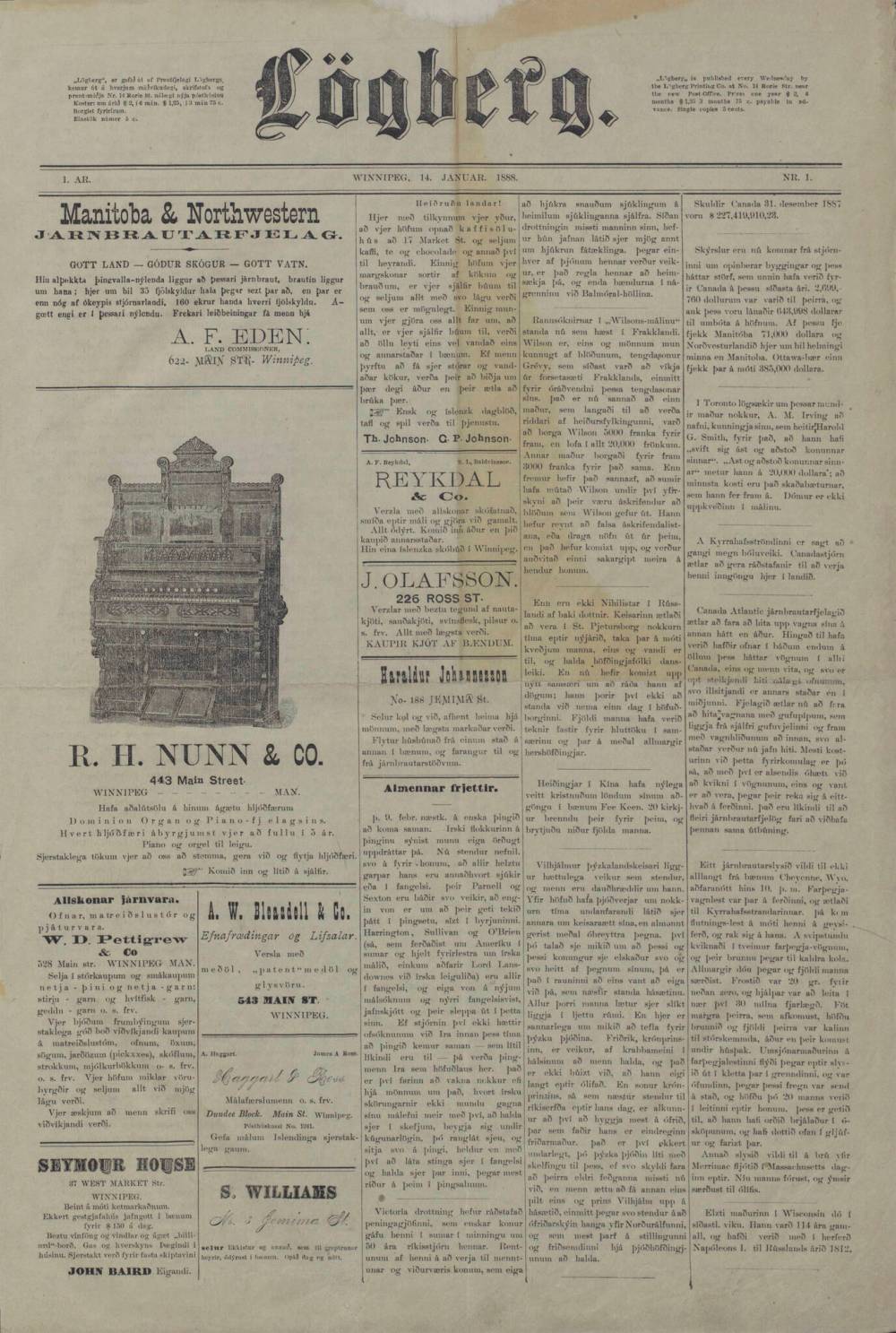
When she became a citizen, she changed her given name and surname to reflect her adopted home and culture.
Currently an assistant librarian at the University of Manitoba, Nielsdottir said Lögberg-Heimskringla has a lot of potential moving forward. She underscored the newspaper is for everyone, including people with no Icelandic heritage.
“You don’t have to go back four generations and say, ‘Well, these grandparents of mine moved here,’” she said. “It doesn’t matter. You can still be Icelandic. You can still love the literature and the culture and the vinarterta (Icelandic torte).
“I see those possibilities and I see us building a stronger community with the next generation.”
aaron.epp@freepress.mb.ca

Aaron Epp reports on business for the Free Press. After freelancing for the paper for a decade, he joined the staff full-time in 2024. Read more about Aaron.
Every piece of reporting Aaron produces is reviewed by an editing team before it is posted online or published in print — part of the Free Press‘s tradition, since 1872, of producing reliable independent journalism. Read more about Free Press’s history and mandate, and learn how our newsroom operates.
Our newsroom depends on a growing audience of readers to power our journalism. If you are not a paid reader, please consider becoming a subscriber.
Our newsroom depends on its audience of readers to power our journalism. Thank you for your support.