Trump leaves G7 summit early amid escalations in Middle East
Read this article for free:
or
Already have an account? Log in here »
To continue reading, please subscribe:

Digital Subscription
One year of digital access for only $205*
- Enjoy unlimited reading on winnipegfreepress.com
- Read the E-Edition, our digital replica newspaper
- Access News Break, our award-winning app
- Play interactive puzzles
*First annual payment billed as $205.00 + GST for one year. This annual subscription will automatically renew at $233.00 + GST every 52 weeks (10% off the regular annual price of $259.35). Offer available to new and qualified returning subscribers only. Cancel any time.
To continue reading, please subscribe:
Add Free Press access to your Brandon Sun subscription for only an additional
$1 for the first 4 weeks*
- Enjoy unlimited reading on winnipegfreepress.com
- Read the E-Edition, our digital replica newspaper
- Access News Break, our award-winning app
- Play interactive puzzles
*Your next Brandon Sun subscription payment will increase by $1.00 and you will be charged $17.95 plus GST for four weeks. After four weeks, your payment will increase to $24.95 plus GST every four weeks.
Read unlimited articles for free today:
or
Already have an account? Log in here »
Hey there, time traveller!
This article was published 16/06/2025 (449 days ago), so information in it may no longer be current.
KANANASKIS – Escalating violence in the Middle East overshadowed movement on trade deals within the G7 on Monday, as U.S. President Donald Trump departed the summit in Alberta a day early because of the crisis in Israel and Iran.
The abrupt plan to depart was announced by White House Press Secretary Karoline Leavitt on social media, and Trump confirmed it at the end of a group photo with other G7 leaders before their working dinner.
“I have to be back, it’s very important,” Trump told reporters. “I want to just thank our great hosts, thank you to Canada, but you probably see what I see.”
Israel began deploying warplanes and drones to attack nuclear sites and other energy infrastructure in Iran on Friday, and the two countries have traded fire since then.
Trump remained at the summit long enough to attend dinner, after which the G7 issued a joint statement calling for a de-escalation of hostilities in the Middle East.
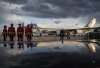
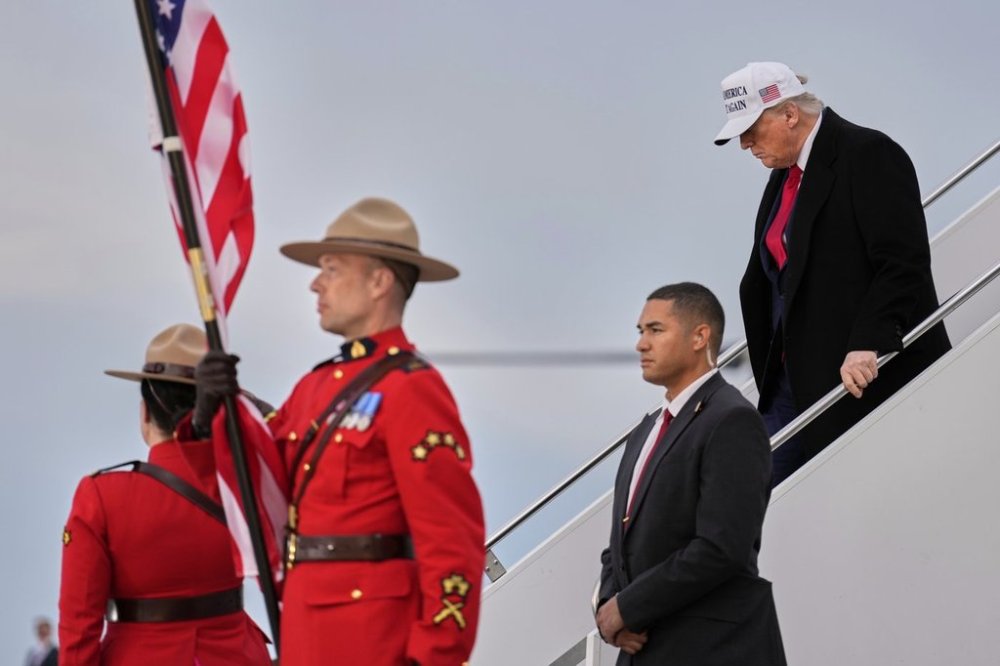
Just before Air Force 1 took off late at night, Trump posted on social media that he was not going back to Washington to work on a cease fire between Israel and Iran, saying it’s “much bigger than that.”
Unlike Trump’s early departure at the last G7 summit hosted in Canada seven years ago, he did not storm out in a huff.
“We had just a really great relationship with everybody,” he said. “It was really nice. I wish I could stay for tomorrow, but they understand this is big stuff.”
Carney said he was “very grateful for the president’s presence” and he understood why Trump had to leave.
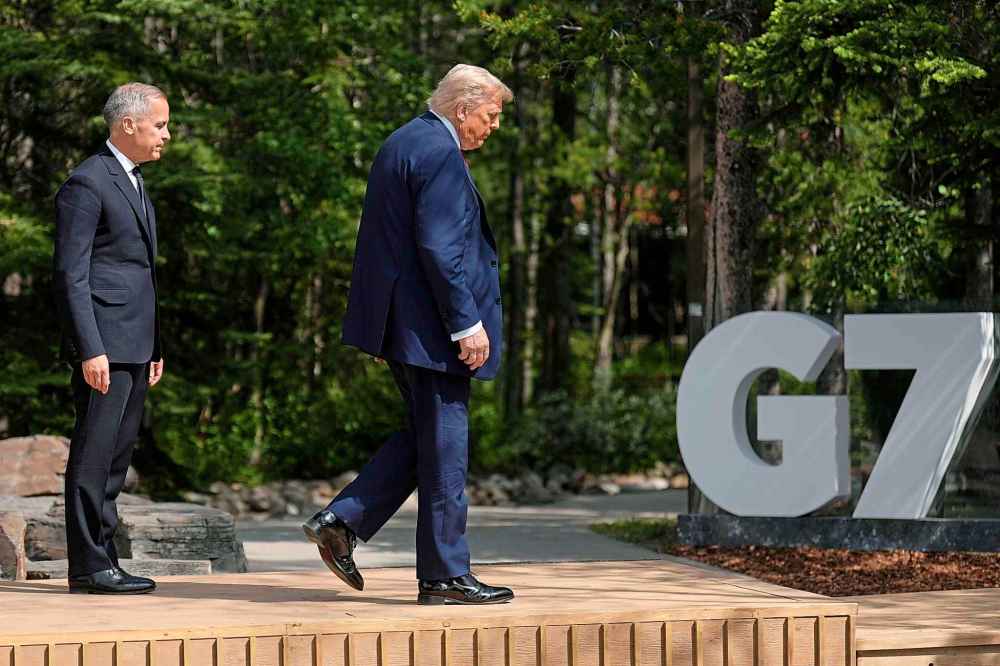
Carney and Trump met face-to-face first thing Monday, and Carney’s office later said he and Trump agreed to a mid-July deadline for finalizing a partnership they have been negotiating for more than a month.
“Prime Minister Carney and President Trump discussed immediate trade pressures and priorities for each country’s workers and businesses, and shared updates on key issues raised in negotiations on a new economic and security relationship between Canada and the U.S.,” said Canada’s formal summary following a morning meeting between the two leaders.
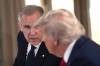
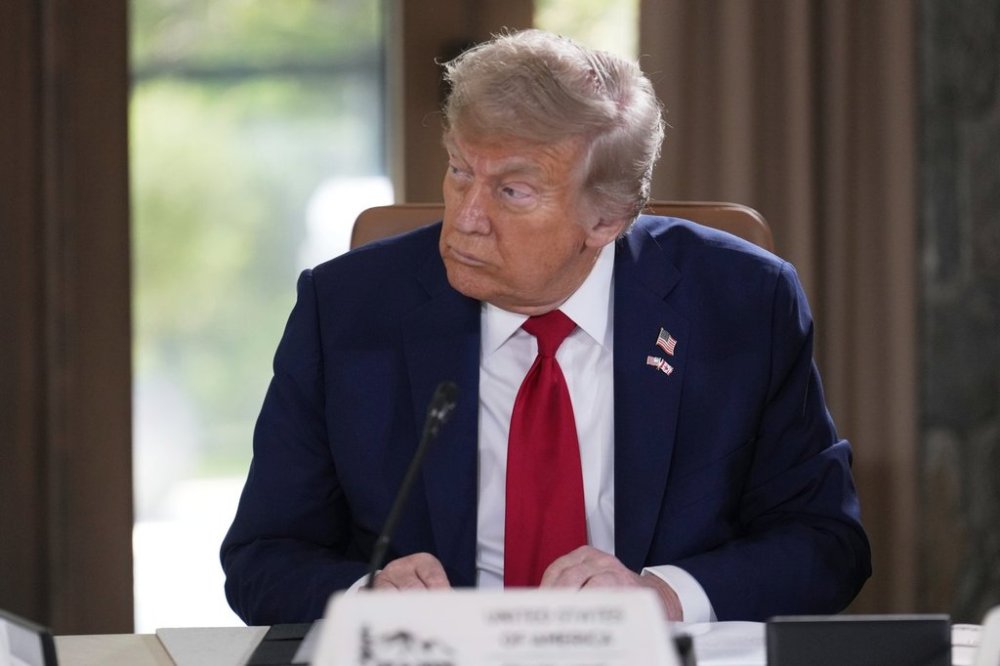
The news came despite Trump telling reporters at a photo op that he and Carney have “different concepts” of what that deal might look like.
The two met privately at the summit Carney is hosting in Kananaskis, Alta. Canadian officials initially described the meeting as a productive conversation about a possible trade deal and security partnership.
But Monday afternoon, Canada’s formal summary of the meeting said Carney and Trump “agreed to pursue negotiations toward a deal within the coming 30 days.”
The White House was asked to confirm its understanding of what the leaders agreed to, but did not respond.
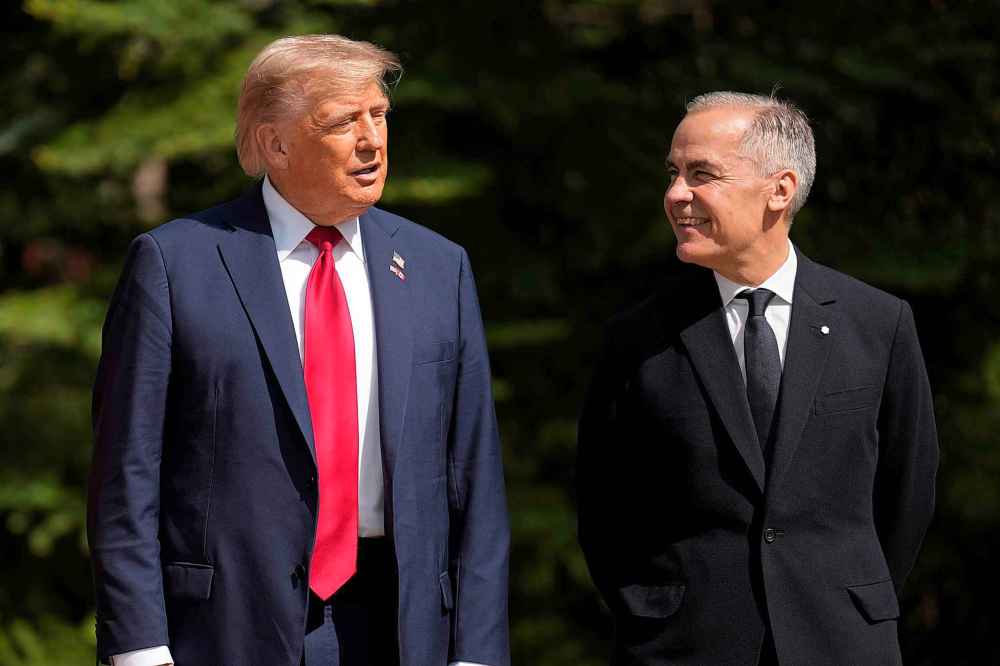
The two leaders met after weeks of exchanging phone calls and text messages in an ongoing attempt to resolve the economic conflict triggered by Trump’s tariffs. The president said their meeting would largely surround trade.
“I’m sure we can work something out,” Trump told reporters.
“I’m a tariff person. I’ve always been a tariff (person). It’s simple, it’s easy, it’s precise and it just goes very quickly. And I think Mark has a more complex idea, but also very good,” Trump said.
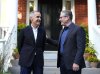
In brief remarks, Carney welcomed Trump to the summit and wished him a happy birthday. The president turned 79 on Saturday.
“This marks the 50th birthday of the G7,” Carney said. “And the G7 is nothing without U.S. leadership.”
The summit officially began Monday. Following a welcome ceremony, Carney said while G7 countries don’t always agree, they still face shared threats in an increasingly dangerous world.
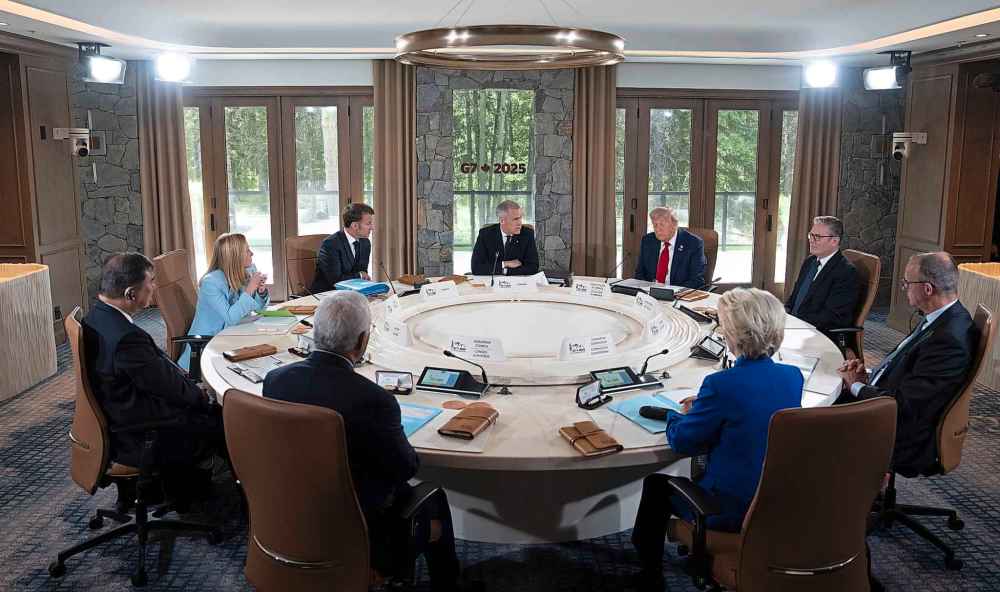
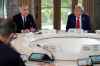
“Nostalgia isn’t a strategy,” Carney said in his opening statement to a roundtable of G7 members.
“We will have open, frank discussions over the course of the next two days. We might not agree on absolutely every issue, but where we will co-operate, we will make an enormous difference.”
The joint statement on “recent developments between Israel and Iran” was among those areas of consensus. Issued late Monday, the statement called Iran “the principal source of regional instability and terror” in the Middle East and voiced support for Israel’s security and “the importance of the protection of civilians.”
The statement said Iran “can never have a nuclear weapon” and urged de-escalation. Carney’s office says Trump endorsed the statement.
In earlier social media posts Monday, Trump called for the immediate evacuation of the Iranian capital of Tehran and warned Tehran needed to curb its nuclear program before it was “too late.”
He said Iranian leaders would “like to talk,” but they had 60 days to reach an agreement on their nuclear ambitions and failed to do so before the Israeli aerial assault began.
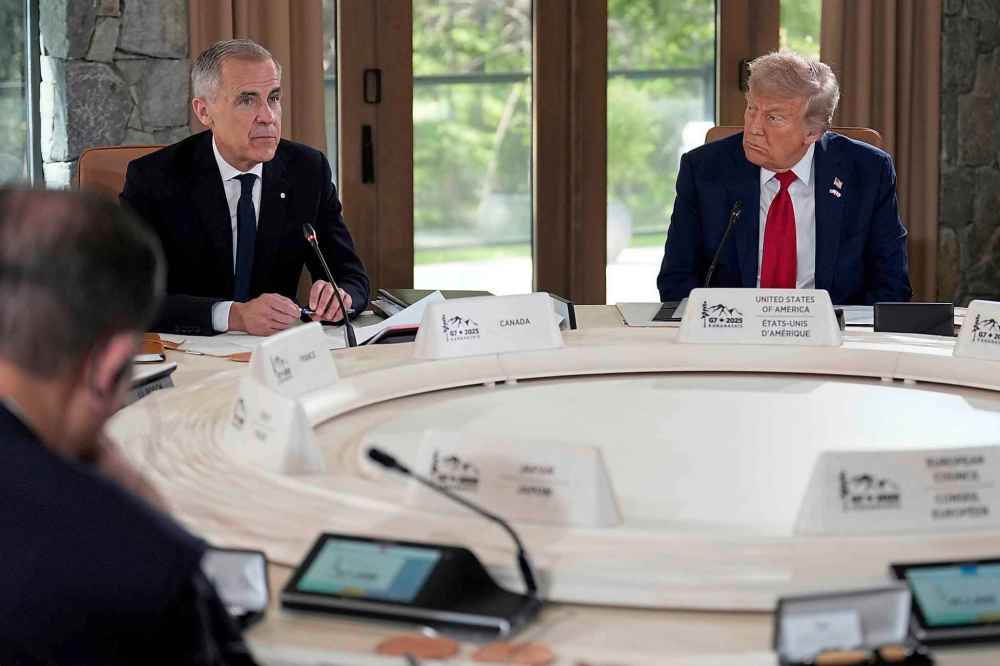
Carney also met one-on-one with other G7 leaders, including French President Emmanuel Macron, Italian Prime Minister Giorgia Meloni, Japanese Prime Minister Ishiba Shigeru and European Commission President Ursula von der Leyen.
He met Sunday with Starmer and Merz.
Following their meeting, Trump and Carney sat down with a wider group that included Intergovernmental Affairs Minister Dominic LeBlanc, U.S. Treasury Secretary Scott Bessent and U.S. Trade Representative Jamieson Greer.
LeBlanc and Kirsten Hillman, Canada’s ambassador to the U.S., told a news conference that talks with their American counterparts accelerated in recent weeks.
LeBlanc said both countries have agreed to keep details of those discussions private and to reconvene before the end of the week.
“The important thing is that we collectively think we’re making progress in coming to a deal that would be in the economic interest of both countries, but we’re not there yet,” he said.
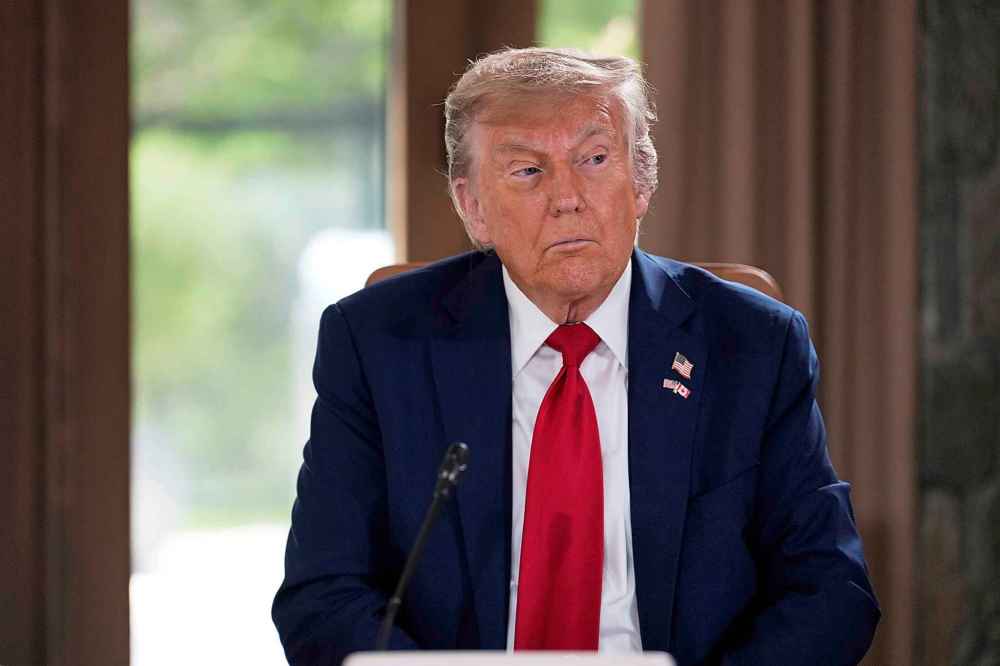
Hillman said she has a sense the Americans are “understanding us better,” as Canadian officials call for all the tariffs to be removed.
“We have a president who is very convinced of the policy that he has around tariffs in order to achieve some of his policy goals,” she said.
“We are very convinced that applying that policy to Canada is actually detrimental to his overall goals, and we are trying to get there with him and his officials.”
Hillman and LeBlanc didn’t answer repeated questions about whether Trump again raised the idea of making Canada a U.S. state, something he has repeatedly raised for months and, with tariffs, has prompted Canadians to boycott American products and travel.
Trump stormed out of the G7 summit that Canada hosted in 2018. He pulled out of a joint leaders’ statement and issued a statement of his own, calling then-prime minister Justin Trudeau weak and dishonest. It came after Trudeau announced countermeasures against U.S. tariffs.
Trump and Trudeau had a notoriously poor relationship. On Monday, Trump said he and Carney have “a very good relationship.”
Carney’s formal summary of the meeting also said the leaders discussed summit themes, including critical minerals, defence, border security, and gun and drug smuggling.
The war in Ukraine is one of Canada’s top priorities as summit host. Carney also invited Ukrainian President Volodymyr Zelenskyy to attend.
Indian Prime Minister Narendra Modi’s plane touched down at the Calgary airport Monday evening and he is later set to join the summit. Leaders from South Korea, Australia, Brazil, Mexico and South Africa are also to attend sessions Tuesday, as are senior UN and World Bank officials.
Carney has been criticized for his decision to invite Modi to the gathering, as security officials have linked Modi’s government to the murder of a Canadian man two years ago. There have been protests in Calgary and Ottawa.
The summit is scheduled to wrap Tuesday, when leaders are expected to focus on foreign policy.
The G7 includes France, the United States, Germany, Japan, the United Kingdom and Italy, as well as the European Union.
— With files from Sarah Ritchie and Catherine Morrison in Ottawa, Emilie Bergeron in Kananaskis and The Associated Press
This report by The Canadian Press was first published June 16, 2025.
Related Articles
Activists rally in Calgary during G7 summit to protest India PM Modi