Financial Literacy
Please review each article prior to use: grade-level applicability and curricular alignment might not be obvious from the headline alone.
MPI must evolve to ‘best-in-class’
4 minute read 2:02 AM CDTAs a Manitoban, you pay the lowest auto insurance rates in Canada in 2026. (That’s the analysis shared in the Saskatchewan Auto Fund’s 2026 Rate Proposal, in case having your good fortune envied by your neighbours sweetens the news.)
You deal directly with one insurance company — your own — after your vehicle gets hit, rather than chasing the other driver’s company. When it comes to fair and transparent customer service, your insurer has a higher bar to jump than in many other provinces. A private insurance company could just hike your rates; before making rate changes, Manitoba Public Insurance must go through an open and transparent public hearing at the Public Utilities Board, a neutral third party.
It’s worth remembering these points as MPI is slammed in opinion columns, social media posts and water-cooler talk. We have rates and an ease of navigating claims that other Canadians envy. We have a crown corporation that is a crown jewel — or could be.
But the criticism is warranted.
How the city fills its coffers
4 minute read 2:00 AM CDTWinnipeg has a serious revenue problem. There is no single solution, and the city operates with fewer revenue tools than provincial or federal governments. But how city hall raises money is a growing concern, alongside the fact that the city faces a structural deficit.
Municipalities have an uphill battle given the technicalities of how property taxes are calculated. Unlike income and sales taxes collected by the province, property tax revenues do not automatically grow with inflation in the economy. To keep up with rising costs and maintain public services at status quo levels, the city needs to increase tax rates each year.
For years, Winnipeg failed to raise property tax rates in line with inflation and population growth, while relying more heavily on frontage levies, user fees and utility revenues. The long property-tax freeze from 1998 through 2011 weakened the city’s revenue base and contributed to underinvestment in services and infrastructure. The 2026 alternative municipal budget by the Manitoba chapter of the Canadian Centre for Policy Alternatives estimates that, after inflation and population growth, city revenue per person in 2025 remained 1.9 per cent below its 2001 level.
This city has partially compensated over the last 15 years by increasing water-and-sewer rates, frontage levies, recreation fees and fines. This increasing reliance on utilities, levies, fees and fines has important equity considerations. One particularly problematic practice is transferring money from the water and sewer utilities into the city’s general revenues.

Most Canadian actors earn less than $20K per year from screen work, survey finds
5 minute read Preview Updated: 7:21 AM CDT
Addressing homelessness and toxic drug use
4 minute read Preview Tuesday, Oct. 20, 2026
Salvation Army calls on Winnipeggers to donate merchandise as sales soar
3 minute read Preview Monday, Oct. 19, 2026
Bank of Canada’s Macklem warns global resilience ‘under strain’
3 minute read Preview Tuesday, Oct. 20, 2026
Increasingly cited financial term, ‘nut,’ is worth knowing, says best-selling author
5 minute read Preview Saturday, Oct. 17, 2026
A kitchen is transformed with beautiful tiles and new countertops
4 minute read Preview Saturday, Oct. 17, 2026
Bank of Canada set for pair of important data drops ahead of ‘live’ rate decision
4 minute read Preview Tuesday, Oct. 20, 2026
NDP expects crypto, data centre electricity levy to shave about $50 annually off residential Hydro bills
5 minute read Preview Friday, Oct. 16, 2026
To get a suitable home, buyers figure out what they’ll accept as a trade-off: Re/Max
3 minute read Preview Sunday, Oct. 11, 2026
Older Canadians less confident in their retirement finances: BlackRock survey
3 minute read Preview Wednesday, Oct. 7, 2026
Business leaders want capital gains deferral to keep money in Canadian firms
3 minute read Preview Wednesday, Oct. 7, 2026
Lemonade stand brings in hundreds for West Broadway Youth Outreach
9 minute read Preview Monday, Oct. 5, 2026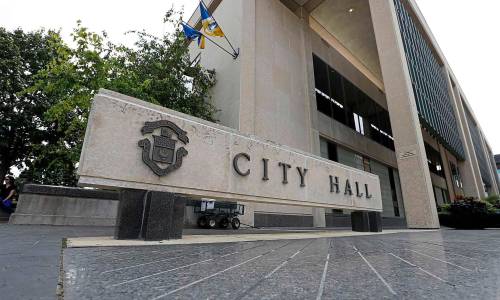
The election of our discontent: City at a crumbling crossroads, grumbling residents say in poll
7 minute read Preview Monday, Oct. 5, 2026Fewer pitchforks, better policy
4 minute read Saturday, Oct. 3, 2026Tenants facing rent increases of 50, 75 or even 100 per cent in several Winnipeg apartment buildings should be taken seriously.
Increases such as these can be devastating for seniors on fixed income or families already stretched by the cost of living.
I’m familiar with the buildings in last Saturday’s article (Tenants slam Alta.-based landlord, protest rent increases, Sept. 26). Before the buildings sold, the same group had owned them for decades. Many rents were around $500 a month, maintenance had been put off for years, and some of the buildings were nearly unlivable.
Unfortunately, this isn’t unusual in Manitoba. Existing housing policy has led to the oldest rental stocks in the country, with tens of thousands of units at or past 50 years old. Keeping them livable will take hundreds of millions of dollars. This is a bad time to make reinvesting in apartments even less attractive and put thousands of construction jobs at risk.

Trade tensions spur fresh wave of interest in community-supported farms, fisheries
4 minute read Preview Thursday, Oct. 1, 2026
Perfecting profitability
5 minute read Preview Saturday, Sep. 26, 2026
Gillingham outlines big plan for Seine River in a second term as mayor
4 minute read Preview Friday, Sep. 25, 2026

More than 60,000 Manitobans rely on food bank each month, Harvest Manitoba report says
3 minute read Preview Thursday, Sep. 24, 2026Students in Manitoba are facing additional costs at a time when many are already struggling with the rising cost of living, despite repeated promises from the provincial government to make life more affordable.

Life, disability coverage confusingly diverse ecosystem for most Canadians
5 minute read Preview Saturday, Sep. 19, 2026