Health and dental
Please review each article prior to use: grade-level applicability and curricular alignment might not be obvious from the headline alone.

Long-term care best when public
4 minute read Preview Wednesday, Sep. 2, 2026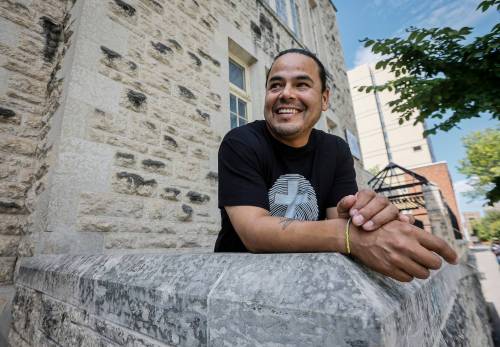
Former abuser of alcohol, drugs who graduated from recovery program now helping others
6 minute read Preview Monday, Aug. 31, 2026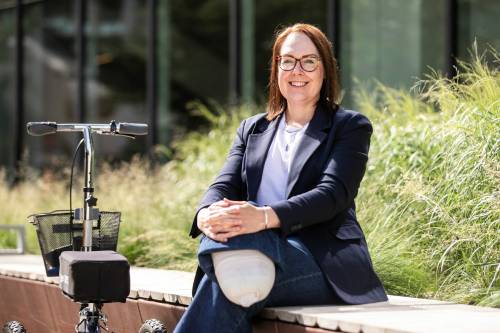
Rare and tough to notice, sarcomas may lurk in the body
12 minute read Preview Monday, Aug. 31, 2026
NDP trying to solve health-care problems from every angle — except the one likely to have the biggest impact
5 minute read Preview Friday, Aug. 28, 2026
At the city’s busiest fire and paramedic hall, first responders face a relentless workload
24 minute read Preview Friday, Aug. 28, 2026Treating symptoms, not the disease
4 minute read Friday, Aug. 28, 2026The backlog in emergency rooms in Manitoba stems from problems before and after the ER, not in the ER.
In Tom Brodbeck’s piece on the chronic and rising emergency room crisis in Winnipeg (Condition critical, Aug. 21) he quoted several experts who alluded to the backlog of accessible beds, beds needed so that acutely ill people can be moved out of the ER onto hospital wards.
This is a problem of an acute-care bed shortage in the acute-care hospitals and a long-term care bed shortage outside of the acute-care hospitals, where patients who no longer need acute care should be.
One major problem not addressed in Brodbeck’s article is the care required to reduce patients’ perceived or real need to come to the ER.
NDP should explain Shared Health’s value to Manitobans waiting for promised ‘fix’
4 minute read Thursday, Aug. 27, 2026Eight years after Shared Health was created, the revolving door in its executive ranks should prompt a more fundamental question than who gets the next job.
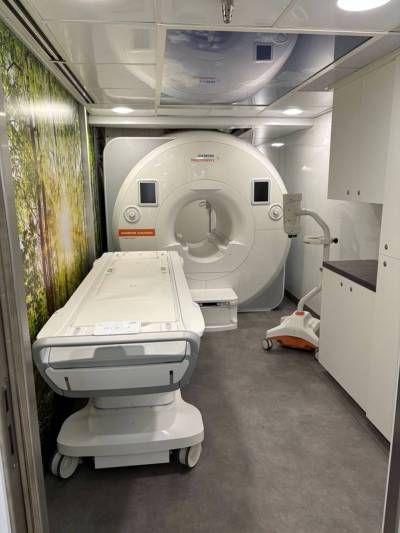
Northern Manitoba mobile MRI makes first move in 15 months
4 minute read Preview Wednesday, Aug. 26, 2026
Mole Mobile on move for your dermatological needs
3 minute read Preview Thursday, Aug. 20, 2026Build the resources to help children with speech
6 minute read Thursday, Aug. 20, 2026Imagine your daughter says her first word later than her friends do. You wait, hoping she will catch up. By age three, she still is not putting words together the way other kids her age are. Your doctor refers you to a speech-language pathologist. You expect a call within a few weeks.
Instead, you wait. Six months. A year. Two years.
By the time your daughter is finally seen, she is heading into kindergarten. She still struggles to tell her teacher she needs the bathroom. She still cannot explain when something hurts. She still cannot join in the games her classmates play, because those games need more words than she has.
As a parent, your anxiety grows, the frustration leading to sleepless nights worrying about how your child’s life will be impacted by this lack of support. The rest of your family and circle of friends is deeply affected by this potential crisis, they can see you struggling, you feel the stain of stigma attaching itself to your precious daughter. Where can you turn to help your child?
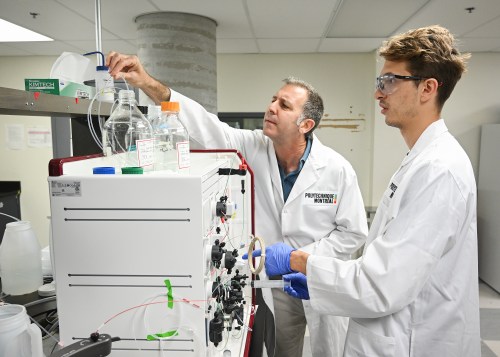
Inside the Montreal lab working to prepare Canada against future pandemics
6 minute read Preview Tuesday, Aug. 18, 2026
Manitoba supports MAID delay: Asagwara
5 minute read Preview Friday, Aug. 14, 2026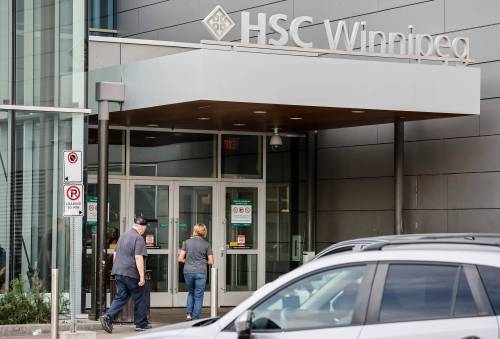
HSC nurses concerned info hacked in cyberattack
3 minute read Preview Wednesday, Aug. 12, 2026
Federal government invests $24 million for cannabis and brain health research
2 minute read Preview Thursday, Aug. 13, 2026
Quiet opening fitting for controversial site
4 minute read Preview Wednesday, Aug. 12, 2026
A mission to make hearing care easier to access
5 minute read Preview Wednesday, Aug. 12, 2026‘Artificial intelligence’ based on large language models is shaping up to be the most efficient destroyer of value since the South Sea Bubble. After “the Crash”, which is inevitably coming, some specific functions of AI will eventually turn out to be genuinely revenue-generating, and a lot of jobs will duly disappear. But the biggest winner (and potentially biggest loser) is medical science.
Dr. Brian Hie, a chemical engineer at Stanford University in California, has just revealed that his team has made the first viruses designed by artificial intelligence. They are ‘bacteriophages’, viruses that only infect bacteria and are widely used to treat people with infections that resist other treatments.
However, natural bacteriophages sometimes fail, so Dr. Hie used generative AI to design new ones that might do the job. The AI generated thousands of designs for new genomes that more or less fit the bill, and he chose around 300 of them to build in the lab. It’s hard work, not magic, but he ended up with 16 ‘novel’ bacteriophages that might work.
He applied them to petri dishes containing two harmful strains of E. coli, a common bacteria that lives in the human gut, and they killed the bacteria off. It’s still early days, but if it is truly becoming possible to tailor-make bacteriophages that target specific bacteria, then we may be getting a major new weapon in the struggle against antibiotic resistance.

Long-awaited supervised drug consumption site opens quietly after months of loud opposition
11 minute read Preview Tuesday, Aug. 11, 2026
Manitoba opens province’s first supervised consumption site
3 minute read Preview Wednesday, Aug. 12, 2026
City emergency crews to administer drug that stops opioid withdrawal symptoms
5 minute read Preview Monday, Aug. 10, 2026First Nations need co-ordinated health care
5 minute read Monday, Aug. 10, 2026In November 2025, Garden Hill Anisininew Nation declared a state of emergency. The threat was not wildfire or flood. The reason was hepatitis A, a vaccine-preventable liver infection spread through contaminated water, food and close contact.
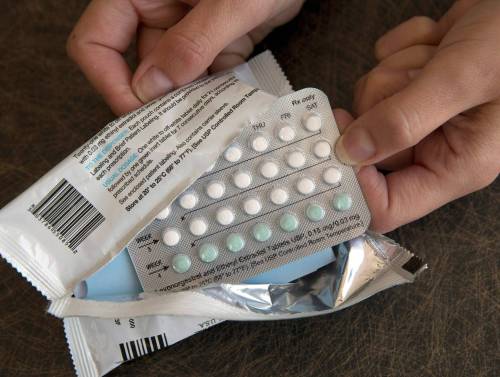
Province allows pharmacists to prescribe birth control; more services coming, Asagwara says
4 minute read Preview Friday, Aug. 7, 2026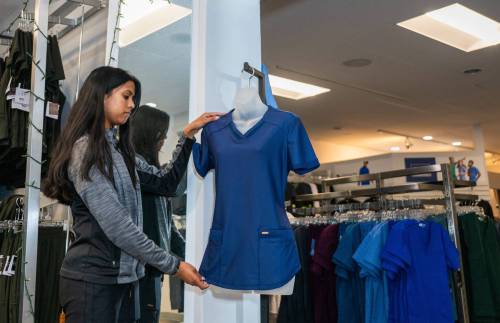
Local medical scrubs retailer feeling abandoned by U of M, RRC Polytech nursing programs
4 minute read Preview Thursday, Aug. 6, 2026