
The missing ink Newspapers have been the traditional lifeblood of civic information; what happens if they disappear?
Read this article for free:
or
Already have an account? Log in here »
To continue reading, please subscribe:
Monthly Digital Subscription
$1 per week for 24 weeks*
- Enjoy unlimited reading on winnipegfreepress.com
- Read the E-Edition, our digital replica newspaper
- Access News Break, our award-winning app
- Play interactive puzzles
*Billed as $4.00 plus GST every four weeks. After 24 weeks, price increases to the regular rate of $19.95 plus GST every four weeks. Offer available to new and qualified returning subscribers only. Cancel any time.
Monthly Digital Subscription
$4.99/week*
- Enjoy unlimited reading on winnipegfreepress.com
- Read the E-Edition, our digital replica newspaper
- Access News Break, our award-winning app
- Play interactive puzzles
*Billed as $19.95 plus GST every four weeks. Cancel any time.
To continue reading, please subscribe:
Add Free Press access to your Brandon Sun subscription for only an additional
$1 for the first 4 weeks*
*Your next subscription payment will increase by $1.00 and you will be charged $16.99 plus GST for four weeks. After four weeks, your payment will increase to $23.99 plus GST every four weeks.
Read unlimited articles for free today:
or
Already have an account? Log in here »
Hey there, time traveller!
This article was published 13/10/2017 (3056 days ago), so information in it may no longer be current.
As the Free Press prepares to mark its 145th anniversary next month, we want to share with our readers a perspective of the role we play in this community, as seen from afar.
The piece below, published last weekend in the Toronto Star, was written by former Montreal Gazette managing editor Catherine Wallace, who also worked at the Star and the Globe and Mail. Her look at the Free Press was part of her Atkinson Fellowship series exploring the future of public-interest journalism at a time when the news industry is in financial crisis. Cost-cutting measures have included widespread staffing reductions; in the past six years, a third of the nation’s journalists lost their jobs.
Canadians are experiencing massive changes in the way information is being delivered to their phones, tablets and computers, as well as their doorsteps. Wallace makes a compelling case for the Free Press newsroom’s determined effort to provide dynamic, relevant and trustworthy public-interest journalism to Manitobans every day.
The Atkinson Fellowship awards a seasoned Canadian journalist with the opportunity to pursue a yearlong investigation into a current policy issue. The award is a project funded by the Atkinson Foundation, the Honderich family and the Toronto Star.
If your local newspaper went out of business, would you still get the news you need? Most of us — 86 per cent of Canadians — believe we would. That’s an astonishing number. It’s a deeply worrying one.
Perhaps we feel we’re swimming in news because it comes from all directions and sources, even when we aren’t looking for it: from friends, strangers and news outlets, passing on links and likes. In the constant influx, we’re less likely to notice who is providing it, and that local reporting may be an ever-smaller stream in a flow of repackaged stories.
When we find a story through social media or an online search, more than half the time we aren’t aware of its origin — who reported and wrote it. We just know we got to it through Facebook or Google, according to a survey by the Reuters Institute for the Study of Journalism, which issues an annual report on digital news.
This unawareness of where news comes from may explain Canadians’ complacent belief that they would continue to be well-informed if their local paper folded, says Bruce Anderson of Abacus Data, which produced the poll with these findings in early June.

The state of the news industry, battered by the digital revolution, is a big story this year. Two in-depth reports, one by the Public Policy Forum and the other from the House of Commons heritage committee, detailed the effects of falling advertising revenues and subsequent job losses.
Both reports suggest some form of government financial aid to help the news media adapt to yet-unknown new business models. The call has been taken up by an industry association, News Media Canada, which in June asked the federal government to provide $350 million a year to support coverage of civic news during the transition. The main goal, says council chair Bob Cox, who is also publisher of the Winnipeg Free Press, is to preserve newsroom jobs as companies cut costs.
The reports and appeals don’t address a second challenge of the digital revolution: that while news organizations struggle with business models, communities and institutions are learning to produce and distribute information without going through the traditional media gatekeepers.
A new ecosystem is evolving, and it’s changing the way we think about news: what it is, who creates it, who gets to tell the story. This has been the focus of the 2016-17 Atkinson Fellowship in Public Policy.
But it’s very difficult to imagine a strong information ecosystem — to imagine a well-informed society — that doesn’t have strong professional journalism at its core.
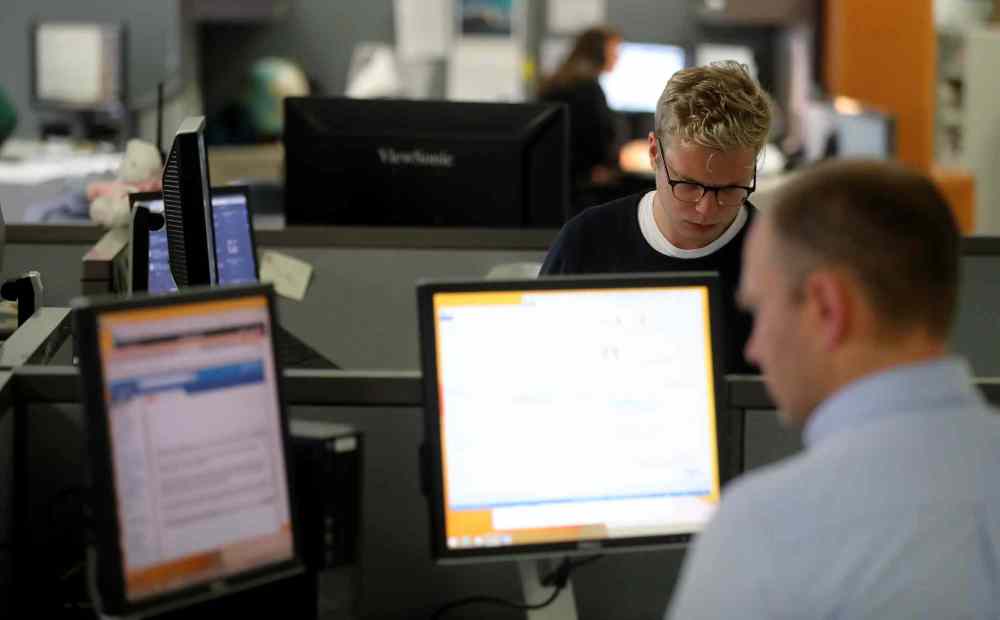
Newspapers have long been the main supplier in any community’s news system. They do the most sustained reporting on the widest range of topics, from daily coverage of government and social beats such as health and justice to occasional investigations that uncover dangerous or corrupt practices.
What happens when these sources of information dry up? What might happen if a paper such as the Winnipeg Free Press shut down? What would the people of Winnipeg know about their city and what their governments were up to?
No one should worry about losing the Free Press any time soon, though it is facing the same challenges as all newspapers. It has local owners committed to its survival to the extent that they’ve taken no dividends since 2015; any profits have been reinvested. Its employees are also committed, agreeing to an eight-per-cent pay cut if revenues fall below a certain level in the next two years (in return for a company promise of no layoffs).
But its newsroom has gone from 100 employees in the summer of 2010 to 67 in July this year. Many Canadian newsrooms have been cut more drastically.
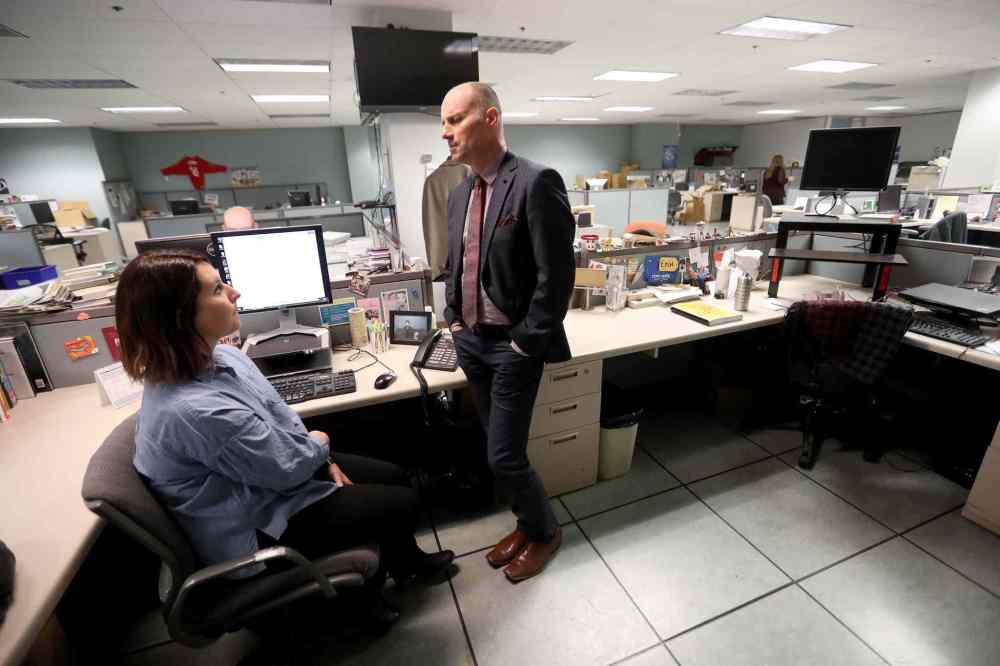
At the Free Press, ingenuity is filling some of the gaps. When the company decided to outsource the layout and editing of its print pages to Toronto-based Pagemasters North America, for example — most Canadian papers have outsourced this work — some copy editors became writers. Other employees took on hybrid jobs: Someone may edit for the first four hours of a shift and then switch to writing; a page designer may post stories to the web and help tweak layouts when necessary.
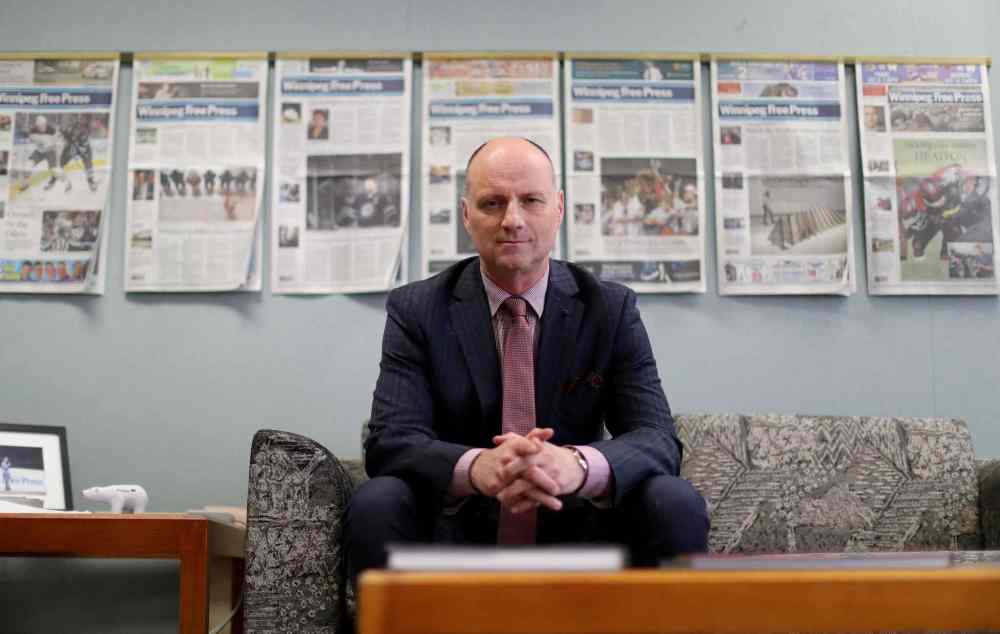
When the newsroom became too small to support more than one full-time editorial writer/editor, the Free Press came up with an “adjunct editorial board” that still fully discusses issues important to the community. Six writers in different departments participate in a weekly ideas meeting, take turns writing editorials and each day give feedback on the paper’s editorial stand.
The Free Press has two reporters at the provincial legislature and one in Ottawa, an increasingly rare position among local papers. It also publishes stories on amateur as well as professional sports, book reviews written locally and a Saturday section of in-depth stories.
Civic journalism, says publisher Cox, is journalism that informs communities about themselves.
“Local sports coverage informs the community about itself, and local theatre coverage informs the community about itself,” he says. “Even though they’re not public institutions, they’re certainly coverage of the things that are core to a community and to a healthy community.”
So what would the people of Winnipeg have been missing on Thursday, July 13 — a day chosen at random — if the Free Press weren’t around?
Several women who saw a Free Press story online about a man who grabbed a female jogger wouldn’t have come forward with their own experiences that might involve the same assailant.
Winnipeggers would have missed a story about the impact of a government cut in outpatient physiotherapy services.
They wouldn’t have learned how a forest-fire centre based in Winnipeg organizes relief crews from around the world.
The burial of a Ghanaian woman who died trying to cross the border into Canada in late May would have gone unreported; so would the loss of trees in a local wetland, cut down by a developer.
In all, the Winnipeg Free Press produced 40 local stories written by staff and freelancers on July 13:
- Local and government news: 16 stories and four briefs
- Local business: three stories
- Local sports: seven stories (one freelance) and one brief
- Local arts: two stories
- Weekly auto section: four local stories (one staff, three freelance)
- Columns: three local freelance columns on health, personal finance and lifestyles
- Opinion: one staff editorial, three local opinion pieces
- 24 staff photos
This was one day. Over 365 days, year in and year out, this is journalism that documents the community: in big events and small, policy and human-interest articles, stories that make us fear and stories that connect us.
How informed would the city be without it?
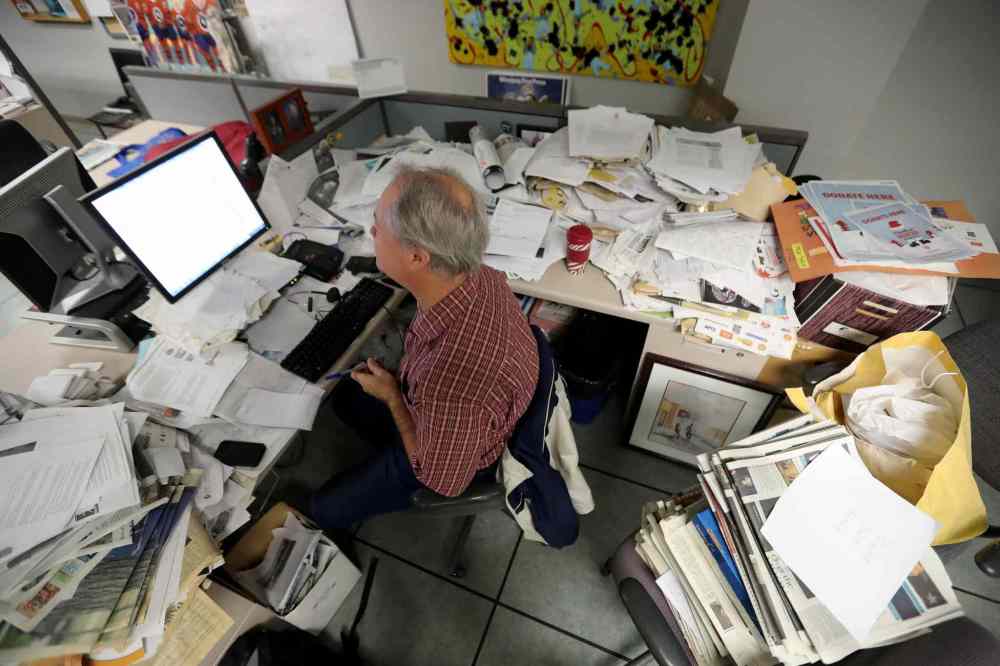
A day in the life of the Winnipeg Free Press
On Thursday, July 13, the Winnipeg Free Press newsroom had 62 people scheduled to work, including five summer interns. (Ten regular staffers were on vacation.)
The efforts of only a couple of dozen of them would have been obvious to people reading Free Press stories produced that day. The complex choreography that allows a news organization to cover daily news while also juggling features and investigations happens largely behind the scenes.
For instance, literary editor Ben MacPhee-Sigurdson was working nine days ahead on the Saturday book section of July 22. He sorts through 40 to 50 books a week, deciding which to send to his three dozen freelance reviewers for the eight reviews he needs. And the arts department was finishing its exhaustive coverage plan for the upcoming Winnipeg Fringe Festival, which featured 188 shows over 12 days.
And so on and so on, in every department, through every level of planning, reporting, editing and production.
The first shift on July 13 started at 6 a.m. The final story was posted online at 12:10 a.m. July 14. Here are some highlights behind the day.
6 a.m.: early arrivals

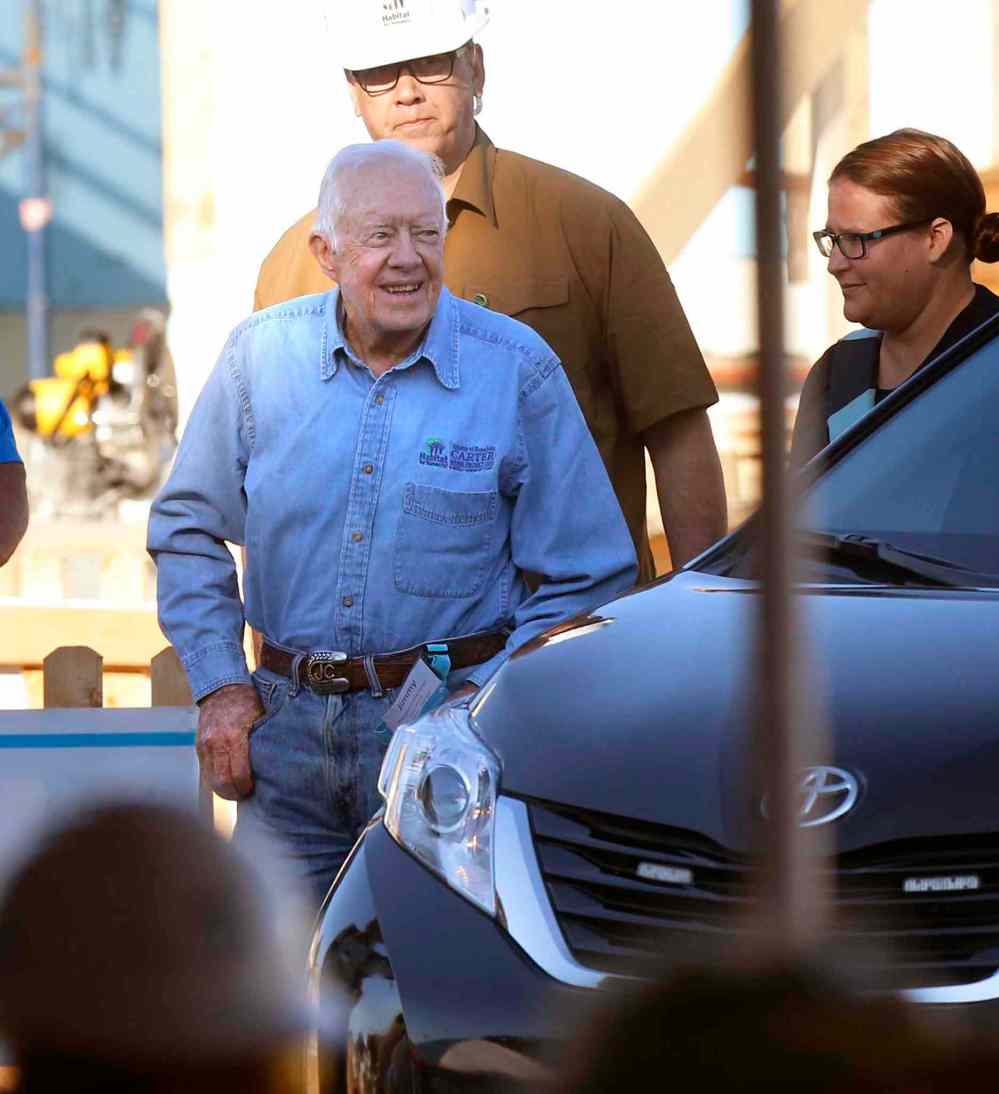
Carl DeGurse starts the first assignment shift, scanning other media sites, checking overnight emails, answering the phone and co-ordinating the nine general-assignment reporters available on this day. Photographer Wayne Glowacki and videographer Mike Deal are covering Jimmy Carter’s visit to a Habitat for Humanity build in Winnipeg. Security for former U.S. presidents being what it is, they had to apply for accreditation weeks ago, and they have to be on site by 6:30, though Carter’s first scheduled event isn’t until 8 a.m.
8 a.m.: The press pen
Carter and his wife Rosalynn — longtime volunteers with Habitat for Humanity, the organization in which low-income families help build their own homes — arrive and Glowacki is taking photos from what organizers “call the press pen,” he says later. “Like a pig pen? — this little picket-fenced area.” He’s hemmed in but gets a photo he likes and transmits it for a quick website post, using Wi-Fi to connect his camera to his phone. He had prepared a few captions the previous night, using the official Carter agenda as a guide, so he could work faster today.
9:03 a.m.: First of many
Melissa Martin’s first story is posted on the Free Press website. She’ll be writing and tweeting about the Carters throughout their visit.
9:15 a.m.: The legislature reporter

Larry Kusch has spent months writing about the Manitoba government’s health reforms, including a front-page story in this morning’s paper about cuts to outpatient physiotherapy services. He lets the assignment editor know he’ll be following more angles on this, including trying to get “what my editors call ‘a real person,’” in this case an outpatient. He’ll also check tips on a couple of other issues.
9:45ish: Carter collapses
Jimmy Carter has been working on a Habitat house with hammer and saw in the hot sun for an hour. Martin is in her car recharging her phone. Photographers have moved to a nearby tent for a 10:45 press conference. Glowacki hangs back for a few minutes, and that’s when the 92-year-old Carter wobbles and drops to his knees. His security people close in.
Ignoring a Habitat person who says “You shouldn’t be taking pictures of that,” Glowacki gets the best photos he can through the crowd, “and then I got my phone and I messaged to Melissa and to Mike to come back here.”
Deal had been setting up his video equipment in the tent. “I grabbed my camera off my tripod,” forgetting it was wired to a soundboard, he says later. “I forgot and I pulled it and everyone’s like, what’s going on? I just ignored everyone and ran off.” He’s shooting as he goes, and realizes he has captured Carter in the distance. He gets 16 seconds of Carter’s head bobbing among the phalanx of security.
10 a.m: The morning meeting
Yesterday’s physio cuts story is the top performer on the website, and as senior editors discuss the day’s plans, one of them suggests an additional angle for Kusch to pursue: How will this affect people getting knee and hip replacements, a growth field for baby boomers? The rest of the lineup is straightforward. Coverage of the Carter visit was long planned, so little is said about it — until photo editor Mike Aporius gets an email about Carter’s collapse. He runs out of the meeting to find out more.
10:19, 10:42, 11:01, 11:29 a.m.: Online updates
Martin has looked at the photographers’ stills and video footage and is emailing updates to her original web story. She’s still tweeting.
Jimmy Carter did become dehydrated and is now being treated, head of Habitat Int’l confirms. Carter passed along message that he is "okay."
— Melissa Martin (@DoubleEmMartin) July 13, 2017
11:45 a.m.: site down
There’s a whoosh as editor-in-chief Paul Samyn stalks out the newsroom door to the technology department, cursing. The website’s home page isn’t loading. The problem lasts about 15 minutes but the timing is bad: There’s usually a readership peak around noon, and today the Free Press also has the Carter collapse.
It turns out the U.S. company behind the publishing platform was doing technical work — something out of the newspaper’s hands, Samyn says later. “I told them, ‘One of your former U.S. presidents has collapsed in our city. We need it up and operational and we need it now.’”
11:45 a.m: The raw clip
Deal has an exclusive in his video clip of Carter being helped by security, though it was shot at a distance, and Canadian and U.S. news outlets are calling to see if it’s available. He comes in from the Habitat site to produce a raw clip for possible use elsewhere, and then a version for the Free Press that highlights Carter’s head in the crowd, frame by frame. He couldn’t have done that video treatment on his phone onsite, he says.
Samyn is being cautious with allowing outside use of the clip. “In today’s world,” he says, “no one’s going to hear it was the Winnipeg Free Press that did it” if they see it on another site.
Noon: Two-headed reporter

Mike McIntyre is covering the Winnipeg Goldeyes baseball game tonight but he shows up at the ballpark press box at noon. He has a feature to write, and he wants a quiet location. McIntyre is both a sportswriter and a projects reporter on the justice beat. After years of covering the courthouse he wanted a change but didn’t want to waste the good sources he had built up. Now he covers games and tournaments, and fits his justice work around them — usually.
More than once, the roles have overlapped. A source gave him information about the murder of a bus driver one night when he was covering a Winnipeg Jets NHL game. He toggled back and forth on his laptop: hockey story, murder story, hockey story… “There would be a whistle and then I’d write a few paragraphs of the murder story, and then I’d write a few paragraphs for my working copy on the Jets game.”
Today, looking out over the empty green baseball diamond, he’s writing about Crown attorneys and post-traumatic stress disorder.
12:15 p.m.: The editorial
Perspectives editor Brad Oswald usually has several editorials in the works. Today he’ll run one about a change in Canadian Press style to capitalize the words Indigenous and Aboriginal. Oswald has discussed the piece with editor Samyn and now, as he always does, he emails it to the editorial writers scattered in different departments for their comments. There is little feedback today, probably because “the CP style change is one most folks think was overdue,” he says.
12:20 p.m.: Final questions

Alexandra Paul was assigned the coming weekend’s big feature back in February: writing about the 200th anniversary of the Selkirk Treaty, which brought peace to the region and created the settlement that became Winnipeg. While still working news shifts, she’s been sorting through treaty accounts and interpretations and trying to track down descendants. Her research material fills a grocery box beside her desk.
She began talking to associate editor Scott Gibbons about the reporting and writing at the beginning of June. Now, just hours before the Saturday feature pages go to press as a preprinted section, she and Gibbons are dealing with final questions, such as the different spellings that various sources have of some Indigenous names.
2 p.m.: Too much for one plate
Legislature reporter Kusch has gathered many of the followup details he wants on the physio cuts, some from a good source at the hospital. He has also checked out another story that proved untrue, and wrote up a quick assessment of several cabinet ministers to help a columnist.
Now he hears of another health cut and that CBC and CTV are chasing it. He has too much on the go, so he phones city editor Shane Minkin, who assigns a news reporter to the story.
2 p.m.: Story behind the story

Randy Turner sits down to write a short feature he researched yesterday. The Canadian Interagency Forest Fire Centre was mentioned in a Tuesday story about B.C. wildfires; it’s based in Winnipeg but no one knows much about it. Turner was asked to check it out, see if there was more to say. There is.
When he went to the centre’s office, “it was just a bunch of guys sitting at their desks, so it didn’t look visually exciting,” he says later. “But when they started to explain how it worked, I thought, ‘This is pretty cool.’” He did the interviews, lined up a photographer and transcribed his tapes. The writing now will take a couple of hours. The story will fill most of a page in Friday’s paper.
“Not everything has to be breaking news,” Turner says. “There’s lots of room, or should be, for stories that explain things about the news.”
4 p.m.: Two minutes, 44 seconds
Before Carter collapsed (it turns out to have been dehydration, and he recovered well), Deal had shot 32 clips of him talking to volunteers and working on a house. Deal edits this into a video that comes in at two minutes, 44 seconds. Not knowing how accessible Carter would be, he had been to the Habitat site several times earlier in the week to shoot B-roll. None of it is used today.
5:53 p.m.: Multi-tasking
Kusch has most of the interviews he needs and files his story. He didn’t get a current physio patient. “Yet I was able to recreate what a patient might have told me from what I gleaned from the folks I did get,” he says. “On so many days, reporters have a lot on the go. If you work on one story at a time, there are many days where you might not file anything.”
10:30 p.m.: Three stories later …
Mike McIntyre had filed his 2,000-word PTSD feature just in time to watch the Goldeyes take batting practice at 4 p.m. He interviewed a new player and wrote a 700-word profile before game time at 7. Now he files 350 words on the game itself — his last story of a long day.
In the newsroom, print and digital editors are still at work.
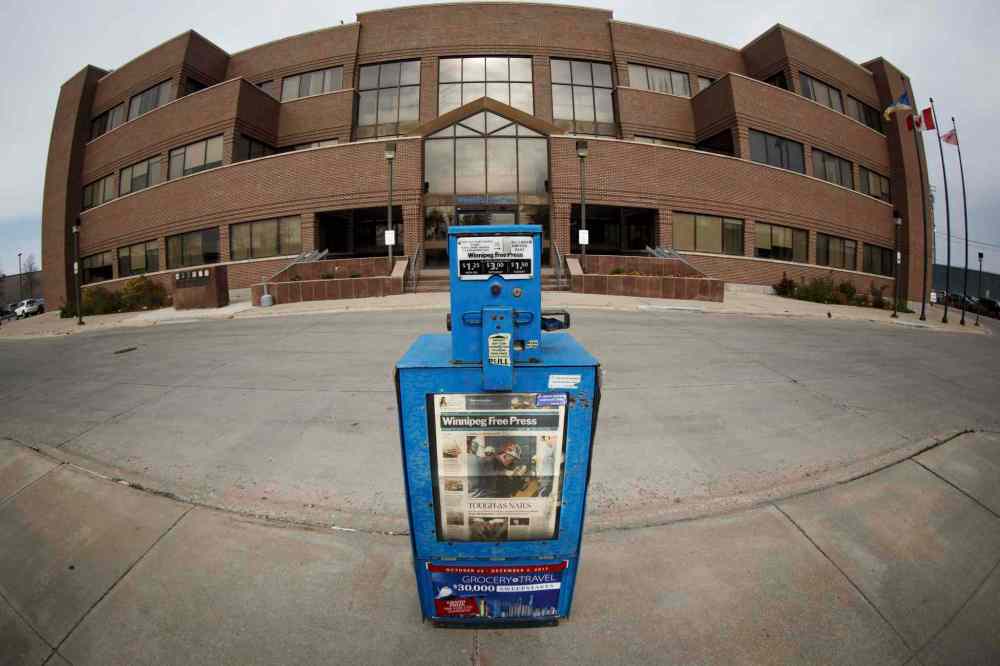
Winnipeg media breakdown
Winnipeg Free Press
Newsroom employees summer 2017: 67
Newsroom employees summer 2010: 100
Circulation: 100,000 weekdays, 130,000 Saturdays (Alliance for Audited Media data)
Digital-only full-access subscriptions: 6,000
Digital pay-per-article subscriptions: 6,000
Cost per article: 27 cents
Print and digital reach: 68% of Winnipeg adults each week (Vividata)
Print edition reach: 59% of Winnipeg adults each week
Annual operations budget: $70 million
Annual newsroom operations budget: $7 million
Winnipeg Sun
Local material in the July 14 tabloid paper:
5 staff news stories and 5 news briefs
1 editorial and 1 oped
7 staff and 2 freelance sports stories, plus 1 sports brief
2 staff arts stories
The Canadian Press
The national news service has one reporter in Winnipeg to cover the Manitoba legislature and other news. It uses freelancers to cover professional sports and occasional news.
Metro Winnipeg
The free tabloid has two reporters and an editor, and uses a few freelance reporters. Local material in the July 14 edition:
4 news stories, 1 weekend events lookahead
CBC Winnipeg
The national broadcaster’s Winnipeg bureau has 13 reporters, 3 video-journalists, 8 videographers, 5 web writers who do some original reporting and 1 data journalist. This does not include editors, producers, and broadcast hosts. They all feed radio and TV news, radio current affairs programs, web and social media and national programs.
CTV and Global TV Winnipeg
Information on their resources was not available.
wallace.mtl@gmail.com