
Thinking outside the tinderbox Experts say Manitoba must rethink forestry strategy to face intensifying wildfire threats
Read this article for free:
or
Already have an account? Log in here »
To continue reading, please subscribe:
Monthly Digital Subscription
$1 per week for 24 weeks*
- Enjoy unlimited reading on winnipegfreepress.com
- Read the E-Edition, our digital replica newspaper
- Access News Break, our award-winning app
- Play interactive puzzles
*Billed as $4.00 plus GST every four weeks. After 24 weeks, price increases to the regular rate of $19.95 plus GST every four weeks. Offer available to new and qualified returning subscribers only. Cancel any time.
Monthly Digital Subscription
$4.99/week*
- Enjoy unlimited reading on winnipegfreepress.com
- Read the E-Edition, our digital replica newspaper
- Access News Break, our award-winning app
- Play interactive puzzles
*Billed as $19.95 plus GST every four weeks. Cancel any time.
To continue reading, please subscribe:
Add Free Press access to your Brandon Sun subscription for only an additional
$1 for the first 4 weeks*
- Enjoy unlimited reading on winnipegfreepress.com
- Read the E-Edition, our digital replica newspaper
- Access News Break, our award-winning app
- Play interactive puzzles
*Your next Brandon Sun subscription payment will increase by $1.00 and you will be charged $17.95 plus GST for four weeks. After four weeks, your payment will increase to $24.95 plus GST every four weeks.
Read unlimited articles for free today:
or
Already have an account? Log in here »
Hey there, time traveller!
This article was published 10/10/2025 (214 days ago), so information in it may no longer be current.
Wildfire is part of the natural life cycle of a forest; but as Manitoba continues to battle the embers of its most devastating fire season in more than 30 years, its leaders are starting to consider a more active role in managing this critical resource to stave off the flames.
In early October, as more than 70 wildland fires still smouldered across the province, Premier Wab Kinew and a handful of cabinet ministers released Manitoba’s first all-encompassing plan to slash carbon emissions in the next 25 years.
Among the promised initiatives was a commitment to “co-develop a wildfire prevention and preparation approach that reflects Indigenous leadership, land-based knowledge and nature-based solutions” — a first hint at how the provincial government plans to respond to the growing threat of wildfire.
“We just came out of the worst wildfire season in living memory,” Environment and Climate Change Minister Mike Moyes said at a press conference for the new strategy this week.
“We recognize that local communities often will have insights in how to respond or how to prevent things. As we review (the wildfire response), we’re going to be looking to make those connections with local leaders and communities so we can get it right, heaven forbid, if that ever happens again.”
The 2025 wildfire season, which began in early May in the midst of a record-shattering heat wave, has seen 432 fires consume more than 2.1 million hectares of land — a surface area larger than Lake Ontario.
JULIA-SIMONE RUTGERS / FREE PRESS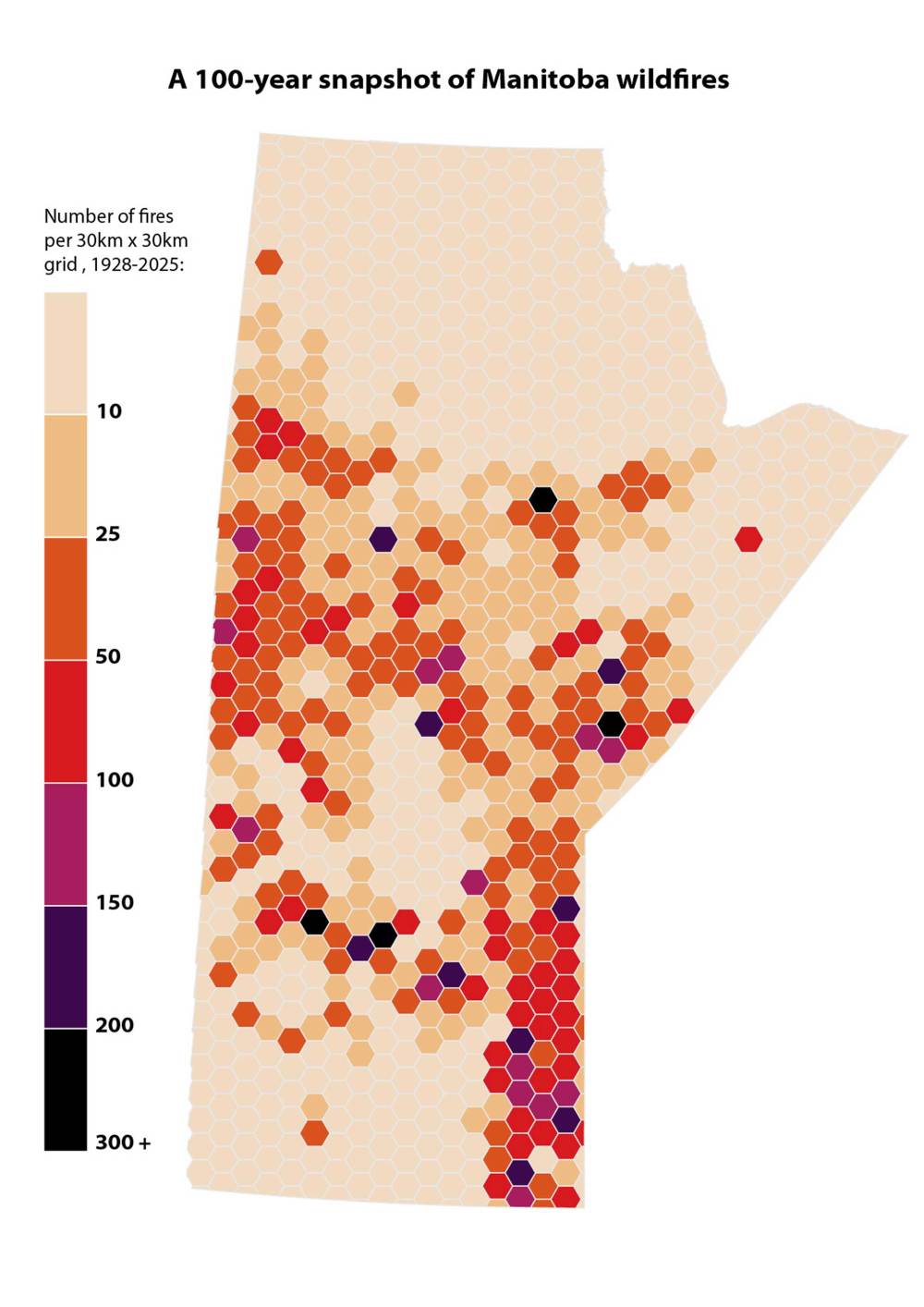
Two people died trying to evacuate a blaze near Lac Du Bonnet, the first civilian wildfire deaths in Manitoba’s recent history. The province declared a state of emergency in late May and another in July. The Canadian Red Cross recorded more than 32,000 evacuees, many of whom are still waiting to go home.
In nearly 100 years of recorded wildfire history in the province, only the 1989 season was more severe.
There are few details about the direction Manitoba’s fire prevention strategy will take. Provincial officials have deferred questions about the strategy until the final review is completed.
But in an interview prior to the launch of the emissions-reduction plan, Natural Resources Minister Ian Bushie acknowledged the wildfire risk is changing — and Manitoba’s approach to managing its forest resources will need to change too.
“If this fire season is our new normal,” he says, “then maybe we’ve got to be able to adapt some of our policies to adhere to what that new normal would entail.”
Michael Doig is a longtime Manitoba forester who currently manages a working group in the province’s forestry and peatlands branch.
Much of his team’s work involves taking detailed inventories, carefully monitoring forest health and conducting complex modelling to draw up decades- or centuries-long plans for harvesting and regenerating the province’s vast forests.
Nearly half of Manitoba’s land area is covered by forest — 26.3 million hectares in all. The majority is made up of dense, boreal wood: a mix of boggy, black spruce lowlands, and uplands dotted with white spruce, poplar and jack pine. There are stands of broadleaf forest dotting the southern prairie grasslands — clusters of aspen, burr oak and other deciduous species.
Nearly half of Manitoba’s land area is covered by forest. The majority is made up of dense, boreal wood.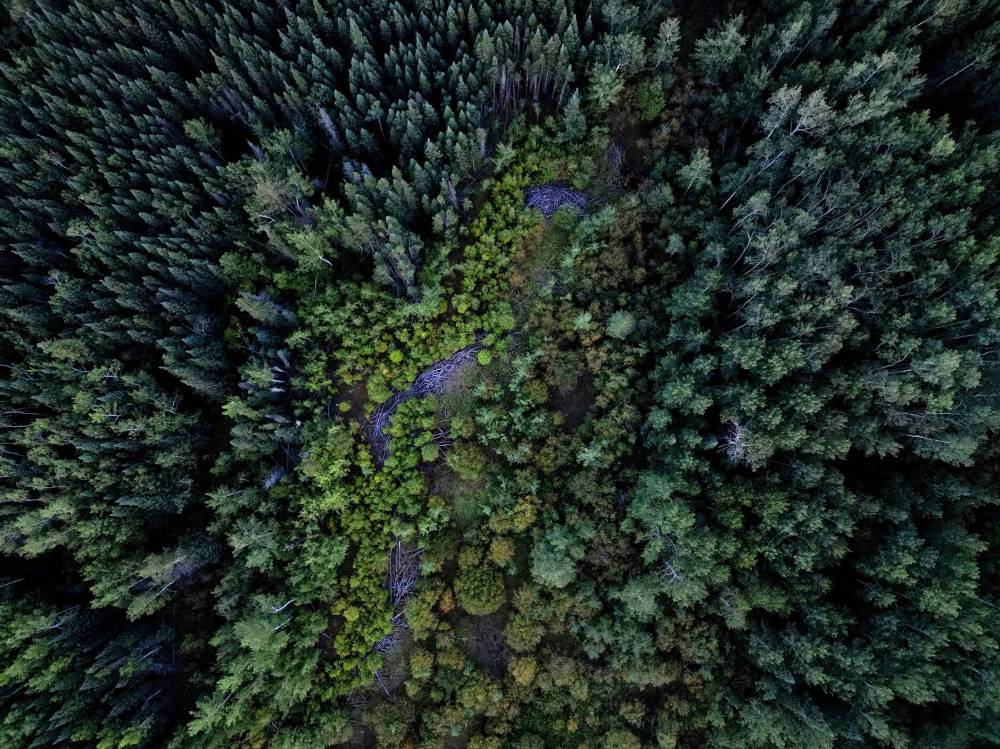
Some two million hectares are considered provincial forests, which serve as recreation areas, research hubs and timber reserves. Other sections are wrapped within the bounds of provincial parks and protected areas, where they are (for the most part) undisturbed by industrial activities.
And then there are the 11 million hectares of woodlands set aside for commercial logging in two sprawling forest management licence areas — where Doig and his team invest the majority of their resources.
“Our province is huge and our forest industry is somewhat centralized in the northwest and western regions,” Doig says.
That’s not to say the rest of the province’s forests go without oversight. In eastern and central Manitoba, provincial staff keep track of logging and renewal activities and manage limited, small quota harvests. The province participates in a national forest health survey every year, which requires flying over and monitoring forests in provincial parks and other forested regions.
But the two large swaths of land licensed to forestry companies Canadian Kraft Paper and Louisiana-Pacific come with boots-on-the-ground monitoring, troves of inventory data — and the potential to generate significant provincial revenue.
Logging generated $6.4 million in Crown royalties in 2024, though a significant drop compared to 2022 and 2023, when royalties reached approximately $12 million.
According to the Forest Industry Association of Manitoba, the industry generates an average of $700 million in revenues annually and contributes more than $330 million to the provincial GDP.
Fire seasons like this year’s are bad for business.
More than 1.2 million hectares burned in logging licence areas alone in 2025 — approximately 10 per cent of the province’s regularly harvested forests. It’s the most damage the logging areas have seen in nearly 100 years of recorded fire history.
JULIA-SIMONE RUTGERS / FREE PRESS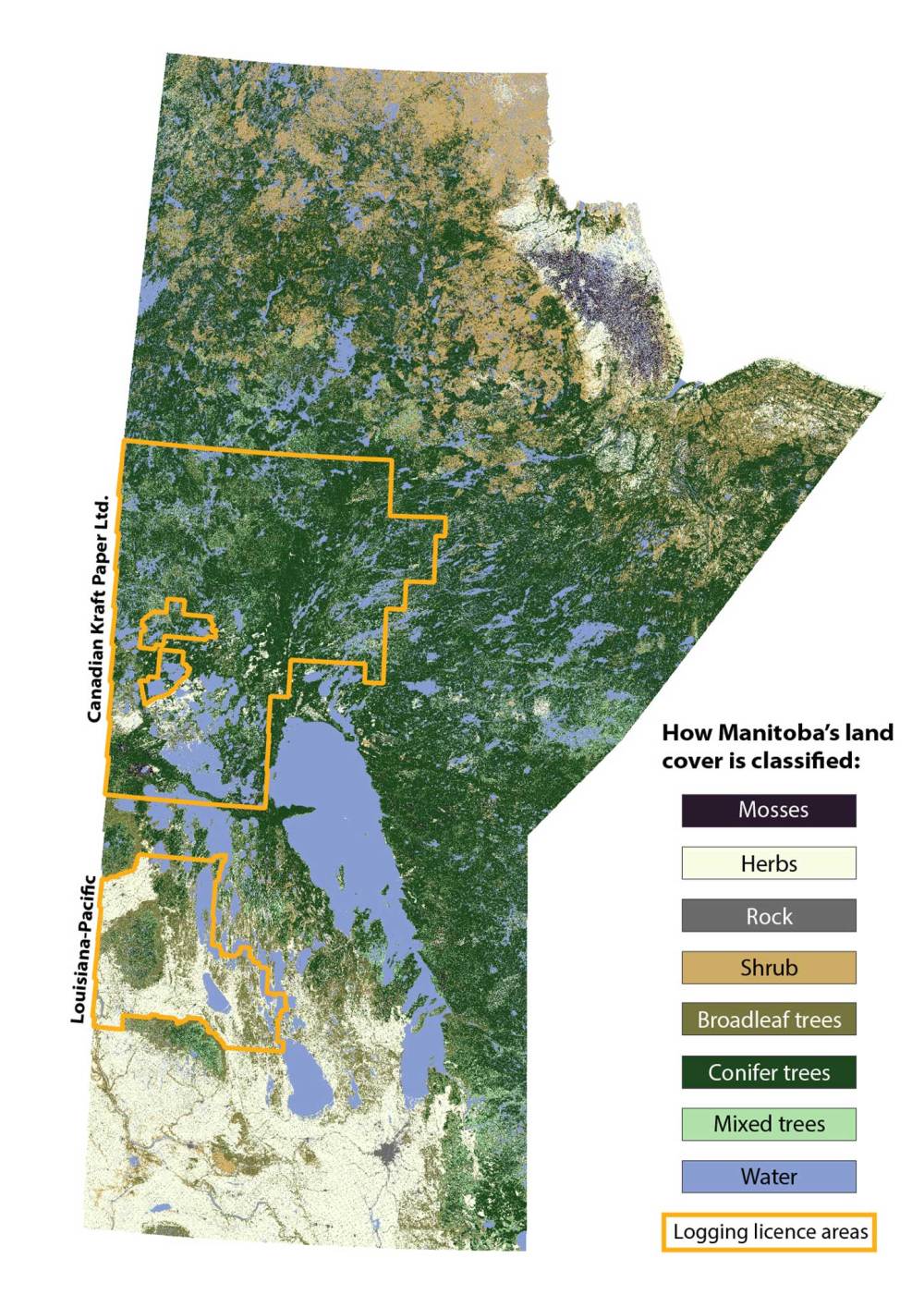
It’s still too early to determine the full consequences the fires will have on Manitoba’s logging industry, and Doig says the province will soon review the impacts and could potentially adjust harvest borders to compensate for potential damage in the future.
But the trends that have emerged across the country in recent years are cause for concern.
“The (forestry) industry is scared to death,” says British Columbia-based Bob Gray, one of Canada’s foremost wildfire researchers.
June and July 2023 saw lumber production in Canada dip 20 per cent below the previous five-year average for the same months, according to a report from the Canadian Climate Institute. The research group’s modelling shows if forests are left to burn as they have, the impacts of climate change — including wildfires — could cost the country thousands of jobs and billions in revenue.
The impacts are already felt in B.C., where lumber mills have closed after fire decimated their product source.
“Whole regions now have nothing but young trees. There’s nothing to harvest,” Gray says.
If nothing changes, “those regions will start to expand. It will get to a point where the industry is done. You’re chasing guts and feathers across the landscape.”
According to the Canadian Climate Institute, the cost of wildfire protection has been climbing by $150 million per decade since the 1970s. Wildfires have cost provincial governments more than $1 billion in six of the last 10 years.
Wildfires, to some extent, beget more wildfires. Severe burns can damage soil, making it more challenging for a forest to recover and leaving it more vulnerable to future burns. Forests that re-burn multiple times are at risk of transforming to new, less treed ecosystems.
As fires burn they blanket the skies in heavy smoke and harmful particulate matter (associated with increased risk of health issues impacting the lungs, heart, cardiovascular system and brain).
These pollutants contribute to greenhouse gas emissions, and trap heat in the atmosphere, worsening climate impacts like drought — which in turn makes forests more vulnerable to fire.
In his 40 years of wildfire research, Gray says he’s starting to see approaches to forest management change — but just not as fast as they need to.
Historically, forest management has focused on economic returns, both in terms of royalties to the Crown and revenues for shareholders.
“But if forestry is going to survive then we have to tackle the fire-risk problem, and that means doing very specific treatments in very specific places not driven entirely by economics,” he says.
Gray acknowledges that might require compromises, such as asking companies to harvest less profitable stands for the greater benefit of managing fire risk. But Gray believes there are ways to get the best of both worlds, bringing profit for industry while helping manage the long-term risks.
Foresters choose stands to harvest based on age, health and vulnerability to natural disturbances such as disease or fire. Manitoba’s forestry department prioritizes harvesting older or damaged stands with “a high fuel load, so lots of standing dead timber or ladder fuel,” Doig says. Ladder fuel refers to dead trees or underbrush that help a fire climb higher up a tree.
“When you take an old, tall forest and make it into a young, short forest, fire behaviour changes dramatically.”
JULIA-SIMONE RUTGERS / FREE PRESS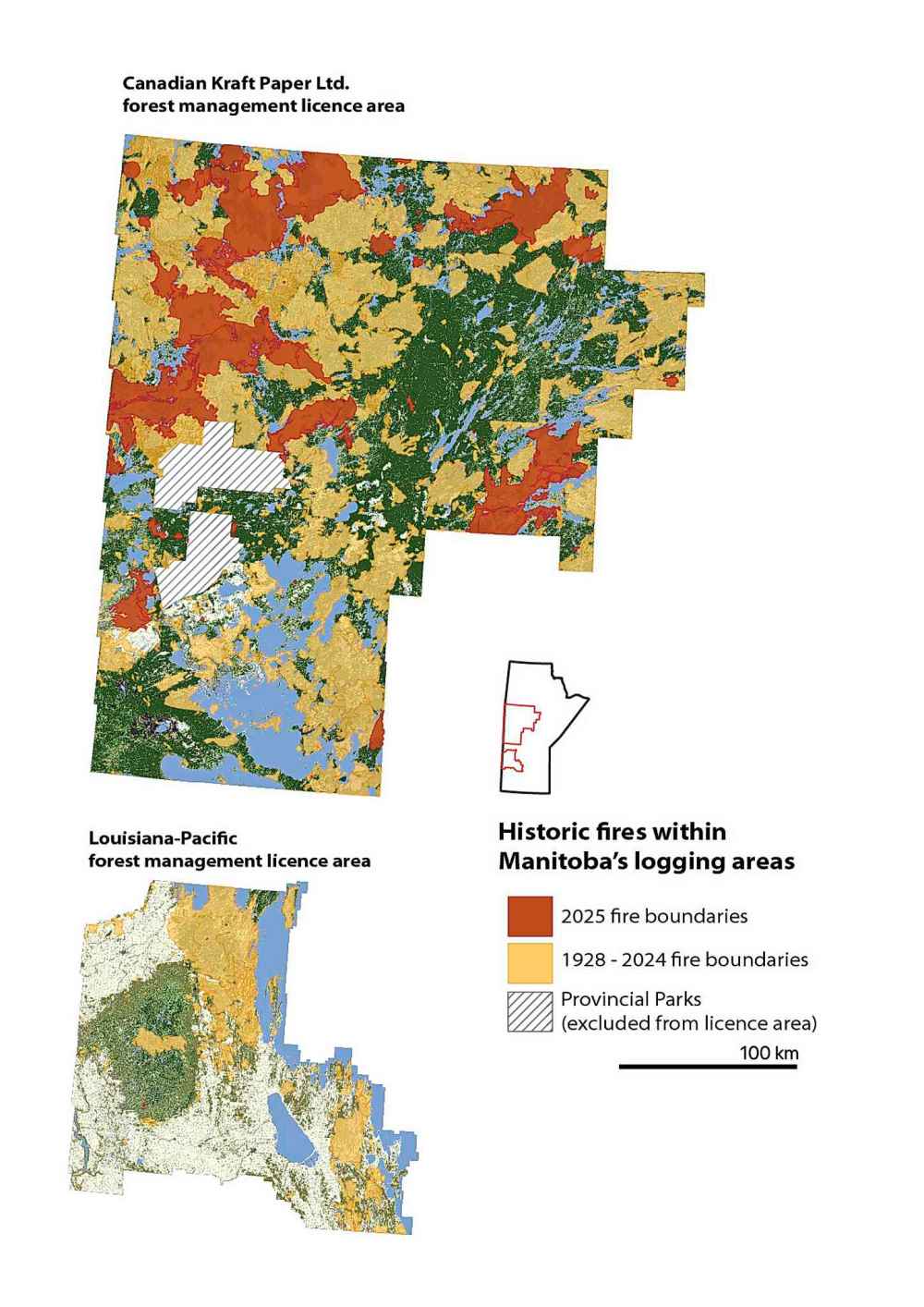
Doig says forestry teams have recently started to prioritize stands closer to communities — even if they aren’t the most profitable — to help protect homes, buildings and critical infrastructure from fire.
“We’ve always tried to stay away from communities; the thought process is now changing a bit. We need to get closer to communities with our forest management activities to change the forest landscape a little bit,” he explains.
“The chances that the tree you plant today is going to make it to maturity in 100 years is pretty slim.”
Gray says the forestry industry can also look to diversify stands while regenerating forests. Flammable conifers, which make up the majority of replanted forests, aren’t always good investments.
“The chances that the tree you plant today is going to make it to maturity in 100 years is pretty slim,” he says.
Instead, he recommends planting more hardwood lumber — like aspen — to take advantage of its fire-resilient qualities. A mature aspen stand can be significantly cooler and damper than surrounding areas while serving as a barrier against high winds.
Doig says Manitoba has considered changing the forest composition, but it can be challenging. Jack pines — a big part of Manitoba’s loggable forests — grow naturally in deep sandy soil; aspen stands may not be sustainable in the same growing conditions.
The province is, however, studying assisted migration, a process of deliberately moving seeds from one area of the forest to another to understand and better predict how forest composition will evolve.
But the most important role industry can play in fire mitigation, Gray says, is transforming how it deals with slash — a term for the unsaleable trees, branches, deadwood and discarded treetops left behind after the harvest.
A mature aspen stand can be significantly cooler and damper than surrounding areas while serving as a barrier against high winds.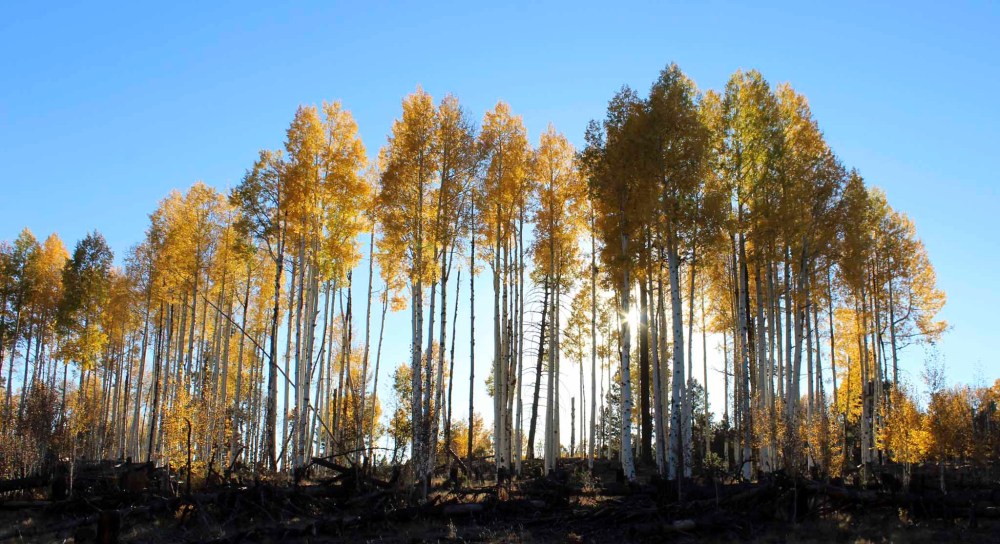
One hectare of harvested forest can generate between 50 and 100 tonnes of slash, Gray says, and all that woody detritus on the forest floor fuels hotter and more intense wildfires.
It’s standard practice for foresters to limit slash as much as possible; emerging biomass and engineered wood product markets have created more uses for the leftover lumber and more opportunities to maximize the economic value of forests. Manitoba is already looking for ways to cash in on those markets, Doig says.
But in cases where that’s not possible — such as when forests aren’t easy to access by road or are located far from processing and manufacturing facilities, “you basically need to start to burn the slash,” Gray says.
“That’s the key strategy: thinning it and then burning it.”
“Timber harvest just rearranges fuels, it doesn’t remove fuels.”
In Manitoba, Doig says, the slash that can’t be brought to market is typically spread out on the landscape to allow nutrients to return to the soil and provide habitat for small animals while avoiding the risks posed by large piles of dead, flammable wood.
But Gray says even slash that’s been spread out can be “hazardous forever” in a time of extreme fire weather.
“Timber harvest just rearranges fuels, it doesn’t remove fuels,” Gray says. “All you’ve done is take canopy fuels, aerial fuels, and put them on the ground. You open things up, now things are hotter and drier and there’s no wind friction — so you just sped up fire.”
By contrast, a forest stand that’s deliberately burned after harvest becomes more resilient, he says.
Grassy, herbaceous vegetation will grow back first, and in the case of a wildfire, will burn with less intensity than denser forest. Once replanted conifer trees are tall enough to close the canopy and shade the grassy material below, the stand is “sort of non-burnable for a while,” Gray says.
“I think prescribed burning is always a tool for consideration, but it’s not part of our plan, not part of our toolbelt at this time,” Doig says of Manitoba’s forest management strategy. Records show 42 such burns in provincial history, all between 1995 and 2015.
Canadian Kraft Paper and Louisiana-Pacific did not respond to written requests for comment. The Forest Producers Association referred interview requests to members of the Wildfire Consortium of Canada, which was not able to comment on forest industry perspectives by publication time.
Outside of the logging areas, forest management activities are limited. Manitoba conducts forest health surveys and allows limited harvest, but Gray says provinces should take more active roles in managing their forests in parks and protected areas too.
While the intent behind leaving swathes of forest undisturbed by industrial activity is laudable, “fire doesn’t recognize lines on a map,” he says.
Nopiming Provincial Park was all but wiped out by a 359,000-hectare fire that started in early May. After more than 150 days, the sprawling blaze has consumed more than 70 per cent of Nopiming, along the province’s eastern flank, and portions of Atitaki Provincial Park further north. As of early October, it is still considered an active fire.
All told, more than 260,000 hectares of provincial park lands have been impacted by fire this year — more than double the total area burned between 2020 and 2024.
Nopiming Provincial Park was all but wiped out by a 359,000-hectare fire that started in early May.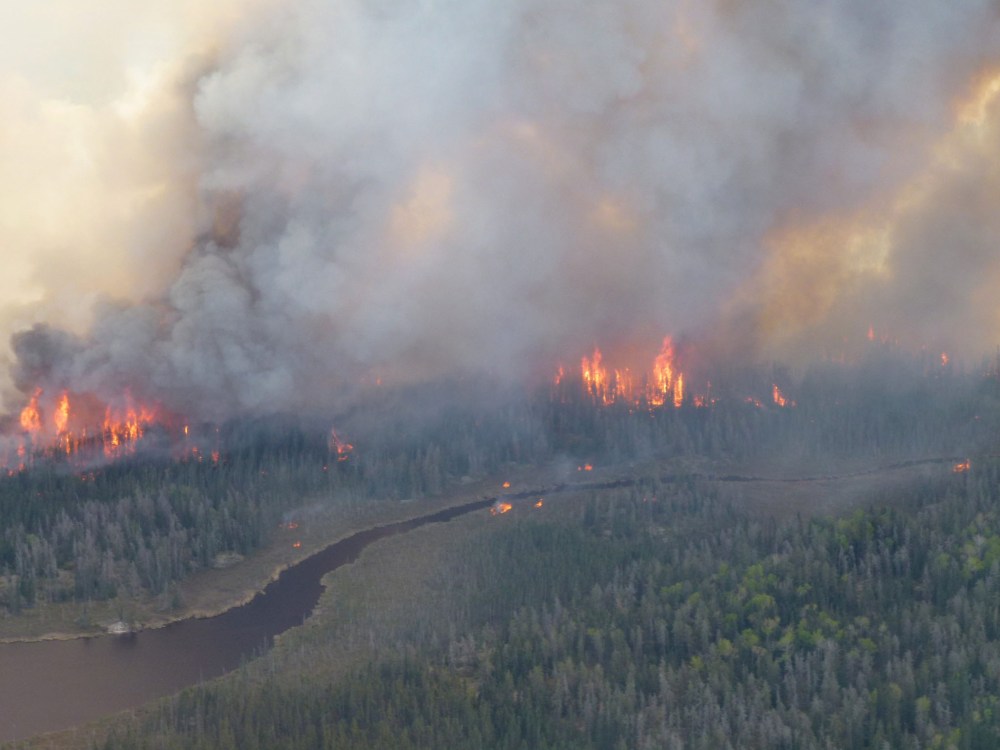
Forest management in these parks is minimal, Doig says. Logging was banned in all but one provincial park in 2009, so there’s less attention to forest inventory and strategic harvesting, though staff do clear some sections for infrastructure, park expansion and other needs.
Gray says provincial governments can take cues from Canada’s national parks to better manage those protected forests.
Industrial logging is generally prohibited in national parklands, but strategic forest thinning is permitted in some parks to reduce fire risk. Jasper National Park, which was scorched by wildfire in 2024, has allowed selective logging and prescribed burns to clear excess vegetation, especially surrounding infrastructure and townsites, since 2003.
Riding Mountain National Park conducted 4,000 hectares of prescribed burning in 2024 and a further 1,400 hectares in April this year.
British Columbia has adopted similar practices in its provincial parks, Gray says.
The key is that provincial governments need to take a more proactive role in protecting these natural resources.
“We cannot take a static approach in dynamic systems,” Gray says. More time and resources need to be invested in “getting out ahead of as much fire as possible versus reacting to it.”
Bushie, who oversees both the wildfire service and the forestry department, says the early start to this year’s fires put more of a spotlight on wildfire mitigation.
“As a good, responsible steward of the land … it’s imperative that we evolve when things change,” he says.
“As much as I want to say we have policies in place, absolutely they’re going to evolve as the seasons progress. And if there’s added investments we need … I think we have to maintain that flexibility.”
Fire mitigation strategies were top of mind for Bushie and other Canadian leaders during the annual meeting of the Council of Canadian Forest Ministers in St. John’s, N.L. in June.
The council released its Wildland Fire Prevention and Mitigation Strategy in 2024 after more than two years of engagement with political leaders, academics, Indigenous governments and industry.
“Wildland fire management in Canada needs to be transformed,” the strategy reads. “This transformation can only be achieved by taking a more proactive approach to preventing and mitigating risks before they occur.”
More than 2.1 million hectares of land was consumed by 432 fires during the 2025 Manitoba wildfire season.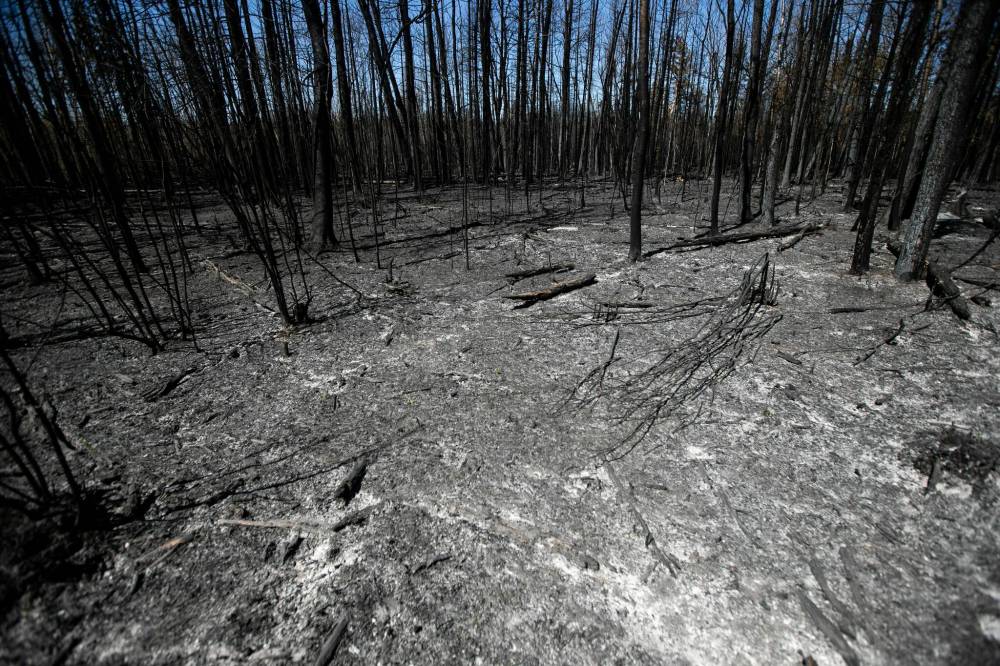
To get there, the report stresses the need for a whole-of-society approach, with leadership from both governments and Indigenous communities often uniquely impacted by wildfire; more than 40 per cent of fire-related evacuations between 1980 and 2021 were in predominantly Indigenous communities. The report recommends increased investment in training, education and prevention programs, as well as financial incentives for industry.
Implementation is currently underway, focused on risk planning and community education before shifting investment to prevention and mitigation programs.
“It would be irresponsible of us not to engage and have every idea on the table.”
Whatever tools the province ultimately chooses to advance its wildfire mitigation efforts, Bushie says it will need input from First Nations, rightsholders, industry, community members and other “boots on the ground” Manitobans.
“I don’t think there’s a one-size fits all brush when it comes to forestry management,” Bushie says.
“It would be irresponsible of us not to engage and have every idea on the table.”
julia-simone.rutgers@freepress.mb.ca

Julia-Simone Rutgers is the Manitoba environment reporter for the Free Press and The Narwhal. She joined the Free Press in 2020, after completing a journalism degree at the University of King’s College in Halifax, and took on the environment beat in 2022. Read more about Julia-Simone.
Julia-Simone’s role is part of a partnership with The Narwhal, funded by the Winnipeg Foundation. Every piece of reporting Julia-Simone produces is reviewed by an editing team before it is posted online or published in print — part of the Free Press‘s tradition, since 1872, of producing reliable independent journalism. Read more about Free Press’s history and mandate, and learn how our newsroom operates.
Our newsroom depends on a growing audience of readers to power our journalism. If you are not a paid reader, please consider becoming a subscriber.
Our newsroom depends on its audience of readers to power our journalism. Thank you for your support.