Kinew’s quiet campaign kickoff suggests NDP plans to party like it’s 1999

Read this article for free:
or
Already have an account? Log in here »
To continue reading, please subscribe:
Digital Subscription
One year of digital access for only $1.44 a week*
- Enjoy unlimited reading on winnipegfreepress.com
- Read the E-Edition, our digital replica newspaper
- Access News Break, our award-winning app
- Play interactive puzzles
*Billed as $5.77 plus GST every four weeks. After 52 weeks, price increases to the regular rate of $19.95 plus GST every four weeks. Offer available to new and qualified returning subscribers only. Cancel any time.
To continue reading, please subscribe:
Add Free Press access to your Brandon Sun subscription for only an additional
$1 for the first 4 weeks*
- Enjoy unlimited reading on winnipegfreepress.com
- Read the E-Edition, our digital replica newspaper
- Access News Break, our award-winning app
- Play interactive puzzles
*Your next Brandon Sun subscription payment will increase by $1.00 and you will be charged $17.95 plus GST for four weeks. After four weeks, your payment will increase to $24.95 plus GST every four weeks.
Read unlimited articles for free today:
or
Already have an account? Log in here »
Hey there, time traveller!
This article was published 09/08/2023 (1165 days ago), so information in it may no longer be current.
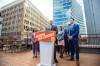
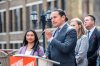
On Wednesday, at the unofficial launch of the NDP’s fall election campaign, Leader Wab Kinew unleashed a rather subdued message.
He promised no big changes, balanced budgets, no tax increases and a plan to “grow our economy to rebuild health care and make life more affordable.”
“I’ll balance the budget because I care about working people,” Kinew said.
It’s hardly the fire and brimstone you might expect from an election campaign, and a far cry from the hyperbole the NDP employed in the Manitoba legislature. But you may have noticed that since the legislature was suspended for its summer break, the NDP has been a triumph in understatement, making few announcements and keeping a low profile.
Why is Kinew taking such a low-key approach in this, the most important moment in his political career?
Related Articles
Meet your candidate: We invited would-be MLAs to introduce themselves to you

When the polls are mostly favourable in the weeks before an election, your No. 1 job as leader is to avoid any possibility of a self-inflicted wound. The Tories are playing catch-up and there is evidence that their unprecedented pre-election spending spree has been greeted with equal doses of skepticism and applause.
Trying to buy back the love of voters right before an election is a risky strategy, at best, for a governing party that is as unpopular as Manitoba’s Progressive Conservatives are right now. Why divert the attention of voters while all that is happening?
If that’s the strategy, Kinew might just be stealing a page out of Gary Doer’s 1999 election-strategy playbook.
That year, then-premier Gary Filmon launched into the campaign with a bold plan to offer hundreds of millions of dollars in tax cuts and spending on core services. In response, Doer and the NDP took a much more cautious approach.
Having already promised he would resign as leader if he didn’t win, Doer dialed down the hyperbole and focused his campaign on five core commitments: balancing the budget; lowering post-secondary tuition; improving public safety; creating new partnerships with business and labour leaders; and reforming health care by eliminating “hallway medicine.”
Historians still debate whether the New Democrats accomplished their goals, but one thing is for certain: Doer’s cautious approach triumphed over Filmon’s gambit.
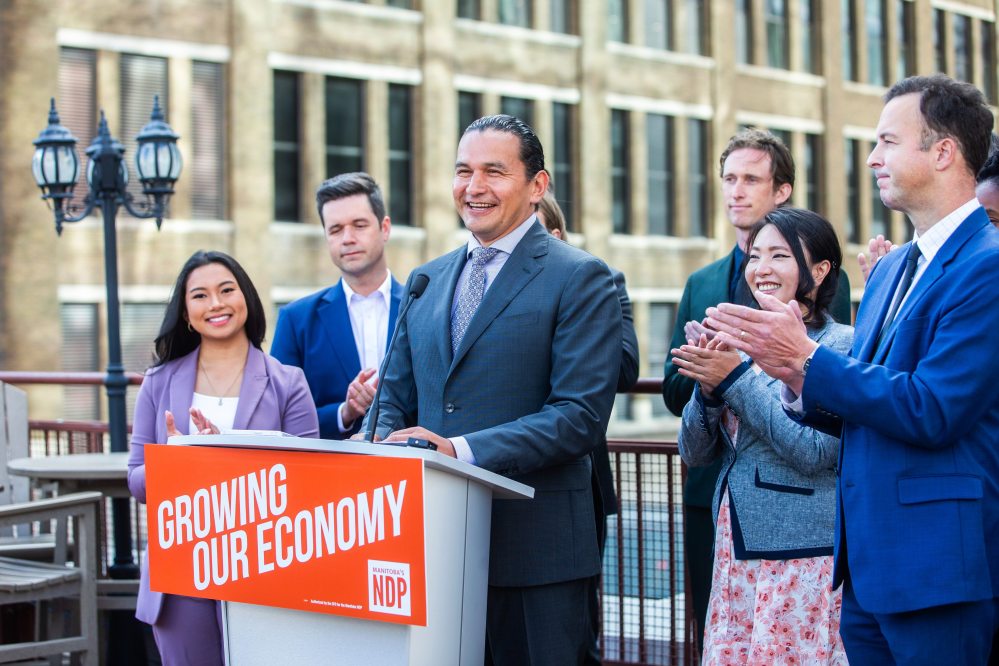
If you listen carefully, you can hear a lot of Doer in the soft-opening Kinew orchestrated this week.
Less than a week after the pre-election government announcement blackout was triggered, which put to an end the tsunami of spending announcements from the PC government, Kinew sought to address — and, he hopes no doubt, defuse — some of the Tories’ most likely points of attack.
Kinew pledged to adopt the economic forecast and fiscal outlook in the last PC budget tabled in the spring, and to balance the budget within his first term in office. And in pursuit of a balanced budget, Kinew pledged to keep the Tory tax cuts, including the controversial education property-tax rebate.
Kinew would not, however, keep the Tory pledge to fully eliminate education property taxes. Instead, he talked about working with school divisions to reduce the education portion of property taxes, and ending the annual cheque blitz the Tories favoured to highlight their tax cut.
It’s hardly a complete plan. But then again, no political party releases its entire campaign four weeks out from the writ of election, which is expected to drop on Sept. 5. That would provide for a 28-day campaign leading up to election day on Oct. 3.
The big question for Kinew — and the one that faced Doer in 1999 — is whether the lower profile he and the party kept during the Tory news release blitz this summer, and the understated announcement Wednesday, will capture the imagination of voters and wipe away concerns about the NDP’s horrible crash and burn in 2016.
The 1999 election, once again, provides a fascinating study in what might be happening now.
Still, you can bet the race will tighten significantly by election day.
There are some important differences to note. First, the NDP had been in opposition for 11 years when the 1999 election was called, long enough to distance Doer from the previous and unpopular Howard Pawley administration.
Second, the Tories and NDP were in a dead heat in pre-election polls.
This time around, the NDP is running well ahead of the Tories in Winnipeg — which is where elections are won because it has the largest population and the greatest number of seats — but is slightly behind on a provincewide basis. Still, you can bet the race will tighten significantly by election day. And differences notwithstanding, that actually sets the table for a result not dissimilar to 1999.
In that watershed election, the NDP won 32 seats (a gain of nine) with 44.5 per cent of the vote; the Tories won 24 (a loss of seven) with almost 41 per cent of the vote. That means lots of close races the NDP were able to win, thanks to more momentum and less baggage than the governing party.
More importantly, Doer ran a nearly flawless, mistake-free campaign. While Filmon struggled to convince core Tory supporters of the viability of his spend-and-tax-cut plan, Doer kept diligently hammering away at the five core commitments. It helped make him boring during the campaign, and a winner on election night.
And that leads us to one inescapable truth.
If Kinew lacked shock and awe in his soft campaign opening this week, it might just be that he planned it that way.
dan.lett@winnipegfreepress.com

Dan Lett is a columnist for the Free Press, providing opinion and commentary on politics in Winnipeg and beyond. Born and raised in Toronto, Dan joined the Free Press in 1986. Read more about Dan.
Dan’s columns are built on facts and reactions, but offer his personal views through arguments and analysis. The Free Press’ editing team reviews Dan’s columns before they are posted online or published in print — part of the our tradition, since 1872, of producing reliable independent journalism. Read more about Free Press’s history and mandate, and learn how our newsroom operates.
Our newsroom depends on a growing audience of readers to power our journalism. If you are not a paid reader, please consider becoming a subscriber.
Our newsroom depends on its audience of readers to power our journalism. Thank you for your support.
History
Updated on Thursday, August 10, 2023 8:55 AM CDT: Corrects typo