Bias in media

Please review each article prior to use: grade-level applicability and curricular alignment might not be obvious from the headline alone.

No Subscription Required

The joke’s on us as social media capitalizes on our base impulses in race to the bottom

Melissa Martin 8 minute read Preview
No Subscription Required

The joke’s on us as social media capitalizes on our base impulses in race to the bottom

Melissa Martin 8 minute read Friday, Dec. 16, 2022

The most important thing we can teach ourselves, and our children, about how to navigate social media is this: the algorithms want you to be angry. They want you to be angry, because it is good for business.

Read
Friday, Dec. 16, 2022

Behold the transformation of Poilievre

Tom Brodbeck 4 minute read Preview

Behold the transformation of Poilievre

Tom Brodbeck 4 minute read Thursday, Sep. 22, 2022

It appears newly minted Conservative Leader Pierre Poilievre is willing to add a little water to his wine. After months of criss-crossing the country peddling conspiracy theories and fuelling anti-Liberal rage with juvenile slogans and deranged claims about Canadians losing control of their lives, Poilievre is showing signs of moderation.

Read
Thursday, Sep. 22, 2022

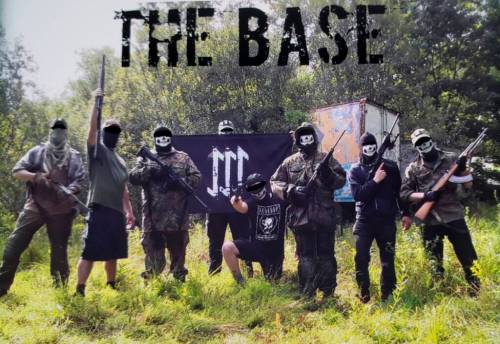
Neo-Nazi group members plotted to kill Free Press reporter

5 minute read Preview

Neo-Nazi group members plotted to kill Free Press reporter

5 minute read Wednesday, Aug. 10, 2022

Disturbing details of a plan to kill a Free Press reporter who had infiltrated a white nationalist hate group were revealed for the first time Wednesday.

Read
Wednesday, Aug. 10, 2022
No Subscription Required

Memorization and practice still important to learning

Michael Zwaagstra 4 minute read Friday, Oct. 8, 2021

INSTEAD of making students memorize a bunch of useless facts, we should help them think like scientists and historians. This is best accomplished by an inquiry-based approach that allows students to guide their own learning process.

Does this reasoning make sense to you? It probably does if you’ve recently attended a faculty of education where teachers are trained. This is also what teachers are often told at their professional development sessions.

The problem is that this approach is wrong. Not just wrong by a little, but by a lot. Despite claiming to be based on solid evidence, the real science of learning points in the opposite direction.

In fact, students learn best when they are immersed in a content-rich learning environment that builds up their background knowledge. Practice is also a key part of helping students master new skills. Learning is hard work, and for this reason alone it is important for teachers, not students, to set the direction in the classroom.
No Subscription Required

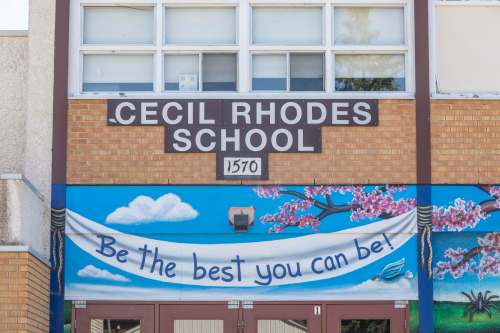
Winnipeg School Division to review all its schools named after people

Maggie Macintosh 6 minute read Preview
No Subscription Required

Winnipeg School Division to review all its schools named after people

Maggie Macintosh 6 minute read Thursday, Sep. 23, 2021

Manitoba’s largest school board is reviewing all of its K-12 building titles to determine whether the namesakes and their respective legacies are in line with modern-day morals.

Last week, Jamie Dumont, vice-chairwoman of the board of trustees in the Winnipeg School Division, introduced a motion to undertake an evaluation of all schools named after people and research each historical figure’s resumé.

“We operate, as a school division, under a number of values and, in many cases, we are very much a leader in diversity, equity, inclusion and Indigenous education — so I think it’s important that, as a board, we ensure that our schools and our buildings don’t contradict these values,” Dumont said during a virtual board meeting Sept. 13.

The review will identify whether any buildings are named after individuals with a history of actions that are discriminatory or not in accordance with WSD values, namely: inclusiveness, diversity, reconciliation, and respect for the rights and human dignity of others, or both.

Read
Thursday, Sep. 23, 2021
No Subscription Required

Me, hate cute little squirrels? You must be nuts

Doug Speirs  4 minute read Preview
No Subscription Required

Me, hate cute little squirrels? You must be nuts

Doug Speirs  4 minute read Saturday, Sep. 18, 2021

I was standing in the backyard next to a very tall tree, sipping the first coffee of the day, trying to think of a topic for today’s column, when suddenly it hit me.

No, I was not struck by a sudden inspiration. I was bonked on the top of my head by a pine cone the size of a regulation volleyball.

In quick succession, several more potentially lethal pine cones plummeted from the sky and thudded into the ground near my feet.

“I can see you up there!” I shrieked, waving my fist at the sky. “You are not going to get away with this!”

Read
Saturday, Sep. 18, 2021
No Subscription Required

Winnipeg Police Museum shines a light on the history of policing in city

Brenda Suderman 8 minute read Preview
No Subscription Required

Winnipeg Police Museum shines a light on the history of policing in city

Brenda Suderman 8 minute read Sunday, Sep. 5, 2021

Worn for only a few days or weeks, a set of frayed and grimy canvas armbands stored in a back room at the Winnipeg Police Museum bear the weight of more than a century of history.

Originally fastened around a jacket sleeve with a set of snaps or modified with hand stitched elastic, these armbands bear witness to the involvement of special police constables in the 1919 Winnipeg General Strike.

“They knew they were going to have all these civilians, so they needed ways to identify them,” museum curator Tammy Skrabek said, pointing to the large plastic bin of armbands stored on a shelf in a large second-floor archives room.

Along with the white armbands, printed with the words Special Police Winnipeg, the museum owns a bin of pinback celluloid buttons also issued to the anti-strike, anti-union volunteers hastily commissioned as police officers during the strike, which saw more than 30,000 workers participate, including most of Winnipeg’s Police Department.

Read
Sunday, Sep. 5, 2021
No Subscription Required

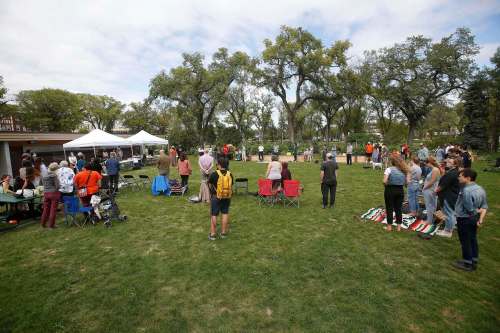
Group engages community on renaming Wolseley neighbourhood

Malak Abas 4 minute read Preview
No Subscription Required

Group engages community on renaming Wolseley neighbourhood

Malak Abas 4 minute read Monday, Aug. 30, 2021

In 1870, Col. Garnet Wolseley led a military expedition into Manitoba to violently overthrow Louis Riel’s provisional government at the Red River Colony. On Sunday afternoon, a group gathered at Vimy Ridge Park to discuss how to push for the renaming of the neighbourhood that bears his name.

Red River Echoes, a Métis collective that first came together with the purpose of “bringing an alternative voice to what Métis people think in Manitoba” after Manitoba Metis Federation president David Chartrand put out an ad with the Winnipeg Free Press in March in support of the Winnipeg Police Service, put together the rendezvous to take questions and comments community members might have around the growing conversation to rename Wolseley.

"With a lot of names being changed right now, we thought it was a good opportunity,” Red River Echoes member Claire Johnston said. “And Wolseley in particular has a really violent and negative association for Métis people, and also all other people of colour in who live in Winnipeg.”

In the months since the remains of 215 children were found in unmarked graves near a residential school in Kamloops, B.C., calls have been sparked across the country to rename landmarks named after people who had a hand in the colonization of Canada. In Winnipeg, Wolseley isn’t the first instance — calls to rename Bishop Grandin Boulevard due to its namesake’s hand in the residential school system have resulted in consultations and a possible recommendation for its renaming coming to city council this fall.

Read
Monday, Aug. 30, 2021
No Subscription Required

Pit bulls legal, ball pythons banned?

Gabrielle Piché 6 minute read Preview
No Subscription Required

Pit bulls legal, ball pythons banned?

Gabrielle Piché 6 minute read Wednesday, Aug. 11, 2021

Laura Baker has wanted a pit bull for 20 years, but hasn’t bought one because of the city’s ban.

“I just feel like the whole breed has been so misrepresented, misunderstood and given a raw deal in terms of being able to find loving homes,” the St. James resident said.

If proposed changes to a city bylaw pass, Baker will legally be able to own a pit bull, while it could become illegal to feed wildlife and to leave pets in vehicles at certain temperatures.

The city is looking for feedback on suggestions to its Responsible Pet Ownership bylaw. Winnipeg Public Service reviewed the rules this summer and came back with a number of ideas, including a removal of breed-specific bans.

Read
Wednesday, Aug. 11, 2021

Puncturing the shield of ‘implicit bias’

Niigaan Sinclair 5 minute read Preview

Puncturing the shield of ‘implicit bias’

Niigaan Sinclair 5 minute read Friday, Feb. 5, 2021

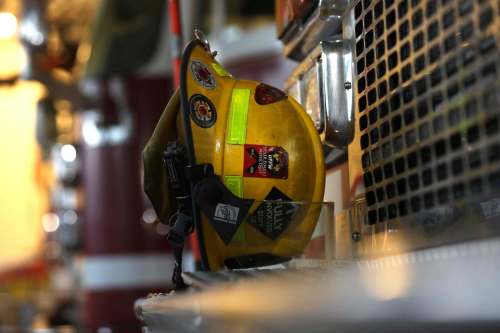
A leaked internal report this week into the conduct of four Winnipeg firefighters showed evidence of “implicit racial bias” against an Indigenous woman and “racial animus” towards a paramedic (also a person of colour) on a call in October 2020.

The report is clear: identifying the actions of the firefighters put the woman’s health at risk, delayed her journey to the hospital, and showed callous disregard for her safety. One firefighter riding in the ambulance refused to help the paramedic, forcing the injured woman to hold the dressing to the stab wound on her own neck.

Later, one of them called it: “Just another call in the North End.”

According to the report, it was part of “retaliation” against the paramedic, who previously alleged racist conduct by members of the Winnipeg Fire Paramedic Service — including one of the firefighters involved, who called him a “sand n-----.”

Read
Friday, Feb. 5, 2021