Echo chambers and conspiracy theories

Please review each article prior to use: grade-level applicability and curricular alignment might not be obvious from the headline alone.
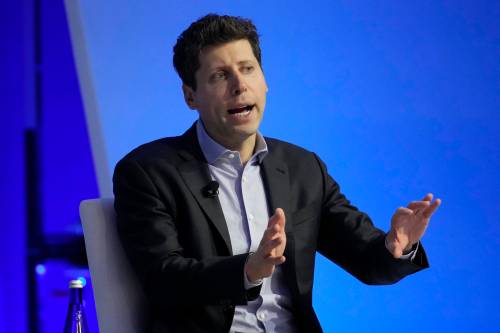
A Florida lawsuit and AI’s complicity in killing

Editorial 4 minute read Preview

A Florida lawsuit and AI’s complicity in killing

Editorial 4 minute read Yesterday at 2:01 AM CDT

Readers following the mass shooting in Tumbler Ridge, B.C., will know that Open AI’s CEO, Sam Altman, has apologized for not notifying police about corporate concerns raised internally about ChatGPT’s chatbot interactions with the killer before the attack.

Read
Yesterday at 2:01 AM CDT

Health advice is all over social media. Here’s how to vet claims

Devi Shastri, The Associated Press 5 minute read Preview

Health advice is all over social media. Here’s how to vet claims

Devi Shastri, The Associated Press 5 minute read Tuesday, May. 12, 2026

Health and wellness advice is available in abundance on social media — from trendy to informative to straight-up disinformation — and you're far from alone in seeing it.

A new survey by the Pew Research Center finds that about 4 in 10 U.S. adults — and around half of those under 50 — get health information from social media or podcasts.

Researchers also looked at the social media profiles of 6,828 health and wellness influencers with at least 100,000 followers. Only about 4 in 10 list a background as a health professional. About one-third called themselves coaches, about 3 in 10 described themselves as entrepreneurs and about 1 in 10 cited their own life experience, like being a parent.

Despite the wide range of expertise, about half of people who get health and wellness information from influencers said the influencers help them better understand their own health, while about one-third said it hasn't made much difference. About 1 in 10 said it made them more confused.

Read
Tuesday, May. 12, 2026

Foreign actors producing more false content about Alberta separatism: report

Fakiha Baig, The Canadian Press 3 minute read Preview

Foreign actors producing more false content about Alberta separatism: report

Fakiha Baig, The Canadian Press 3 minute read Thursday, May. 7, 2026

EDMONTON - Foreign actors are increasingly generating articles, podcasts and social media posts riddled with disinformation about Alberta's separatist movement, says a new report.

The report from a team of researchers, published Wednesday by the Canadian monitoring platform DisinfoWatch, says the campaigns are coming out of Russia and the United States.

It says social media influencers with millions of followers are generating the disinformation in the United States.

"This matters because influencers increasingly command more attention than traditional institutions and can move fringe narratives into mainstream political debate," the report says.

Read
Thursday, May. 7, 2026

Delaying access to social media

Lianna McDonald 4 minute read Tuesday, May. 5, 2026

An 11-year-old boy is threatened with the distribution of nude images unless he pays an international extortionist who found him on TikTok. A 12-year-old girl is relentlessly pressured by someone she believed was a friend to expose herself on camera. A 14-year-old boy is unravelling — failing classes, withdrawing from life — because his friend is being exploited on Roblox and he feels powerless to help.

These are not outliers. In 2025 alone, Cybertip.ca processed more than 28,000 reports. These are just three.

Canada’s children are not stumbling into harm by accident. They are being systematically exposed to it — on platforms engineered to capture their attention, monetize their vulnerability and retain their engagement at all costs. The scale and severity of harm now demand more than incremental reform. They demand intervention.

For over 25 years, the Canadian Centre for Child Protection has documented a steep and accelerating rise in online harms against children. This trajectory is not coincidental. It reflects a digital environment that is fundamentally misaligned with the developmental realities of childhood.

Empower youth by giving them tools to stay safe online

Jen Zoratti 5 minute read Preview

Empower youth by giving them tools to stay safe online

Jen Zoratti 5 minute read Saturday, May. 2, 2026

Do you support banning kids from social media? Do you also post photos of your kids on your Facebook or Instagram?

Whenever the topic of banning social media for kids comes up, as it did again this week when Premier Wab Kinew announced that Manitoba will ban youth from using social media and AI chatbots, we run into a wee bit of cognitive dissonance among the adults.

Many of today’s young people had social media presences long before they were old enough to consent to them — not as users, but as content posted by their parents. Instagram is nearly 16 years old; the iPhone nearly 20. A lot of kids have had digital footprints since the sonogram. Their whole lives are online.

So, as young people who are already on social media transition into social media users themselves, we should, as a society, empower them to make informed decisions about how, where and if they want to show up online, not ban them from platforms they use to connect with their peers, express their creativity and learn about the world. Platforms they’ve grown up around and, in many cases, on.

Read
Saturday, May. 2, 2026

Young Canadians want AI companies to make their chatbots less addictive: report

Anja Karadeglija, The Canadian Press 5 minute read Preview

Young Canadians want AI companies to make their chatbots less addictive: report

Anja Karadeglija, The Canadian Press 5 minute read Friday, May. 1, 2026

OTTAWA - A new report focusing on the perspectives of young people says the government should order AI companies to take steps to curb the addictive aspects of their AI chatbots.

It’s one of a series of recommendations made by youth between the ages of 17 and 23 who took part in roundtables across the country.

Participants presented the report — published by McGill University’s Centre for Media, Technology and Democracy and Simon Fraser University's Dialogue on Technology Project — and its recommendations on Parliament Hill on Thursday.

Maddie Case, a youth fellow with the McGill centre, introduced the 25 young people who developed the chatbot recommendations.

Read
Friday, May. 1, 2026

Tumbler Ridge families likely to seek US$1 billion in lawsuit against OpenAI: lawyer

Chuck Chiang, The Canadian Press 7 minute read Preview

Tumbler Ridge families likely to seek US$1 billion in lawsuit against OpenAI: lawyer

Chuck Chiang, The Canadian Press 7 minute read Thursday, Apr. 30, 2026

VANCOUVER - An American lawyer representing some of the victims of the Tumbler Ridge, B.C., mass shooting says they will likely be seeking more than US$1 billion in their California legal action against OpenAI and its founder Sam Altman.

Chicago-based Jay Edelson has represented a number of clients in wrongful death cases against the artificial intelligence platform and Altman in the past year.

But Edelson said Wednesday that the Tumbler Ridge shootings in which eight victims were killed was the most egregious case his law firm had encountered, citing catastrophic injuries suffered by child plaintiff Maya Gebala.

The other plaintiffs include the parents of children killed in the attack and the husband of Shannda Aviugana-Durand, a teacher's aide who was also shot dead.

Read
Thursday, Apr. 30, 2026

Proposed social-media ban for Manitoba children gets likes, thumbs-down

Maggie Macintosh 5 minute read Preview

Proposed social-media ban for Manitoba children gets likes, thumbs-down

Maggie Macintosh 5 minute read Tuesday, Apr. 28, 2026

Mia Danyluk had a YouTube channel before she reached double digits. She was 11 years old when she signed up for Snapchat. In Grade 9, she joined Instagram.

Perhaps unsurprisingly, it was on social media that she learned about Manitoba’s plan to ban children and youth from accessing these platforms.

The irony was not lost on her — a 16-year-old who was raised in Winnipeg and on the borderless online world.

“We’re seeing younger and younger kids grow up with an iPad instead of toys in their hands. If we’re exposing kids to screens, we need to teach them online safety,” the high schooler said.

Read
Tuesday, Apr. 28, 2026

Youth social media ban likely to begin in schools, provincial education minister says

Carol Sanders 5 minute read Preview

Youth social media ban likely to begin in schools, provincial education minister says

Carol Sanders 5 minute read Monday, Apr. 27, 2026

The first phase of a provincial social media ban for youth will likely start with Manitoba schools, which already restrict cellphone use, Education Minister Tracy Schmidt said Monday.

Read
Monday, Apr. 27, 2026
No Subscription Required

Antisemitism on the rise, becoming normalized, B’nai Brith warns

John Longhurst 3 minute read Preview
No Subscription Required

Antisemitism on the rise, becoming normalized, B’nai Brith warns

John Longhurst 3 minute read Monday, Apr. 27, 2026

Canada is in the throes of a national antisemitism crisis, says B’nai Brith Canada.

The organization’s annual audit of antisemitic incidents reports 6,800 in 2025, 6,248 of which involved online hate.

That is a 9.3 per cent increase over 2024, when the total was 6,219, and it represents the highest total since 1995, said B’nai Brith, the country’s oldest human rights organization dedicated to eradicating racism, antisemitism and hatred.

The biggest spike in antisemitism occurred in 2023, when the number of incidents rose from 2,769 in 2022 to 5,791 following the Oct. 7 Hamas attack on Israel.

Read
Monday, Apr. 27, 2026