Role of news media

Please review each article prior to use: grade-level applicability and curricular alignment might not be obvious from the headline alone.
Asian Heritage Month: more than a celebration

Fortunato Lim 4 minute read Yesterday at 2:00 AM CDT

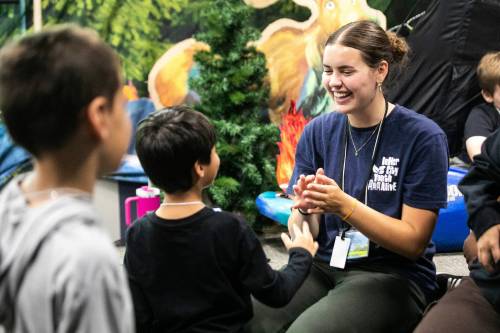
May is Asian Heritage Month in Canada. In Manitoba, it is a time to honour the many Asian communities who have shaped this province through culture, labour, leadership, family, food, faith, art, advocacy and public service. Celebration matters. But so do the stories that give celebration its sweetness.

Asian Canadian history is made of many threads.

We remember Chinese labourers who helped build the Canadian Pacific Railway while later facing the Chinese Head Tax and the Chinese Exclusion Act.

We remember the South Asian passengers of the Komagata Maru, denied entry by immigration rules designed to exclude them.

Infielder Matsubara playing big role in UBC’s historic run

Joshua Frey-Sam 6 minute read Preview

Infielder Matsubara playing big role in UBC’s historic run

Joshua Frey-Sam 6 minute read Wednesday, May. 20, 2026

Jill Matsubara has been on the road for the last two weeks, but she’s not itching to return home.

If things go her way, she’ll happily continue to live out of her suitcase.

You see, the Winnipeg-born sophomore infielder is in the midst of a historic run with the University of British Columbia Thunderbirds, who are preparing for their first appearance in the National Association of Intercollegiate Athletics (NAIA) Softball World Series in Columbus, Ga., this week.

It took a few timely hits and some good fortune for the Thunderbirds to reach the national championship tournament, but for Matsubara, this was the inevitable next step for the program after reaching the NAIA Championship Opening Round tournament — which precedes the World Series — for the first time last year.

Read
Wednesday, May. 20, 2026

Time for change? Province launches survey to review clock changes

Carol Sanders and Morgan Modjeski 5 minute read Preview

Time for change? Province launches survey to review clock changes

Carol Sanders and Morgan Modjeski 5 minute read Wednesday, May. 20, 2026

The provincial government has asked Manitobans to weigh in on whether to end the seasonal time change.

Read
Wednesday, May. 20, 2026

Premier has everyone’s attention on and about social media; now it’s time for some careful thought

Dan Lett 5 minute read Preview

Premier has everyone’s attention on and about social media; now it’s time for some careful thought

Dan Lett 5 minute read Wednesday, May. 20, 2026

Using social media to condemn social media may seem hypocritical. But when you look at the audience Premier Wab Kinew commands across his social media accounts, there is a certain logic. An admittedly perverse logic, but logic all the same.

Read
Wednesday, May. 20, 2026

Words matter

Frances Ravinsky 4 minute read Wednesday, May. 20, 2026

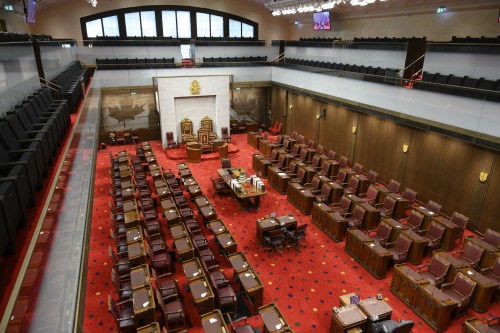
I have been following with interest the media’s reporting of the ban in Manitoba’s Legislative Assembly on the use of the words racist, bigot, homophobe, misogynist and transphobe to call out hateful speech. The stated goal of the ban is “to improve House decorum.”

I’ve appreciated the fulsome coverage of this issue in the Free Press through the publishing of editorials, op-eds and letters to the editor. I was in particular struck by Premier Wab Kinew’s comments during his May 7 monthly interview with Marcy Markusa on CBC Radio.

Kinew’s strong opposition to the ban raises a critical question: How do we keep democratic civil society alive while silencing the calling out of discriminatory language and behaviour? Of course we can’t. By confusing decorum with silence we run the risk of contributing to a “head in the sand” mindset; to what American journalist and activist Barbara Ehrenreich referred to as a “Smile or Die” culture.

But then a followup question emerges: How do we effectively voice our legitimate dissent in ways that move us towards correcting discriminatory practices? A “no holds barred” approach to voicing our opposition may not be the answer. It’s all too easy to slip into shaming people by lobbing ad hominem/ad feminam attacks across partisan lines.

Designated encampments are a poor solution

Kate Sjoberg 5 minute read Wednesday, May. 20, 2026

The overall shrinking of public space and degradation of the policy environment on use of public space is contributing to people experiencing homelessness being less safe — and contributing to interest in ideas like designated encampments. Unfortunately, this direction fails to centre the interests of people living unhoused. Further, we forget too easily that any consideration of land use on Treaty 1 land needs to start with historic claims and ancestral rights.

Among people experiencing homelessness, Indigenous people are overrepresented. Many people are living unsheltered on their own ancestral territories. Having endured intergenerational theft that started with land (transferred to settlers whose descendants now enjoy generational wealth), and continued with limits on movement, ability to make money, access to education and more, they are now actively surviving homelessness. Yet, the limits on their person continue.

Recent years have seen the closure and limits on use of public space throughout the downtown and broader city. These include Portage Place mall, the Millennium Library and Winnipeg Transit, and previously through the closure of downtown single-room occupancy hotels and their barrooms.

For some time, the city has been telegraphing an intention to limit access to outdoor public space according to housing status. At every opportunity, those cautioning against this move have raised the problem of limiting those with ancestral rights, and further limiting free movement of citizens on public land. The latter has been decided through B.C. legal process, and suggests the City of Winnipeg’s exposure to risk as it moves forward.

No Subscription Required

Hands-on workshop guides process of making unique, custom silver jewellery

AV Kitching 7 minute read Preview
No Subscription Required

Hands-on workshop guides process of making unique, custom silver jewellery

AV Kitching 7 minute read Tuesday, May. 19, 2026

I know things aren’t going well when cracks keep forming on my clay — but not to worry. I’d been paying attention when instructors Jillian Sheedy and Joanne Roberts told me how to deal with this problem.

So I confidently dip my brush into the water and start moistening my clay to smooth it out. Except I’ve added a bit more water than I should have, and now the clay is wet and extremely sticky.

Beside me, Roberts smiles reassuringly.

“It’s a task that requires a little bit of patience,” she says, carefully removing the brush from my hand.

Read
Tuesday, May. 19, 2026

This not just in: treaty rights carry legal force and are protected in the Constitution

Tom Brodbeck 5 minute read Preview

This not just in: treaty rights carry legal force and are protected in the Constitution

Tom Brodbeck 5 minute read Tuesday, May. 19, 2026

More than a century after the numbered treaties were signed across Western Canada, the courts delivered a blunt reminder last week that those agreements are not ancient historical footnotes.

They still carry legal force and governments cannot ignore them.

Two major court rulings — one in Manitoba and one in Alberta — reinforced a reality many Canadians still do not fully understand: treaties between First Nations and the Crown remain constitutionally protected agreements that continue to shape Canadian law, public policy and governments’ obligations today.

The decisions also underscored something else: Canadians would benefit greatly from learning more about treaties, why they were negotiated as Canada expanded westward and why courts continue to uphold Indigenous and treaty rights.

Read
Tuesday, May. 19, 2026

It takes a village to raise — and educate — a child

Jerry Storie 6 minute read Tuesday, May. 19, 2026

The oft-quoted saying, “it takes a village to raise a child,” resembles an African proverb. In the Yoruba language, the saying goes “two eyes birth a child, but 200 eyes raise it.”

Over the past several decades, that saying has come to mean something entirely different from what villagers meant, in Africa and in the small town where I grew up. The saying meant two, equally important things. It meant the community has a stake in ensuring that children are properly cared for, but the saying also meant that children must be taught and understand their obligations to the community at large.

The 200 eyes raising the child in the village did not look away when the parents or a child failed to observe community standards. When a child disrespected someone in the community, they were corrected. The village had a clear code of conduct that governed what was expected behaviour. These mores, or societal expectations, were understood and enforced by both parents and community members.

Everyone needs to understand their society’s written and unwritten rules. It is our obligation to teach our children the expectations we have of each other.

U.S. says it’s pausing long-standing military board with Canada

Kelly Geraldine Malone, The Canadian Press 5 minute read Preview

U.S. says it’s pausing long-standing military board with Canada

Kelly Geraldine Malone, The Canadian Press 5 minute read Tuesday, May. 19, 2026

WASHINGTON - The U.S. undersecretary of defence for policy said Monday that the United States is pausing a long-standing military board, claiming "Canada has failed to make credible progress on its defense commitments."

In a post on social media, Elbridge Colby said his department is pausing the Permanent Joint Board on Defense "to reassess how this forum benefits shared North American defense."

The board was established in 1940 and is an advisory forum for U.S.-Canada bilateral defence co-operation.

Colby said the United States "can no longer avoid the gaps between rhetoric and reality" in the post, where he shared a link to a transcript of Prime Minister Mark Carney's January speech at the World Economic Forum in Davos.

Read
Tuesday, May. 19, 2026